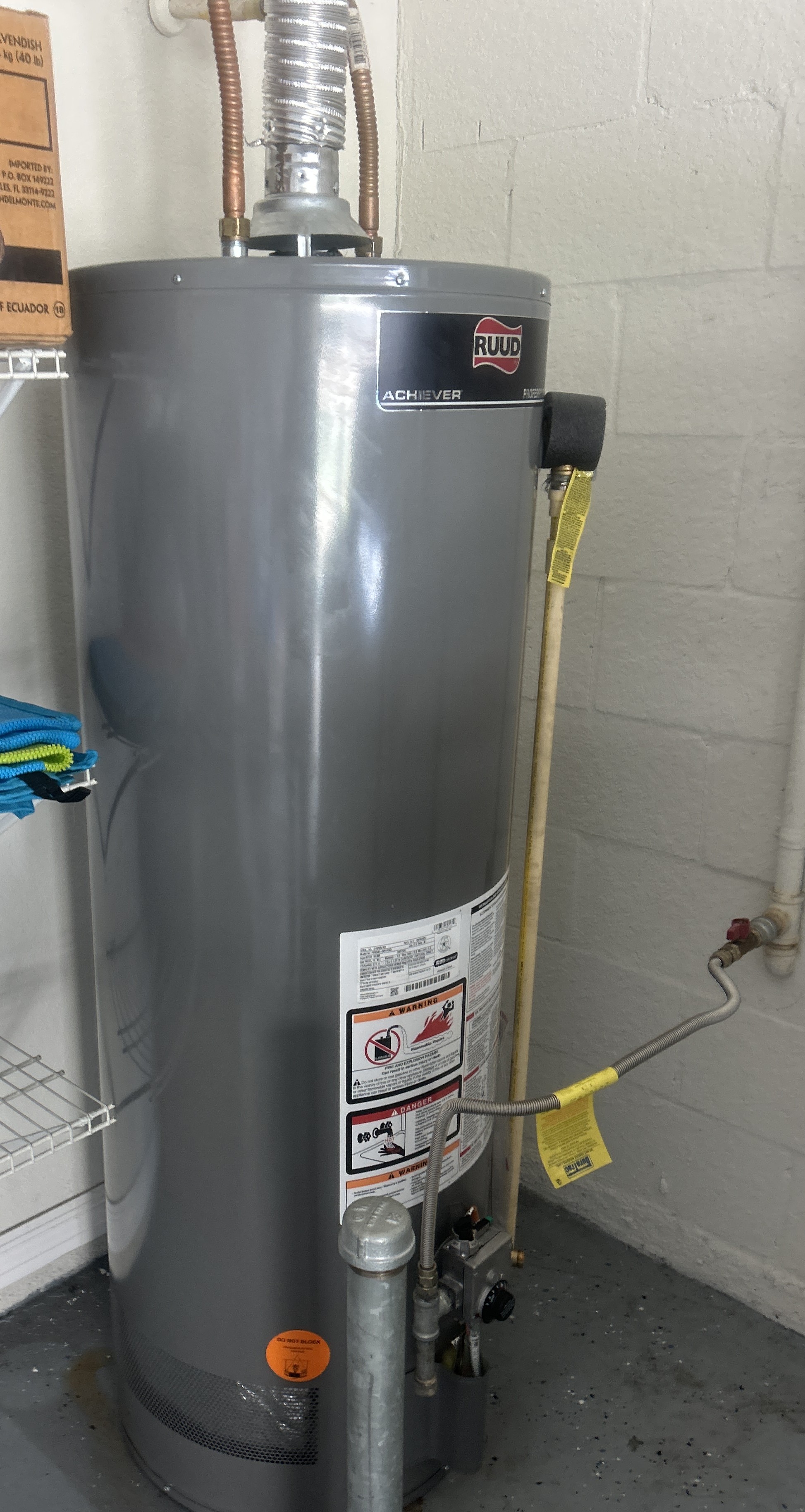
A standard 40-gallon water heater typically takes between 30 and 90 minutes to heat a full tank of water to its set temperature. Gas-powered models are the most efficient, usually requiring only 30 to 45 minutes, whereas electric models generally take 60 to 90 minutes. These durations depend heavily on the initial groundwater temperature and the unit’s recovery rate.
Understanding the time required to heat a 40-gallon tank is essential for managing household chores, scheduling showers, and diagnosing potential mechanical failures. Whether you are installing a new unit in 2026 or troubleshooting an existing one, the "recovery time"—the time it takes to reheat the water after the tank has been emptied—is the most critical metric for performance.
The Science of Recovery Rates and Fuel Sources
The primary factor determining heating time is the energy source. Gas and electric water heaters operate on fundamentally different thermodynamic principles, which directly impacts how quickly they can transfer heat to the 40 gallons of water stored within the tank.
Gas Water Heaters: High-Intensity Combustion
Gas water heaters utilize a burner located at the bottom of the tank. When the thermostat detects a drop in temperature, the burner ignites, sending hot combustion gases through a central flue. This flue acts as a heat exchanger, transferring energy to the surrounding water.
In 2026, most standard 40-gallon gas units are rated at approximately 36,000 to 42,000 BTUs (British Thermal Units). Because gas provides a high-intensity heat source, it can raise the temperature of a large volume of water much faster than electricity. A typical gas unit has a recovery rate of roughly 35 to 45 gallons per hour (GPH) at a 90°F temperature rise. This means a gas heater can often replace nearly its entire volume of hot water in about an hour.
Electric Water Heaters: Resistive Heating
Electric water heaters use two submerged heating elements (an upper and a lower element) that operate via electrical resistance. In a standard 240-volt configuration, these elements are usually rated at 4,500 or 5,500 watts.
The heating process in an electric tank is sequential; the top element heats the upper third of the tank first to ensure some hot water is available quickly, then the bottom element takes over to heat the remainder. Because the heat transfer from a resistive element is less "aggressive" than an open flame, the recovery rate for electric units is lower, typically between 18 and 22 GPH. Consequently, if you exhaust a 40-gallon electric tank, you should expect a wait of at least 75 to 90 minutes before the entire volume is back to the target temperature (usually 120°F).
Key Variables Affecting Heating Duration
While the fuel source sets the baseline, several external and internal factors can significantly extend or shorten the time you spend waiting for a hot shower.
1. Initial Groundwater Temperature
The "temperature rise" is the difference between the cold water entering the tank and the desired thermostat setting. In colder climates or during winter months, groundwater may enter the home at 40°F. If your thermostat is set to 120°F, the heater must achieve an 80-degree rise. In warmer climates where groundwater enters at 70°F, the heater only needs a 50-degree rise. This difference can add 20 to 30 minutes to the total heating time for both gas and electric models.
2. Thermostat Settings and Safety
Most manufacturers ship water heaters with a default setting of 120°F (49°C). Increasing the thermostat to 140°F—often done to kill Legionella bacteria or to make hot water "last longer" by mixing it with more cold water at the tap—requires the heating elements or burners to run for a longer cycle. It is important to note that while higher temperatures reduce heating "availability" times, they increase the risk of scalding and energy consumption.
3. Sediment Accumulation
Over years of operation, minerals like calcium and magnesium precipitate out of the water and settle at the bottom of the tank. In gas heaters, this layer of sediment acts as an insulator between the burner and the water, forcing the unit to run longer and work harder. In electric heaters, sediment can bury the lower heating element, causing it to overheat and eventually burn out. If a 40-gallon tank that used to heat up in 45 minutes now takes 2 hours, sediment buildup is the most likely culprit.
4. Tank Insulation and Ambient Temperature
The efficiency of the tank's insulation (measured by its R-value) determines how much heat is lost to the surrounding air. If a water heater is located in an uninsulated garage during a 2026 winter freeze, the "standby heat loss" is higher. Modern units produced under current National Appliance Energy Conservation Act (NAECA) standards have significantly thicker insulation than models from a decade ago, which helps maintain internal temperatures and slightly improves recovery efficiency.
40-Gallon Water Heater Performance Comparison
The following table compares the typical performance metrics for 40-gallon units across different technologies available in 2026.
| Feature | Gas (Standard) | Electric (Standard) | Hybrid (Heat Pump) |
|---|---|---|---|
| Typical Energy Input | 40,000 BTU | 4,500 Watts | 500W (Comp.) + 4500W (Elem.) |
| Recovery Rate (90°F Rise) | 36–42 GPH | 20–22 GPH | 20 GPH (Hybrid Mode) |
| Time to Heat from 50°F to 120°F | 35–50 Minutes | 70–90 Minutes | 80–110 Minutes (Eco Mode) |
| First Hour Rating (FHR) | 65–75 Gallons | 50–60 Gallons | 60–70 Gallons |
| Primary Advantage | Fastest Recovery | Lower Install Cost | Highest Energy Efficiency |
Calculating Your Own Heating Time
If you want to be precise, you can use the basic physics of water heating. It takes 8.33 BTUs to raise one gallon of water by one degree Fahrenheit.
For a 40-gallon tank requiring a 70°F rise (from 50°F to 120°F):
- Total BTUs needed: 40 gallons × 70 degrees × 8.33 = 23,324 BTUs.
However, no heater is 100% efficient.
- Gas heaters are roughly 60-70% efficient (due to heat lost through the flue). A 40,000 BTU burner provides about 24,000–28,000 BTUs per hour to the water. Thus, it takes about 50-60 minutes for a full 70-degree rise.
- Electric heaters are nearly 100% efficient at the point of use because the elements are submerged. A 4,500-watt element produces 15,358 BTUs per hour ($4,500 \times 3.413$). To reach 23,324 BTUs, it takes approximately 1.5 hours (90 minutes).
Troubleshooting Slow Heating Times
If your 40-gallon water heater is exceeding these standard timeframes, there may be a mechanical or systemic issue.
Failed Electric Elements
In electric models, there are two elements. If the upper element fails, you will have no hot water at all. If the lower element fails, the water will get warm but will run out very quickly, and the recovery time will double because only the top third of the tank is being heated effectively. Testing elements with a multimeter for continuity is a standard 2026 maintenance procedure.
Dip Tube Issues
The dip tube is a plastic pipe that directs incoming cold water to the bottom of the tank so it can be heated. If the dip tube breaks or dissolves, cold water enters at the top of the tank and mixes with the hot water exiting the tank. This results in "lukewarm" water and makes it appear as though the heater is taking forever to reach the correct temperature.
Thermostat Malfunction
On electric heaters, each element has its own thermostat. If the lower thermostat is set lower than the upper one, or if it is faulty, the bottom of the tank may never reach the target temperature, leading to a perceived slow recovery. For gas units, a failing gas valve or a dirty pilot/igniter assembly can cause the burner to cycle off prematurely.
Maintenance Strategies to Maintain Fast Recovery
To ensure your water heater stays within the 30-to-90-minute heating window, regular maintenance is required.
- Annual Flushing: Drain several gallons of water from the drain valve at the bottom of the tank once a year. This removes the sediment that slows down heat transfer. In areas with hard water, a full flush and the use of a water softener can preserve the heater's recovery speed for decades.
- Anode Rod Inspection: The sacrificial anode rod prevents the tank from rusting. If the rod is depleted, the tank will begin to corrode, leading to leaks and efficiency loss. Check this every 3 to 5 years.
- Insulation Blankets: For older units or units located in cold basements, adding an R-11 or higher insulation blanket can reduce standby heat loss, ensuring the water stays closer to the target temperature and reducing the "reheat" time after small amounts of usage.
- Temperature and Pressure (T&P) Valve Testing: While not directly related to heating speed, a leaking T&P valve allows hot water to escape, forcing the heater to constantly "top up" the heat, which wastes energy and mimics a slow recovery.
The Role of Hybrid (Heat Pump) Models in 2026
By 2026, many homeowners have transitioned to Hybrid Heat Pump Water Heaters. These units use a compressor to pull heat from the surrounding air and transfer it to the water. While incredibly efficient, they have the slowest recovery times when operated in "Efficiency Mode" (taking 2+ hours). However, most have a "High Demand" or "Hybrid" mode that engages electric resistance elements alongside the heat pump to match the 60-to-90-minute recovery time of standard electric units when needed.
Frequently Asked Questions
Does the age of the water heater affect how long it takes to heat?
Yes. As a water heater ages, the accumulation of scale on the elements (electric) or the floor of the tank (gas) creates a thermal barrier. This doesn't just make the process less efficient; it physically slows the rate at which heat can move from the source into the water molecules. A 12-year-old unit will almost always heat slower than a new 2026 model.
Is it faster to heat water if I turn the thermostat up?
No. Turning the thermostat to a higher temperature does not make the "flame hotter" or the "electricity stronger." It simply keeps the heater running for a longer duration to reach that higher set point. If you need hot water faster, the only solution is a unit with a higher BTU/wattage rating or a higher recovery rate.
Can I increase the recovery rate of my existing electric heater?
Generally, no. The recovery rate is limited by the wattage of the elements and the gauge of the wiring in your home. Upgrading from 4,500W to 5,500W elements is sometimes possible if your circuit breaker and wire gauge (typically 10-gauge for 30 amps) can handle the increased load, but this should only be performed by a licensed electrician.
Why is my 40-gallon gas heater taking over an hour to heat?
If a gas heater exceeds a 60-minute recovery time, it is likely due to either a very low cold-water inlet temperature (common in northern winters) or a significant layer of sediment at the bottom of the tank. A yellow, flickering burner flame also indicates poor combustion, which reduces heat transfer efficiency.
How much hot water can I get in the first hour?
This is known as the First Hour Rating (FHR). For a 40-gallon tank, the FHR is usually around 65–75 gallons for gas and 50–60 gallons for electric. This figure includes the initial 40 gallons plus the amount the unit can heat while you are actively using it.
Final Recommendation
If your priority is a fast recovery time to support a large family or back-to-back showers, a gas water heater is the superior choice, providing hot water in roughly half the time of an electric model. For those with electric-only utilities, ensuring your tank is free of sediment and that both heating elements are functioning is the best way to maintain the standard 60-to-90-minute heating cycle. If your unit is over 10 years old and recovery times are lengthening, consider a 2026-rated high-efficiency replacement to restore performance and reduce energy costs.