November 22, 1963, stands as one of the most defining and consequential turning points in modern American history. On this fateful Friday in Dallas, Texas, President John F. Kennedy was mortally wounded by gunfire while riding in an open-top presidential motorcade through Dealey Plaza. The sudden and violent nature of his death sent immediate shockwaves across the United States and around the globe, fracturing the collective sense of national security and ushering in an era of profound political and social transformation. This comprehensive examination explores the sequence of events, the immediate aftermath, the investigative findings, and the enduring historical legacy of the day that changed the world.
The Historical Context of the Dallas Visit
In the autumn of 1963, President John F. Kennedy and his administration faced a complex political landscape. While the President enjoyed broad national visibility, his political standing within the Democratic Party in Texas was plagued by factional infighting between liberal and conservative wings. To shore up support for the upcoming 1964 presidential election, Vice President Lyndon B. Johnson, a Texan, urged the President to undertake a political trip to the state. The itinerary included stops in San Antonio, Houston, Fort Worth, Dallas, and Austin.
Dallas, in particular, was viewed as a potential security risk. The city had recently been a hotbed of vocal anti-Kennedy sentiment, characterized by hostile newspaper advertisements, conservative political pamphlets, and an incident earlier in the year where Adlai Stevenson, the U.S. Ambassador to the United Nations, was spat upon and jeered. Despite these warning signs, White House planners and the United States Secret Service designed a motorcade route through downtown Dallas to maximize public exposure, allowing the charismatic president and First Lady Jacqueline Kennedy to greet the crowds lining the streets.
The Motorcade and the Events in Dealey Plaza
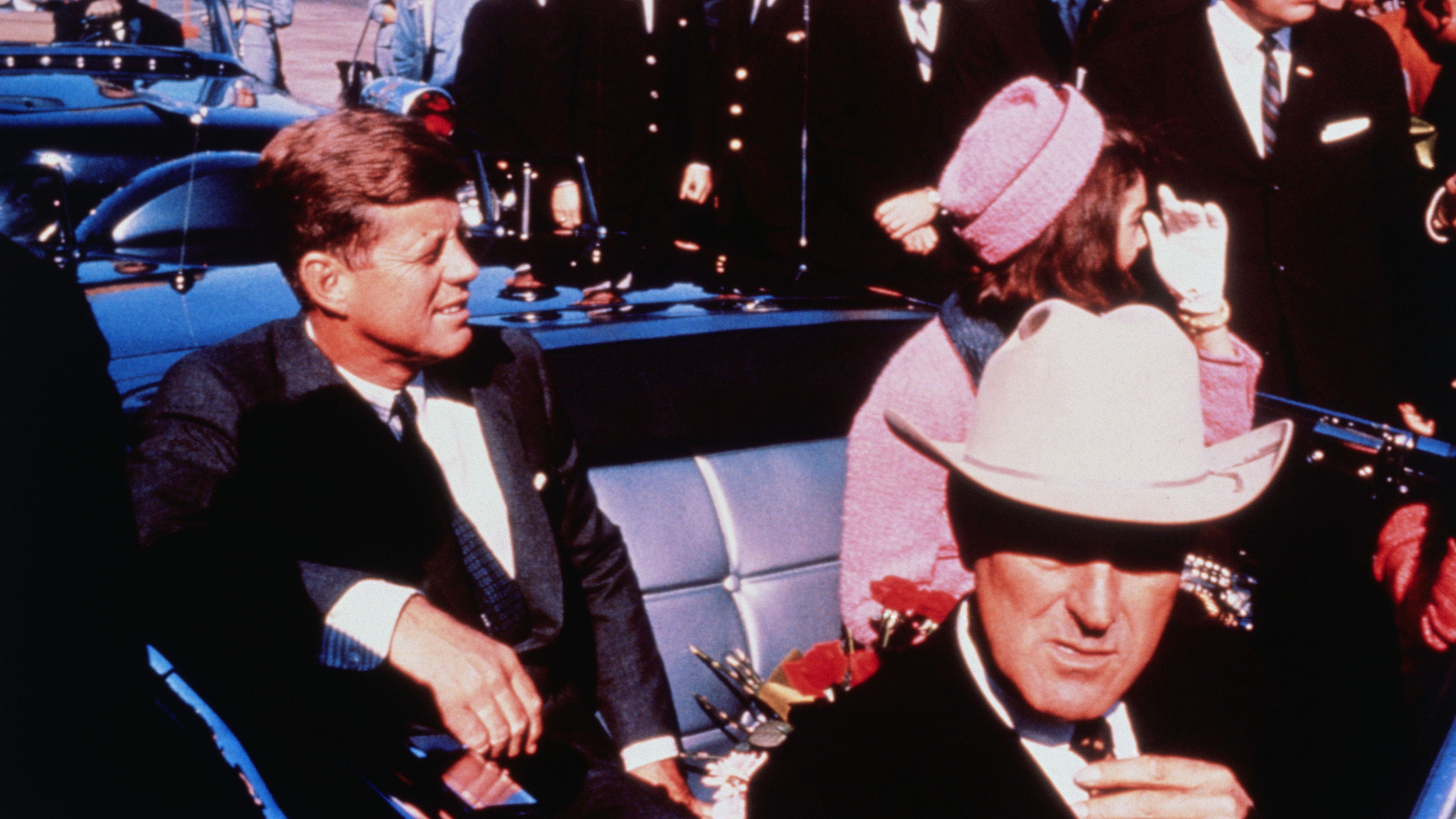
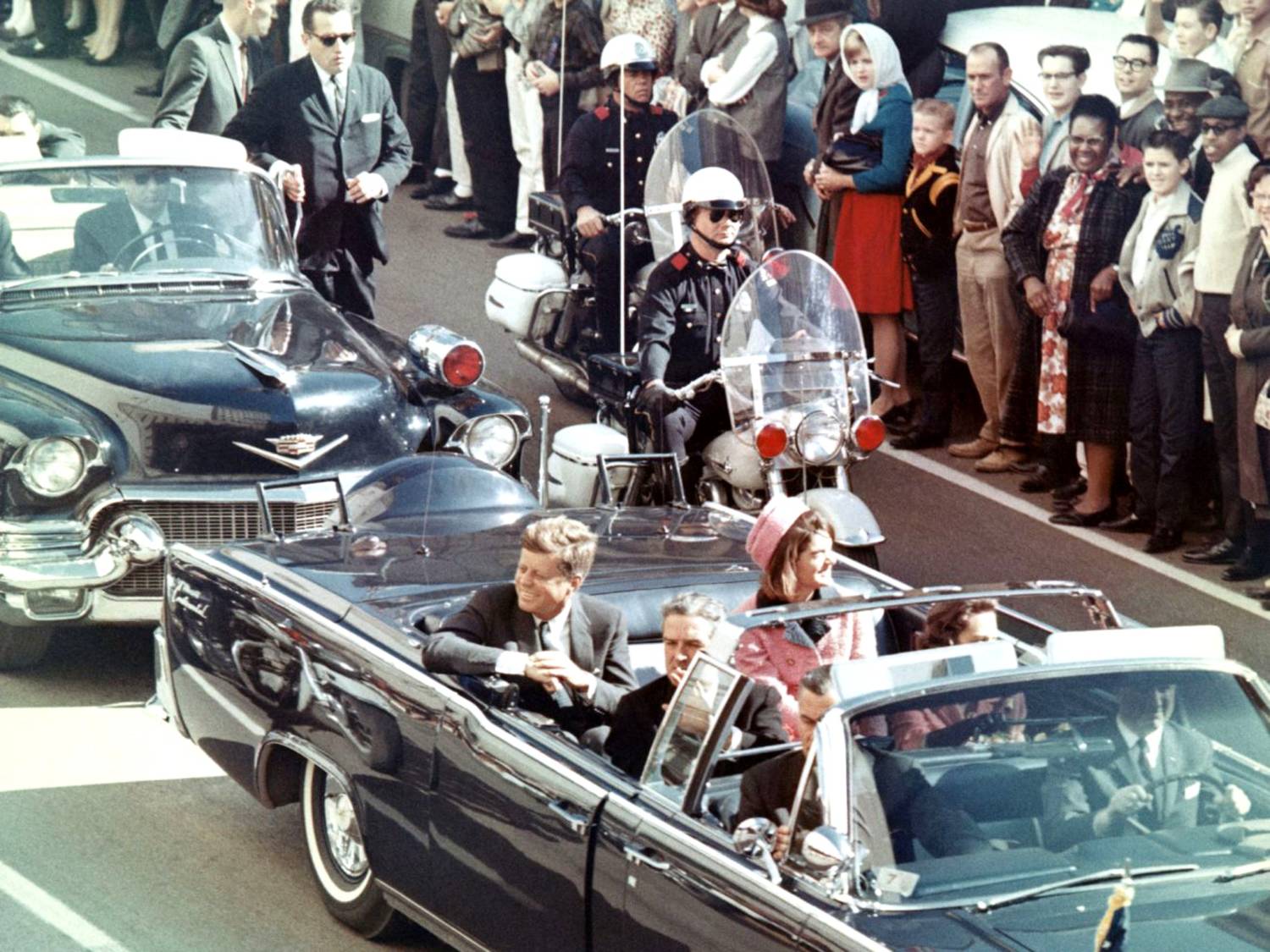
On the morning of November 22, 1963, Air Force One landed at Love Field in Dallas, where President and Mrs. Kennedy were greeted by an enthusiastic crowd. The presidential party boarded an open-top 1961 Lincoln Continental convertible. Alongside them in the car were Texas Governor John Connally and his wife, Nellie. Secret Service agent Roy Kellerman occupied the front passenger seat, while William Greer drove the vehicle. Two additional Secret Service vehicles and a trailing press and VIP pool followed closely behind.
The motorcade departed Love Field shortly before noon, weaving through a dense, cheering crowd of over 200,000 people in downtown Dallas. At approximately 12:30 p.m. CST, the vehicle entered Dealey Plaza, passing the Texas School Book Depository building on Elm Street. As the car slowed to negotiate a sharp turn, rifle shots rang out. According to official findings and eyewitness testimonies, multiple shots were fired from an elevated position overlooking the plaza. President Kennedy was struck in the neck and head, and Governor Connally was seriously wounded by gunfire from the same direction.
| Time (CST) | Event Location | Description of Activity |
|---|---|---|
| 11:38 AM | Love Field Airport | Air Force One lands; President and Mrs. Kennedy greet local dignitaries and the public. |
| 11:55 AM | Love Field Motorcade Route | The presidential motorcade departs for downtown Dallas amid large crowds. |
| 12:29 PM | Main Street, Dallas | The motorcade enters the downtown district, moving toward Dealey Plaza. |
| 12:30 PM | Dealey Plaza | Gunfire strikes President Kennedy and Governor Connally as the motorcade moves down Elm Street. |
| 1:00 PM | Parkland Memorial Hospital | President John F. Kennedy is officially pronounced dead by attending physicians. |
Immediate Aftermath and Medical Efforts
Following the gunfire, Secret Service agent Clint Hill sprinted forward, leaping onto the back of the accelerating presidential limousine to shield Mrs. Kennedy, while driver William Greer accelerated out of Dealey Plaza toward Stemmons Freeway. The vehicle raced to Parkland Memorial Hospital, arriving just minutes after the shooting.
At Parkland, a team of emergency physicians and trauma surgeons led by Dr. Charles Carrico and Dr. Malcolm Perry initiated frantic life-saving measures. President Kennedy had sustained catastrophic head and neck injuries and showed virtually no signs of life upon arrival. Despite emergency tracheotomy procedures and closed-chest heart massage, the medical team was unable to revive him. At 1:00 p.m. CST, President John F. Kennedy was officially pronounced dead at the age of 46.
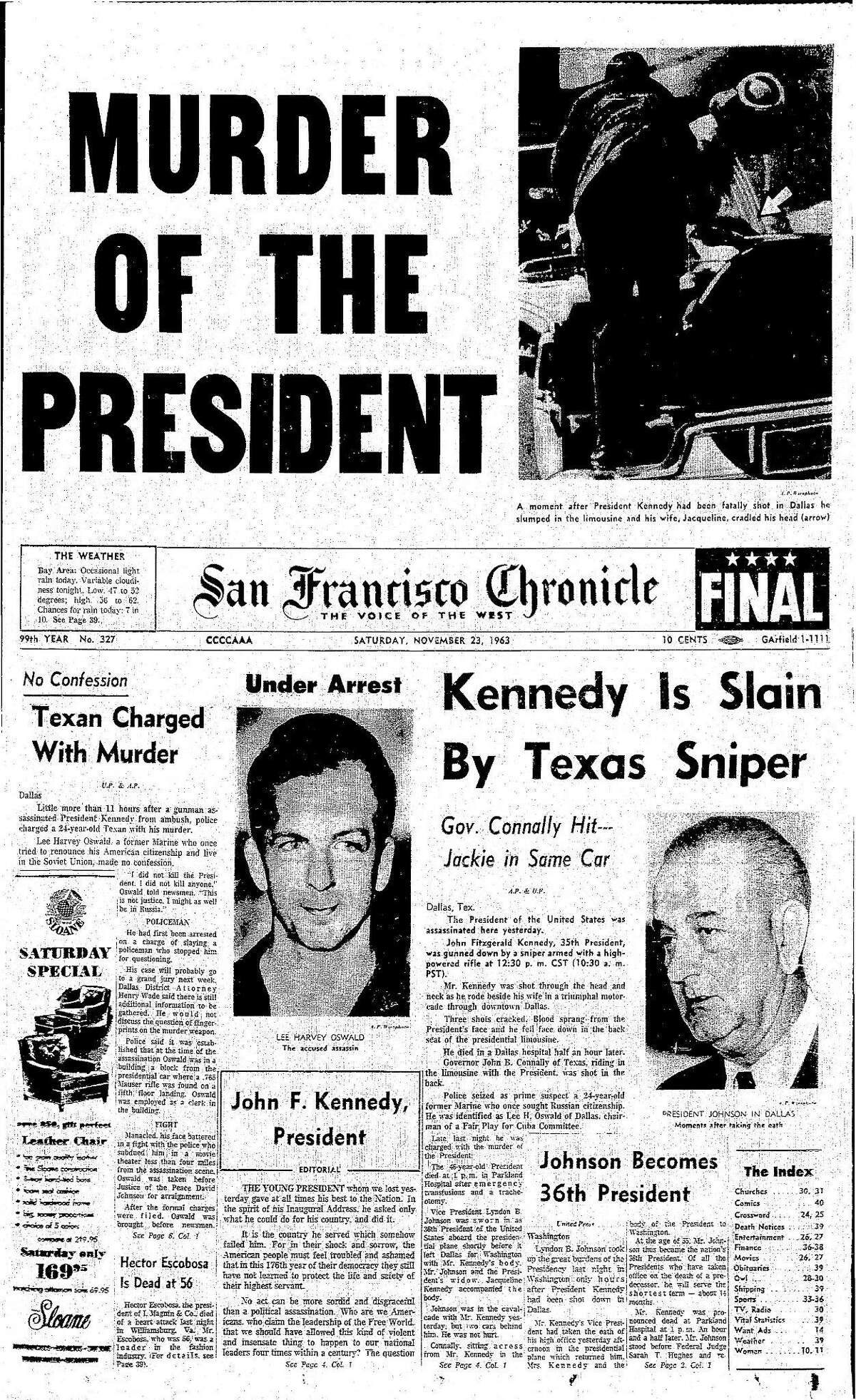
News of the shooting flashed across television and radio networks worldwide, interrupting regular programming. Walter Cronkite of CBS News delivered the official bulletin confirming the President's death at 1:38 p.m., struggling to maintain his composure on live television. The nation ground to a halt as workers, students, and families gathered around television screens and radios to process the unprecedented tragedy.
The Investigation and the Warren Commission
In the hours and days following the assassination, law enforcement agencies mobilized a massive investigation. Lee Harvey Oswald, an employee at the Texas School Book Depository, was quickly identified as the prime suspect after shooting and killing Dallas police officer J.D. Tippit on a residential street shortly after fleeing the building. Oswald was arrested inside the Texas Theatre later that afternoon.
Oswald denied involvement in either killing during subsequent interrogations at Dallas police headquarters. However, on November 24, 1963, as police prepared to transfer Oswald to the county jail, local nightclub owner Jack Ruby stepped forward from a crowd of reporters and fatally shot Oswald on live television. Oswald's death effectively ended the possibility of a criminal trial, leaving lingering public questions about the full scope of the conspiracy.
To restore public confidence and establish an authoritative record of the events, President Lyndon B. Johnson established the President's Commission on the Assassination of President Kennedy, commonly known as the Warren Commission, on November 29, 1963. Headed by Chief Justice Earl Warren, the commission conducted an exhaustive 10-month investigation. Its final report, published in September 1964, concluded that:
- Lee Harvey Oswald acted alone in firing three shots from the sixth floor of the Texas School Book Depository.
- No evidence supported the existence of a domestic or foreign conspiracy involving the assassination.
- Communication gaps and coordination issues between the Secret Service and other federal agencies contributed to vulnerabilities in the president's security detail.
Despite the conclusions of the Warren Commission, the assassination sparked decades of public skepticism, alternative theories, and ongoing historical debate. Subsequent congressional investigations, including the House Select Committee on Assassinations in the late 1970s, suggested that a second gunman may have fired a shot that missed, though the fundamental conclusion regarding Oswald's central role remained largely unchanged.
State Funeral and National Mourning
The nation entered a period of deep collective mourning following the assassination. On November 24, President Kennedy's flag-draped casket was transported from the White House to the U.S. Capitol rotunda, where an estimated 250,000 citizens paid their final respects over a 24-hour period.
The state funeral took place on Monday, November 25, coinciding with what would have been the third birthday of Kennedy's son, John F. Kennedy Jr. Dignitaries, heads of state, and representatives from over 90 countries traveled to Washington, D.C., to participate in the solemn procession. The funeral procession moved from the Capitol to St. Matthew's Cathedral and ultimately to Arlington National Cemetery, where President Kennedy was laid to rest with full military honors. Jacqueline Kennedy ignited an enduring visual symbol of national grief by lighting an eternal flame at the gravesite.
Frequently Asked Questions
What time was President John F. Kennedy shot on November 22, 1963?
President Kennedy was shot at approximately 12:30 p.m. CST while his motorcade traveled through Dealey Plaza in downtown Dallas, Texas. He was pronounced dead at Parkland Memorial Hospital thirty minutes later at 1:00 p.m. CST.
Who shot President John F. Kennedy?
The official investigation by the Warren Commission concluded that Lee Harvey Oswald acted alone in shooting the president from the sixth-floor window of the Texas School Book Depository. Oswald was arrested hours later and was subsequently killed by Jack Ruby two days after the assassination.
Why was President Kennedy visiting Dallas in November 1963?
President Kennedy traveled to Texas to mend political divisions within the state's Democratic Party ahead of the 1964 presidential election. The tour included stops in several Texas cities, with Dallas serving as a key political fundraising and campaign stop.
What was the Warren Commission?
The Warren Commission was a special presidential commission established by President Lyndon B. Johnson in November 1963 to investigate the assassination of John F. Kennedy. Led by Supreme Court Chief Justice Earl Warren, the commission released a comprehensive report in 1964 detailing the timeline, evidence, and conclusion that Lee Harvey Oswald acted alone.
How did the assassination impact the U.S. presidency?
The tragedy prompted significant legislative and operational changes. It accelerated the passage of key civil rights legislation championed by Kennedy and enacted under President Johnson. Additionally, it led to a permanent overhaul of Secret Service protocols, security planning, and presidential protection standards.
Practical Insights and Historical Legacy
Examining the events of November 22, 1963, requires consulting primary sources, government documents, and verified historical records rather than relying on unverified speculative media. For researchers, historians, and students seeking primary documentation, the National Archives and Records Administration (NARA) maintains extensive, publicly accessible collections containing millions of declassified pages related to the assassination, the Warren Commission, and subsequent investigative bodies. Reviewing these official records ensures an accurate understanding of the complex political and judicial dimensions surrounding the tragedy.