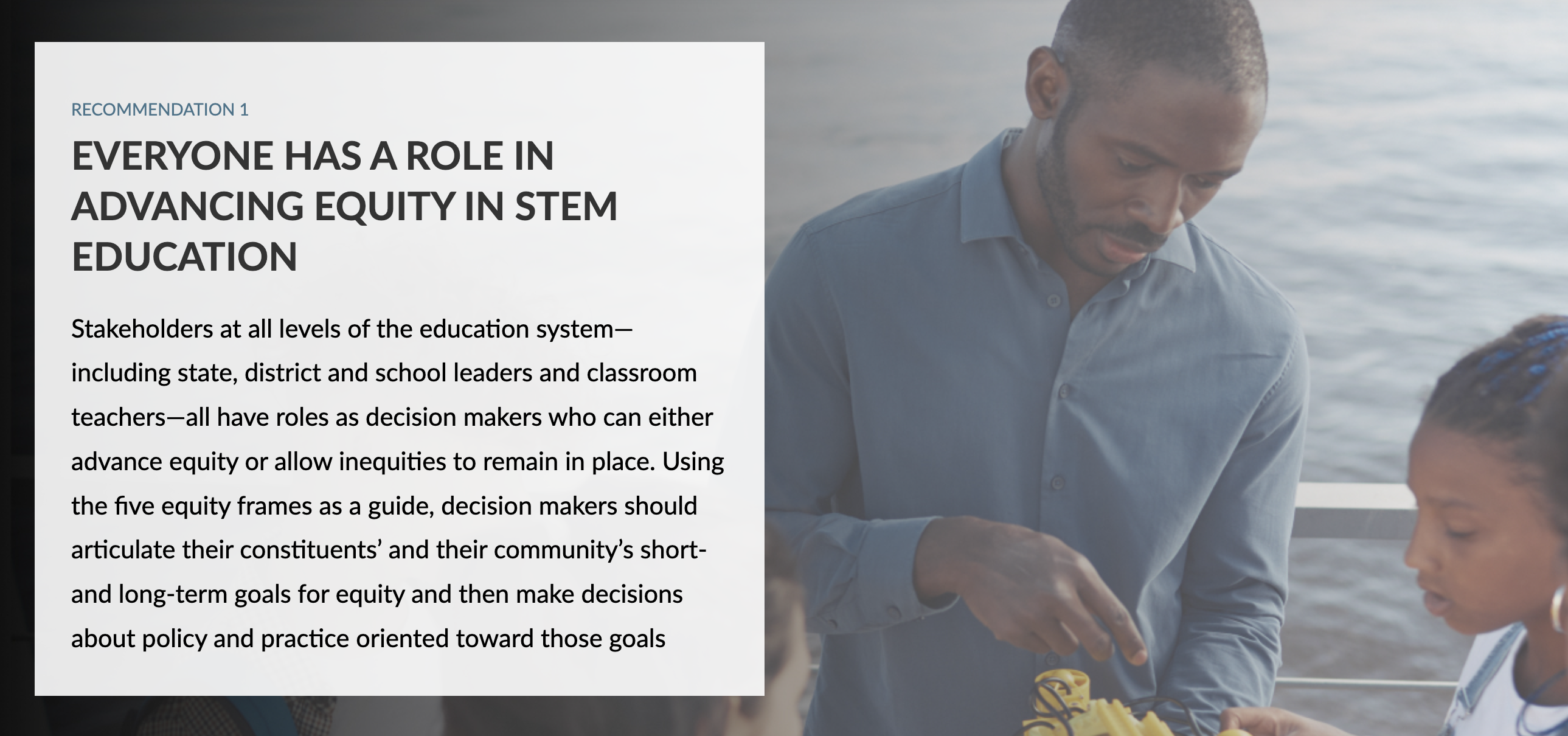
The 2025 125 framework, formally recognized as the "New Path for STEM Equity," is a comprehensive strategic roadmap designed to dismantle systemic barriers and integrate "The Missing Millions" into the United States’ science, technology, engineering, and mathematics (STEM) workforce. Launched as a pivotal update to the National Science Board’s Vision 2030, this 125-point action plan provides the tactical requirements for educational institutions, federal agencies, and private industry to achieve demographic parity in the technical sectors by the end of the decade.
The Genesis of the 2025 125 Initiative
As of 2026, we are witnessing the first full year of implementation for the 2025 125 initiative. The "125" designation refers to the 125 specific, measurable interventions identified by the National Science Board (NSB) and the National Science Foundation (NSF) to accelerate equity. For decades, the U.S. STEM workforce has struggled with a representation gap known as the Missing Millions—the millions of people from underrepresented groups (including women, Black, Hispanic, and Indigenous communities) who must join the workforce for it to reflect the diversity of the American population.
The "New Path" was born out of the realization that traditional "top-down" diversity initiatives were insufficient. Instead, the 2025 roadmap emphasizes a "wraparound" ecosystem approach. This involves not only recruitment but the fundamental restructuring of how STEM education is funded, how research environments are managed, and how geographical "STEM deserts" are irrigated with resources.
The urgency of this path is fueled by the CHIPS and Science Act, which provided the legislative and financial backbone to scale these efforts. By 2025, it became clear that national security and economic competitiveness were directly tied to the ability to cultivate talent from every zip code, not just traditional innovation hubs.
The Three Core Pillars of the 2025 125 Roadmap
To understand the 2025 125 framework, one must analyze its three foundational pillars. These pillars categorize the 125 action items into manageable domains for stakeholders.
1. Geographical and Institutional Access
The roadmap recognizes that talent is distributed equally, but opportunity is not. A significant portion of the 125 actions focuses on expanding the STEM "geography." This means moving beyond the "Silicon Valleys" and "Route 128s" to invest in rural areas, the Deep South, and the Mountain West.
Key requirements in this pillar include:
- Capacity Building in Emerging Research Institutions (ERIs): Providing direct funding to universities that have historically been overlooked by federal grant cycles.
- Community College Integration: Recognizing community colleges as the primary entry point for a diverse STEM workforce and establishing 125 "Bridge to Career" partnerships between these colleges and federal labs.
2. The "Wraparound" Student Support Model
STEM equity fails when students enter the pipeline but cannot survive the "weed-out" culture of introductory courses. The 2025 path mandates a shift from exclusionary pedagogy to inclusionary support. This includes 125-targeted grant programs for "inclusive mentoring," which requires PIs (Principal Investigators) to demonstrate not just research excellence, but a proven track record of supporting diverse cohorts.
3. Industry-Academic Reciprocity
The final pillar addresses the "leaky pipeline" at the transition from graduation to the workforce. The 2025 125 framework establishes new standards for industry partners who receive federal contracts. To be eligible for certain 2026 funding cycles, private companies must demonstrate adherence to the Equity in Innovation standards, which include transparent salary benchmarking and mid-career "returnship" programs for those who have stepped away from STEM roles.
Identifying the "Missing Millions": 2025 Targets vs. 2030 Goals
The 2025 125 roadmap is predicated on the "Missing Millions" data. To reach a representative STEM workforce by 2030, the U.S. needs to nearly double the number of women and triple the number of Hispanic and Black professionals in technical fields.
| Demographic Group | 2025 Baseline Representation (Est.) | 2030 Target Representation | Growth Required (Millions) |
|---|---|---|---|
| Women | 35% | 50% | ~2.5 Million |
| Hispanic / Latino | 9% | 20% | ~1.2 Million |
| Black / African American | 7% | 13% | ~0.8 Million |
| American Indian / Alaska Native | 0.6% | 1.1% | ~0.1 Million |
| Persons with Disabilities | 3% | 10% | ~1.0 Million |
Source data based on National Science Board (NSB) "State of U.S. Science and Engineering" indicators adjusted for the 2025-125 initiative.
Implementation Steps for Educational Institutions
For universities and K-12 districts looking to align with the "New Path," the 2025 125 framework outlines a specific sequence of actions. These steps are no longer optional for institutions seeking NSF or Department of Energy (DOE) funding in 2026.
Phase 1: The Equity Audit
Institutions must first conduct a comprehensive audit of their STEM departments. This is not merely a headcount; it is an analysis of retention rates, grading disparities in "gatekeeper" courses (like Organic Chemistry or Calculus II), and the distribution of departmental resources. The 2025 125 framework provides a standardized Equity Scorecard that schools use to benchmark their progress.
Phase 2: Curriculum De-Siloing
A major "New Path" directive is the integration of "Societal Impact" into technical curricula. Research shows that students from underrepresented backgrounds are more likely to persist in STEM when they see the direct social utility of their work. The 2025 roadmap incentivizes universities to redesign engineering and computer science programs to focus on grand challenges—such as climate change, healthcare equity, and ethical AI—rather than abstract theory alone.
Phase 3: Infrastructure Modernization
Equity cannot exist without modern tools. Many underrepresented students attend institutions with outdated labs and limited high-speed computing access. The 2025 125 plan allocates specific tranches of the $125 billion infrastructure fund (authorized under the broader Science Act framework) to modernize labs at Historically Black Colleges and Universities (HBCUs) and Tribal Colleges and Universities (TCUs).
Technical Requirements for Federal Grant Compliance
In 2026, the criteria for "Broader Impacts" in federal grant applications have become more stringent under the 2025 125 guidelines. Researchers must now provide:
- A Diverse Recruitment Plan: Detailed strategies for recruiting graduate students from beyond the "top 50" research universities.
- Mentorship Verification: Evidence of formal mentorship training for all senior personnel on the grant.
- Data Transparency: Commitment to publishing anonymized demographic data regarding participant outcomes in their research groups.
This shift ensures that the "New Path" is not just a slogan but a built-in requirement of the scientific enterprise. Failure to meet these 125-point criteria can result in the withholding of indirect cost recovery or the suspension of multi-year funding.
Economic and National Security Implications
The "2025 125" initiative is often framed as a social justice issue, but its primary drivers are economic and strategic. As of 2026, the global competition for "critical and emerging technologies" (CETs)—including quantum computing, biotechnology, and semiconductors—has reached a fever pitch.
The U.S. Department of Commerce has noted that without the "Missing Millions," the American semiconductor industry would face a labor shortage of over 100,000 technicians and engineers by 2030. The 2025 125 path treats STEM equity as a "defense-grade" priority. By expanding the talent pool, the U.S. reduces its reliance on high-skill immigration alone and builds a more resilient, domestically grounded innovation base.
Challenges and Troubleshooting the 2025 125 Path
Despite the clear roadmap, implementation has faced hurdles that stakeholders must navigate in 2026.
- Resistance to Pedagogical Change: Some faculty members view the "New Path" as a threat to academic rigor. The response from the NSB has been clear: rigor is maintained by ensuring all students have the tools to succeed, not by making the entry barrier unnecessarily high.
- Funding Lag: While billions have been authorized, the "125" milestones require annual appropriations. Institutions should diversify their funding streams by seeking out the 125 Private-Public Equity Partnerships established between the NSF and major philanthropic organizations.
- Data Fragmentation: Many institutions struggle to track "Missing Millions" data across different departments. The 2025 framework recommends adopting the Integrated STEM Equity Data System (ISEDS), a cloud-based platform designed to standardize equity reporting across the nation.
Strategic Partnerships: The Role of Industry
The private sector plays a critical role in the 2025 125 "New Path." Leading tech firms have committed to the "125 Equity Pledge," which involves:
- Eliminating Degree Inflation: Shifting to skills-based hiring for roles that historically required a four-year degree but could be performed by community college graduates with specialized certifications.
- Geographical Decentralization: Establishing satellite R&D centers in "STEM deserts" rather than forcing talent to relocate to high-cost-of-living areas.
- Transparent Promotion Pathways: Addressing the "broken rung" on the corporate ladder where women and minorities are often passed over for their first promotion into management.
Frequently Asked Questions (FAQ)
What exactly does the "125" in "2025 125" stand for?
The "125" represents the 125 Actionable Objectives established in the 2025 National STEM Equity Roadmap. These are specific, measurable tasks—ranging from legislative changes to institutional audit requirements—that must be completed to bridge the "Missing Millions" gap. It also references the significant milestone funding tranches that began rolling out in the 2025 fiscal year to support these objectives.
Who are the "Missing Millions"?
The National Science Board defines the Missing Millions as the gap between the current demographic makeup of the STEM workforce and what it would look like if it were truly representative of the U.S. population. This primarily includes women, Black or African Americans, Hispanics or Latinos, and American Indians or Alaska Natives.
How does the 2025 125 initiative affect individual researchers?
For individual researchers and PIs, the "New Path" changes the expectations for federal grant applications. There is a much higher emphasis on the "Broader Impacts" section. Researchers must now demonstrate a proactive, verifiable plan for inclusive excellence and mentorship to be competitive for NSF and other federal agency funding in 2026.
Is the 2025 125 path only for higher education?
No. While much of the funding targets universities and community colleges, the roadmap includes significant K-12 components. These include the "125 Pre-College Initiatives" designed to improve math and science proficiency in under-resourced school districts and to provide early exposure to STEM careers for students in middle and high school.
Where can institutions find the 2025 125 implementation guidelines?
The official guidelines are hosted on the National Science Foundation's Equity Portal and the White House Office of Science and Technology Policy (OSTP) website. These platforms provide the necessary templates for equity audits, grant compliance checklists, and partnership registration.
Next Steps for Stakeholders
As we move further into 2026, the window for "early adoption" of the 2025 125 standards is closing. The framework is rapidly becoming the baseline for all federal and industry technical engagements.
For Educational Leaders: Your immediate next action should be the adoption of the ISEDS Data Standard and the scheduling of an external equity audit. This will ensure your institution remains eligible for the 2027-2030 funding cycles.
For Industry Partners: Re-evaluate your recruitment pipelines. Focus on the 125-identified "Bridge Institutions" (community colleges and ERIs) to find untapped talent that your competitors are likely overlooking.
For Researchers: Prioritize "Mentorship Certification." Professional development in inclusive leadership is no longer a "soft skill" but a technical requirement for career advancement in the modern STEM ecosystem.
The 2025 125 path is more than a policy document; it is a fundamental shift in how the United States conceptualizes its scientific future. By moving toward equity not as an afterthought, but as a core engine of innovation, the nation ensures that the next breakthrough in AI, medicine, or clean energy can come from anywhere—and from anyone.