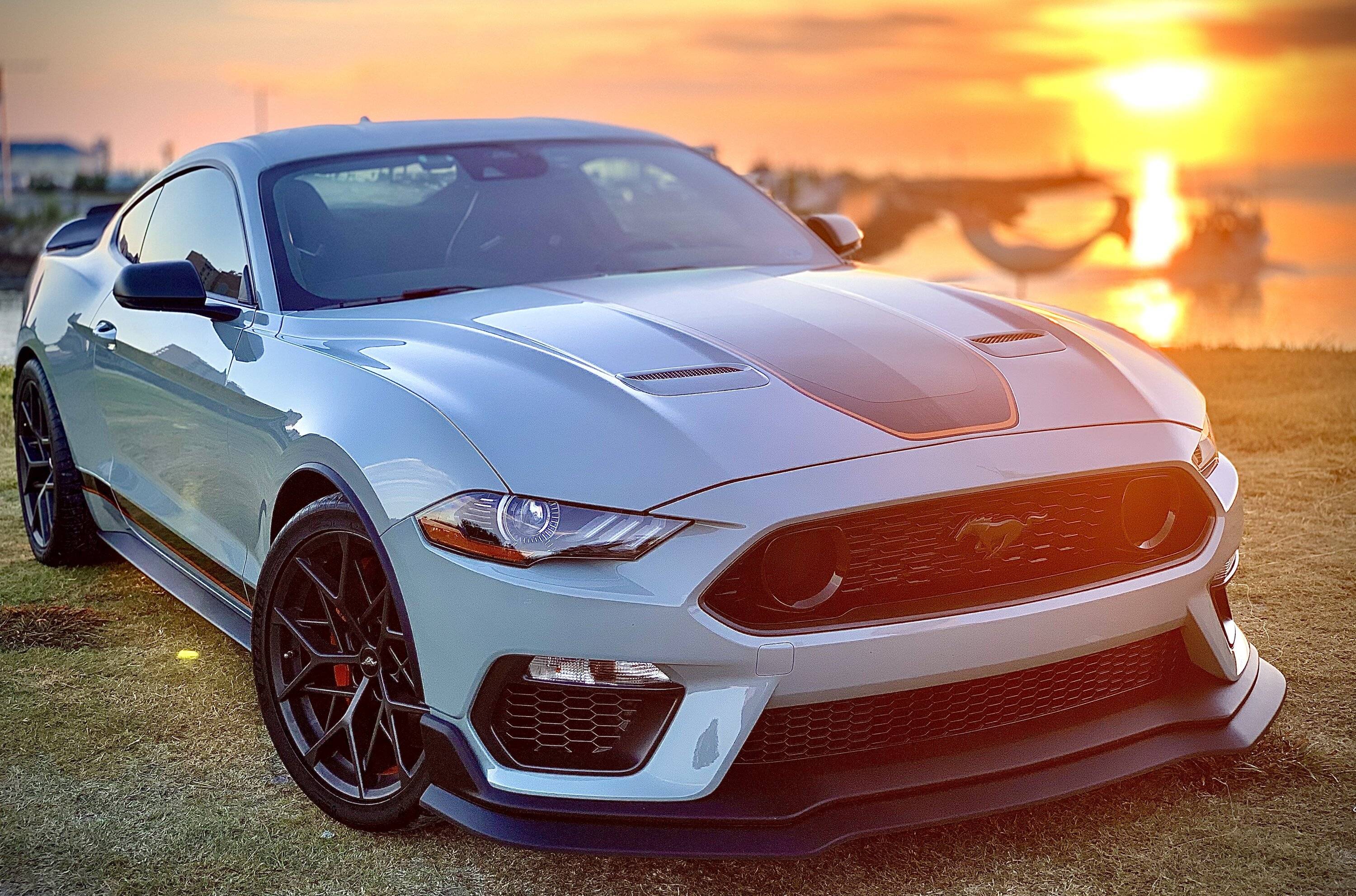
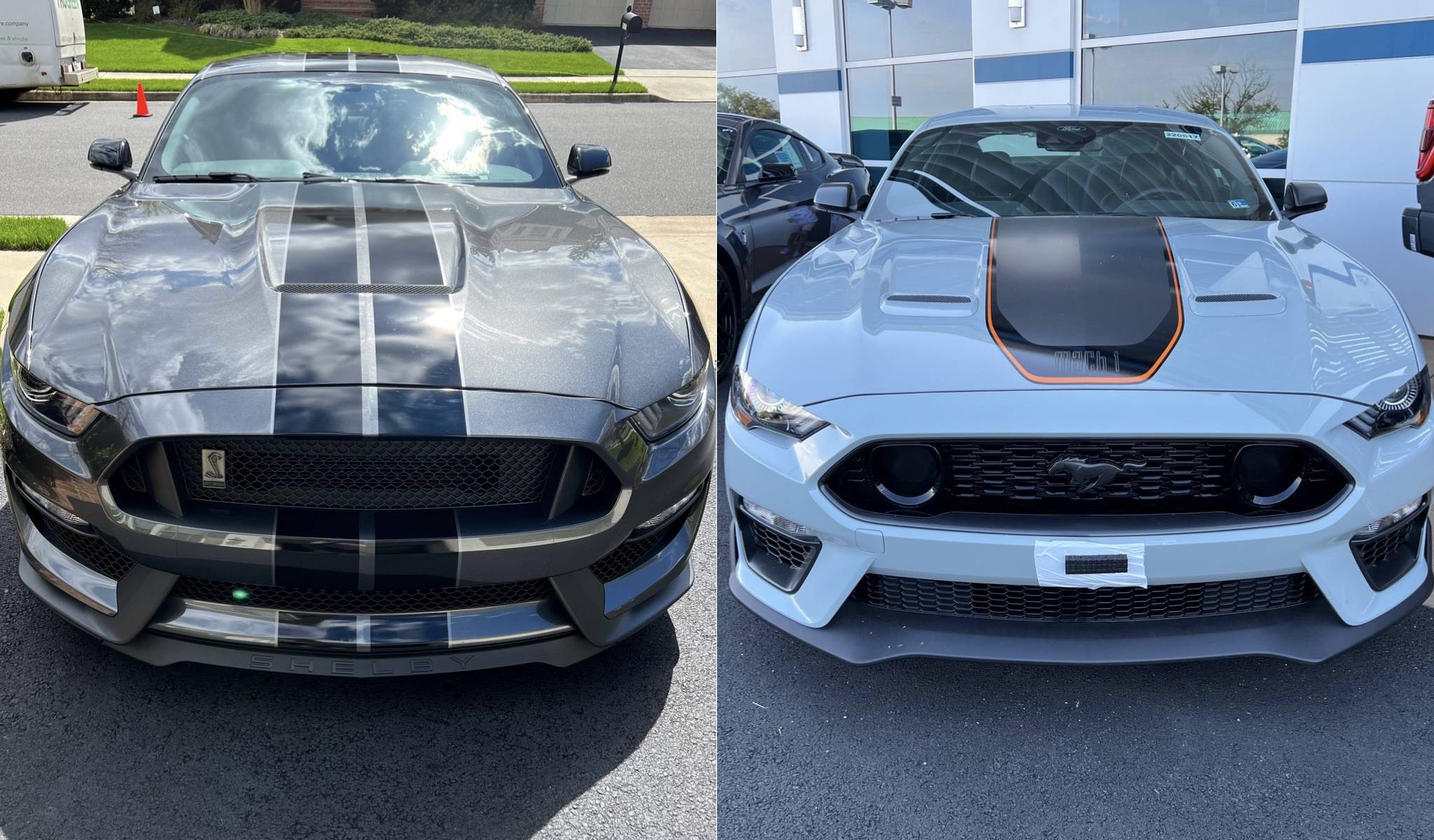
The 2022 Mustang Mach 1 achieves a 0-60 mph time of approximately 3.8 seconds when equipped with the 10-speed automatic transmission. Models featuring the 6-speed Tremec manual transmission typically clock in between 4.2 and 4.5 seconds, depending on the presence of the optional Handling Package and tire temperature.
The 2022 Mustang Mach 1 occupies a unique space in the Ford Performance hierarchy, serving as a bridge between the standard GT and the track-focused Shelby variants. As we look back from 2026, the Mach 1 remains a high-water mark for the S550 platform, blending specialized hardware from the Shelby GT350 and GT500 with the reliable 5.0L Coyote V8. Understanding the 0-60 mph performance of this vehicle requires more than just a single number; it involves an analysis of transmission gearing, aerodynamic drag, and the specific engine tuning necessitated by the 2022 model year's emissions requirements.
The Engineering Behind the Mach 1 Acceleration
To understand the 0-60 mph timeline of the 2022 Mach 1, one must first look at the hardware that differentiates it from a standard GT. The 2022 model year was powered by the 5.0-liter Coyote V8 engine, which produced 470 horsepower and 410 lb-ft of torque. It is important to note that this was a 10-horsepower reduction from the 2021 Mach 1, a change driven by stricter Particulate Matter (PM) emissions standards that required recalibration of the engine's fueling and timing maps.
Despite this slight dip in peak power, the Mach 1’s acceleration stayed competitive because of its parts-bin excellence. Ford engineers integrated the intake manifold, oil filter adapter, and engine oil cooler from the Shelby GT350. These components allowed the engine to breathe more freely at high RPMs and maintain performance during repeated high-stress launches—crucial for achieving consistent 0-60 times.
Transmission Impact: 10R80 vs. Tremec 3160
The 0-60 mph performance of the 2022 Mach 1 is bifurcated by the choice of transmission.
- The 10-Speed SelectShift Automatic (10R80): This transmission is the choice for pure longitudinal acceleration. With its closely spaced gear ratios, the 10R80 allows the engine to stay within its optimal power band (roughly 5,000 to 7,000 RPM) throughout the sprint. The first three gears are short, providing immense mechanical advantage off the line. In ideal conditions, the automatic Mach 1 can dip into the high 3-second range (3.8s–3.9s).
- The 6-Speed Tremec 3160 Manual: Borrowed from the GT350, this transmission features Rev-Matching and No-Lift Shift technology. While the manual transmission provides a more visceral connection, it is physically impossible for a human to shift faster than the 10R80's solenoids. Furthermore, the Tremec’s taller gearing compared to the automatic means it requires more finesse to launch without bogging or excessive wheelspin. Most testers found the manual 0-60 time to settle around 4.3 seconds.
The 0-60 Performance Timeline: Contextualizing the Results
When analyzing "timeline" data for car performance, we look at the progression of testing results from official manufacturer claims to independent media verification and real-world owner data.
Initial Testing and Manufacturer Estimates (Late 2021 - Early 2022)
Upon the release of the 2022 specifications, Ford Performance positioned the Mach 1 as a "track-first" machine. While Ford rarely publishes "official" 0-60 times in the same way some European manufacturers do, internal benchmarks suggested a sub-4-second car for the automatic. Initial press fleet testing confirmed that despite the 10-hp loss from the previous year, the car's 0-60 mph capability remained effectively unchanged due to the efficiency of the MagneRide suspension's launch control integration.
Independent Media Verification (2022-2023)
Major automotive publications such as Car and Driver and MotorTrend performed instrumented testing on the 2022 Mach 1. These tests typically use a "1-foot rollout," which subtracts the first foot of movement from the timer—a standard industry practice to simulate drag strip timing.
- Automatic (10-speed): Consistently recorded at 3.8 to 4.0 seconds.
- Manual (6-speed): Consistently recorded at 4.2 to 4.5 seconds.
These variations often came down to the Handling Package. Cars equipped with this package featured Michelin Pilot Sport Cup 2 tires, which provide significantly more grip than the standard Pilot Sport 4S tires found on the base Mach 1. However, Cup 2 tires are notoriously temperature-sensitive; if they are not properly warmed, 0-60 times can actually suffer compared to the more versatile PS4S.
Real-World Owner Data and 2026 Perspective
By 2026, the 2022 Mach 1 has a well-established performance profile in the secondary market. Data from drag-strip apps and OBD-II loggers shows that on an unprepared street surface, most 2022 Mach 1 owners see 0-60 times in the 4.1 to 4.4-second range for the automatic. The discrepancy between magazine "hero runs" and real-world use is usually attributed to "density altitude" (the combination of temperature, humidity, and pressure) and the quality of the asphalt.
Technical Specifications and Performance Comparison
The following table compares the 2022 Mach 1's performance metrics against its contemporaries to show where it sits in the performance timeline.
| Model Year | Vehicle | Horsepower | Transmission | 0-60 MPH (Estimated) |
|---|---|---|---|---|
| 2022 | Mustang Mach 1 | 470 hp | 10-Speed Auto | 3.8 Seconds |
| 2022 | Mustang Mach 1 | 470 hp | 6-Speed Manual | 4.3 Seconds |
| 2022 | Mustang GT (Base) | 450 hp | 10-Speed Auto | 4.2 Seconds |
| 2021 | Mustang Mach 1 | 480 hp | 10-Speed Auto | 3.8 Seconds |
| 2020 | Shelby GT350 | 526 hp | 6-Speed Manual | 3.9 Seconds |
| 2024 | Mustang Dark Horse | 500 hp | 10-Speed Auto | 3.7 Seconds |
The data reveals that the 2022 Mach 1's 10-hp deficit compared to the 2021 model had a negligible impact on 0-60 times. This is because 0-60 sprints are limited more by traction and gearing than by a 2% change in peak horsepower at the top of the rev range.
Factors Influencing the Mach 1’s 0-60 Speed
To achieve the lower end of the 0-60 mph spectrum, several technical variables must align. The Mach 1 is a sophisticated machine, and its computer systems manage several parameters to optimize launch.
Launch Control and Line Lock
The 2022 Mach 1 includes electronic launch control, which allows the driver to set a specific RPM for the start. For the manual transmission, finding the "sweet spot" between 3,000 and 4,500 RPM is essential. Setting the RPM too high results in excessive wheelspin, while too low causes the engine to "bog" as the tires bite. The Mach 1 also features an electronic Line Lock system, which locks the front brakes to allow for a rear tire burnout. While primarily a drag racing feature, warming the tires via a brief burnout is the only way to achieve sub-4-second times on many surfaces.
The Aerodynamics Paradox
The Mach 1 features significantly more downforce than a Mustang GT—up to 150% more when equipped with the Handling Package. While downforce is excellent for high-speed cornering and stability, it creates aerodynamic drag. At the low speeds involved in a 0-60 mph sprint (0 to 88 feet per second), the aerodynamic drag is minimal, but the added weight of the spoilers and the aggressive front splitter does not help the launch. The Mach 1’s 0-60 success is therefore a testament to its mechanical grip rather than its "slippery" profile.
Cooling and Heat Soak
One reason the Mach 1 maintains its 0-60 timeline over multiple runs is its superior cooling. It features two side heat exchangers—one for engine oil and one for transmission oil—plus a rear differential cooler. In a standard Mustang GT, heat soak can begin to pull timing (reducing power) after just a few hard pulls. The Mach 1’s ability to stay cool means that your fifth 0-60 run of the day is likely to be just as fast as your first.
Maintenance and Modifications in 2026
As these vehicles have aged into 2026, the 0-60 performance is now largely a function of maintenance. The Michelin tires that came standard on the vehicle have likely reached the end of their optimal life cycles. Owners looking to replicate or beat the 3.8-second 0-60 time today often upgrade to modern tire compounds that have debuted since 2022.
Furthermore, the 2022 model’s engine calibration can be "restored" or enhanced via aftermarket tuning to regain the 10 horsepower lost to emissions requirements, though this may impact the vehicle's street-legal status in certain jurisdictions. Standard maintenance of the MagneRide sensors and fluid levels in the Tremec or 10R80 transmissions is also vital for ensuring the suspension correctly manages weight transfer during a hard launch.
Frequently Asked Questions
Does the 2022 Mach 1 have a different 0-60 than the 2021?
Technically, the 2022 Mach 1 has 10 less horsepower (470 hp vs 480 hp) due to emissions changes. However, in real-world 0-60 mph testing, the difference is negligible—usually within 0.1 seconds—because the torque curve and gearing remained identical.
Is the Handling Package faster in 0-60 mph?
It depends on the surface. On a prepped track with warm tires, the Handling Package's Michelin Pilot Sport Cup 2 tires provide better grip, leading to faster times. On a cold street, the standard Pilot Sport 4S tires may actually perform better as they reach operating temperature faster.
Can a manual Mach 1 beat an automatic in a 0-60 race?
Under equal conditions with stock drivers, no. The 10-speed automatic's ability to shift in milliseconds and its superior gear multiplication make it significantly faster in a 0-60 mph sprint. The manual is designed for driver engagement and track durability rather than pure drag racing.
What is the 1/4 mile time for the 2022 Mach 1?
The 2022 Mach 1 typically completes the 1/4 mile in approximately 12.0 to 12.2 seconds at a trap speed of 114-116 mph.
Why is the 0-60 timeline important for this car?
The 0-60 timeline shows how the Mach 1 has maintained its performance relevance. Even as newer models like the S650 Dark Horse have arrived, the 2022 Mach 1’s 3.8-second capability remains a benchmark for naturally aspirated V8 performance.
Practical Recommendation for Owners and Buyers
For those looking to maximize the 0-60 mph performance of a 2022 Mustang Mach 1 in 2026, the most effective action is ensuring the MagneRide system is calibrated and that the tires are in peak condition. If the car is used primarily for street driving, the Michelin Pilot Sport 4S remains the best all-around tire for consistent acceleration. If you own a manual version, practicing "No-Lift Shifting"—which allows you to keep the throttle floored while clutching—is the only way to approach the 4.2-second mark. For prospective buyers, the 10-speed automatic remains the definitive choice for those who prioritize straight-line speed and consistent 0-60 metrics.