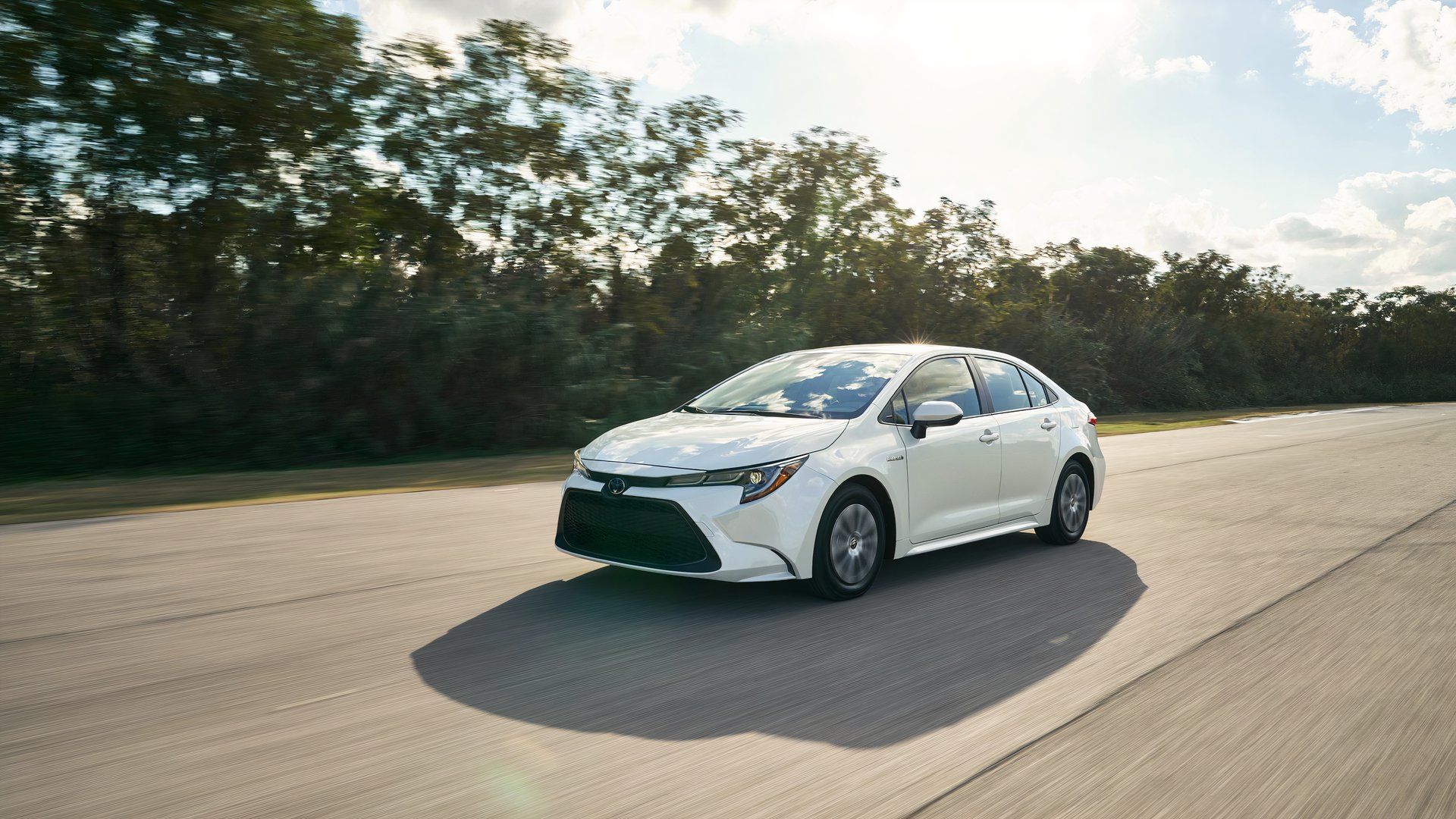
The 2020 Toyota Corolla Hybrid achieves an EPA-estimated 52 mpg combined, pairing exceptional fuel efficiency with daily usability, a comfortable ride, and a comprehensive suite of safety features, though it compromises on raw acceleration speed and rear-seat cargo versatility compared to hatchback alternatives.
When Toyota introduced a hybrid variant to the twelfth-generation Corolla lineup for the 2020 model year, it marked a significant milestone for the world's best-selling nameplate. For decades, the Corolla was known primarily as a dependable, budget-friendly commuter car rather than an efficiency pioneer in its class. By adapting the Prius powertrain for the traditional sedan format, Toyota created a compelling option for drivers seeking hybrid fuel economy without the polarizing styling of a dedicated alternative-energy vehicle. Evaluating the 2020 Toyota Corolla Hybrid requires examining how its fuel economy metrics, driving dynamics, interior packaging, and everyday practicality intersect to form a cohesive package for modern drivers.
Understanding the Powertrain and Mechanical Foundation
The heart of the 2020 Toyota Corolla Hybrid is its Hybrid Synergy Drive system, which pairs a 1.8-liter four-cylinder gas engine operating on the Atkinson cycle with two electric motor-generators. This setup is managed through an electronically controlled planetary-type continuously variable transmission (e-CVT).
Unlike traditional stepped automatic transmissions, the e-CVT seamlessly blends power from the gasoline engine and the electric motors. The system generates a combined net output of 121 horsepower. While this figure is modest, hybrid powertrains deliver immediate torque from the electric motor off the line, giving the car a responsive feel in low-speed urban driving environments.
The vehicle utilizes Toyota’s New Global Architecture (TNGA-C) platform. This structural foundation brought a lower center of gravity, increased torsional rigidity, and a multi-link rear suspension to the Corolla sedan for the 2020 model year. These engineering enhancements directly affect both performance and ride quality, transforming the Corolla from a purely utilitarian appliance into a composed, stable cruiser.
Fuel Economy (MPG): Real-World Efficiency and Mechanics
Fuel economy is the primary reason buyers cross-shop hybrid vehicles, and the 2020 Corolla Hybrid delivers remarkable figures that match or exceed EPA estimates in everyday driving conditions.
EPA Estimates vs. Real-World Performance
The EPA rates the 2020 Toyota Corolla Hybrid at an impressive 53 mpg city, 52 mpg highway, and 52 mpg combined. Achieving these numbers relies on the car's ability to seamlessly switch between gas and electric power, capture kinetic energy through regenerative braking, and shut down the internal combustion engine during idle stops.
In real-world testing and owner reporting, these figures prove remarkably attainable. Drivers who maintain a smooth, anticipatory driving style frequently match or exceed the 52 mpg combined rating, particularly in heavy urban traffic where hybrid systems operate at peak efficiency. On sustained highway trips, fuel economy typically settles between 48 and 52 mpg, depending on terrain, ambient temperature, and cruising speed.
Driving Modes and Efficiency Aids
The Corolla Hybrid features three distinct selectable driving modes that allow drivers to tailor the vehicle's response to their efficiency goals:
- ECO Mode: Softens throttle response and optimizes climate control operation to maximize fuel economy.
- POWER Mode: Sharpens throttle input to provide a more urgent acceleration feel, though it does not increase total horsepower.
- EV Mode: Allows the car to run on pure electric power for short distances at low speeds, provided the high-voltage battery has sufficient charge and the engine is warm.
Regenerative braking also plays a vital role in maintaining high efficiency. When the driver lifts off the accelerator or applies the brakes, the electric motor acts as a generator, slowing the vehicle down while converting kinetic energy into electricity to recharge the nickel-metal hydride (Ni-MH) battery pack.
Performance and Driving Dynamics
Assessing the performance of the 2020 Toyota Corolla Hybrid requires contextualizing its mission profile. This vehicle is engineered for supreme efficiency and serene daily commuting, not aggressive track driving or spirited weekend mountain runs.
Acceleration and Power Delivery
With 121 horsepower moving a curb weight of roughly 3,050 pounds, acceleration is leisurely. Zero to 60 mph takes approximately 10.7 seconds. Passing slower traffic on two-lane highways requires advanced planning, as the gas engine and electric motors work near their capacity under full throttle, accompanied by the characteristic drone of the e-CVT under heavy loads.
However, within urban and suburban parameters—stop-and-go commuting, merging onto congested expressways, and maintaining city speeds—the electric motor assistance provides smooth, linear power delivery without hesitation or gear-hunting.
Ride Quality and Handling
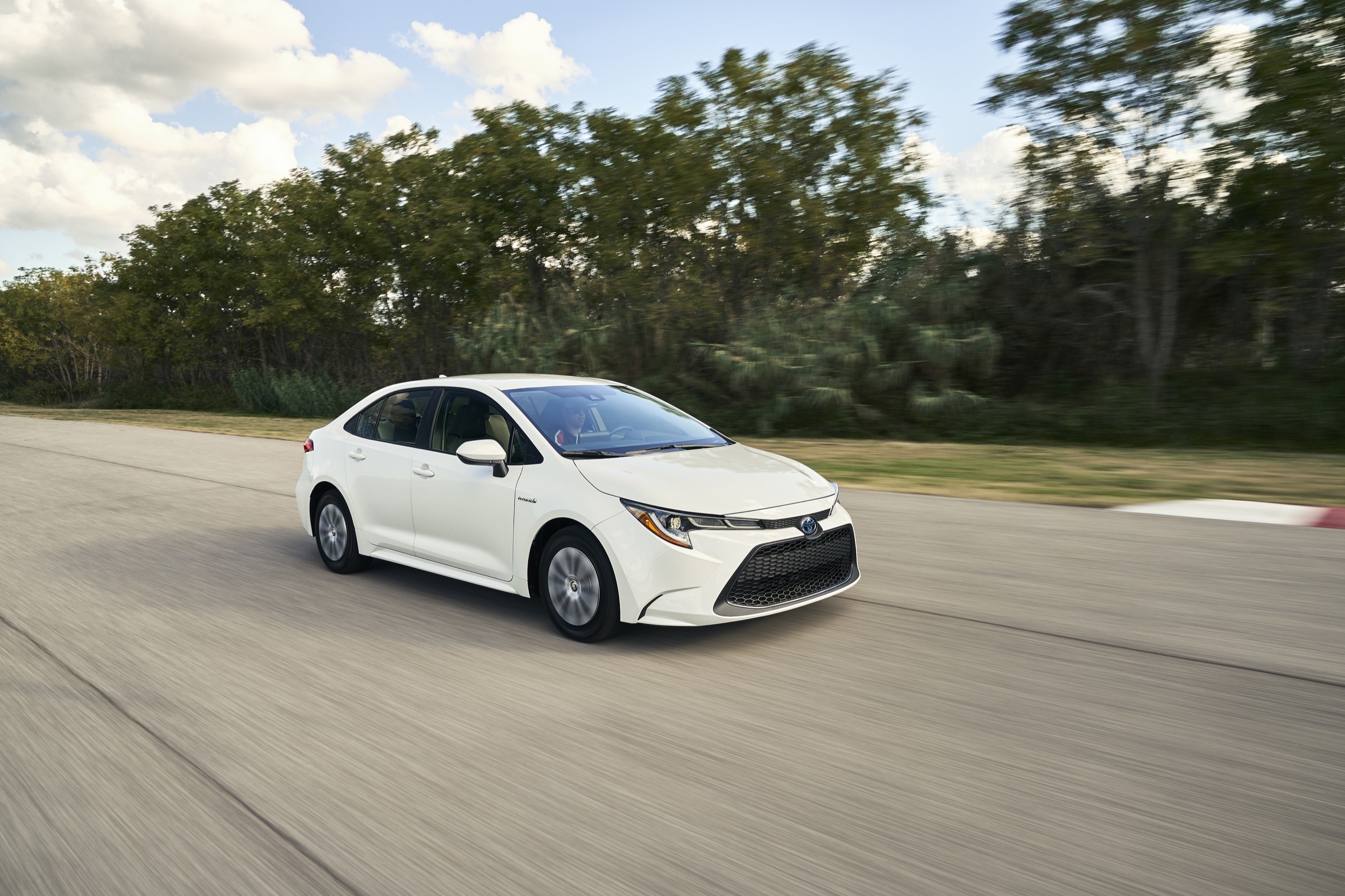
The TNGA-C platform and independent multi-link rear suspension give the 2020 Corolla Hybrid a surprisingly refined ride. Body roll is well-controlled through corners, and the steering is weighted appropriately with decent center feel. While the low-rolling-resistance tires prioritize longevity and efficiency over ultimate cornering grip, the chassis inspires confidence. Ride comfort is a notable strength; the suspension absorbs road imperfections, potholes, and expansion joints with composure, keeping the cabin settled and quiet during long highway journeys.
| Performance Metric | Specification / Behavior |
|---|---|
| Combined Horsepower | 121 hp |
| Transmission | Electronically controlled CVT (e-CVT) |
| 0-60 mph Time | ~10.7 seconds |
| EPA Fuel Economy | 53 City / 52 Hwy / 52 Combined MPG |
| Battery Type | Sealed Nickel-Metal Hydride (Ni-MH) |
| Suspension | MacPherson strut front / Multi-link rear |
Interior Practicality, Packaging, and Comfort
Packaging a hybrid system into a compact sedan often forces compromises in passenger room or cargo capacity. Toyota mitigated these concerns in the 2020 model by positioning the hybrid battery beneath the rear seat cushion rather than taking up trunk space.
Passenger Space and Cabin Layout
The Corolla Hybrid offers seating for five occupants. Front-seat passengers enjoy supportive seats and adequate head and legroom. The rear seats accommodate adults reasonably well, though taller passengers may find rear headroom slightly constrained by the sloping roofline compared to boxier SUV alternatives.
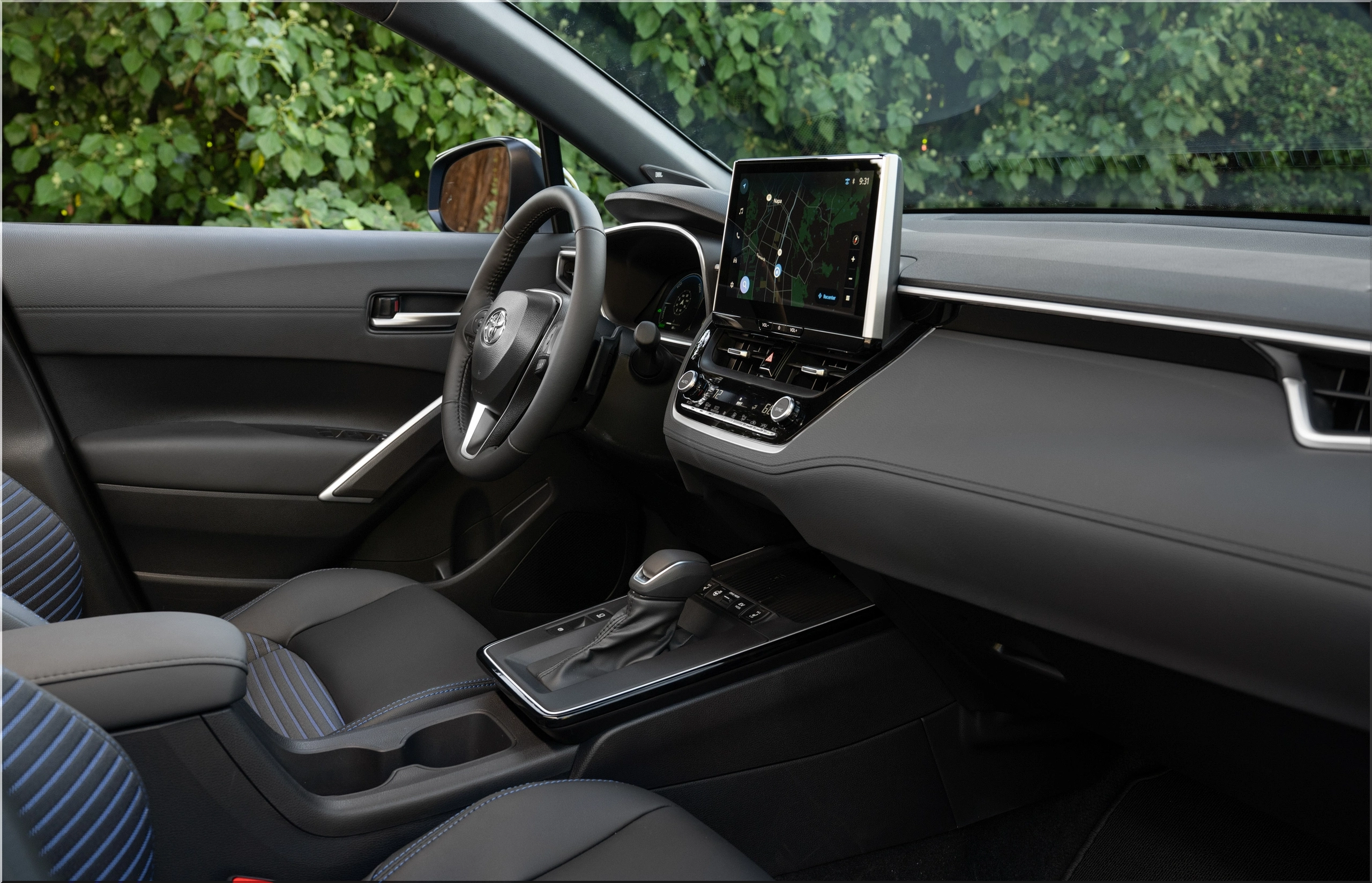
Interior materials in the LE trim—the sole trim level available for the Corolla Hybrid in 2020—feature a clean layout with soft-touch dashboard surfaces and logically arranged climate and audio controls. Fabric upholstery is standard, offering durable wear characteristics for daily use.
Cargo Capacity and Storage
Because the battery pack resides under the rear bench seat, the trunk retains its full utility, offering 13.1 cubic feet of cargo space. This matches the capacity of the non-hybrid gasoline Corolla sedan. The 60/40 split-folding rear seatbacks fold down to accommodate longer items, though the pass-through opening is somewhat restricted by structural reinforcement braces behind the seats.
Cabin storage includes deep door pockets, a center console storage bin, a glove compartment, and dual front cup holders, providing ample space for personal items, beverages, and mobile devices.
Technology, Safety, and Standard Features
The 2020 model year brought significant technological updates to the Corolla lineup, ensuring the hybrid variant felt modern and well-equipped.
Infotainment and Connectivity
The standard infotainment system features an 8-inch touchscreen mounted prominently on the dashboard. Standard connectivity features include:
- Apple CarPlay integration (Android Auto was not integrated into Toyota models until the following year).
- Amazon Alexa compatibility.
- Bluetooth hands-free phone capability and audio streaming.
- Wi-Fi Connect capability powered by Verizon.
- USB 2.0 media port.
While physical buttons and knobs supplement the touchscreen for primary audio and climate functions, the interface is straightforward and responsive, minimizing driver distraction.
Safety Suite: Toyota Safety Sense 2.0 (TSS 2.0)
Every 2020 Corolla Hybrid comes standard with Toyota Safety Sense 2.0, a comprehensive suite of advanced driver-assistance systems. This package includes:
- Pre-Collision System with Pedestrian Detection (PCS w/PD)
- Lane Departure Alert with Steering Assist (LDA w/SA)
- Automatic High Beams (AHB)
- Full-Speed Range Dynamic Radar Cruise Control (DRCC)
- Lane Tracing Assist (LTA)
- Road Sign Assist (RSA)
These systems provide robust active safety support during highway cruising and urban commuting, contributing to the vehicle's high safety ratings from organizations like the IIHS (Insurance Institute for Highway Safety) and NHTSA (National Highway Traffic Safety Administration).
Pros and Cons of the 2020 Toyota Corolla Hybrid
Objectively weighing the advantages and limitations of this vehicle helps clarify whether it aligns with specific driving needs.
Advantages
- Class-Leading Fuel Economy: Achieving over 50 mpg consistently reduces fuel expenditure significantly.
- Uncompromised Trunk Space: Battery placement under the rear seat preserves full trunk volume.
- Standard Advanced Safety: TSS 2.0 equips the base model with top-tier driver-assistance features.
- Refined Ride Quality: The TNGA platform and multi-link suspension deliver a smooth, stable ride.
- Proven Reliability: Toyota's long-standing hybrid engineering record supports low long-term maintenance costs.
Limitations
- Sluggish Acceleration: 121 horsepower makes highway passing and spirited driving challenging.
- No Android Auto Support: The 2020 model year lacks factory Android Auto integration (Apple CarPlay only).
- Single Trim Level: Buyers in 2020 could only purchase the hybrid in the LE trim, limiting options for luxury or sport-oriented features.
- Cabin Noise: Engine drone under hard acceleration and road noise at highway speeds are noticeable.
- Sedan Body Style Restrictions: Lacks the cargo flexibility of a hatchback or compact crossover.
Frequently Asked Questions
Does the 2020 Toyota Corolla Hybrid require plugging in to charge?
No. The 2020 Corolla Hybrid is a traditional hybrid electric vehicle (HEV), meaning it self-charges entirely through regenerative braking and the internal combustion engine. It cannot and does not need to be plugged into an external power source or electric vehicle charger.
How reliable is the hybrid battery in the 2020 Corolla?
Toyota has a long-standing track record with hybrid battery durability, utilizing advanced thermal management systems to preserve battery health. For the 2020 model year, Toyota offered a hybrid battery warranty of 10 years or 150,000 miles, providing significant reassurance regarding long-term reliability and component longevity.
Can you fit bulky items in the trunk of the Corolla Hybrid?
The trunk provides 13.1 cubic feet of space, identical to the standard gas-powered Corolla sedan, and features folding rear seats. While it handles groceries, luggage, and golf clubs easily, bulky or boxy items may struggle to fit through the sedan trunk opening compared to a hatchback or SUV.
Does the 2020 Corolla Hybrid support Android Auto?
No. While the 2020 Corolla Hybrid features Apple CarPlay and Amazon Alexa compatibility as standard equipment, Android Auto was not added to the Toyota Corolla lineup until the subsequent 2021 model year.
Is the Corolla Hybrid more expensive to maintain than a regular car?
Maintenance costs for the Corolla Hybrid are generally comparable to—or lower than—a traditional gasoline car. Because of regenerative braking, brake pad wear is significantly reduced. The vehicle uses standard synthetic oil and does not require expensive clutch replacements or alternator changes, making maintenance straightforward and economical.
Conclusion and Buying Recommendation
The 2020 Toyota Corolla Hybrid successfully bridges the gap between ultra-high fuel efficiency and everyday vehicular practicality. Its 52 mpg combined rating drastically cuts fuel costs, while its comfortable ride, uncompromised trunk space, and comprehensive safety suite make it an ideal commuter car.
While buyers seeking brisk acceleration, Android Auto connectivity, or versatile hatchback cargo configurations may need to look elsewhere or consider a later model year, efficiency-focused drivers will find the 2020 Corolla Hybrid to be an exceptionally reliable, cost-effective, and sensible transportation choice.