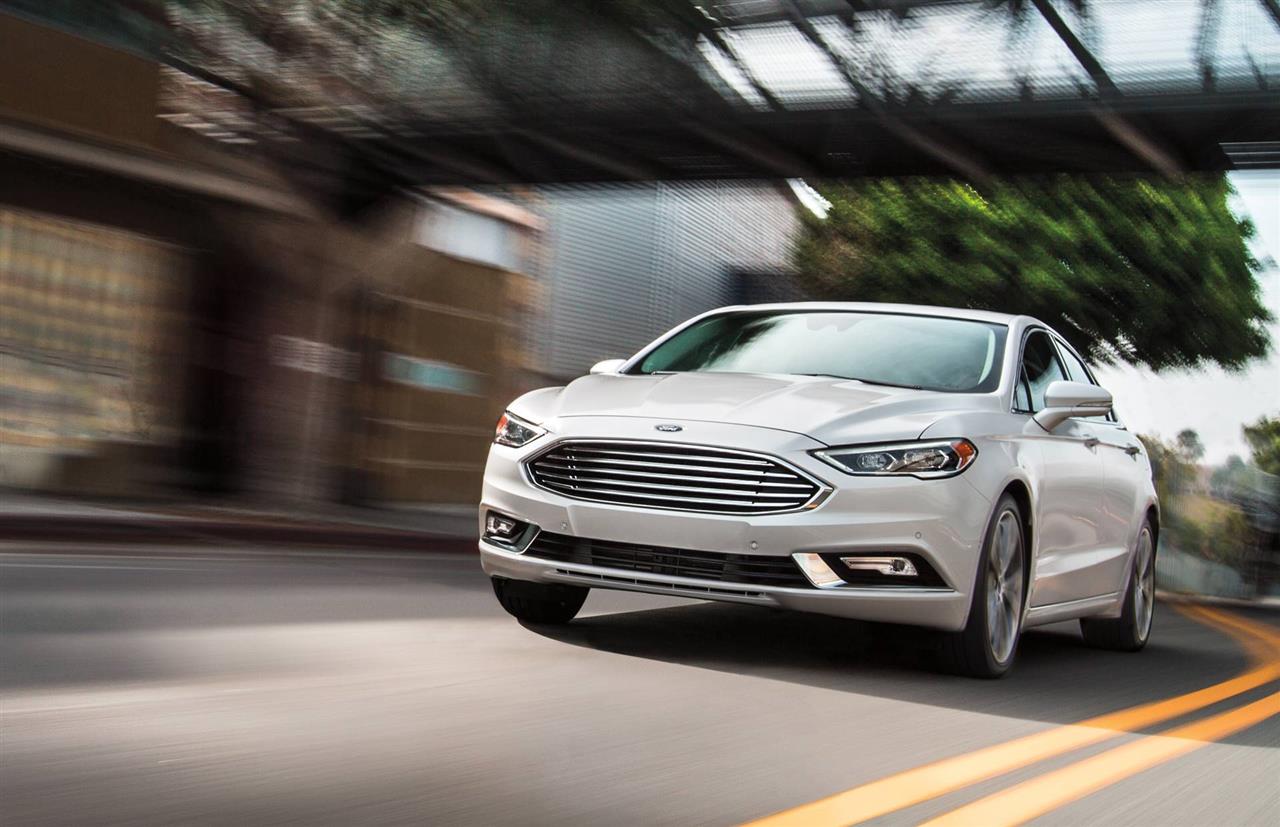
The 2020 Ford Fusion Titanium Hybrid represents the pinnacle of efficiency and refinement for the final full production year of Ford’s iconic midsize sedan. Combining a 2.0-liter iVCT Atkinson-cycle I-4 engine with an electric motor and an electronic continuously variable transmission, this trim level delivers an EPA-estimated fuel economy of 43 mpg city and 41 mpg highway while offering upscale leather-trimmed seating, advanced driver-assistance technologies, and a premium Sony audio system.
Identity and Scope of the 2020 Ford Fusion Titanium Hybrid
The 2020 model year marked the final chapter for the Ford Fusion line in North America, as Ford shifted its corporate focus toward sport utility vehicles and trucks. Within this final lineup, the Titanium trim served as the apex of luxury and technology for the hybrid powertrain variant. Positioned above the S, SE, and SEL trims, the Titanium Hybrid bridged the gap between everyday fuel-efficient commuting and upscale executive comfort.
Understanding this vehicle requires looking closely at its dual nature. On one hand, it is a practical, aerodynamic midsize sedan designed to extract maximum mileage from every gallon of gasoline. On the other hand, it functions as a feature-rich cruiser equipped with amenities typically found in entry-level luxury vehicles. For buyers exploring the used car market or evaluating late-model eco-friendly sedans, the Titanium Hybrid offers a compelling blend of low operational costs and high-end cabin features.
Powertrain Mechanics and Fuel Economy Performance
At the core of the 2020 Ford Fusion Titanium Hybrid is a sophisticated powertrain designed to balance performance with ecological responsibility. The mechanical setup pairs a 2.0-liter Atkinson-cycle four-cylinder engine with an electric traction motor powered by a lithium-ion battery pack. Together, they generate a net system horsepower of 188.
The Atkinson-cycle engine differs from traditional internal combustion engines by keeping the intake valves open longer during the compression stroke. This design trades low-end torque for superior thermal efficiency, which is where the electric motor steps in. The electric motor provides instantaneous torque from a standstill, ensuring that the vehicle accelerates smoothly without lagging.
Transmission and Drivetrain Dynamics
Power is routed to the front wheels via an Electronic Continuously Variable Transmission (eCVT). Unlike stepped automatic transmissions, the eCVT uses a planetary gear set to seamlessly blend power from the gasoline engine and the electric motor. This results in uninterrupted acceleration curves without traditional shift shock.
Efficiency Metrics
The EPA-estimated fuel economy ratings for the 2020 Fusion Titanium Hybrid stand at:
- City: 43 mpg
- Highway: 41 mpg
- Combined: 42 mpg
These figures are aided by regenerative braking, a system that captures kinetic energy usually lost during deceleration and converts it into electricity to recharge the 1.4 kWh lithium-ion battery.
Exterior Design and Aerodynamic Styling
The exterior of the 2020 Ford Fusion Titanium Hybrid retains the sleek, European-inspired silhouette that made the second-generation Fusion popular throughout its production run. The Titanium trim adds distinct aesthetic touches that differentiate it from lower-tier models.
Key exterior design elements include:
- Unique Grille: A bright chrome mesh upper grille that gives the front fascia a more upscale appearance.
- Lighting: LED signature lighting, LED fog lamps, and LED taillights that provide crisp illumination and modern styling.
- Wheels: 18-inch premium-painted aluminum wheels wrapped in all-season low-rolling-resistance tires to optimize fuel efficiency.
- Chrome Accents: Chrome door handle surrounds, window moldings, and a rear decklid applique that enhance the vehicle's refined stance.
The aerodynamic profile is not merely aesthetic; the sloping roofline, active grille shutters, and underbody aerodynamic shields work collectively to reduce drag coefficient, directly contributing to the vehicle's impressive highway fuel economy.
Interior Luxury, Comfort, and Technology Features
Stepping inside the 2020 Ford Fusion Titanium Hybrid reveals a cabin focused on driver and passenger comfort. The Titanium trim elevates the interior well beyond the standard fleet-sedan aesthetic found in base models.
Seating and Ergonomics
The cabin features leather-trimmed seating surfaces. The front seats are both heated and ventilated, offering 10-way power adjustability for the driver (with memory settings) and 6-way power adjustability for the front passenger. The steering wheel is wrapped in leather and includes heating functionality, a welcome feature for cold-weather driving.
Infotainment and Connectivity
Technology integration is anchored by the SYNC 3 system, displayed on an 8-inch capacitive touchscreen. SYNC 3 supports Apple CarPlay and Android Auto integration, allowing seamless smartphone mirroring for navigation, messaging, and media streaming. Voice recognition capability comes standard.
Audiophiles benefit from a 12-speaker Sony audio system featuring HD Radio and SiriusXM capability. Instrument cluster information is delivered via two configurable 4.2-inch LCD displays flanking a central analog speedometer, allowing the driver to monitor power flow, fuel economy history, and battery status in real time.
Safety and Driver-Assistance Systems
The 2020 Ford Fusion Titanium Hybrid came comprehensively equipped with Ford Co-Pilot360 Assist, a suite of advanced driver-assistance technologies designed to enhance road safety and driver awareness.
| Feature Name | Primary Function | Operational Scope |
|---|---|---|
| Pre-Collision Assist with Automatic Emergency Braking | Detects potential frontal collisions with vehicles or pedestrians. | Applies brakes automatically if the driver fails to react in time. |
| Blind Spot Information System (BLIS) | Monitors blind spots for adjacent vehicles. | Illuminates warning lights in side mirrors and chimes if a turn signal is active. |
| Lane-Keeping System | Detects unintentional drifting outside lane markings. | Provides steering wheel vibrations or corrective steering torque. |
| Rear View Camera | Provides a video feed of the area directly behind the vehicle. | Features dynamic gridlines to assist with reversing and parking maneuvers. |
| Adaptive Cruise Control with Stop-and-Go | Maintains a set following distance from the vehicle ahead. | Can bring the vehicle to a complete standstill and resume motion in traffic. |
In crash testing conducted by the National Highway Traffic Safety Administration (NHTSA), the Ford Fusion earned a 5-star overall safety rating, reflecting strong structural integrity and occupant protection capabilities.
Practicality, Cargo Space, and Packaging Trade-offs
While hybrids offer exceptional fuel efficiency, their mechanical complexity introduces specific packaging considerations, particularly regarding cargo capacity.
Trunk Space Limitations
Because the lithium-ion battery pack must be housed within the vehicle architecture, the 2020 Fusion Hybrid sacrifices some trunk space compared to its non-hybrid counterpart. The gasoline-powered Fusion provides 16.0 cubic feet of trunk volume, whereas the Hybrid variant offers 12.0 cubic feet.
While 12 cubic feet remains adequate for weekly groceries, luggage, or golf clubs, the battery intrusion creates a raised floor section at the rear of the trunk, limiting the vertical loading height. Furthermore, due to the battery placement behind the rear seats, the rear seatbacks do not fold down to pass through long items, which restricts the vehicle's utility for transporting oversized cargo.
Passenger Accommodations
Passenger space remains largely uncompromised. Front-seat occupants enjoy ample legroom and headroom, while the rear seats accommodate up to three passengers comfortably, offering 38.3 inches of legroom.
Ownership Costs, Maintenance, and Reliability
Operating a 2020 Ford Fusion Titanium Hybrid involves distinct financial and maintenance considerations. Understanding these factors helps prospective buyers assess long-term value.
Routine Maintenance
Maintenance requirements for the hybrid model mirror those of standard internal combustion vehicles in many aspects—requiring regular oil changes, engine air filter replacements, and tire rotations. However, certain components experience less wear:
- Brake Longevity: Thanks to regenerative braking, which uses the electric motor to slow the car, physical brake pads and rotors typically experience significantly extended lifespans compared to non-hybrid sedans.
- Fluid Checks: Routine coolant checks for both the engine and the hybrid electronics cooling system are necessary.
Battery Reliability and Warranty
Ford equipped the high-voltage battery on the 2020 Fusion Hybrid with an 8-year/100,000-mile federal emissions warranty (extending to 10 years/150,000 miles in California-emissions states). Lithium-ion battery degradation over time is mitigated by liquid thermal management systems designed to keep the battery operating within optimal temperature ranges.
Comparison: Titanium Hybrid vs. Lower Trims and Competitors
To fully grasp the value proposition of the 2020 Ford Fusion Titanium Hybrid, it is helpful to compare it against other trim levels within the same model family, as well as primary market rivals from that era.
Titanium vs. SEL Hybrid
While the SEL Hybrid offers a well-appointed cabin with synthetic leather seating and standard SYNC 3, the Titanium trim introduces premium upgrades that justify its higher original price point:
- Genuine leather seating surfaces with ventilation.
- Heated steering wheel.
- 12-speaker Sony audio system (replacing the 11-speaker or 6-speaker setups).
- 18-inch wheels versus the SEL's 17-inch wheels.
- Standard sunroof and exterior chrome styling enhancements.
Market Competitors
In the midsize hybrid sedan market, the Fusion Titanium competed directly with models such as the Toyota Camry Hybrid and the Honda Accord Hybrid.
- Toyota Camry Hybrid: Generally held an advantage in raw fuel economy (approaching 50+ mpg depending on the sub-trim) and long-term resale value, though some drivers criticized its continuously variable transmission drone and interior material quality compared to the Fusion.
- Honda Accord Hybrid: Offered class-leading rear legroom and sporty driving dynamics, alongside exceptional fuel economy ratings. However, the Fusion Titanium countered with a quieter, more insulated cabin feel and more traditional luxury styling touches.
Frequently Asked Questions
Can the 2020 Ford Fusion Titanium Hybrid run on electricity alone?
Yes, the vehicle can operate in pure electric mode under light acceleration and low speeds, typically when the battery has sufficient charge and demand on the powertrain is minimal. However, the gasoline engine will automatically engage when accelerating briskly, climbing hills, or driving at highway speeds.
Does the 2020 Ford Fusion Hybrid require a charging cable or plug-in?
No. The 2020 Fusion Hybrid is a traditional self-charging hybrid, not a plug-in hybrid (PHEV) like the Fusion Energi model. The battery is recharged entirely through regenerative braking and surplus energy generated by the gasoline engine.
Why do the rear seats not fold down in the Fusion Hybrid?
The high-voltage lithium-ion battery pack is positioned directly behind the rear seatback bulkheads to optimize weight distribution and crash safety. This packaging decision prevents the installation of a pass-through or folding rear seat mechanism.
What is the fuel tank capacity and total driving range?
The fuel tank holds 14.0 gallons of regular unleaded gasoline. Combined with an EPA rating of 42 mpg, the vehicle is capable of achieving a theoretical cruising range of nearly 580 miles on a single tank of fuel under ideal highway and city driving conditions.
Is premium gasoline required for the 2020 Fusion Hybrid?
No. The 2.0-liter Atkinson-cycle engine is engineered to run efficiently on standard 87-octane regular unleaded gasoline, helping to minimize ongoing refueling operational costs.
Conclusion and Buying Recommendation
The 2020 Ford Fusion Titanium Hybrid stands out as a refined, comfortable, and efficient midsize sedan. For drivers seeking the comfort of leather seating, advanced safety suites, and high fuel economy without the complexity of managing charging cables, this model delivers a balanced ownership experience. While cargo flexibility is compromised by the hybrid battery placement, the vehicle's highway cruising stability, quiet cabin, and low fuel consumption make it an enduring choice for daily commuters and road-trip enthusiasts alike.