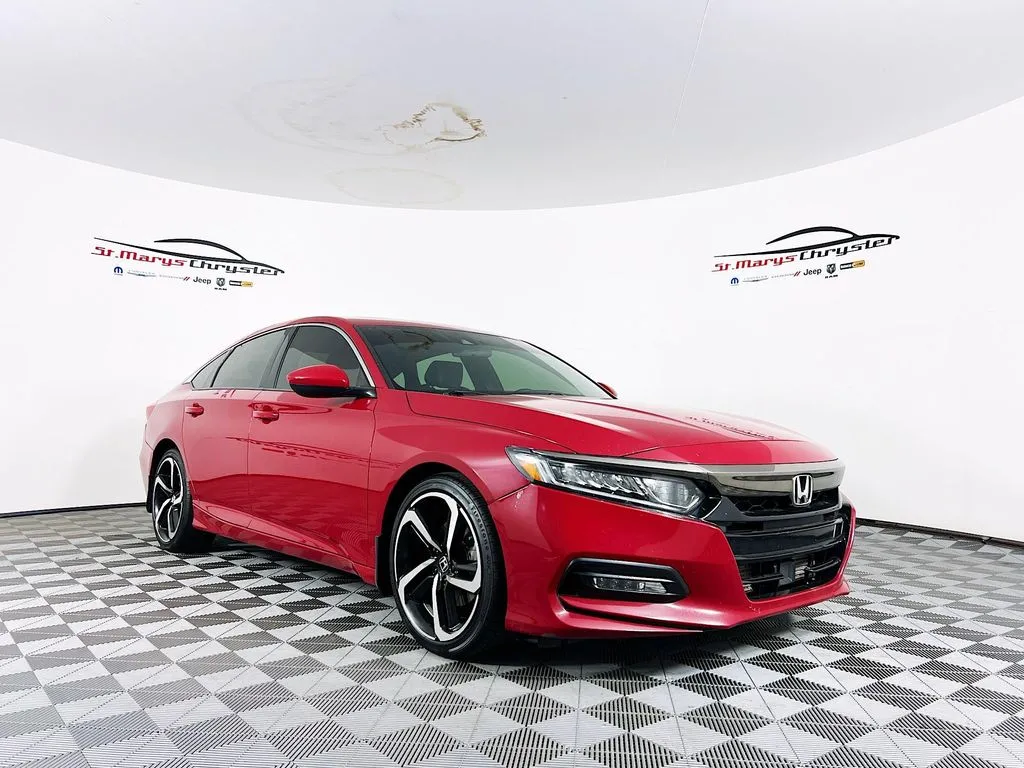
The 2019 Honda Accord Sport 2.0T delivers a factory-verified 0-60 mph acceleration time of approximately 5.7 to 5.8 seconds. This performance is facilitated by its 2.0-liter turbocharged four-cylinder engine, which produces 252 horsepower and 273 lb-ft of torque, bridging the gap between a practical family sedan and a legitimate sports-oriented vehicle.
The 2019 Honda Accord represents the tenth generation of one of the most successful nameplates in automotive history. Among the various trim levels available for the 2019 model year, the Sport 2.0T stands out as the enthusiast’s choice. While the base 1.5-liter engine offers efficiency, the 2.0T variant transforms the Accord’s personality, providing a level of acceleration that surprised many critics upon its release. Understanding the performance metrics of this vehicle requires a look at the interplay between its powertrain, transmission options, and chassis engineering.
The Engine Dynamics: K20C4 Architecture
At the heart of the 2019 Accord Sport 2.0T is the K20C4 engine. This unit is a detuned version of the powerplant found in the Civic Type R. By utilizing a twin-scroll turbocharger, the engine minimizes lag, allowing for a broad torque curve that remains flat from 1,500 to 4,000 RPM. This is the primary driver behind its 0-60 mph performance.
Unlike naturally aspirated engines that require high revolutions to reach peak power, the 2.0T provides a surge of low-end grunt. This allows the driver to achieve impressive acceleration figures without needing to aggressively downshift or push the engine to its redline in every gear. The engine features direct fuel injection and dual-variable timing control, which balances the aggressive performance output with Honda’s standard for long-term reliability.
Transmission Options and Their Impact on Acceleration
The performance feel of the 2019 Accord Sport 2.0T is heavily influenced by the transmission choices available to the buyer. During the 2019 model year, Honda offered two distinct transmission setups for this trim:
- The 10-Speed Automatic: This transmission is the most common and often yields the most consistent 0-60 mph times. Its short first gear provides an excellent "launch," while the close-ratio spacing keeps the engine in its optimal power band throughout the acceleration run. The 10-speed unit shifts rapidly, often faster than a human could manage with a manual transmission, which contributes to the sub-6-second performance times recorded by independent testing outlets.
- The 6-Speed Manual: For purists, the 6-speed manual transmission was available. While this setup requires more driver skill to achieve optimal 0-60 mph times, it offers a more engaging tactile experience. Achieving a 5.7 or 5.8-second time with the manual version requires a perfect launch and precise shifts, as the penalty for wheel spin or slow gear changes is more pronounced compared to the automated shifting of the 10-speed.
Real-World Performance vs. Official Specifications
When discussing performance metrics like 0-60 mph times, it is essential to distinguish between factory claims and independent real-world testing. Honda, like many manufacturers, focuses on conservative performance estimates for general consumers. However, when road-tested by automotive publications using standardized equipment on prepared surfaces, the 2019 Accord Sport 2.0T consistently performed in the high 5-second range.
Several factors influence these times in daily use:
- Tire Grip: The stock tires provided on the Sport trim are focused on a balance of longevity and handling. Upgrading to high-performance summer tires can marginally improve launch traction, effectively shaving milliseconds off the 0-60 sprint.
- Surface Temperature and Altitude: Turbocharged engines are sensitive to ambient air density. On cooler, dense-air days at sea level, the engine performs at its peak. Conversely, at higher altitudes or in extreme heat, the turbocharger must work harder to compress air, which can slightly increase acceleration times.
- Fuel Grade: The 2.0T engine is designed to run optimally on premium unleaded gasoline (91 octane or higher). While it can safely operate on regular fuel, the engine management system will retard ignition timing to prevent knocking, which inevitably results in a reduction of available horsepower and torque.
Handling and Chassis Dynamics
A car’s ability to accelerate is only part of its "performance" profile. The 2019 Accord Sport 2.0T features a MacPherson strut front suspension and a multi-link rear setup. This chassis architecture provides a level of stability that allows the driver to deploy the 252 horsepower confidently.
The Sport trim also includes larger stabilizer bars and specific damper tuning that reduces body roll during hard acceleration and cornering. When accelerating from a stop, the car exhibits minimal torque steer—a common issue in high-powered front-wheel-drive vehicles. Honda’s engineers utilized specific suspension geometry to ensure that the power is transferred to the pavement effectively, keeping the car composed even during aggressive throttle application.
Comparison of Performance Metrics
To understand where the 2019 Accord Sport 2.0T fits within its segment, one must compare it to its peers from the same era. The following table highlights key performance and powertrain specifications for context.
| Vehicle Model | Engine | HP | 0-60 Time (Approx.) | Transmission |
|---|---|---|---|---|
| 2019 Accord Sport 2.0T | 2.0L Turbo I4 | 252 | 5.7 - 5.8s | 10-Speed Auto / 6-Speed Manual |
| 2019 Toyota Camry SE | 2.5L I4 | 203 | 7.6s | 8-Speed Auto |
| 2019 Ford Fusion Sport | 2.7L Twin-Turbo V6 | 325 | 5.3s | 6-Speed Auto |
| 2019 Mazda6 Signature | 2.5L Turbo I4 | 250 | 6.4s | 6-Speed Auto |
As shown in the table, the Accord Sport 2.0T occupies a "sweet spot." It is significantly faster than the standard mid-size sedan offerings but remains more accessible and fuel-efficient than the more expensive, all-wheel-drive performance sedans like the Ford Fusion Sport.
Maintenance Considerations for Performance Longevity
Maintaining the performance of the 2019 Accord Sport 2.0T requires adherence to the maintenance schedule, specifically regarding forced-induction components.
- Oil Change Frequency: Turbocharged engines generate higher thermal loads on engine oil. Using full synthetic oil that meets the manufacturer's specification is critical. Frequent oil changes are recommended for drivers who frequently utilize the car's performance capabilities.
- Cooling System Health: The intercooler is essential for keeping intake temperatures low. Ensuring the front grille remains free of debris allows for optimal airflow, which keeps the charge air cool and maintains the engine's power output.
- Air Filter Integrity: A clean engine air filter is vital for a turbocharged engine. As the turbo draws in large volumes of air, any restriction in the intake path directly impacts boost pressure and overall acceleration.
Common Performance-Related Questions (FAQ)
Does the 2019 Accord Sport 2.0T require premium gas? While the engine can run on 87-octane regular gasoline, Honda recommends 91-octane premium for maximum power. Using lower-grade fuel may cause the engine's computer to pull timing, resulting in a noticeable reduction in the snappy acceleration that defines the 2.0T experience.
Is the 0-60 time different between the manual and automatic versions? In practical, everyday use, the 10-speed automatic is generally faster and more consistent. The manual transmission offers a more engaging experience but requires the driver to be highly skilled at launch control and power-shifting to match or beat the times achieved by the automatic.
Does the Sport trim have a different suspension than other 2.0T trims? Yes, the Sport trim features tuned dampers and larger stabilizer bars compared to the LX or EX trims. These modifications are designed to provide a firmer, more direct road feel, which complements the engine's performance output.
What is the "Sport" mode button, and how does it affect 0-60? The Sport mode button adjusts the throttle mapping, transmission shift points, and steering weight. By holding gears longer and sharpening the throttle response, Sport mode ensures the engine is always ready to deliver peak torque, which helps the driver achieve the best 0-60 performance without having to manipulate the transmission manually.
Can the 2019 Accord Sport 2.0T be easily modified for more power? There is a vibrant aftermarket community for the K20C4 platform. Software flashes (ECU tuning) can significantly increase boost and power output. However, owners should be aware that such modifications can impact the vehicle's factory warranty and may introduce additional stress on the transmission and drivetrain components.
Recommendations for Enthusiast Drivers
If you are currently driving or considering a 2019 Honda Accord Sport 2.0T for its performance credentials, your focus should be on maintaining the mechanical health of the drivetrain to ensure it continues to hit those 5.7-second marks.
Regularly monitor your tire pressure and tread depth, as this is the primary point of contact between the car's power and the road. If you find the factory-set launch characteristics are not meeting your expectations, ensure you are utilizing "Sport" mode and premium fuel before considering any mechanical or software alterations. For those seeking the most direct connection to the vehicle, the 6-speed manual remains the gold standard, provided the driver is prepared to master the nuances of the clutch and throttle engagement.
Ultimately, the 2019 Accord Sport 2.0T remains a benchmark in the mid-size sedan market. It proved that a practical family car could offer genuine performance thrills without sacrificing reliability or daily usability. Whether you are using it for a spirited drive on winding backroads or merging quickly onto a busy highway, the car’s acceleration capabilities are well-suited for a variety of driving environments.