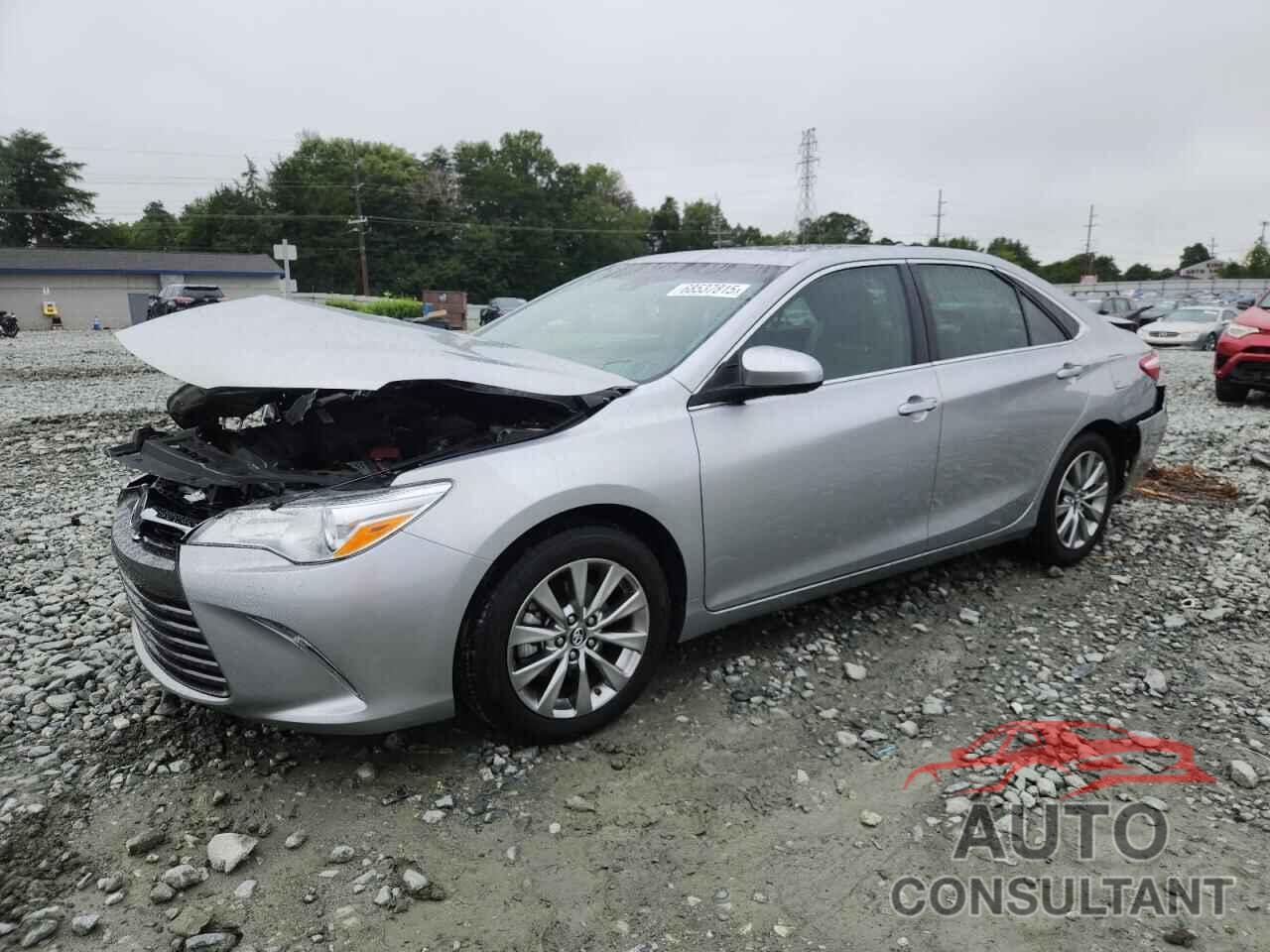
The 2016 Toyota Camry is widely regarded as one of the most reliable mid-size sedans on the used market, though it is not without specific mechanical and electronic flaws. While most owners experience years of trouble-free driving, common issues include torque converter shudder in the 6-speed transmission, infotainment system glitches, and premature wear of interior materials or braking components.
As we look at the 2016 Toyota Camry from the perspective of 2026, this vehicle has officially entered its "high-mileage" era. Most units on the road now have between 100,000 and 150,000 miles. This decade-long track record provides a clear picture of what goes wrong and how to fix it. This guide analyzes the common failure points, technical service bulletins (TSBs), and maintenance strategies for the 2016 model year.
Understanding the XV50 Platform Maturity
The 2016 Camry represents the "mid-cycle refresh" of the seventh-generation (XV50) Camry. By the time 2016 arrived, Toyota had ironed out many of the early-generation kinks seen in the 2012–2014 models. However, the introduction of more complex infotainment systems and stricter fuel economy requirements led to a specific set of new challenges.
In 2026, the 2016 Camry remains a popular choice for commuters and student drivers because of its simple engine architecture. Unlike newer vehicles that rely heavily on small-displacement turbocharged engines, the 2016 Camry utilizes the tried-and-true 2.5L 2AR-FE four-cylinder or the 3.5L 2GR-FE V6. Both engines are known for their longevity, but the supporting systems—transmission, cooling, and electronics—are where the issues typically arise.
Transmission Problems: The Torque Converter Shudder
The most significant mechanical issue reported for the 2016 Toyota Camry involves the U760E 6-speed automatic transmission. This issue is often described by drivers as a "shudder," "vibration," or "stutter" occurring between 25 and 50 miles per hour.
Identifying the Shudder
The sensation feels remarkably like driving over a "rumble strip" on the shoulder of a highway. It typically occurs under light acceleration or when the vehicle is maintaining a steady speed in higher gears. This happens because the torque converter’s flex lock-up clutch is engaging and disengaging improperly or slipping.
The Fix and TSBs
Toyota issued several Technical Service Bulletins regarding this issue. The initial remedy was a software update for the Engine Control Module (ECM) to change the logic of the lock-up clutch. If the software update was not performed early enough, the physical torque converter could sustain damage, requiring a full replacement.
By 2026, any 2016 Camry still experiencing this shudder likely needs a mechanical replacement of the torque converter rather than just a software patch. Owners should also be aware that while Toyota claimed the transmission fluid was "lifetime," many mechanics now recommend a fluid exchange every 60,000 miles to prevent the buildup of contaminants that exacerbate this shudder.
Infotainment and Electronic Glitches (Entune 2.0)
For the 2016 model year, Toyota equipped the Camry with the Entune 2.0 infotainment system. While functional, it has become a primary source of frustration for owners a decade later.
Touchscreen Unresponsiveness
A common failure point is the "ghost touch" or complete unresponsiveness of the touch digitizer. Over time, the layers of the screen can delaminate or become overly sensitive to temperature fluctuations. This results in the radio changing stations on its own or the navigation map scrolling uncontrollably.
Bluetooth and Connectivity
In 2026, many modern smartphones struggle to maintain a stable connection with the older Bluetooth 3.0/4.0 protocols used in the 2016 Camry. Owners frequently report dropped calls, lagging audio, or the system failing to recognize the device upon startup.
Because the 2016 Camry does not support Apple CarPlay or Android Auto natively, many owners in the current year opt to replace the entire head unit with an aftermarket system. This is often more cost-effective than paying the $1,000+ fee at a dealership for an OEM replacement unit that lacks modern features.
Engine and Cooling System Concerns
While the engines themselves are robust, the 2016 Camry has a few peripheral engine bay components that tend to fail as the car crosses the 100,000-mile mark.
Water Pump Leaks
The 2.5L four-cylinder engine is prone to water pump failures. Owners should look for a "pink crusty" residue around the engine pulleys, which indicates dried Toyota Super Long Life Coolant. If the water pump fails completely, it can lead to rapid overheating and potential head gasket failure. In 2026, if you are buying a used 2016 Camry, checking the service history for a water pump replacement is a high priority.
VVT-i Solenoid and Oil Leaks
The Variable Valve Timing (VVT-i) system can occasionally develop a "rattle" on cold starts. This is often caused by a worn VVT-i actuator or a clogged solenoid screen due to infrequent oil changes. Additionally, minor oil weeping from the timing cover is common on the V6 models. While rarely a "catastrophic" leak, the labor cost to reseal a V6 timing cover can be significant because it often requires removing the engine from the vehicle.
Interior Quality and Build Issues
As the 2016 Camry ages, certain interior components show their wear more than others. This model year was part of an era where Toyota experimented with different adhesives and plastics that haven't always aged gracefully in hot climates.
- Dashboard Stickiness: Though less prevalent than in the 2007-2011 models, some 2016 owners in high-heat regions (like Florida or Arizona) report the dashboard material becoming "shiny" or slightly tacky to the touch.
- Sunroof Rattles: The seals around the optional power sunroof can dry out, leading to a persistent rattling sound when driving over uneven pavement. Applying a silicone-based lubricant to the seals often resolves this.
- Seat Bolster Wear: The "SofTex" synthetic leather used in the SE and XSE trims is generally durable, but the driver-side outer bolster is prone to cracking or peeling after ten years of ingress and egress.
Safety Recalls and Investigations
When researching 2016 Toyota Camry issues, it is essential to verify that all safety recalls have been addressed. You can check your specific VIN on the NHTSA website.
Major Recalls for the 2016 Model Year:
- Occupant Classification System (OCS): Some vehicles had a recall regarding the front passenger seat sensor. If the sensor was improperly calibrated, the airbag might not deploy correctly for an adult passenger or might fail to turn off for a child.
- Brake Vacuum Pump: On certain units, the brake vacuum pump could fail, leading to a sudden loss of power braking assist. This increases the physical effort required to stop the vehicle.
- Fuel Pump Failure: While more common in 2018+ models, some late-production 2016 units were caught in a broader low-pressure fuel pump recall. A failing fuel pump can cause the engine to stall while driving.
Maintenance and Repair Costs Comparison
Below is a breakdown of the estimated costs for common repairs on a 2016 Toyota Camry as of 2026. Prices vary by region and whether you use an independent mechanic or a dealership.
| Component | Common Issue | Estimated Repair Cost (2026) | Urgency |
|---|---|---|---|
| Torque Converter | Shudder/Vibration | $1,500 – $2,200 | High |
| Water Pump | Coolant Leakage | $450 – $700 | High |
| Infotainment Screen | Unresponsive Touch | $400 (Used/Aftermarket) - $1,200 (OEM) | Low |
| Brake Rotors/Pads | Pulsation/Warping | $350 – $600 (Per Axle) | Medium |
| Alternator | Charging System Failure | $400 – $650 | High |
| VVTi Actuator | Cold Start Rattle | $800 – $1,300 | Medium |
2016 Camry Hybrid Specific Issues
The 2016 Camry Hybrid remains a highly efficient vehicle in 2026, but it introduces a unique set of potential problems related to its battery and braking system.
Hybrid Battery Degradation
By 2026, the nickel-metal hydride (NiMH) battery pack in a 2016 Camry Hybrid is 10 years old. Depending on the mileage and climate, the battery may be nearing the end of its functional life. Signs of failure include a rapidly fluctuating "state of charge" on the dashboard, the gasoline engine running almost constantly, and a significant drop in MPG. Replacing the pack with a refurbished unit costs roughly $1,500, while a new OEM pack can exceed $3,000.
ABS Actuator and Brake Booster
The hybrid models use an integrated electronic braking system. The ABS actuator and brake booster pump are known to fail more frequently than the mechanical brakes on the standard Camry. If these fail, the car will display multiple warning lights (Brake, ABS, Stability Control) and may require significantly more pressure to stop. This is a high-cost repair, often exceeding $2,000.
Troubleshooting Common Symptoms
If you are experiencing issues with your 2016 Camry, use this quick troubleshooting guide to narrow down the cause:
- Vibration while braking: Usually indicates warped front brake rotors. Toyota’s OEM rotors from this era are known to thin out after repeated resurfacing. Replacement with high-quality aftermarket rotors is often a permanent fix.
- Musty smell from AC: This is a common Toyota issue where moisture builds up on the evaporator core. Replacing the cabin air filter with a charcoal-activated version and using an evaporator cleaner foam usually solves the odor.
- Delayed shifting (Cold): Often normal for this 6-speed transmission as it tries to warm up the catalytic converter, but if it persists when warm, check the transmission fluid level and condition.
- Power window speed: If the windows move slowly, the tracks likely need cleaning and lubrication with a dry silicone spray. The motors themselves are quite durable.
FAQs
Is the 2016 Toyota Camry a good car to buy in 2026?
Yes, it is considered one of the best value used cars. Its "simple" technology compared to 2026 standards makes it cheaper to maintain. While you must watch for the transmission shudder and water pump leaks, the engine and chassis are capable of lasting 250,000 miles or more with proper care.
How do I know if my 2016 Camry has the transmission shudder?
Drive the vehicle at a steady speed of 35-40 mph on a flat road. If you feel a brief, rhythmic vibration that feels like you are driving over small bumps, and it disappears when you give it more gas or take your foot off the pedal, it is likely the torque converter shudder.
Does the 2016 Camry have a timing belt or a timing chain?
Both the 2.5L 4-cylinder and the 3.5L V6 engines in the 2016 Camry use a timing chain. Unlike a timing belt, a chain is designed to last the life of the engine and does not require periodic replacement, provided you perform regular oil changes.
Why is my 2016 Camry radio screen frozen?
This is a known issue with the Entune 2.0 system. Sometimes a "soft reset" (holding down the power/volume knob for 10-15 seconds) will fix it. If the screen is physically unresponsive to touch, the digitizer has failed and the unit will likely need replacement.
Can I add Apple CarPlay to a 2016 Toyota Camry?
The factory system does not support it. In 2026, the most popular solution is to install an aftermarket head unit (from brands like Sony, Pioneer, or specialized Android-based units) that replaces the factory screen while retaining steering wheel controls and the backup camera.
Final Recommendations for Owners and Buyers
For those owning or looking to buy a 2016 Toyota Camry in 2026, the key to longevity is proactive maintenance. Do not adhere to the "lifetime" transmission fluid myth; change the fluid every 60,000 miles to protect the torque converter. Likewise, inspect the water pump at every oil change once the vehicle passes 100,000 miles.
If you are currently experiencing the "shudder" issue, seek a technician who can verify if the TSB software update was ever performed. If the software is current and the shudder persists, plan for a torque converter replacement rather than a whole new transmission, as the internal gears of the U760E are actually quite robust.
Despite these documented issues, the 2016 Camry remains a benchmark for reliability. Compared to its contemporaries, the frequency of "catastrophic" engine or transmission failure is remarkably low, making it a safe and logical choice for high-mileage transport.