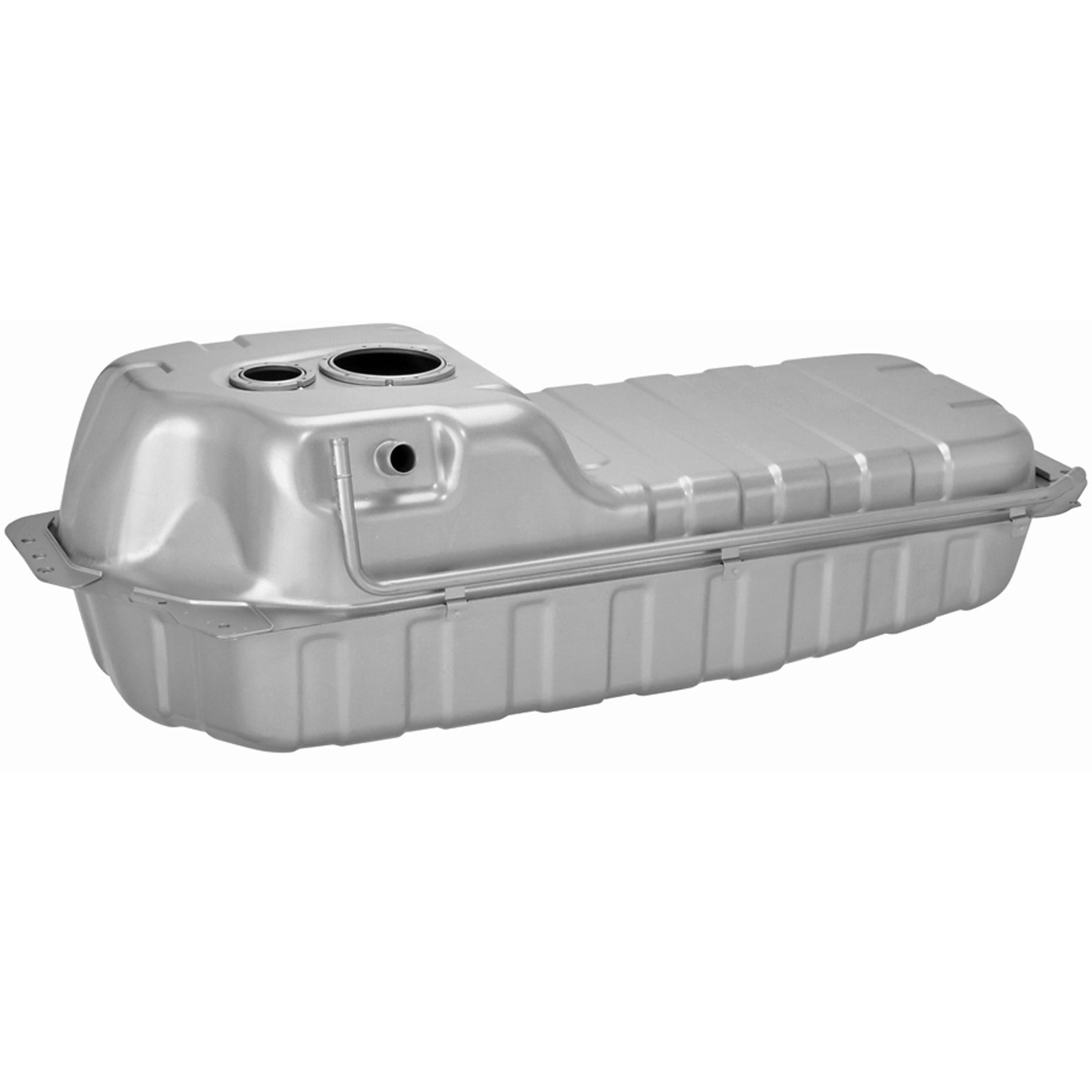
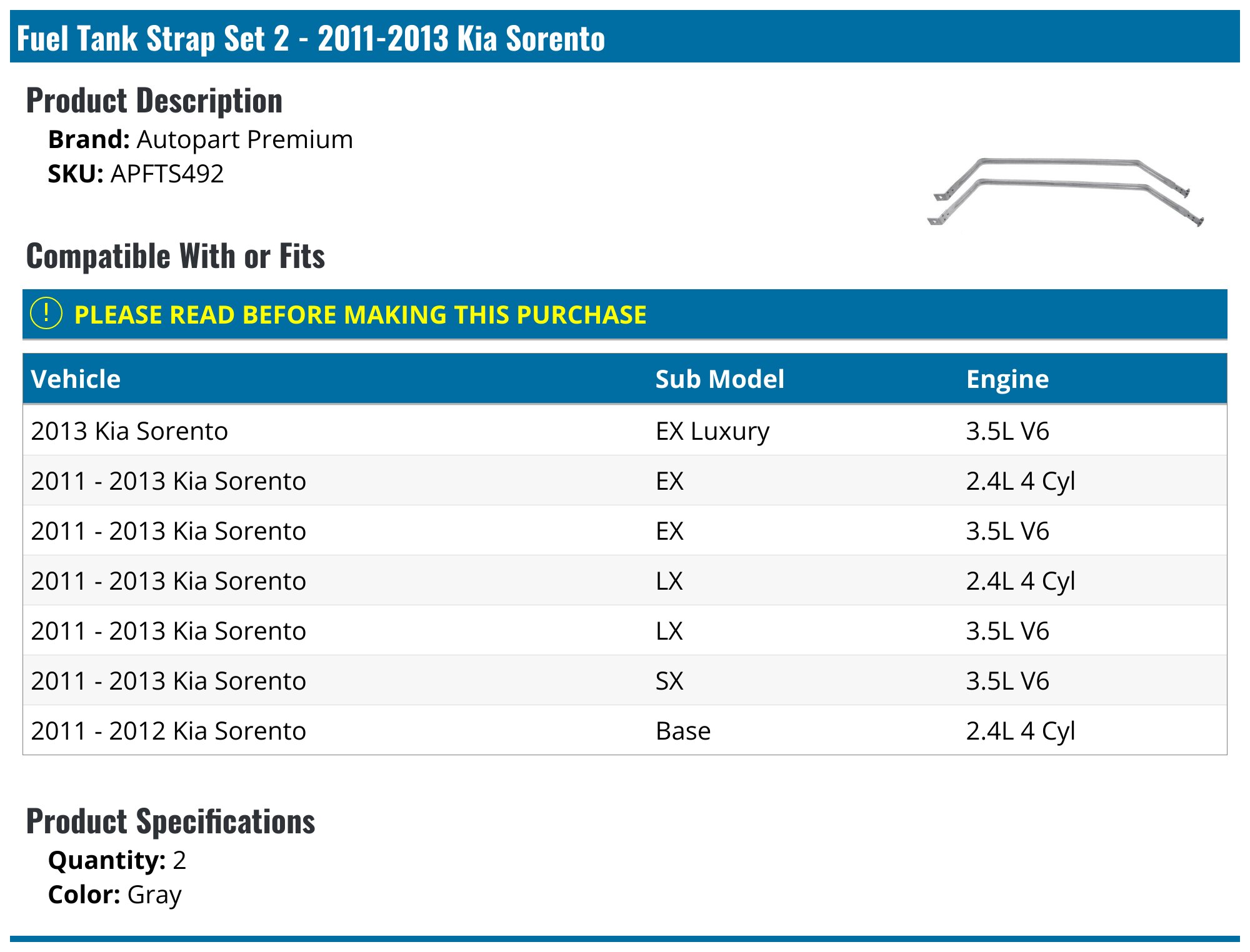
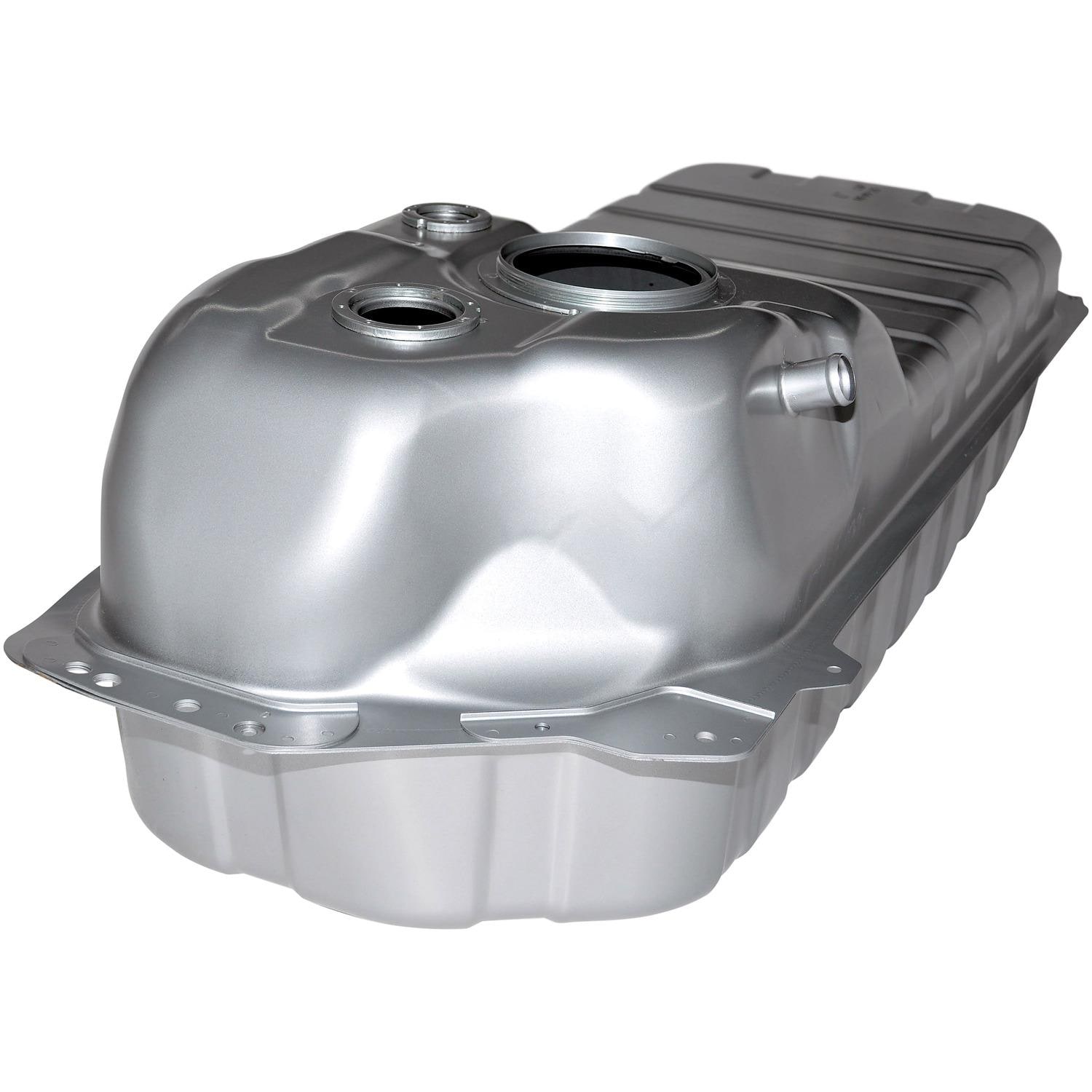
The 2011 Kia Sorento features a standard fuel tank capacity of 18.0 gallons (approximately 68 liters) across all trim levels, including the LX, EX, and SX. This capacity remains consistent regardless of whether the vehicle is equipped with the 2.4L 4-cylinder engine or the more powerful 3.5L V6 engine.
The 2011 model year represented a significant turning point for the Kia Sorento. It marked the introduction of the second generation (XM series), which shifted from a truck-based body-on-frame design to a more car-like unibody construction. This change was not just aesthetic; it fundamentally altered the vehicle's weight distribution, interior volume, and fuel efficiency. Understanding the 18-gallon fuel tank capacity is essential for owners and used-car buyers in 2026 to calculate driving range, estimate refueling costs, and understand the mechanical limits of the vehicle’s fuel system.
Understanding the 2011 Kia Sorento Fuel System
The fuel system in the 2011 Sorento is designed for efficiency and reliability in a crossover SUV format. With an 18-gallon tank, Kia engineers aimed for a balance between a respectable driving range and the physical constraints of a mid-sized crossover chassis. A larger tank would have increased the vehicle's curb weight and reduced interior floor space, while a smaller tank would have necessitated more frequent stops at the pump.
Located mid-ship, the fuel tank is positioned safely ahead of the rear axle to protect it during rear-end collisions. The system uses a pressurized fuel delivery setup involving an in-tank fuel pump and a high-pressure rail system. For the GDI (Gasoline Direct Injection) variants found in some markets, or the standard Multi-Point Injection (MPI) found in the North American 2.4L and 3.5L engines, the tank capacity remains the anchor point for all range calculations.
Detailed Fuel Capacity and Range by Engine Type
While the physical volume of the tank is 18 gallons, the "usable" range varies significantly based on the powertrain and drivetrain configuration. In 2026, many of these vehicles have high mileage, making fuel efficiency awareness even more critical for budgeting and maintenance.
The 2.4L Inline-4 Engine Efficiency
The 2.4L Theta II engine was the entry-level offering for the 2011 Sorento. It was designed for drivers who prioritized fuel economy over raw towing power.
- Front-Wheel Drive (FWD): Rated at approximately 21 city / 29 highway MPG. With an 18-gallon tank, the theoretical highway range is roughly 522 miles.
- All-Wheel Drive (AWD): Rated at approximately 21 city / 27 highway MPG. The added weight and mechanical drag of the AWD system reduce the highway range to approximately 486 miles.
The 3.5L V6 Engine Performance
The 3.5L Lambda II V6 provided a substantial boost in horsepower (276 hp) but came with a predictable trade-off in fuel consumption.
- Front-Wheel Drive (FWD): Rated at approximately 20 city / 26 highway MPG. This yields a theoretical highway range of 468 miles.
- All-Wheel Drive (AWD): Rated at approximately 18 city / 24 highway MPG. This is the least efficient configuration, offering a theoretical highway range of 432 miles on a full tank.
It is important to note that these "theoretical" ranges assume you are running the tank from 100% full to 0% empty, which is neither recommended nor practical. Most drivers will look to refuel when the low-fuel warning light illuminates, which typically happens when there are roughly 2 to 3 gallons remaining.
2011 Kia Sorento Fuel Specifications Table
| Feature | Specification Details |
|---|---|
| Fuel Tank Capacity | 18.0 Gallons (68.1 Liters) |
| Recommended Fuel Type | Regular Unleaded (87 Octane) |
| Fuel Delivery System | Multi-Point Injection (MPI) |
| Low Fuel Warning Threshold | Approx. 2.0 - 2.5 Gallons remaining |
| Estimated Range (Hwy - 2.4L FWD) | 522 Miles |
| Estimated Range (Hwy - 3.5L V6 AWD) | 432 Miles |
| Emissions Standard | ULEV-II (Ultra-Low Emission Vehicle) |
Fuel Requirements and Octane Ratings
One of the advantages of the 2011 Kia Sorento's engine design is its compatibility with standard 87-octane regular unleaded gasoline. Kia explicitly stated in the 2011 owner's manual that using premium fuel (91 or 93 octane) does not provide a measurable benefit in performance or fuel economy for these specific naturally aspirated engines.
However, the quality of the fuel matters. Kia recommends using "Top Tier" detergent gasolines to prevent carbon buildup on the intake valves and fuel injectors. As these vehicles age into 2026, the accumulation of deposits in the fuel system can lead to a decrease in effective MPG, making the choice of high-quality fuel more relevant than the octane rating itself.
Factors Affecting Real-World Fuel Range
The 18-gallon capacity is a constant, but several variables will dictate how much of that capacity translates into actual miles on the road.
Vehicle Load and Aerodynamics
The 2011 Sorento was marketed as a family vehicle, often equipped with a third-row seat. Carrying seven passengers and their luggage significantly increases the gross vehicle weight, which forces the engine to work harder during acceleration, thereby consuming more fuel. Similarly, roof racks or cargo carriers installed on the top of the vehicle create aerodynamic drag, which can reduce highway fuel economy by as much as 10% to 15%.
Driving Environment and Temperature
Cold weather is a notorious enemy of fuel efficiency. In winter conditions, gasoline engines take longer to reach their optimal operating temperature. Furthermore, winter-blend gasoline contains less energy per gallon than summer-blend. For an 18-gallon tank, these factors could result in a loss of 30 to 50 miles of total range per fill-up during the coldest months of the year.
Ethanol Content
Most modern gasoline in North America contains up to 10% or 15% ethanol (E10 or E15). Ethanol has a lower energy density than pure gasoline. While the 2011 Sorento is designed to handle E10, using fuels with higher ethanol concentrations can lead to a slight drop in the total range available from the 18-gallon tank.
Common Issues with the Fuel Delivery System
As the 2011 Kia Sorento ages, certain components related to the fuel tank and delivery system may require attention. Owners in 2026 should be aware of these potential maintenance areas to ensure the 18-gallon capacity is utilized safely and efficiently.
Fuel Level Sensor Failure
A common issue reported by some Sorento owners involves the fuel level sending unit. When this part fails, the fuel gauge on the dashboard may display erratic readings—such as showing a half-tank when it is actually empty or vice versa. This can be dangerous, as it leads to unexpected breakdowns despite the driver believing there is still fuel in the 18-gallon reservoir.
EVAP System and the Charcoal Canister
The Evaporative Emission (EVAP) system prevents gasoline vapors from escaping the tank into the atmosphere. A common mistake made by drivers is "topping off" the tank after the pump clicks off. In the 2011 Sorento, this can force liquid fuel into the charcoal canister, which is designed only for vapors. Replacing a saturated charcoal canister can be an expensive repair, often triggered by a "Check Engine" light with codes like P0442 or P0455.
Fuel Pump Longevity
The fuel pump is located inside the fuel tank. It relies on the gasoline surrounding it to act as a coolant. Frequently driving with the fuel level near "E" can cause the pump to overheat over time. To preserve the life of the fuel pump in an older vehicle like the 2011 Sorento, it is best practice to keep the tank at least a quarter full.
Comparison with 2011 Competitors
To understand the 2011 Sorento's 18-gallon tank in context, it is helpful to look at its primary rivals from the same production era.
- 2011 Honda CR-V: Features a 15.3-gallon tank. While the CR-V was more fuel-efficient, the Sorento’s larger 18-gallon tank allowed it to remain competitive in terms of total cruising range.
- 2011 Toyota RAV4: Equipped with a 15.9-gallon tank. Like the CR-V, it had a smaller capacity than the Sorento, emphasizing the Sorento's role as a larger, more "mid-sized" crossover compared to the "compact" RAV4.
- 2011 Ford Edge: This was a more direct competitor in terms of size and power, featuring an 18-gallon tank (FWD) or a 19-gallon tank (AWD). The Sorento matched the Edge closely in both capacity and utility.
The 18-gallon tank helped the Sorento bridge the gap between the compact and mid-size SUV segments, providing enough fuel for long-distance family road trips without requiring stops every few hours.
Practical Tips for Maximizing Your Range
If you are operating a 2011 Kia Sorento in 2026, maintaining the efficiency of the fuel system is key to managing costs.
- Maintain Tire Pressure: Under-inflated tires increase rolling resistance. Ensure your tires are inflated to the manufacturer-recommended PSI (usually found on the driver-side door jamb) to get the most miles out of every gallon.
- Regular Air Filter Changes: An 18-gallon tank is only as good as the engine's ability to breathe. A clogged air filter can slightly degrade fuel economy, especially on the V6 models.
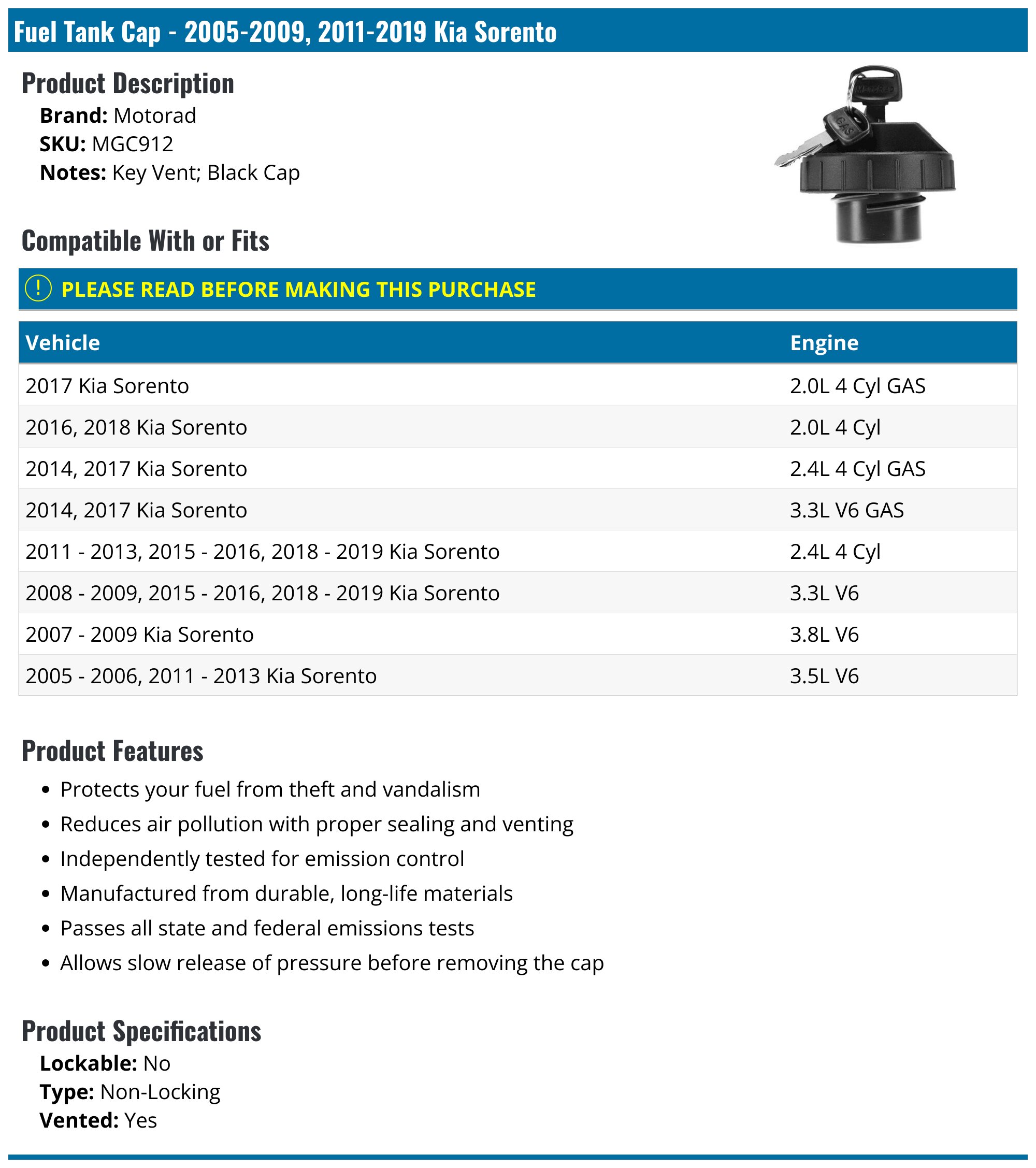
- Monitor the Fuel Cap: A loose or damaged gas cap can allow fuel to evaporate or trigger a Check Engine light. If you notice a drop in range, check the seal on your fuel cap first.
- Use Cruise Control: On long highway stretches, using cruise control helps maintain a steady speed, which is significantly more efficient than the constant micro-accelerations of manual foot control.
Frequently Asked Questions
How many miles can a 2011 Kia Sorento go on a full tank?
Depending on the engine and driving conditions, a 2011 Kia Sorento can typically travel between 350 and 500 miles on a full 18-gallon tank. The 2.4L FWD model provides the highest range, while the 3.5L V6 AWD model provides the lowest.
What happens if I put Premium gas in my 2011 Sorento?
Using Premium (91+ octane) gas in a 2011 Sorento will generally not harm the engine, but it will not provide any performance or fuel economy benefits. The vehicle is optimized for 87-octane regular unleaded fuel. You are essentially paying more per gallon without a functional return on investment.
Is the fuel tank size different for the 7-passenger model?
No, the fuel tank capacity remains 18.0 gallons regardless of whether the Sorento is configured as a 5-passenger or 7-passenger vehicle. The extra seating affects the vehicle's weight and cargo capacity, but the physical fuel tank remains the same.
Why is my gas gauge showing less than 18 gallons after a fill-up?
If you fill up as soon as the low-fuel light comes on, you will typically only be able to pump about 15 to 16 gallons. This is because the light is designed to turn on with a "reserve" of about 2 to 3 gallons still in the tank to prevent you from running out of fuel and to keep the fuel pump submerged and cool.
Can I use E85 fuel in a 2011 Kia Sorento?
No, the 2011 Kia Sorento is not a Flex-Fuel vehicle. Using E85 (85% ethanol) can cause significant damage to the fuel lines, injectors, and engine components. Only use gasoline with an ethanol content of 15% (E15) or less.
Final Recommendation
For owners of the 2011 Kia Sorento, the 18-gallon fuel tank remains a robust and well-sized component for the vehicle's class. To ensure you are getting the most out of this capacity in 2026, prioritize regular maintenance of the fuel system, including the air filter and spark plugs, and avoid the habit of "topping off" at the gas station. If you experience inconsistent fuel gauge readings, have the fuel level sending unit inspected by a professional to avoid the risk of being stranded with an empty tank.