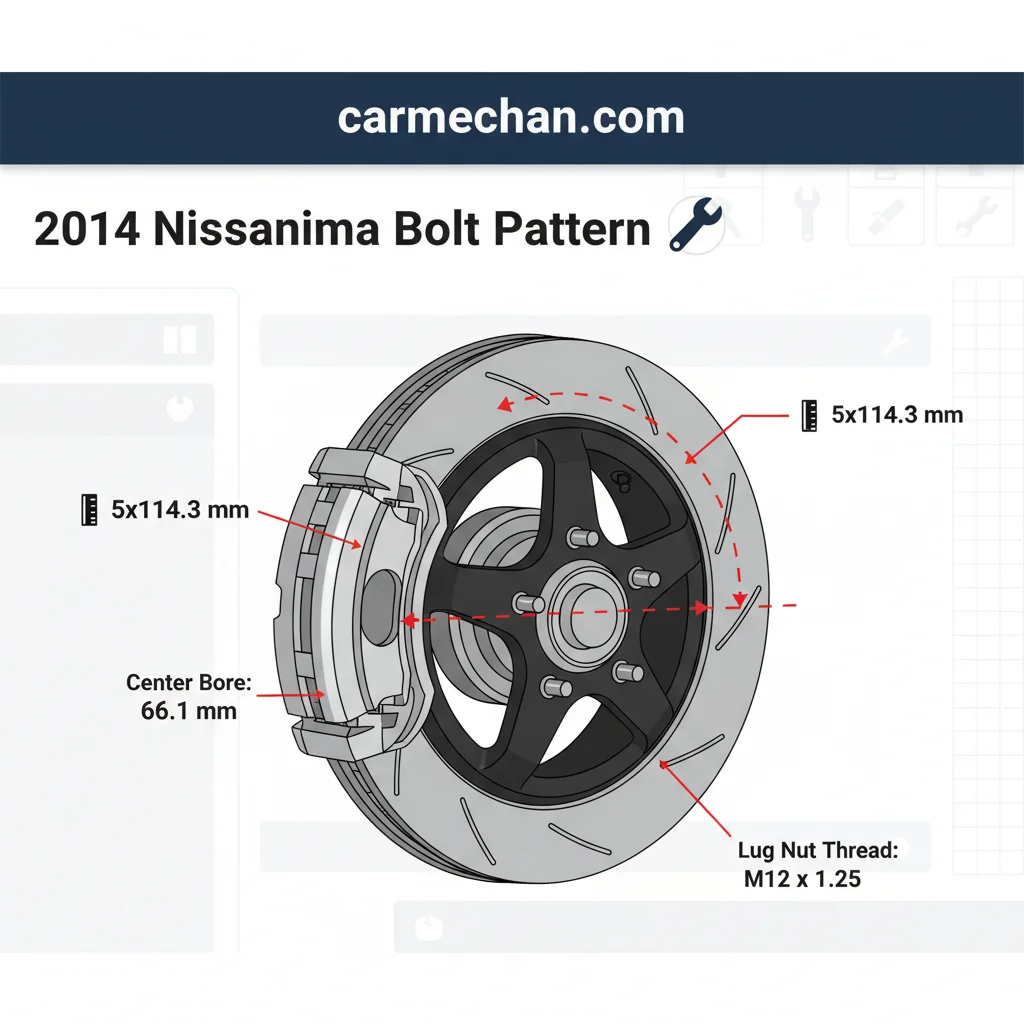
The 2009 Nissan Altima features a 5x114.3 mm (or 5x4.5 inches) wheel bolt pattern, utilizing a 66.1 mm center bore and M12 x 1.25 lug nut thread pitch. Understanding these exact specifications is essential for anyone looking to replace wheels, install aftermarket rims, or perform routine tire rotations safely on this mid-size sedan generation.
Introduction to the 2009 Nissan Altima Wheel Architecture
When working on a fourth-generation Nissan Altima (produced for the 2007 through 2012 model years), vehicle owners, mechanics, and enthusiasts frequently encounter questions regarding wheel compatibility. Whether you are searching for winter tire steelies, upgrading to custom alloy rims, or restoring a factory setup, knowing the precise wheel mounting parameters prevents costly mistakes, vibration issues, and catastrophic mechanical failures.
The wheel bolt pattern—often referred to as the pitch circle diameter (PCD)—determines how a wheel mounts to a vehicle's hub assembly. Using an incorrect pattern or improper hardware compromises the structural integrity of the wheel assembly, placing undue stress on the studs, bearings, and suspension components. This guide examines the exact bolt pattern specifications for the 2009 Nissan Altima, explores the historical context of Nissan's utilization of this standard, details critical mating dimensions, and provides practical troubleshooting advice for wheel installations.
Exact Technical Specifications of the 2009 Nissan Altima Bolt Pattern
To ensure a proper fit when purchasing wheels or spacers for a 2009 Nissan Altima, you must look beyond the basic bolt pattern and examine the complete set of wheel hub dimensions. While the bolt configuration is standard across nearly all trim levels of this model year (including the Base, 2.5 S, 3.5 SE, and Hybrid variants), minor variations in factory wheel widths and offsets existed depending on whether the vehicle rolled off the assembly line with 16-inch or 17-inch wheels.
| Specification Parameter | Value / Measurement |
|---|---|
| Bolt Pattern (PCD) | 5 x 114.3 mm (5 x 4.5 inches) |
| Center Bore Diameter | 66.1 mm |
| Thread Pitch | M12 x 1.25 |
| Factory Fastener Type | Lug Nut (Typically 21mm hex head) |
| Recommended Torque | 80–85 lb-ft (108–115 Nm) |
| OEM Wheel Sizes | 16x7.0" or 17x7.5" |
Detailed Breakdown of Key Parameters
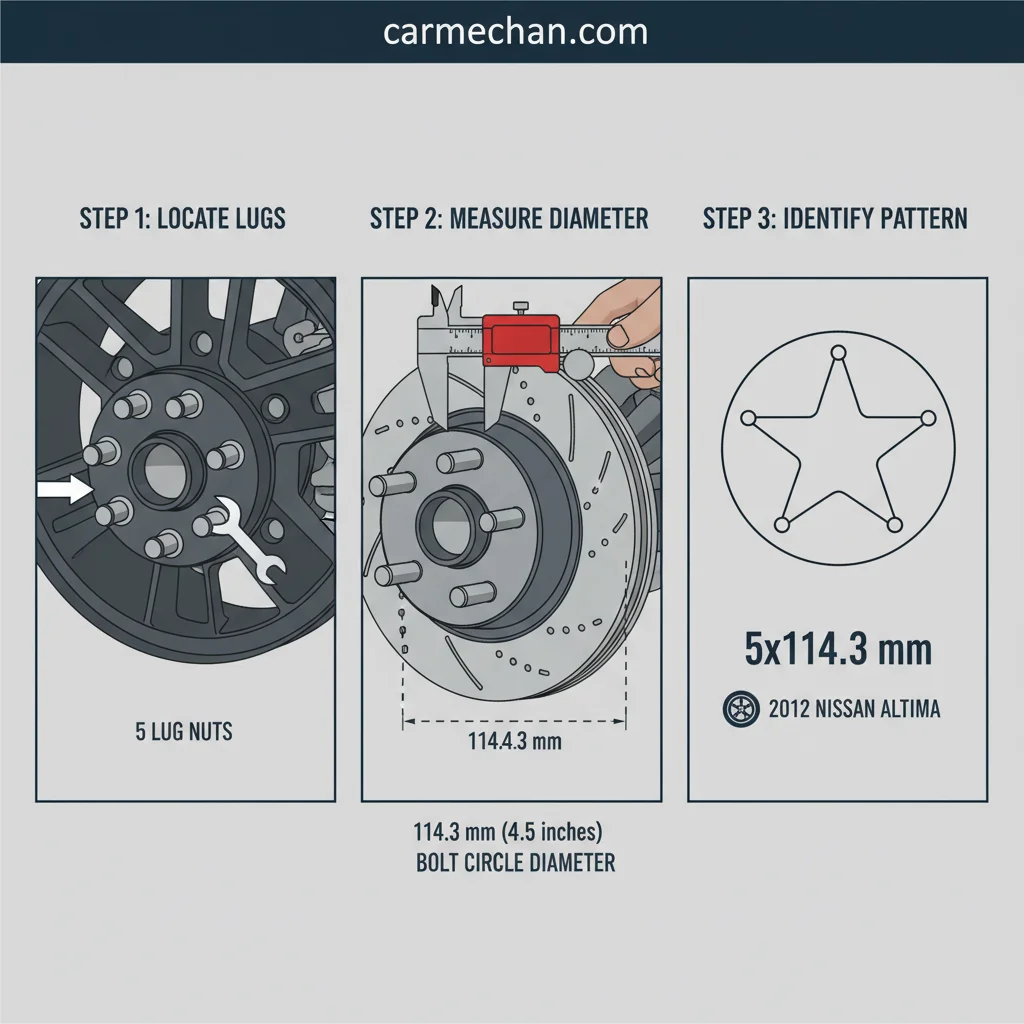
- 5x114.3 mm Bolt Pattern: The "5" indicates that there are five bolt holes arranged in a circle, while "114.3 mm" (equivalent to 4.5 inches) is the diameter of an imaginary circle drawn through the center of all five lug holes. This is one of the most common passenger car and crossover bolt patterns in the automotive industry, sharing cross-compatibility with many Japanese and American vehicles.
- 66.1 mm Center Bore: The center bore is the circular hole in the exact center of the wheel that centers the wheel directly onto the vehicle's hub. Nissan utilizes a 66.1 mm hub pilot on many of its front-wheel-drive sedans and sports cars of this era. If you purchase aftermarket wheels with a larger center bore (e.g., 73.1 mm), you must use hub-centric rings to prevent high-speed steering wheel vibrations.
- M12 x 1.25 Thread Pitch: Nissan historically utilizes fine-pitch threads (1.25 mm) on its wheel studs, differentiating itself from manufacturers that use a 1.5 thread pitch. When replacing lost or damaged lug nuts, verify the thread pitch carefully to avoid stripping the wheel studs.
Historical Context and Evolution of the Altima Bolt Pattern
The fourth-generation Nissan Altima debuted for the 2007 model year, built upon the Nissan Altima platform (designated as the D platform). When Nissan transitioned the Altima through its various design generations, engineering choices regarding wheel architecture reflected both corporate parts-sharing strategies and industry trends toward larger, stiffer wheel assemblies.
Early Altima Generations (1993–2006)
- First and Second Generations (1993–2001): Earlier iterations of the Altima often utilized a 4-lug pattern (4x114.3 mm) on base trims, reflecting its compact-to-midsize segment origins and lower gross vehicle weight ratings.
- Third Generation (2002–2006): As the Altima grew in physical dimensions, horsepower, and weight—particularly with the introduction of the VQ35DE V6 engine option—Nissan standardized a 5-lug pattern across the lineup to handle increased torque loads and improve high-speed stability.
The 2007–2012 Fourth Generation
By 2009, the 5x114.3 mm pattern was firmly entrenched as the industry standard for midsize front-wheel-drive sedans. Nissan maintained this pattern across the Altima Coupe, Sedan, and Hybrid variants. This historical continuity means that wheels from a 2007, 2008, 2010, 2011, or 2012 Altima are entirely interchangeable with a 2009 model. Furthermore, cross-brand interchangeability is surprisingly broad; wheels from certain eras of the Nissan Maxima, Nissan 350Z, and Infiniti G35/G37 often share the same 66.1 mm center bore and 5x114.3 mm layout, though brake clearance and offset must always be verified.
Understanding Wheel Offset and Backspacing
Knowing the bolt pattern alone is insufficient when sourcing replacement wheels for a 2009 Nissan Altima. Offset—the distance from the hub mounting surface to the true centerline of the wheel—dictates whether the wheel will clear your suspension struts, brake calipers, and outer fender lips.
Factory offsets for the 2009 Nissan Altima typically range between +40 mm and +50 mm, depending on the factory wheel width (usually 7.0 to 7.5 inches).
- Positive Offset: The mounting surface is positioned toward the front (street-facing) side of the wheel's centerline. This is standard for front-wheel-drive vehicles like the Altima to keep the wheel tucked properly within the wheel wells.
- Low or Negative Offset Risks: Installing aftermarket wheels with an aggressive low offset (e.g., +20 mm or lower) pushes the wheels outward. On a 2009 Altima, this can cause the tire tread to rub against the outer fender lip during suspension compression or sharp turns, potentially shredding the tire sidewall or damaging the fender paint.
Step-by-Step Guide to Verifying and Installing Wheels
When mounting new wheels or rotating existing ones on a 2009 Nissan Altima, adhering to proper mechanical procedures ensures safety and prevents premature component wear.
1. Verification and Preparation
- Park the vehicle on a flat, level surface, engage the parking brake, and wedge wheel chocks behind the tires that will remain on the ground.
- Loosen the factory lug nuts (utilizing a standard 21mm socket) about a quarter-turn while the vehicle's weight is still on the ground.
- Safely elevate the vehicle using a hydraulic floor jack at designated factory pinch weld lift points, and support the chassis securely with rigid jack stands.
2. Inspecting the Hub and Mounting Surface
- Remove the lug nuts entirely and pull the old wheel off the hub assembly.
- Inspect the wheel studs for rust, stripped threads, or warping. Clean any accumulated rust or debris off the 66.1 mm hub ring using a wire brush. A clean hub ensures the wheel sits completely flush, which prevents dangerous wheel wobble.
3. Mounting the Wheel and Tightening
- Align the wheel's 5 holes with the wheel studs and push the wheel straight back until it seats flush against the hub face. If using aftermarket wheels, slide the appropriate plastic or aluminum hub-centric rings onto the hub first.
- Thread the M12 x 1.25 lug nuts on by hand to ensure they do not cross-thread. Never use an impact wrench to start lug nuts.
- Lower the vehicle until the tires touch the ground with just enough weight to prevent the wheels from spinning.
- Using a calibrated torque wrench in a star or criss-cross pattern, tighten the lug nuts to the manufacturer's recommended specification of 80 to 85 lb-ft.
Common Mistakes to Avoid
- Ignoring Center Bore Differences: Installing aftermarket wheels with a center bore larger than 66.1 mm without hub rings forces the wheel to hang entirely on the studs rather than centering on the hub. This creates persistent vibrations at highway speeds and places excessive shear stress on the wheel studs.
- Using Incorrect Thread Pitch Lug Nuts: Forcing an M12 x 1.5 lug nut (common on Honda and Toyota vehicles) onto an M12 x 1.25 Nissan stud will cross-thread and ruin the wheel stud, requiring a time-consuming replacement procedure.
- Over-Torquing: Cranking down lug nuts with an uncalibrated pneumatic impact gun can warp brake rotors, stretch studs, or crack alloy wheel seats. Always finish tightening with a manual torque wrench.
Frequently Asked Questions
Can I use wheels from a Honda Accord on a 2009 Nissan Altima?
While many Honda Accords share a 5x114.3 mm bolt pattern, older Honda models feature a smaller center bore (64.1 mm), which means Honda wheels will not slide over the Altima's 66.1 mm hub without modification or boring out the center hole. Conversely, an Altima wheel can fit over a Honda hub, but the wheel will not center correctly without hub-centric rings to bridge the gap.
Do I need different lug nuts for aftermarket wheels?
Yes, factory Nissan wheels typically use flat-seat or acorn-style lug nuts with specific washers depending on whether you have steel or alloy OEM wheels. Most aftermarket alloy wheels require tapered (conical 60-degree) lug nuts to match the countersunk holes in the wheel. Using factory lug nuts on aftermarket wheels can result in improper clamping force.
What is the largest rim size I can put on a 2009 Nissan Altima without modification?
Many owners successfully install 18-inch or 19-inch wheels on a 2009 Altima without rubbing, provided they select the correct tire aspect ratio to maintain the overall rolling diameter close to factory specification (approximately 26 to 27 inches). Common plus-size configurations include 225/45R18 or 245/40R19, paired with an offset close to +40 mm to +45 mm.
Will wheel spacers affect my suspension or handling?
Using low-quality or excessively thick slip-on wheel spacers alters the scrub radius of your steering geometry, increases leverage on wheel bearings, and can cause premature wear on suspension components. If you require spacers for brake clearance or aesthetic fitment, always choose hub-centric, bolt-on spacer adapters made from high-grade aluminum.
Practical Recommendations
Before purchasing any replacement wheels or adapters for your 2009 Nissan Altima, remove one existing wheel to physically measure the center bore and verify the condition of your wheel studs. If you are ordering custom wheels online, provide the vendor with your exact vehicle year, make, model, and trim to guarantee that the supplied package includes the correct bolt pattern (5x114.3 mm), center bore (66.1 mm), and mounting hardware.