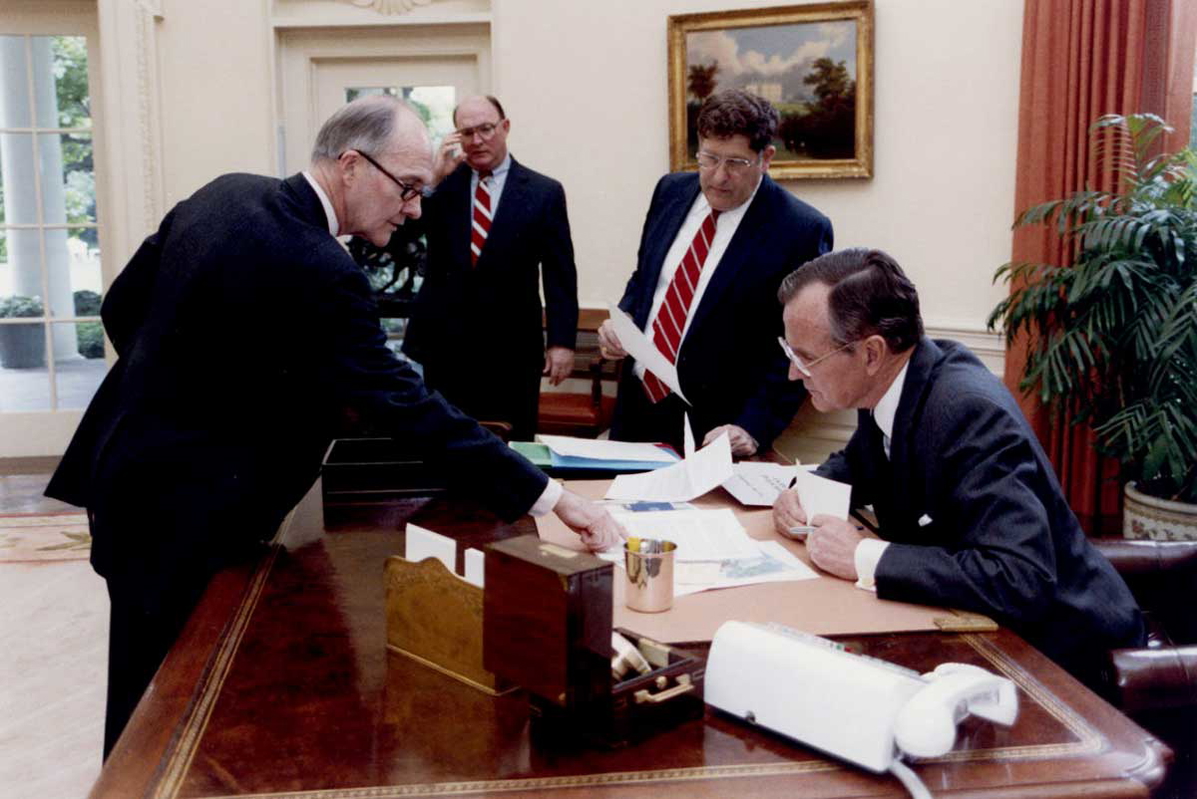
Operation Just Cause was the December 1989 military invasion of Panama by the United States. Ordered by President George H.W. Bush, its primary goals were to safeguard U.S. citizens, defend democracy and human rights, combat international drug trafficking, and protect the integrity of the Panama Canal Treaties by removing dictator Manuel Noriega from power.
The year 1989 stands as a pivotal moment in American foreign policy and military history. As the Cold War neared its end with the fall of the Berlin Wall, the United States turned its attention to its own hemisphere to address a deteriorating political and security situation in Panama. Operation Just Cause was not a sudden impulse but the culmination of years of escalating tension between the U.S. government and General Manuel Antonio Noriega, the de facto leader of Panama.
The Geopolitical Climate and the Rise of Manuel Noriega
To understand why the United States launched Operation Just Cause in 1989, one must examine the complex relationship between Washington and Manuel Noriega. For years, Noriega was a significant U.S. intelligence asset. As the head of Panama's military intelligence and later the Commander of the Panama Defense Forces (PDF), he provided valuable information to the CIA and assisted U.S. interests in Central America, particularly during the Reagan administration’s efforts to counter communist movements in Nicaragua and El Salvador.
However, by the mid-1980s, the relationship began to sour. Reports surfaced of Noriega’s involvement in large-scale money laundering and drug trafficking, specifically working with the Medellin Cartel in Colombia. In 1988, federal grand juries in Miami and Tampa indicted Noriega on drug-related charges. This created a diplomatic nightmare: a foreign leader under U.S. indictment while maintaining control over a country housing the strategically vital Panama Canal.
The domestic situation in Panama also became untenable. The 1989 Panamanian general election, held in May, saw the opposition candidate, Guillermo Endara, leading by a significant margin. Noriega’s regime responded by annulling the election results and deploying "Dignity Battalions"—paramilitary groups—to brutally attack Endara and his supporters in the streets. These images, broadcast globally, severely damaged Noriega’s international standing and increased pressure on the Bush administration to take decisive action.
Strategic Objectives of Operation Just Cause
President George H.W. Bush articulated four primary objectives when he announced the invasion on December 20, 1989. These goals were designed to provide a legal and moral framework for the intervention under international and domestic law.
- Safeguarding U.S. Citizens: There were approximately 35,000 Americans living in Panama at the time. Frequent harassment and threats by the PDF and Dignity Battalions created a climate of fear.
- Defending Democracy and Human Rights: The U.S. aimed to restore the legitimately elected government of Guillermo Endara, who had been denied his office by Noriega’s interference.
- Combating Drug Trafficking: Removing Noriega was seen as a major blow to the transshipment of cocaine from South America to the United States.
- Protecting the Panama Canal Treaties: Under the Torrijos-Carter Treaties of 1977, the U.S. was obligated to defend the neutrality of the canal. The U.S. argued that Noriega’s instability threatened the long-term security of this critical maritime passage.
The Flashpoint: The Death of Robert Paz
While tensions had been high for years, a specific incident in December 1989 served as the immediate catalyst for military action. On December 16, four U.S. military officers were stopped at a PDF roadblock in Panama City. In the ensuing confrontation, 1st Lt. Robert Paz of the U.S. Marine Corps was shot and killed. Another officer was wounded, and a U.S. Navy lieutenant and his wife, who witnessed the incident, were detained and brutally interrogated.
President Bush stated that this "atmosphere of terror" and the "unprovoked attack" left the United States with no choice but to use force. On December 17, the execution order for Operation Just Cause was signed, and units began mobilizing for a massive, multi-pronged assault.
Military Execution and Tactical Innovations
The invasion began at 01:00 on December 20, 1989. It was a massive undertaking, involving approximately 27,000 U.S. troops, including 13,000 already stationed in the Canal Zone and 14,000 flown in from the United States. This was the largest U.S. military operation since the Vietnam War and served as a testing ground for several new military technologies and doctrines.
Key Units and Special Operations
The operation involved a sophisticated blend of conventional forces and elite special operations units. The 82nd Airborne Division conducted its first combat jump since World War II, dropping into Torrijos-Tocumen International Airport. The 75th Ranger Regiment secured Rio Hato Airfield, while Navy SEALs were tasked with destroying Noriega’s private jet and securing the Paitilla Airport to prevent his escape.
The Role of Technology
Operation Just Cause saw the combat debut of the F-117 Nighthawk stealth fighter. Although its use was later criticized as unnecessary given Panama's lack of advanced radar, it demonstrated the U.S. military's commitment to utilizing cutting-edge technology for precision strikes. The AH-64 Apache attack helicopter also saw significant action, proving its effectiveness in urban environments and night operations.
Major Conflict Zones
The fighting was concentrated in Panama City and at key PDF installations across the country. One of the most intense battles occurred at the Comandancia, the headquarters of the Panama Defense Forces located in the El Chorrillo neighborhood. The facility was heavily fortified, and the resulting fire destroyed much of the surrounding civilian residential area, a point that remains a subject of historical debate and grievance in Panama.
| Aspect | Operation Just Cause Details |
|---|---|
| Start Date | December 20, 1989 |
| U.S. President | George H.W. Bush |
| U.S. Troops Involved | ~27,000 |
| Panamanian Leader | Manuel Noriega |
| Primary Adversary | Panama Defense Forces (PDF) |
| U.S. Casualties | 23 killed in action, 325 wounded |
| Panamanian Casualties | ~200-300 military; 200-3,000+ civilians (disputed) |
| Key Outcome | Removal of Noriega; Restoration of Endara |
The Capture of Manuel Noriega and the Vatican Embassy
Despite the rapid collapse of the PDF, Manuel Noriega initially evaded capture. He sought asylum in the Nunciature (the Vatican Embassy) in Panama City on December 24. For ten days, the U.S. military surrounded the embassy, engaging in a unique form of psychological warfare.
U.S. troops set up massive speakers around the Nunciature and played loud rock music (including tracks by Van Halen and The Clash) around the clock. While the official reason for the music was to prevent eavesdropping by journalists using directional microphones, it became a symbol of the U.S. military's determination to flush Noriega out.
Under pressure from both the U.S. and the Vatican, and realizing his support had completely evaporated, Noriega surrendered to U.S. Drug Enforcement Administration (DEA) agents on January 3, 1990. He was immediately flown to Miami to face trial.
Casualties, Controversies, and International Reaction
Operation Just Cause was not without significant cost and controversy. While the U.S. military achieved its tactical objectives within days, the human cost was substantial. The official U.S. count of Panamanian civilian deaths was 202, but independent human rights organizations, such as the Inter-American Commission on Human Rights, have suggested the number could be much higher, with some estimates reaching into the thousands.
The destruction of the El Chorrillo neighborhood left thousands of Panamanians homeless. Internationally, the invasion was met with widespread condemnation. The Organization of American States (OAS) and the United Nations General Assembly passed resolutions criticizing the intervention as a violation of international law and Panamanian sovereignty. Critics argued that the U.S. had returned to "Gunboat Diplomacy," intervening unilaterally in the affairs of a sovereign Latin American nation.
The Post-Invasion Transition and Long-term Impact
Immediately following the invasion, Guillermo Endara was sworn in as President of Panama at a U.S. military base. The Panama Defense Forces were abolished and replaced by a civilian-controlled Public Force, designed to be less prone to political interference and military coups.
The transition was challenging. Panama’s economy had been decimated by years of U.S. sanctions and the physical destruction of the invasion. However, the removal of Noriega paved the way for a return to democratic governance. By 1999, the United States followed through on the Torrijos-Carter Treaties, officially handing over full control of the Panama Canal to the Panamanian government.
As of 2026, Panama remains a stable democracy with one of the fastest-growing economies in Latin America. The Panama Canal continues to be a vital artery for global trade, now managed entirely by Panama. While the scars of 1989 remain—particularly for the families of those lost in El Chorrillo—the operation is generally viewed by historians as the end of a dark era of military dictatorship in Panama.
Legal and Ethical Considerations
The legality of Operation Just Cause remains a subject of study in international law. The U.S. justified the invasion based on the "right of self-defense" under Article 51 of the UN Charter, citing the death of Lt. Paz and the threats to the 35,000 Americans in the country. Additionally, the U.S. invoked its treaty rights to protect the canal.
However, many legal scholars argue that these justifications were insufficient under the UN Charter, which generally prohibits the use of force against the territorial integrity or political independence of any state. The debate often centers on whether "humanitarian intervention" or "pro-democratic intervention" can ever be legally justified without a specific mandate from the UN Security Council.
Frequently Asked Questions
What happened to Manuel Noriega after the invasion?
After surrendering in 1990, Manuel Noriega was taken to the United States. In 1992, he was convicted of eight counts of drug trafficking, racketeering, and money laundering. He was sentenced to 40 years in prison (later reduced). After serving his U.S. sentence, he was extradited to France in 2010 for money laundering and then to Panama in 2011 to face charges for crimes committed during his regime. He died in Panama City in 2017.
Why was it called "Operation Just Cause"?
The name was chosen to emphasize the moral and legal justifications for the intervention. Previous iterations of the contingency plan had names like "Blue Spoon," but the Pentagon transitioned to "Just Cause" to help frame the narrative of the mission to the public and the international community.
Was the Panama Canal ever closed during the invasion?
The Panama Canal was closed for approximately 30 hours during the initial phase of the invasion for safety reasons. This was the first time the canal had been closed since its opening in 1914 due to a military conflict. It reopened once the U.S. military secured the surrounding areas.
How did Operation Just Cause influence future U.S. military operations?
Operation Just Cause is often cited as the first execution of the "Powell Doctrine," which advocates for the use of overwhelming force to achieve specific, clear objectives with an exit strategy. The success and speed of the operation influenced the planning for the 1991 Gulf War (Operation Desert Storm).
What is the current status of the El Chorrillo neighborhood?
In the decades since 1989, parts of El Chorrillo have been rebuilt, but it remains one of the more economically challenged areas of Panama City. There are ongoing efforts by local groups and international human rights organizations to seek further reparations and formal recognition of the civilian casualties that occurred there.
Recommended Next Steps for Researchers
For those seeking to understand the granular details of Operation Just Cause, several avenues of research are recommended:
- National Archives: Review declassified documents from the George H.W. Bush Presidential Library regarding the decision-making process in the fall of 1989.
- Military History Centers: The U.S. Army Center of Military History provides detailed tactical accounts of the various engagements throughout the operation.
- Human Rights Reports: Examine the findings of the Human Rights Watch and the Inter-American Commission on Human Rights to gain a balanced perspective on the civilian impact.
- Panamanian Perspectives: Consult the "Comisión 20 de diciembre de 1989," a Panamanian commission established to investigate the truth of the invasion's impact on the local population.