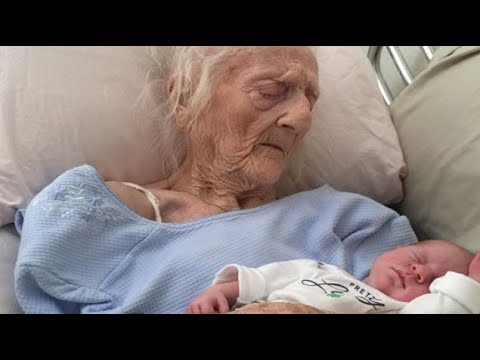
Claims of a 101-year-old giving birth represent an internet-driven medical myth that merges sensationalized tabloid reporting with genuine scientific curiosity about human longevity and reproductive biology. No verified medical documentation exists confirming a natural or assisted birth by a 101-year-old woman, as the biological reality of human reproductive senescence makes such an event impossible without modern medical interventions that themselves have strict physiological boundaries.
Understanding why these sensational stories capture global attention requires examining the intersection of modern reproductive technology, historical records of advanced maternal age, and the mechanisms through which viral misinformation spreads. While medical science continues to push the boundaries of fertility treatment, natural biological limits remain absolute.
The Reality of Human Reproductive Longevity and Menopause
To evaluate claims regarding extreme advanced maternal age, one must first look at the biological timeline of the human female reproductive system. Unlike males, who produce sperm throughout much of their adult lives, females are born with a finite pool of oocytes (eggs) established during embryonic development.
Over time, this ovarian reserve undergoes continuous depletion through a process called atresia. By the time a woman reaches her late 40s or early 50s, the remaining eggs are not only extremely sparse but also carry a dramatically higher rate of chromosomal abnormalities.
Menopause, which marks the permanent cessation of menstrual cycles and ovarian function, typically occurs between the ages of 45 and 55, with the average age hovering around 51. Once a woman enters menopause and exhausts her ovarian reserve, natural conception becomes biologically impossible.
Even with the advent of assisted reproductive technology (ART), such as in vitro fertilization (IVF) using donor eggs, the uterus and the cardiovascular system must be capable of withstanding the extreme physiological demands of pregnancy—a challenge that becomes exceptionally hazardous as a woman enters her sixth, seventh, or subsequent decades of life.
| Reproductive Stage | Typical Age Range | Physiological Status | Natural Conception Possible? |
|---|---|---|---|
| Peak Fertility | 20s to early 30s | Optimal oocyte quality and regular ovulation | Yes |
| Advanced Maternal Age | 35 to 49 | Declining oocyte quantity and rising chromosomal risk | Yes, with decreasing probability |
| Perimenopause | Late 40s to early 50s | Irregular cycles, fluctuating hormone levels, declining reserve | Decreased likelihood |
| Postmenopause | 50s and beyond | Ovarian follicular depletion, permanent cessation of menses | No |
Dissecting the Viral Rumor: Where Did the 101-Year-Old Claim Originate?
The internet frequently circulates fabricated stories, altered photographs, and satirical articles disguised as hard news regarding extreme ages of childbirth. Stories claiming that a 101-year-old gave birth usually stem from clickbait websites, unverified social media posts, or misconstrued translations of foreign tabloid features.
In some instances, viral headlines confuse the age of the mother with the age of the child, the year of an event, or a completely unrelated longevity record. For example, reports of older women giving birth occasionally surface from international outlets involving women in their 60s or 70s—cases that are themselves medical anomalies achieved exclusively through specialized fertility treatments like egg donation and hormone replacement therapy. When these stories are reposted across multiple platforms, numbers are routinely exaggerated, transforming a documented birth by a 70-year-old into a fictional birth by a centenarian.
Verifying such claims requires looking at peer-reviewed medical journals, institutional press releases from recognized hospitals, or official vital statistics registries. To date, no credible medical journal or international news organization with rigorous fact-checking standards has ever documented a successful pregnancy and live birth in a 101-year-old woman.
Verified Records of Advanced Maternal Age in Modern Medicine
While a 101-year-old birth is scientifically impossible, medical history does document verified instances of women giving birth at advanced ages, largely due to advancements in reproductive endocrinology. These cases are rare, heavily scrutinized, and accompanied by significant medical risks for both the mother and the child.
The Boundaries of Assisted Reproductive Technology
In standard clinical practice, fertility clinics establish strict age ceilings for providing treatments like IVF. Many reputable medical associations and clinics set an upper limit of 50 to 55 years old for donor-egg IVF procedures, though some private clinics evaluate patients on a case-by-case basis up to age 60.
These limits exist because pregnancy places a massive load on the cardiovascular system, increasing cardiac output, blood volume, and vascular resistance. Conditions such as gestational hypertension, preeclampsia, gestational diabetes, and placental abruption occur at exponentially higher rates in older mothers.
Notable Documented Cases
- Erramatti Mangayamma: In 2019, this Indian woman made global headlines when she gave birth to twin girls via IVF at the reported age of 74, utilizing donor eggs and a gestational carrier process overseen by a medical team. While verified by local medical staff, the case sparked intense global bioethical debates regarding parenting into advanced old age.
- Adriana Iliescu: A Romanian writer who gave birth to a healthy girl in 2005 at the age of 66 using IVF and fertility treatments. Her case became one of the most thoroughly documented and legally debated examples of late-life motherhood in European medical history.
These documented extremes remain decades away from the centenarian milestone claimed in viral internet rumors, underscoring the vast gulf between modern medical achievement and biological fiction.
The Bioethical and Physiological Implications of Extreme Pregnancy
The fascination surrounding older mothers often overlooks the severe medical and ethical questions raised by late-life pregnancies. Medical professionals evaluate these scenarios through a lens of patient safety, child welfare, and the allocation of specialized healthcare resources.
Maternal Health Risks
As the human body ages, tissue elasticity diminishes, organ function declines, and chronic conditions such as hypertension and cardiovascular disease become more prevalent. Pregnancy accelerates these processes. An older parturient faces a substantially elevated risk of:
- Maternal mortality and severe obstetric hemorrhage.
- Hypertensive disorders of pregnancy, including life-threatening preeclampsia.
- Higher rates of Cesarean section delivery due to pelvic floor rigidity and uterine fatigue.
Child Welfare and Social Considerations
Beyond the physical health of the mother and child, bioethicists frequently examine the long-term social implications of advanced maternal age. A child born to a mother in her 70s, 80s, or beyond faces a statistically high likelihood of experiencing the illness, disability, or death of their primary caregiver during their childhood or adolescence. These ethical considerations prompt many medical boards and regulatory agencies to maintain strict age caps on fertility treatments.
How to Identify and Evaluate Viral Medical Misinformation
The proliferation of sensational health claims online makes critical media literacy an essential tool for readers. When encountering extraordinary stories about medical marvels, such as miraculous longevity feats or extreme physiological achievements, applying a structured verification process prevents the spread of misinformation.
- Check for Primary Sources: Look past aggregated social media posts to find references to peer-reviewed journals, such as The Lancet, the New England Journal of Medicine, or official statements from accredited medical centers.
- Examine the Specificity of Details: Authentic medical reports include the names of attending physicians, specific hospital locations, dates, and measurable clinical data. Vague stories relying on anonymous sources or dramatic narrative prose are typically fabricated.
- Consult Fact-Checking Organizations: Independent verification sites regularly track viral health hoaxes and debunk altered imagery or false numerical claims.
- Evaluate Biological Plausibility: Weigh sensational claims against established physiological facts. If a headline contradicts well-established human biology—such as natural reproduction past the age of menopause without intervention—approach the claim with extreme skepticism.
Frequently Asked Questions
Is it biologically possible for a 101-year-old woman to conceive naturally?
No. Natural conception is biologically impossible for a 101-year-old woman. Women are born with a finite number of eggs that are depleted over decades, leading to menopause—the permanent cessation of ovarian function and menstruation—typically occurring around age 51.
What is the oldest recorded age for a woman to give birth?
The oldest verified women to give birth through assisted reproductive technology, specifically in vitro fertilization using donor eggs, were in their mid-to-late 60s and early 70s, such as Erramatti Mangayamma at age 74.
Why do false stories about elderly mothers circulate online?
Viral stories regarding extreme ages often spread due to clickbait incentives, poor translations of international news stories, satirical website posts taken out of context, or intentional misidentifications designed to generate high web traffic and social media engagement.
What are the main medical risks of pregnancy at an advanced age?
Pregnancy at an advanced age carries significantly elevated risks of gestational hypertension, preeclampsia, gestational diabetes, placental complications, miscarriage, chromosomal abnormalities in offspring (if using own eggs), and maternal cardiovascular stress.
Do fertility clinics have age limits for patients seeking treatment?
Yes. Most reputable fertility clinics and professional medical organizations enforce strict age limits, typically capping treatments like donor-egg IVF between ages 50 and 55, to protect patient health and address ethical concerns regarding long-term child rearing.