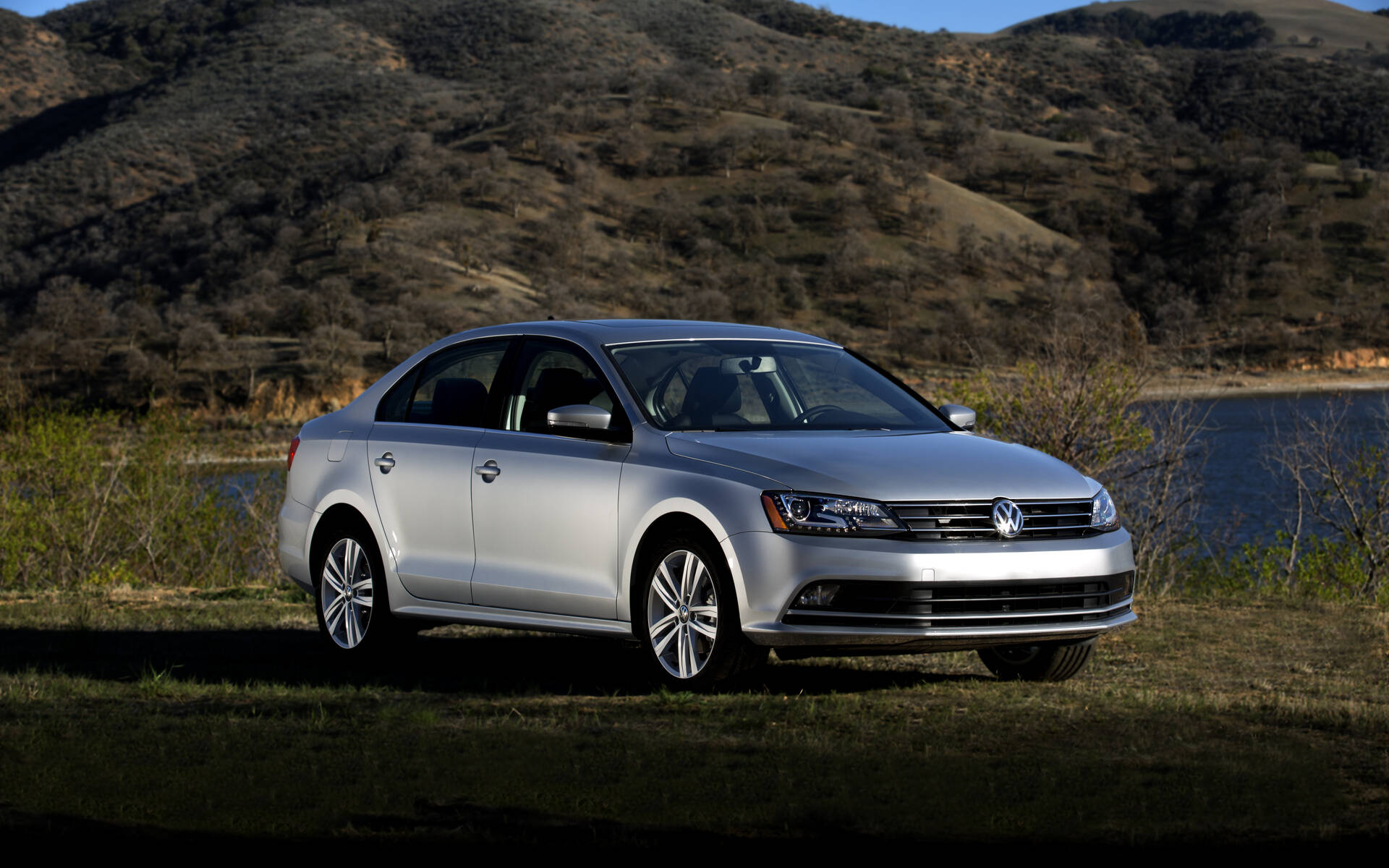
If you are considering a Volkswagen Jetta equipped with a 1.8-liter engine, you are likely looking at either the classic MK4 1.8T or the more modern MK6 1.8 TSI. Both versions offer a significant performance boost over the base engines of their respective eras, providing a balance of turbocharged torque and fuel efficiency that makes them highly sought after on the used market in 2026.
The 1.8-liter displacement has a storied history within the Volkswagen Jetta lineup. For many enthusiasts and commuters alike, the "1.8" badge represents the "Goldilocks" of the Jetta range—more refined and powerful than the entry-level naturally aspirated engines, yet more affordable and insurance-friendly than the performance-oriented GLI models. As these vehicles age into 2026, understanding the nuances of their engineering, common mechanical failure points, and specific maintenance requirements is essential for anyone looking to buy, maintain, or tune one.
A Tale of Two Engines: 1.8T vs. 1.8 TSI
To understand what you need to know about a 1.8 Jetta, you must first identify which generation you are dealing with. The term "1.8 Jetta" generally refers to two distinct periods of Volkswagen production.
The MK4 Era (1999–2005): The 1.8T 20-Valve
The MK4 Jetta introduced the 1.8T, a 20-valve turbocharged four-cylinder engine (often referred to by engine codes like AWP or AWW). In its prime, it produced between 150 and 180 horsepower. This engine was a pioneer in the "downsizing" movement, proving that a small-displacement turbocharged engine could replace a larger V6. By 2026, these cars are considered modern classics. They are beloved by tuners for their robust iron blocks and high ceiling for power modifications, but they require a meticulous owner who understands the vulnerabilities of aging vacuum lines and cooling systems.
The MK6 Era (2014–2018): The 1.8 TSI (EA888 Gen 3)
The 1.8-liter engine made a triumphant return in the MK6 Jetta, replacing the aging 2.5-liter five-cylinder engine. This 1.8 TSI is part of the EA888 Gen 3 engine family. It produces 170 horsepower and, more importantly, up to 199 lb-ft of torque at very low RPMs. This engine is significantly more advanced than its predecessor, featuring direct injection, a water-cooled integrated exhaust manifold, and a complex thermal management system. In 2026, these models represent the bulk of the 1.8 Jettas found on the used market.
Performance and Driving Dynamics
The primary reason drivers seek out the 1.8-liter Jetta is the driving experience. Unlike the 2.0-liter "slow-stick" or the later 1.4 TSI engines, the 1.8-liter variants offer a punchy, effortless acceleration profile.
Torque Delivery
The MK6 1.8 TSI is particularly noted for its flat torque curve. Peak torque is available as low as 1,500 RPM, meaning the car feels energetic in city traffic without needing to downshift constantly. This makes it an excellent highway cruiser, as it has plenty of passing power even in higher gears.
Transmission Options
Depending on the year, the 1.8 Jetta was paired with several transmissions:
- 5-Speed Manual: Found in both MK4 and MK6 versions. It offers a mechanical, engaging feel but lacks the extra highway gear found in more modern competitors.
- 6-Speed Tiptronic Automatic: This is a traditional torque-converter automatic (09G) found in most MK6 1.8 TSI models. It is generally more reliable than the early DSG (Direct Shift Gearbox) units but lacks the lightning-fast shifts of the GLI's dual-clutch system.
- 5-Speed Tiptronic (MK4): Early automatics in the MK4 were prone to "hunting" for gears and require frequent fluid changes to survive past 150,000 miles.
Critical Reliability Concerns and Known Issues
While the 1.8-liter engines are generally capable of high mileage, they have specific "achilles heels" that owners must monitor. In 2026, as these vehicles accumulate miles, these issues become more prevalent.
1. The Water Pump and Thermostat Housing (MK6 1.8 TSI)
Perhaps the most documented issue with the EA888 Gen 3 engine is the plastic water pump and thermostat housing. These components are prone to leaking, often as early as 50,000 miles. Because the housing is made of plastic, repeated heat cycles cause it to warp or crack.
- Symptoms: Low coolant warnings, the smell of sweet coolant after driving, or visible pink crusty residue near the front of the engine block.
- The Fix: Many owners opt for an upgraded aluminum housing to prevent future failures.
2. Carbon Buildup on Intake Valves
Both the MK4 and MK6 engines are susceptible to carbon buildup, though it is more pronounced in the MK6 1.8 TSI due to its direct injection system. Because fuel is sprayed directly into the cylinder rather than over the intake valves, the valves are never "washed" by gasoline. Over time, oil vapors bake onto the valves, restricting airflow.
- Symptoms: Rough idling, cold-start misfires, and a decrease in fuel economy.
- The Fix: A "walnut blasting" service is typically required every 60,000 to 80,000 miles to manually clean the valves.
3. Timing Chain and Tensioner (MK6)
Early versions of the EA888 engine had notorious timing chain tensioner failures. While the Gen 3 engine in the 1.8 Jetta (2014+) received an updated design, "chain stretch" is still a factor to monitor as the car passes the 100,000-mile mark.
- Verification: Mechanics can check the "phase position" via diagnostic software (VCDS) to see if the chain has stretched beyond acceptable limits.
4. Oil Sludge and Vacuum Leaks (MK4 1.8T)
The older 1.8T engines have a smaller oil capacity and run very hot. If previous owners did not use high-quality synthetic oil or adhered to long oil change intervals, oil sludge could clog the pickup tube, leading to engine failure. Additionally, the maze of rubber vacuum and PCV hoses on the MK4 tends to become brittle and crack with age, causing boost leaks and "Check Engine" lights.
Maintenance Requirements for Longevity
To keep a 1.8 Jetta running reliably in 2026, you cannot follow a "bare minimum" maintenance philosophy. These are precision-engineered German engines that demand specific care.
Oil Quality and Intervals
Volkswagen specifies VW 502 00 or 504 00 certified synthetic oils. Using a generic oil that does not meet these standards can lead to premature turbocharger failure and increased carbon buildup. While the factory manual may suggest 10,000-mile intervals, most experts recommend changing the oil every 5,000 to 7,500 miles, especially for the 1.8T.
Spark Plugs and Coil Packs
Turbocharged engines are hard on ignition components. Worn spark plugs can lead to ignition coil failure. It is common practice among Jetta owners to keep a spare ignition coil in the trunk, as a single coil failure will cause a significant misfire and "limp mode."
Cooling System Refresh
For the MK4 generation, the plastic "coolant flanges" and the water pump (which often had a plastic impeller from the factory) are high-risk items. When replacing the timing belt on a MK4 1.8T, it is mandatory to replace the water pump with a metal-impeller version.
Comparison of 1.8 Jetta Specifications
The following table compares the two primary iterations of the 1.8-liter Jetta to help you identify which version fits your needs.
| Feature | MK4 Jetta 1.8T (2002–2005) | MK6 Jetta 1.8 TSI (2014–2018) |
|---|---|---|
| Engine Code Family | EA113 | EA888 Gen 3 |
| Horsepower | 180 hp @ 5,500 RPM | 170 hp @ 4,800 RPM |
| Torque | 173 lb-ft @ 1,950 RPM | 184–199 lb-ft @ 1,500 RPM |
| Fuel System | Multi-Point Fuel Injection | Gasoline Direct Injection (GDI) |
| Timing Component | Timing Belt (Interference) | Timing Chain |
| Recommended Fuel | Premium (91+ Octane) | Regular (87 Octane) or Premium |
| Avg. Fuel Economy | ~24 MPG Combined | ~30 MPG Combined |
| Common Failure | Vacuum leaks / Oil sludge | Water pump / Carbon buildup |
The Enthusiast Perspective: Tuning the 1.8
One of the biggest draws of the "1.8 Jetta" is its potential for aftermarket performance. Both the 1.8T and the 1.8 TSI are "under-tuned" from the factory.
For the MK6 1.8 TSI, a simple Stage 1 ECU reflash from reputable tuners can increase output to approximately 240 horsepower and 280 lb-ft of torque without any hardware changes. This transforms the Jetta from a sensible commuter into a car that can rival many sports sedans.
For the MK4 1.8T, the sky is the limit. Because of the engine's robust design, many enthusiasts install larger turbochargers (such as the K04 or various Garret units), front-mount intercoolers, and high-flow injectors to reach 300+ horsepower. However, as of 2026, finding a "clean," un-abused MK4 is becoming increasingly difficult and expensive.
FAQs About the 1.8 Jetta
Does the 1.8 Jetta require premium gas?
For the MK4 1.8T, premium fuel (91 octane or higher) is highly recommended to prevent engine knock and ensure the longevity of the turbocharger. For the MK6 1.8 TSI, Volkswagen calibrated the engine to run on regular 87-octane fuel. However, many owners find that using premium fuel results in slightly better fuel economy and smoother timing advance under heavy load.
Is the 1.8 TSI better than the 2.5-liter five-cylinder?
This depends on your priorities. The 2.5-liter engine is legendary for its "bulletproof" reliability and unique exhaust note but suffers from mediocre fuel economy. The 1.8 TSI is significantly faster and more fuel-efficient but is more complex and has more potential failure points (turbo, direct injection, high-pressure fuel pump). In 2026, the 1.8 TSI is generally considered the better daily driver, while the 2.5 is the choice for those who prioritize simplicity.
How long do the turbochargers last?
With proper oil changes and a cooling-down period after spirited driving, a 1.8-liter turbocharger can easily last 150,000 to 200,000 miles. Turbo failure is usually a symptom of poor maintenance, such as using the wrong oil or ignoring oil leaks that starve the turbo bearings.
Is the 1.8 Jetta a good car for a first-time owner?
The MK6 1.8 TSI (2014–2018) is an excellent first car if the buyer has a small budget set aside for "preventative" maintenance like the water pump. The MK4 1.8T is better suited for a hobbyist or someone who wants to learn how to wrench, as its age (20+ years) means it will inevitably need frequent small repairs.
What should I look for in a 2026 pre-purchase inspection?
Prioritize service records. Specifically, look for evidence of a carbon cleaning service and whether the water pump has been replaced. Use an OBD-II scanner to check for "pending" codes, particularly P0011 or P0016, which can indicate timing issues.
Final Recommendations
If you are looking for a Volkswagen Jetta with the 1.8-liter engine in 2026, the 2016–2018 MK6 models are the "sweet spot." By these years, Volkswagen had ironed out many of the early EA888 Gen 3 teething issues, and these cars typically included better technology like Apple CarPlay and Android Auto.
For those on a stricter budget or looking for a project, the MK4 Jetta (2002–2005) remains a charming, high-quality vehicle with an interior that feels more premium than its age suggests. However, you must be prepared to address vacuum leaks and cooling system refreshes immediately upon purchase.
Regardless of the generation, the 1.8 Jetta requires a proactive approach to maintenance. By using the correct fluids, addressing leaks early, and keeping the intake valves clean, you can enjoy one of the most balanced and rewarding driving experiences in the compact car segment.