Technically, you are never too young for life insurance once you reach legal adulthood, and many parents even purchase policies for infants. For most young adults, the decision hinges on financial dependents, co-signed debts, and the desire to "lock in" historically low premium rates while in peak health.
The question of whether you are "too young" for life insurance often stems from a misunderstanding of what life insurance actually does. While it is frequently associated with end-of-life planning for the elderly, life insurance is fundamentally a tool for risk management and financial leverage. In 2026, as the cost of living and the complexity of personal debt continue to evolve, the strategic move of securing a policy in your 20s or early 30s has become a cornerstone of modern financial planning.
The Financial Mechanics of Age and Insurance Premiums
Insurance companies operate on the basis of actuarial science, which is the mathematical calculation of risk. From an insurer's perspective, a 22-year-old is significantly less likely to pass away during a 20-year term than a 45-year-old. This lower statistical risk translates directly into lower monthly premiums.
When you purchase a policy while young, you are essentially buying a "guarantee" at a discount. For healthy individuals in their early 20s, a substantial term life insurance policy can often cost less than a monthly streaming subscription. By the time that same individual reaches 40, those rates may double or triple, even if they remain in relatively good health.
Furthermore, many permanent life insurance policies—such as whole life or universal life—allow for the accumulation of cash value. Starting these policies early gives the "power of compounding" more time to work. In 2026, with market volatility remaining a concern for traditional investments, the stable, tax-advantaged growth of a permanent policy's cash value can serve as a secondary emergency fund or a source of retirement income decades down the line.
When "Young" is the Perfect Age: Key Triggers for Coverage
Age is often a secondary factor compared to "life stages." If any of the following scenarios apply to you in 2026, you are definitely not too young for life insurance; in fact, you may be overdue for it.
1. Co-signed Debt and Private Student Loans
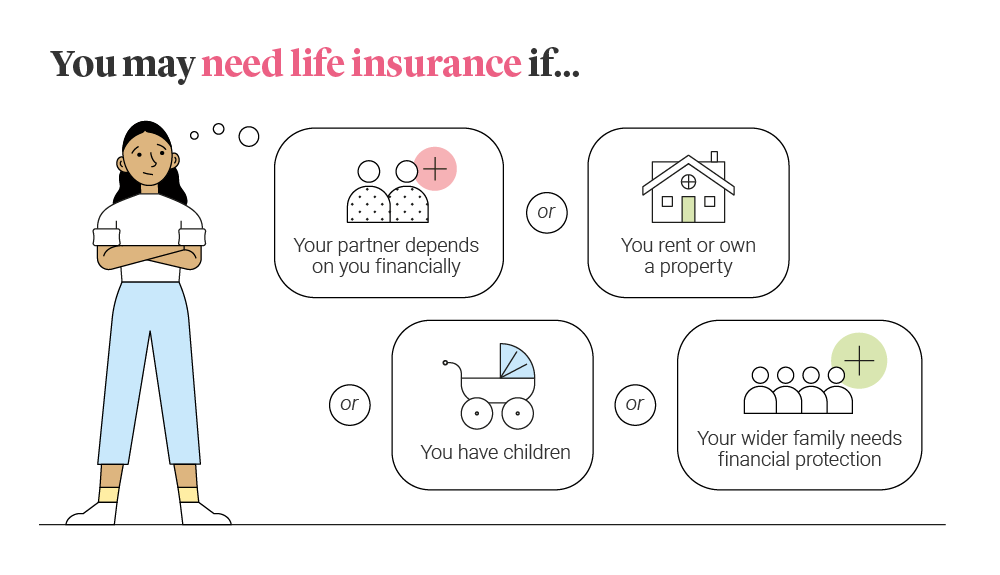
This is perhaps the most critical reason for young adults to seek coverage. While federal student loans in the United States are typically discharged upon the death of the borrower, private student loans often are not. If your parents or a spouse co-signed a private loan for your education, they remain legally responsible for that debt if you pass away. A life insurance policy ensures that your loved ones are not burdened with tens of thousands of dollars in debt during an already tragic time.
2. Marriage or Domestic Partnerships
If you and a partner rely on two incomes to cover rent, a mortgage, or daily living expenses, the loss of one income could be catastrophic. Life insurance provides a safety net that allows the surviving partner to maintain their standard of living, pay off shared debts, or remain in their home while they grieve and regroup.
3. Starting a Family
If you have children or are planning to have them soon, life insurance is a non-negotiable part of responsible parenting. It covers not just immediate final expenses, but also future costs like childcare, education, and the ongoing cost of living for your dependents until they reach adulthood.
4. Support for Aging Parents
In 2026, many young adults find themselves part of the "sandwich generation" earlier than expected, providing financial or caregiving support to aging parents. If your parents rely on your income to cover their medical bills or housing, you need a policy to ensure their care continues if you are no longer there to provide it.
Understanding Policy Types for Young Adults
Choosing the right type of insurance is just as important as deciding when to buy it. For most young people, the choice comes down to two primary categories: Term and Permanent.
Term Life Insurance: The Budget-Friendly Choice
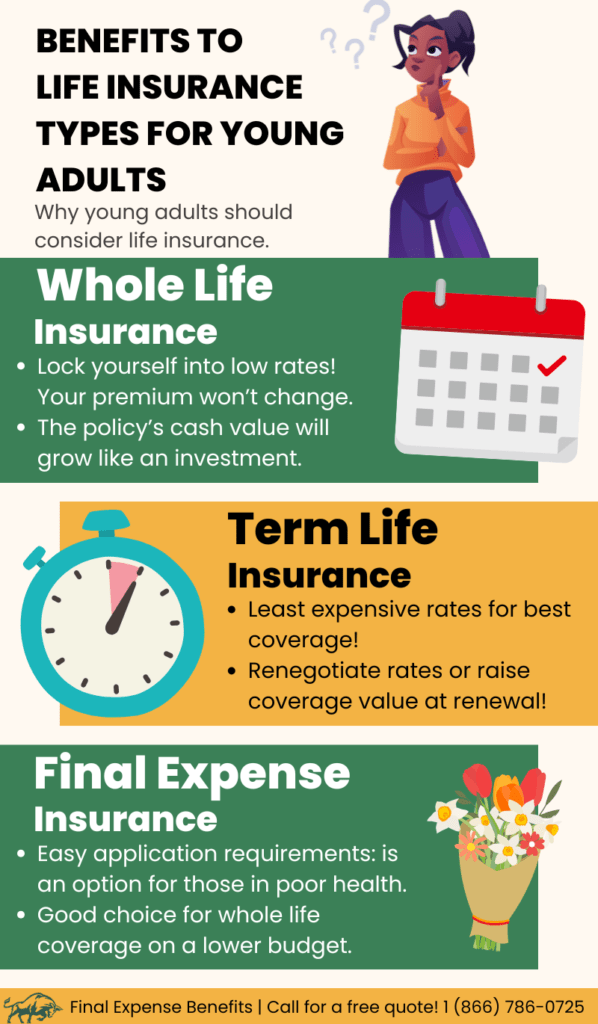
Term life insurance provides coverage for a specific period—typically 10, 20, or 30 years. It is the most straightforward and affordable type of insurance. If you die within the term, the policy pays out to your beneficiaries. If the term ends and you are still living, the coverage expires.
- Pros: Extremely low cost; high coverage amounts; simple to understand.
- Cons: No cash value; coverage ends eventually; premiums may be much higher if you try to renew at an older age.
Permanent Life Insurance: The Long-Term Asset
Permanent insurance, including Whole Life and Universal Life, covers you for your entire life as long as premiums are paid. These policies include a "cash value" component that grows over time.
- Pros: Lifetime coverage; builds equity/cash value; can provide tax-free loans or withdrawals.
- Cons: Significantly higher premiums; more complex than term insurance; may require a longer commitment to see financial benefits.
The Concept of "Insurability" – Protecting Your Future Self
One of the most overlooked reasons to buy life insurance while young is to "insure your insurability." Your health is a snapshot in time. In your 20s, you are likely at your peak physical condition. As you age, the risk of developing chronic conditions—such as high blood pressure, diabetes, or even more severe illnesses—increases.
Once a medical condition is diagnosed, it can make life insurance significantly more expensive or even impossible to obtain. By securing a policy now, you lock in coverage based on your current health. Many policies also offer "guaranteed insurability riders," which allow you to purchase additional coverage at specific intervals or life events (like the birth of a child) without having to undergo a new medical exam. This is a powerful way to protect against the unknown health challenges that the future may hold.
Life Insurance as a Strategic Financial Tool in 2026
In the current economic landscape of 2026, financial literacy has moved toward a more holistic view of wealth. Life insurance is no longer viewed in isolation but as part of a diversified "financial bucket" strategy.
For young professionals, especially those in high-earning trajectories, permanent life insurance can act as a "volatility buffer." When the stock market is down, having a policy with a cash value component provides an alternative source of liquidity that doesn't require selling assets at a loss. Additionally, the death benefit of a life insurance policy is generally paid out tax-free to beneficiaries, which is a major advantage in an era where tax laws are constantly shifting.
| Age Bracket | Primary Financial Goal | Recommended Insurance Strategy | Estimated Priority |
|---|---|---|---|
| 18–24 | Protecting co-signers & locking in rates | Low-cost 30-year Term policy | Moderate |
| 25–34 | Protecting spouse & young children | Combination of Term and Permanent | High |
| 35–44 | Income replacement & mortgage protection | High-value Term (20-year) | Critical |
| 45+ | Estate planning & final expenses | Permanent or Short-term high-value | High |
Common Misconceptions About Youth and Insurance
Many young adults talk themselves out of purchasing insurance due to a few common myths. It is vital to separate fact from fiction when building your 2026 financial plan.
"I Have Insurance Through My Employer"
Most companies offer a basic life insurance policy, often equal to one or two times your annual salary. While this is a great perk, it is rarely enough to cover a mortgage or provide for a family long-term. More importantly, employer-sponsored insurance is usually not "portable." If you leave your job—which the average worker in 2026 does every 4.2 years—you lose that coverage. Having a personal policy ensures you are protected regardless of your employment status.
"It’s Too Expensive"
The perceived cost of life insurance is often much higher than the actual cost. According to industry data, most people overestimate the cost of life insurance by three times. For a healthy 25-year-old, a $500,000 term policy can often be secured for less than $25 per month.
"I’m Single and Don’t Have Kids"
Even if you don't have dependents, someone will be responsible for your final expenses, which can average $10,000 to $15,000 in 2026. Furthermore, if you have any debt with a co-signer, you are leaving them at risk. Finally, buying now serves as a "placeholder" for the family you may have in the future.
How to Evaluate Your Current Need: A Step-by-Step Guide
If you are still unsure if you are "too young," follow these steps to conduct a self-assessment:
- Calculate Your Debt: Total up your private student loans, credit cards, and auto loans. Identify which ones have co-signers.
- Evaluate Your Dependents: Does anyone rely on your income to survive or maintain their lifestyle? This includes partners, children, or parents.
- Estimate Final Expenses: Research the cost of funeral services and probate in your specific region.
- Consider Your Future Goals: Do you plan to marry or have children in the next 5-10 years? If so, locking in a rate now is financially superior to waiting.
- Check Your Health: Are you currently healthy? If you have a family history of certain illnesses, the urgency to lock in a "preferred" rate is higher.
For more information on legal rights regarding debt and inheritance, you can visit the Consumer Financial Protection Bureau. For detailed actuarial data on life expectancy and risk, the Social Security Administration's Actuarial Tables provide a look at the statistical realities of aging.
Frequently Asked Questions
Can a college student buy life insurance?
Yes, a college student can buy life insurance as long as they are at least 18 years old. In fact, many students do this to protect their parents who may have co-signed significant private student loans. Because students are generally in a younger age bracket, they qualify for the lowest possible rates, making it an affordable addition to a financial plan even on a limited budget.
Is life insurance a good investment for a 20-year-old?
While term life insurance is a protection product rather than an investment, permanent life insurance (like Whole Life) can be considered a conservative component of a broader investment portfolio. In 2026, the cash value of these policies grows at a guaranteed rate and is not subject to market crashes. However, it should usually be considered after you have maximized contributions to high-yield options like a 401(k) or Roth IRA.
Does my health really affect the price that much?
Absolutely. Insurance companies place applicants into "risk classes" such as Preferred Plus, Preferred, Standard, and Substandard. A healthy non-smoker in their 20s will almost always land in the "Preferred Plus" category. A single health event—like a diagnosis of high cholesterol or a change in BMI—can move you down a tier, potentially increasing your premiums by 20% to 50% for the life of the policy.
Should I get term or whole life if I'm under 30?
For most people under 30, a 30-year Term Life policy is the best starting point. it provides the most coverage for the least amount of money during the years when your debts (like a new mortgage) are highest. However, if you have a high income and are looking for a tax-advantaged way to save for the future, a small Permanent policy alongside your Term coverage can be a smart "hybrid" approach.
What happens if I buy a policy and then start smoking or get sick?
Once your policy is "in force" (meaning you have been approved and are paying premiums), your rates are locked in. The insurance company cannot raise your premiums or cancel your coverage if your health declines or if you take up a high-risk hobby (like skydiving) later on. This is why securing a policy while you are young and healthy is such a significant financial advantage.
Practical Recommendation
If you are between the ages of 18 and 35, the most practical next step is to obtain a Term Life Insurance quote for a 20 or 30-year term. Aim for a coverage amount that is at least 10 times your annual income plus the total value of any co-signed debts. By acting now in 2026, you capitalize on your youth to create a foundational layer of financial security that will protect both your current loved ones and your future self.