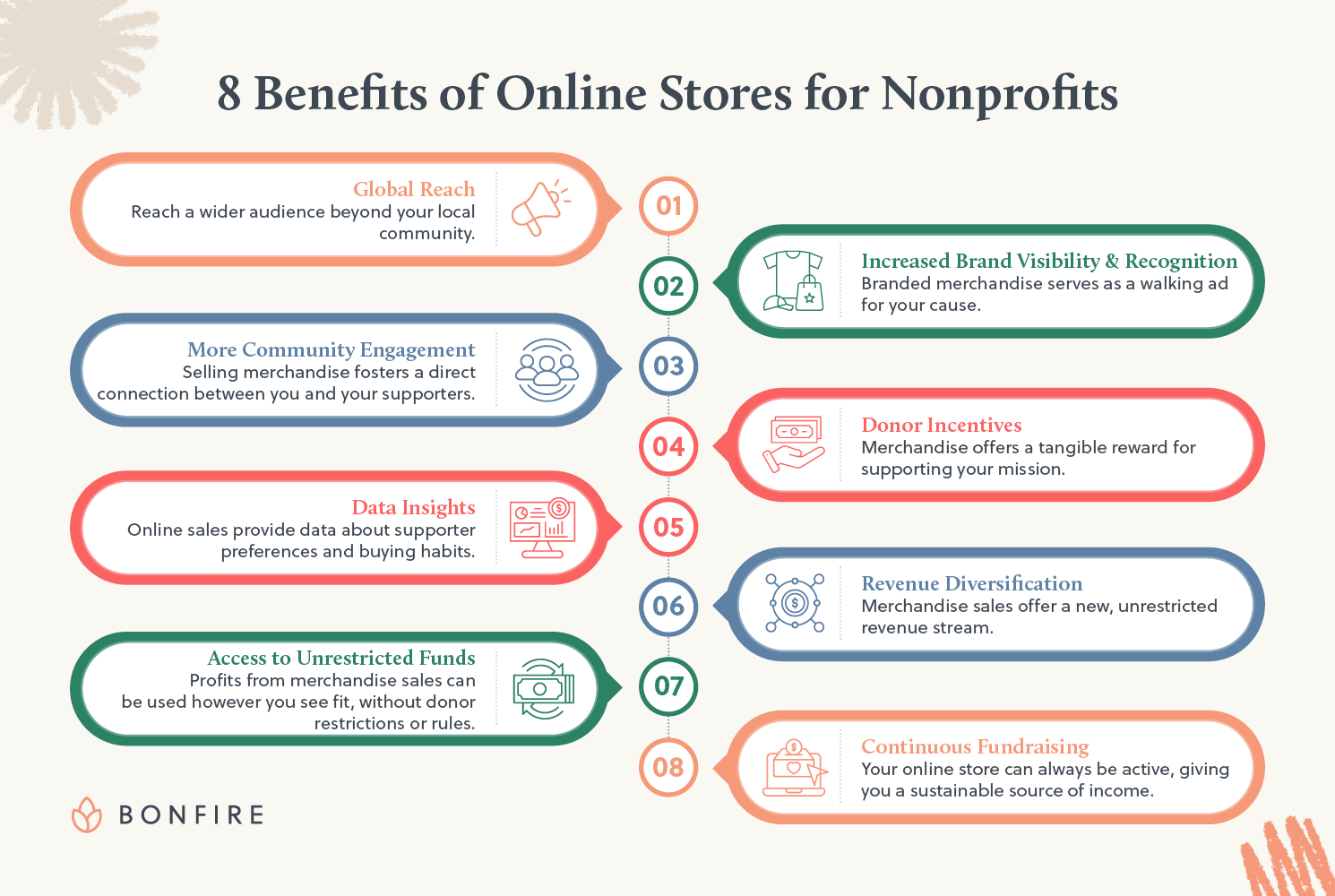
Launching an online store for a nonprofit organization is a strategic decision that balances potential revenue growth against operational complexity and resource allocation. Whether an e-commerce initiative is "worth the effort" depends entirely on your organization’s capacity to manage logistics, the alignment of merchandise with your mission, and your ability to convert your existing supporter base into repeat customers.
Evaluating the Value Proposition of Nonprofit E-Commerce
The allure of an online store for a nonprofit is often centered on the concept of "passive income." Organizations frequently envision a digital storefront where supporters purchase branded apparel, accessories, or mission-aligned products, with the proceeds automatically funding essential programs. In reality, the return on investment (ROI) is rarely passive.
To determine if a store is worth the effort, you must first distinguish between two primary models: Mission-Driven Merchandise and Third-Party Fundraising Products. Mission-driven stores sell items that promote your cause—such as a book written by an organization leader or a product crafted by the communities you serve. Fundraising stores, conversely, focus on branded merchandise (T-shirts, mugs, totes) intended to raise general operating funds.
The effort involved is multifaceted. It begins with the initial setup—choosing a platform like Shopify, WooCommerce, or a print-on-demand service—and continues with perpetual tasks including inventory management, order fulfillment, customer service, and digital marketing. For a small nonprofit, the "effort" can quickly consume staff hours that might otherwise be spent on grant writing, donor cultivation, or program delivery.
Operational Prerequisites and Technical Hurdles
Before committing to a storefront, assess your organizational readiness. E-commerce is not merely a website update; it is a business operation that requires specific infrastructure.
- Supply Chain Management: If you hold physical inventory, you require secure storage, an inventory tracking system, and a process for picking, packing, and shipping orders. If you use a print-on-demand model, you outsource production, but you lose control over the physical quality of the product and often see thinner profit margins.
- Financial Compliance and Tax Implications: In many jurisdictions, nonprofits are not exempt from sales tax obligations on unrelated business income. You must consult with a financial advisor to understand "unrelated business income tax" (UBIT) rules as they apply to your specific tax-exempt status.
- Digital Marketing Capacity: A store does not drive traffic on its own. You must have a strategy to promote products via email newsletters, social media, and your website. If your current marketing channels are already saturated, adding a store may lead to "message dilution," where donors are asked to choose between buying a product and making a direct, tax-deductible donation.
Comparative Analysis: Approaches to Nonprofit Retail
Different models offer varying levels of effort and risk. Understanding these trade-offs is essential for long-term viability.
| Model | Setup Effort | Ongoing Labor | Profit Margin | Risk Level |
|---|---|---|---|---|
| In-House Inventory | High | High | High | High |
| Print-on-Demand | Low | Moderate | Low | Low |
| Third-Party Marketplace | Very Low | Low | Moderate | Minimal |
| Mission-Affiliate Links | Very Low | Very Low | Varies | None |
- In-House Inventory: Offers the highest potential margin but requires significant upfront capital and logistical expertise. This is usually only sustainable for larger nonprofits with dedicated operations staff.
- Print-on-Demand (POD): A service like Printful or Custom Ink allows you to upload designs. When a supporter buys an item, the service creates and ships it. This minimizes risk and requires no storage, but your profit per unit is significantly lower because the vendor takes a substantial cut.
- Mission-Affiliate Links: Rather than running a store, you partner with existing brands that donate a percentage of sales. This requires almost zero operational effort, making it the most "worth it" option for organizations with limited staff.
The Opportunity Cost of E-Commerce
The most significant, yet often overlooked, factor is opportunity cost. Every hour spent managing a fulfillment issue or coordinating a T-shirt restock is an hour not spent on mission-critical activities. For many nonprofits, direct donations are a more efficient way to raise funds.
If your organization has a robust base of individual donors, you should analyze whether those donors are more likely to give $25 as a direct donation or spend $30 on a hoodie. In the former, the organization retains nearly 100% of the funds (minus processing fees). In the latter, after product costs and platform fees, the organization might retain only $5 to $10.
E-commerce is often more valuable as a marketing tool than a fundraising tool. When supporters wear your branded apparel, they become walking advertisements for your mission. If you view the store as an awareness campaign that happens to break even, the return on effort is much higher than if you view it as a primary source of capital.
Common Pitfalls and How to Avoid Them
Even organizations with the best intentions often fail to make their stores sustainable. Common mistakes include:
- The "Garage Full of T-Shirts" Problem: Ordering 500 units of a product to save on bulk pricing, only to find that demand is tepid. This traps cash in unsold inventory and creates logistical nightmares. Start with small, limited-run batches.
- Ignoring User Experience (UX): A store that is difficult to navigate or has a slow checkout process will lose sales. If your website is not mobile-optimized, you are effectively barring a significant portion of your potential supporters from purchasing.
- Lack of Integration: Ensure your e-commerce platform integrates with your Donor Management System (DMS) or CRM. If you cannot track which buyers are also donors, you lose the ability to cultivate those relationships effectively.
When is an Online Store Truly Worth the Effort?
An online store is typically worth the effort under specific conditions:
- You have a strong, recognizable brand that people are proud to display on apparel or gear.
- You have an active, high-traffic digital presence where you can promote products without disrupting your primary fundraising solicitations.
- Your mission allows for physical representations that reinforce your work (e.g., environmental groups selling reusable water bottles).
- You have the capacity to treat the store as a business unit rather than an afterthought.
If you are a small organization struggling to meet fundraising goals, your efforts are likely better spent on donor retention programs or grant research. If you are an established organization with a large, engaged community and existing operational capacity, a store can be a valuable supplement to your revenue stream.
Frequently Asked Questions
Does starting an online store affect my nonprofit tax-exempt status? Generally, no, but revenue from selling merchandise may be subject to Unrelated Business Income Tax (UBIT) if the sales are not substantially related to your exempt purpose. Always consult a tax professional to ensure compliance with current IRS guidelines.
Is print-on-demand better than buying bulk inventory? Print-on-demand is better for organizations with low volume or limited space, as it carries no inventory risk. Bulk inventory is better for high-volume, established brands looking to maximize margins, but it requires upfront capital and logistical management.
Should I use a separate website for my shop? It is generally better to integrate the shop into your existing website (using plugins like WooCommerce or Shopify's embedded features). This keeps users within your ecosystem, improves brand consistency, and simplifies SEO management.
Can an online store help with donor acquisition? Yes. A store can attract younger donors who may prefer purchasing a tangible item over making a direct cash contribution. It serves as an entry point; once they purchase an item, you can nurture them into becoming recurring donors.
What is the minimum team size needed to run a successful nonprofit store? At a minimum, you need one dedicated point person for marketing and one for fulfillment (or an outsourced vendor). If you are relying on volunteers, ensure there is a clear, repeatable process to avoid burnout and inconsistency.
Final Recommendation
If you decide to proceed, start with a "pilot" approach. Use a print-on-demand integration to launch three to five high-quality, mission-aligned products. Run this pilot for 90 days. If the project requires more time than the revenue justifies, you have the data to pivot back to traditional fundraising without having invested significant capital. If the store gains traction, use that data to justify scaling your inventory or investing in a more robust platform.