In the International System of Units (SI), a millimeter is defined as exactly one-thousandth (1/1,000) of a meter. This decimal relationship is a fundamental characteristic of the metric system, where each unit of length is related to the base unit, the meter, by a power of ten. Specifically, there are 1,000 millimeters in a single meter, making the millimeter a precise fractional component used for high-accuracy measurements.
The Mathematical Foundation of the Millimeter
To understand why a millimeter is a fraction of a meter, one must first look at the linguistic and mathematical structure of the metric system. The term "millimeter" is a compound word derived from the Latin prefix milli-, meaning one thousandth, and the base unit meter.
In scientific notation, a millimeter is expressed as $1 \times 10^{-3}$ meters. This base-10 structure was designed to eliminate the complex fractions and arbitrary conversion factors found in older systems of measurement, such as the imperial system. Because the metric system is decimal-based, moving between units like millimeters and meters is a matter of shifting the decimal point.
As of 2026, the meter remains the primary unit of length in the International System of Units. It is defined by the distance light travels in a vacuum during a specific time interval ($1/299,792,458$ of a second). Consequently, the millimeter is not just a theoretical fraction; it is a physical reality tied to the universal constant of the speed of light. Every millimeter is precisely $1/1,000$ of that light-defined meter.
The Hierarchy of Metric Length
The millimeter does not exist in isolation. It is part of a logical progression of measurements that scale up and down. Understanding where the millimeter sits in this hierarchy helps clarify its role as a fraction of the meter.
The Milli- Prefix
The prefix "milli-" is applied to various SI units, such as milliliters (volume) and milligrams (mass). In every instance, it signifies a division by 1,000. When we apply this to the meter, we are subdividing a human-scale unit—roughly the length of a stride or a long arm—into a precision-scale unit suitable for fine craftsmanship and scientific observation.
Comparing Millimeters to Other Subdivisions
While the millimeter is 1/1,000th of a meter, it is also related to other common subdivisions:
- Decimeters (dm): 1/10 of a meter. There are 100 millimeters in a decimeter.
- Centimeters (cm): 1/100 of a meter. There are 10 millimeters in a centimeter.
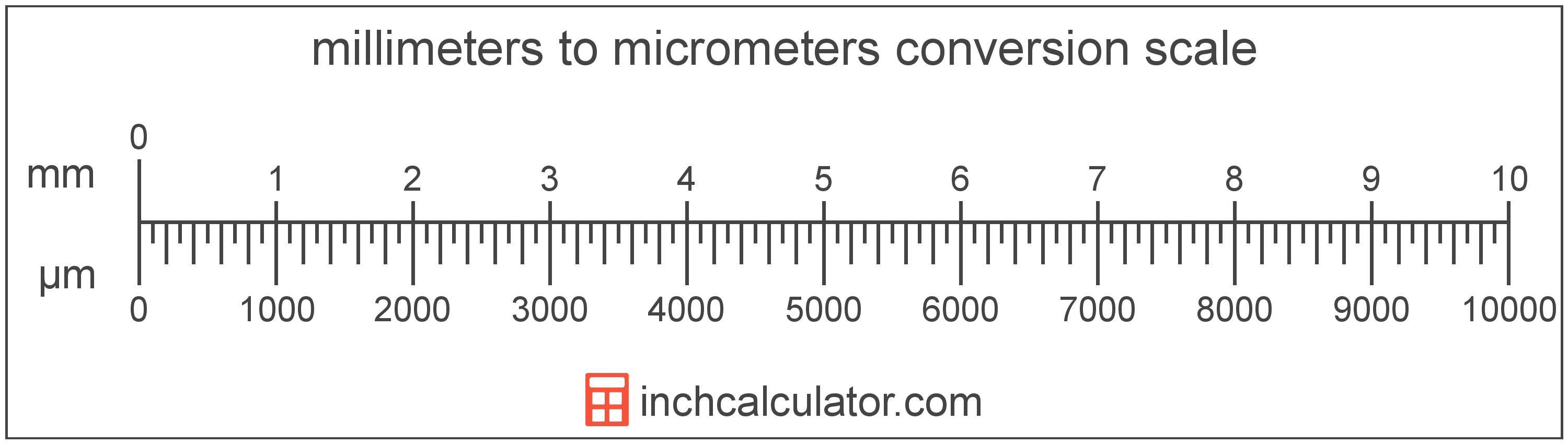
- Micrometers (µm): 1/1,000,000 of a meter. There are 1,000 micrometers in a single millimeter.
This consistency allows professionals to scale their measurements up or down without losing accuracy. For example, a construction project might use meters for the floor plan but switch to millimeters for the thickness of window glass or the gap in a door frame.
Step-by-Step: Converting Millimeters to Meters
Converting between these two units is one of the most common tasks in engineering, physics, and international trade. Because the relationship is exactly 1,000 to 1, the math is straightforward but requires attention to the direction of the conversion.
From Millimeters to Meters
To find how many meters are in a given number of millimeters, you must divide the value by 1,000.
Formula: $m = mm / 1,000$
Practical Example: If you have a steel rod that is 2,500 millimeters long:
- Identify the total millimeters: 2,500.
- Divide by 1,000 (or move the decimal point three places to the left).
- The result is 2.5 meters.
From Meters to Millimeters
To find how many millimeters are in a given number of meters, you multiply the value by 1,000.
Formula: $mm = m \times 1,000$
Practical Example: If a room is 4.25 meters wide:
- Identify the total meters: 4.25.
- Multiply by 1,000 (or move the decimal point three places to the right).
- The result is 4,250 millimeters.
Why Precision Requires the Millimeter
The reason we use a fraction as small as the millimeter is the need for "tolerances." In manufacturing, a "tolerance" is the allowable amount of variation in a physical dimension. If a car engine part is off by even five millimeters, the engine will likely fail. By using millimeters instead of meters, engineers can express these small distances using whole numbers rather than long strings of decimals.
Engineering and Manufacturing
In 2026, advanced manufacturing techniques, such as high-speed CNC machining and 3D metal printing, operate almost exclusively in millimeters. When an architect designs a skyscraper, the structural steel is often measured in millimeters to ensure that bolt holes align perfectly over hundreds of meters of height. A difference of 0.001 meters (1 millimeter) might seem insignificant over a long distance, but in precision assembly, it is the difference between a functional product and scrap metal.
Science and Healthcare
In medical imaging, such as MRI or CT scans, the resolution of the image is often measured in millimeters. For instance, a surgeon might look for a lesion that is only 3 millimeters wide. Using the meter as the primary unit of description ($0.003$ meters) would be cumbersome and prone to transcription errors in a high-pressure clinical environment.
Metric Conversion Reference Table
The following table provides a quick reference for understanding the millimeter’s place as a fraction of the meter and how it compares to other common metric units.
| Unit Name | Abbreviation | Fraction of a Meter | Scientific Notation (m) | Number of Millimeters |
|---|---|---|---|---|
| Kilometer | km | 1,000 / 1 | $10^3$ | 1,000,000 mm |
| Meter | m | 1 / 1 | $10^0$ | 1,000 mm |
| Decimeter | dm | 1 / 10 | $10^{-1}$ | 100 mm |
| Centimeter | cm | 1 / 100 | $10^{-2}$ | 10 mm |
| Millimeter | mm | 1 / 1,000 | $10^{-3}$ | 1 mm |
| Micrometer | µm | 1 / 1,000,000 | $10^{-6}$ | 0.001 mm |
Visualizing the Scale of a Millimeter
For those more accustomed to the imperial system (inches, feet, yards), visualizing a fraction of a meter can be challenging. A meter is roughly 3.28 feet. Since a millimeter is 1/1,000th of that, it is quite small, but still visible to the naked eye.
- The thickness of a standard credit card is approximately 0.76 millimeters, which is just slightly less than one full millimeter.
- A standard paperclip wire is usually about 1 millimeter in diameter.
- The tip of a standard ballpoint pen (medium point) is typically around 1.0 to 1.2 millimeters.
When you hold a meter stick, look at the smallest numbered lines. Those represent centimeters. Between those centimeter lines, you will see ten even smaller unnumbered lines. Each of those tiny gaps represents one millimeter. Seeing 1,000 of those tiny gaps lined up highlights the precision that the metric system offers compared to dividing an inch into 16ths or 32nds.
The Global Standard and BIPM
The definition of the millimeter as a fraction of the meter is maintained by the Bureau International des Poids et Mesures (BIPM). This intergovernmental organization ensures that a millimeter in Tokyo is exactly the same length as a millimeter in Paris or New York.
Before the adoption of the metric system, "fractions" of units were localized. A "thirteenth of a foot" might exist in one town but not the next. The metric system revolutionized science by creating a universal fraction. By defining the millimeter strictly as $1/1,000$ of a meter, the BIPM allows for globalized trade and scientific collaboration. If a company in Germany manufactures a 10mm bolt, it is guaranteed to fit a 10mm nut manufactured in Brazil.
More information on the current definitions of SI units can be found on the official BIPM website.
Common Misconceptions and Errors
Despite the simplicity of the base-10 system, errors often occur when people treat the millimeter as a fraction of the centimeter rather than the meter.
The "Centimeter Trap"
Many people learn that there are 10 millimeters in a centimeter and assume the conversion to meters involves a factor of 10 or 100. It is crucial to remember the "milli" prefix means 1,000. If you are converting from millimeters to meters, you must always account for three decimal places ($10^3$), not two.
The Error of Scale
In large-scale projects, such as civil engineering, measurements might be given in meters ($30.500$ m). Some mistakenly read the three decimal places as "50 millimeters" when it actually represents 500 millimeters. This occurs because $0.5$ meters is half a meter, and half of 1,000 is 500. Keeping the "1,000 units per meter" rule in mind prevents these costly errors in construction and design.
Frequently Asked Questions
Is a millimeter the smallest fraction of a meter?
No, the millimeter is not the smallest fraction. The metric system continues to subdivide by factors of 1,000. Below the millimeter is the micrometer (one-millionth of a meter), the nanometer (one-billionth of a meter), and the picometer (one-trillionth of a meter). These units are essential in fields like microbiology, nanotechnology, and atomic physics.
Why does the U.S. use millimeters if it uses the imperial system?
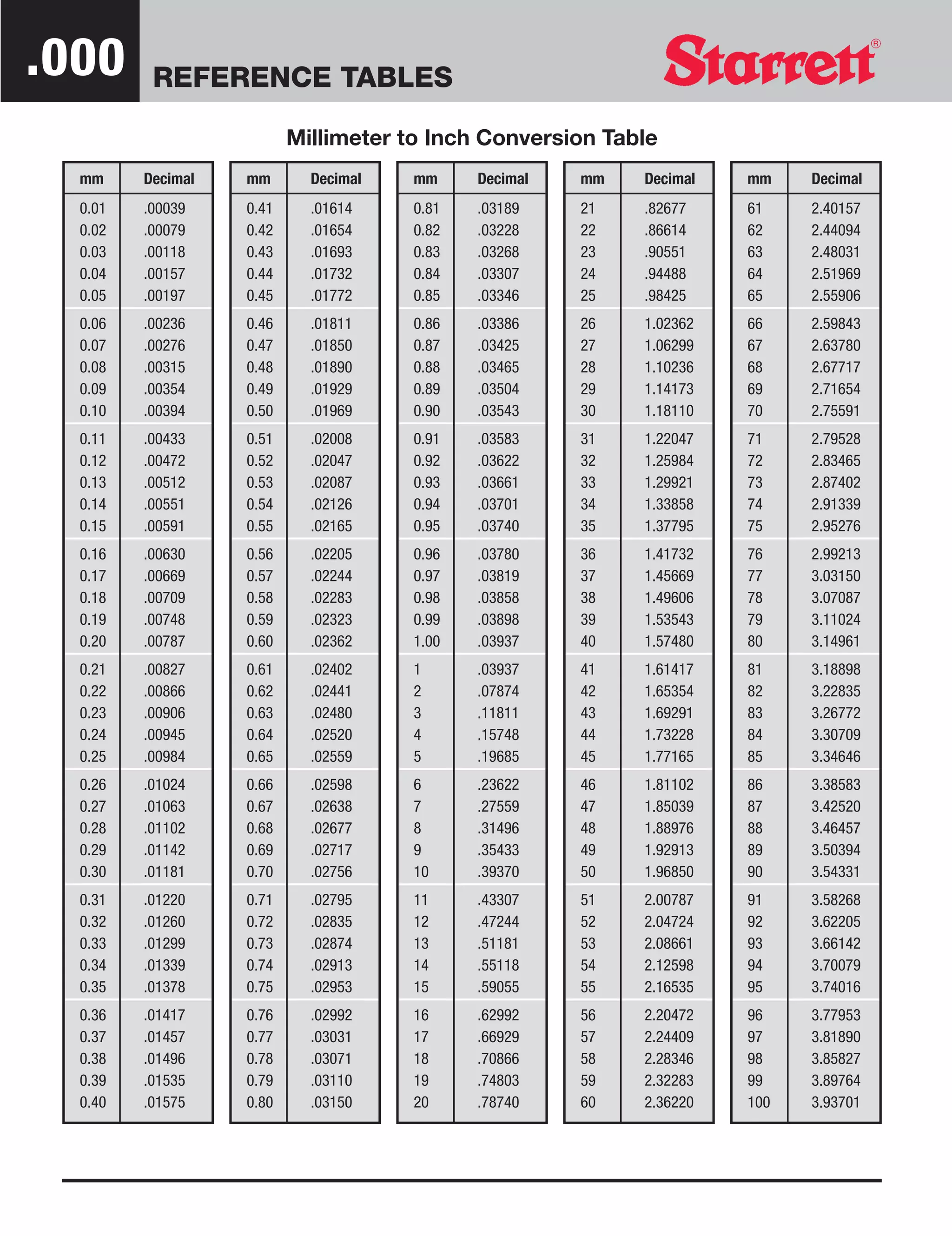
While the United States primarily uses inches and feet for daily life, the U.S. manufacturing, scientific, and medical sectors have largely transitioned to the metric system. For example, the National Institute of Standards and Technology (NIST) defines all U.S. customary units (like the inch) in terms of the meter. By international agreement, 1 inch is defined as exactly 25.4 millimeters. Therefore, even in the U.S., the millimeter serves as the foundational fraction for precision.
How do I write millimeters in decimals of a meter?
To express millimeters as a decimal of a meter, you place the millimeter value in the third decimal place (the thousandths place).
- 1 mm = 0.001 m
- 10 mm = 0.010 m
- 100 mm = 0.100 m
- 999 mm = 0.999 m
Can a millimeter be divided further for even more precision?
Yes. In high-precision industries like semiconductor manufacturing, a millimeter is often divided into "microns" (micrometers). There are 1,000 micrometers in a millimeter. In 2026, even consumer-grade 3D printers are capable of resolutions measured in fractions of a millimeter, typically around 0.1mm or 0.05mm.
Is the millimeter used for area and volume?
Yes, but the fractional relationship changes when you move to higher dimensions. Because a meter is 1,000 millimeters, a square meter ($m^2$) is $1,000 \times 1,000$, which equals 1,000,000 square millimeters. A cubic meter ($m^3$) is $1,000 \times 1,000 \times 1,000$, which equals 1,000,000,000 cubic millimeters. This is a common point of confusion; while the linear millimeter is $1/1,000$ of a meter, the cubic millimeter is $1/1,000,000,000$ of a cubic meter.
Moving Forward with Metric Measurements
Understanding that a millimeter is a fraction of a meter—specifically $1/1,000$—is the first step toward mastering the metric system. Whether you are a student, a DIY enthusiast, or a professional in a technical field, this knowledge allows you to communicate dimensions with absolute clarity across international borders.
For your next project, try to think entirely in millimeters for small-scale work. This eliminates the need for complex fractions like "3/16ths of an inch" and allows for easy scaling. If you find yourself working with a measurement larger than 1,000mm, simply move the decimal three places to the left to express your result in meters. This mathematical simplicity is exactly why the metric system, and the millimeter specifically, remains the global standard for human achievement in 2026.