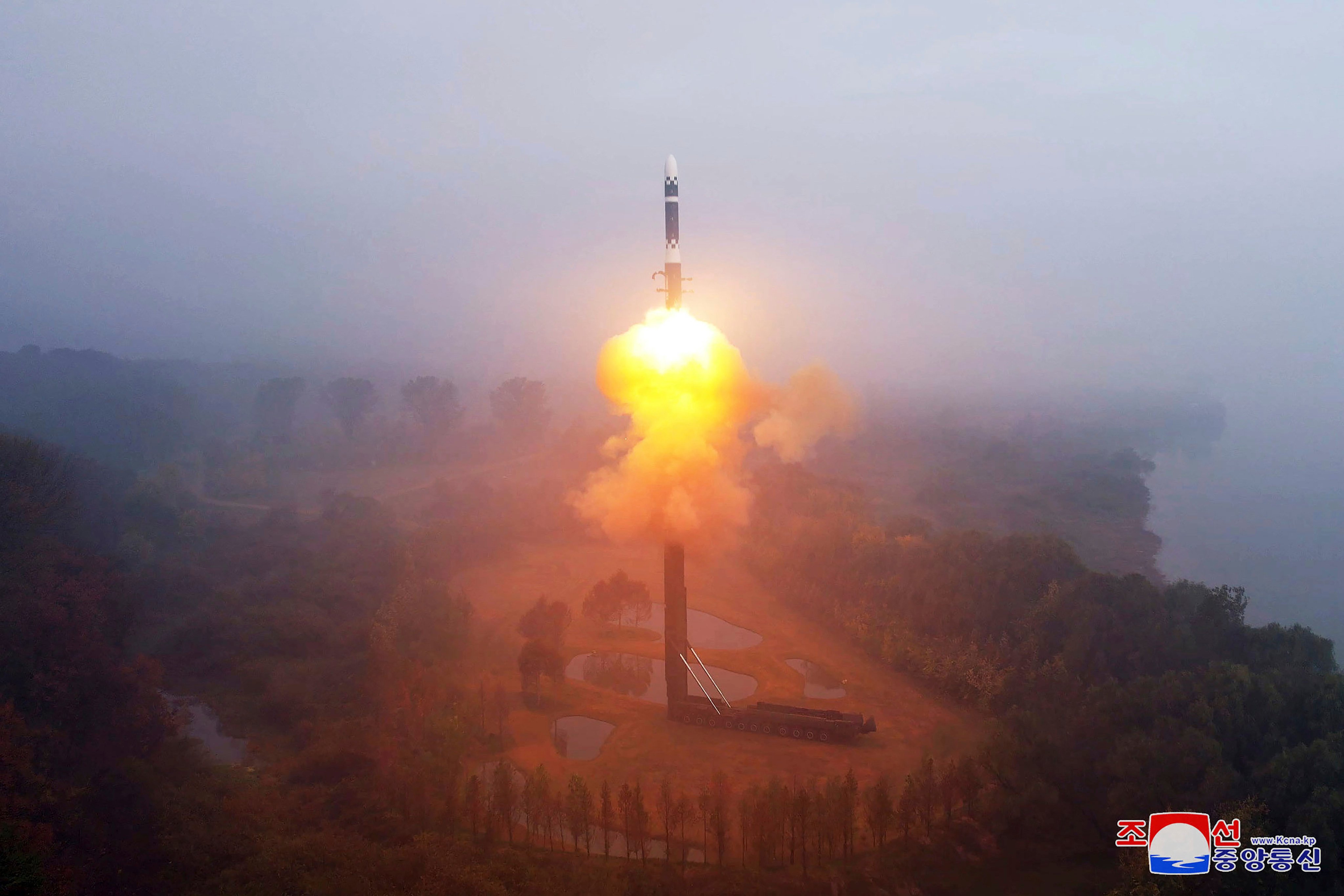
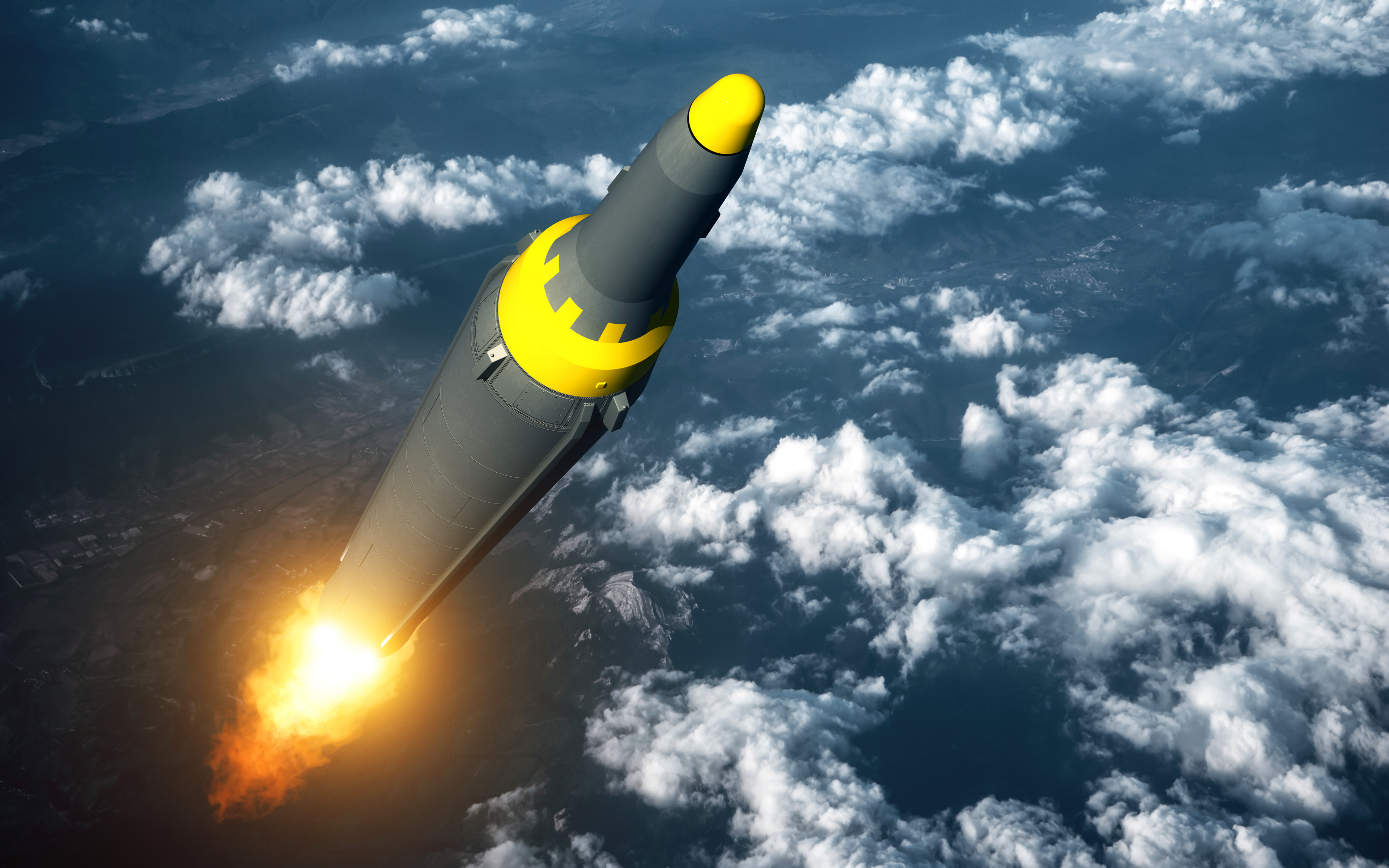
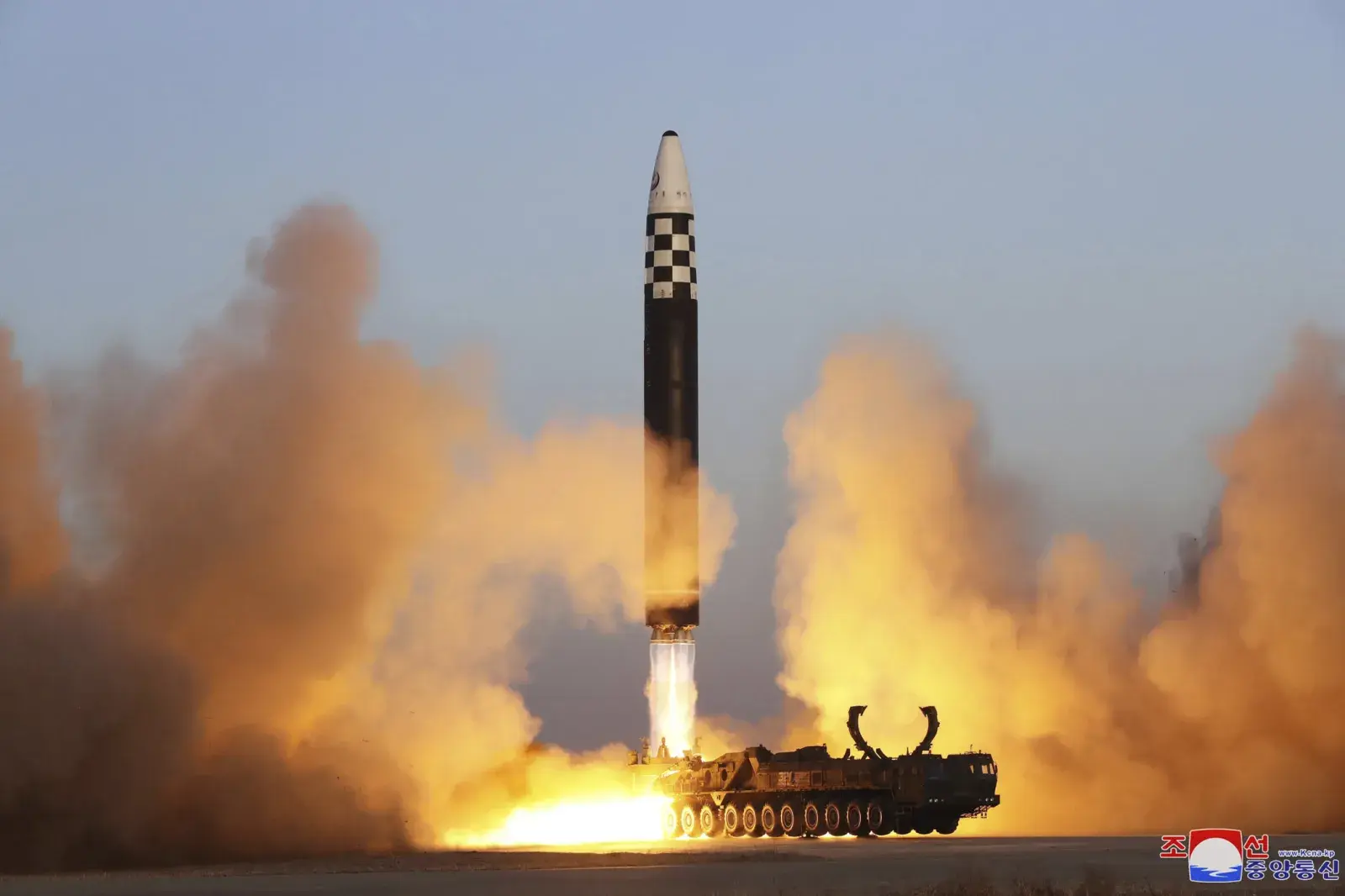
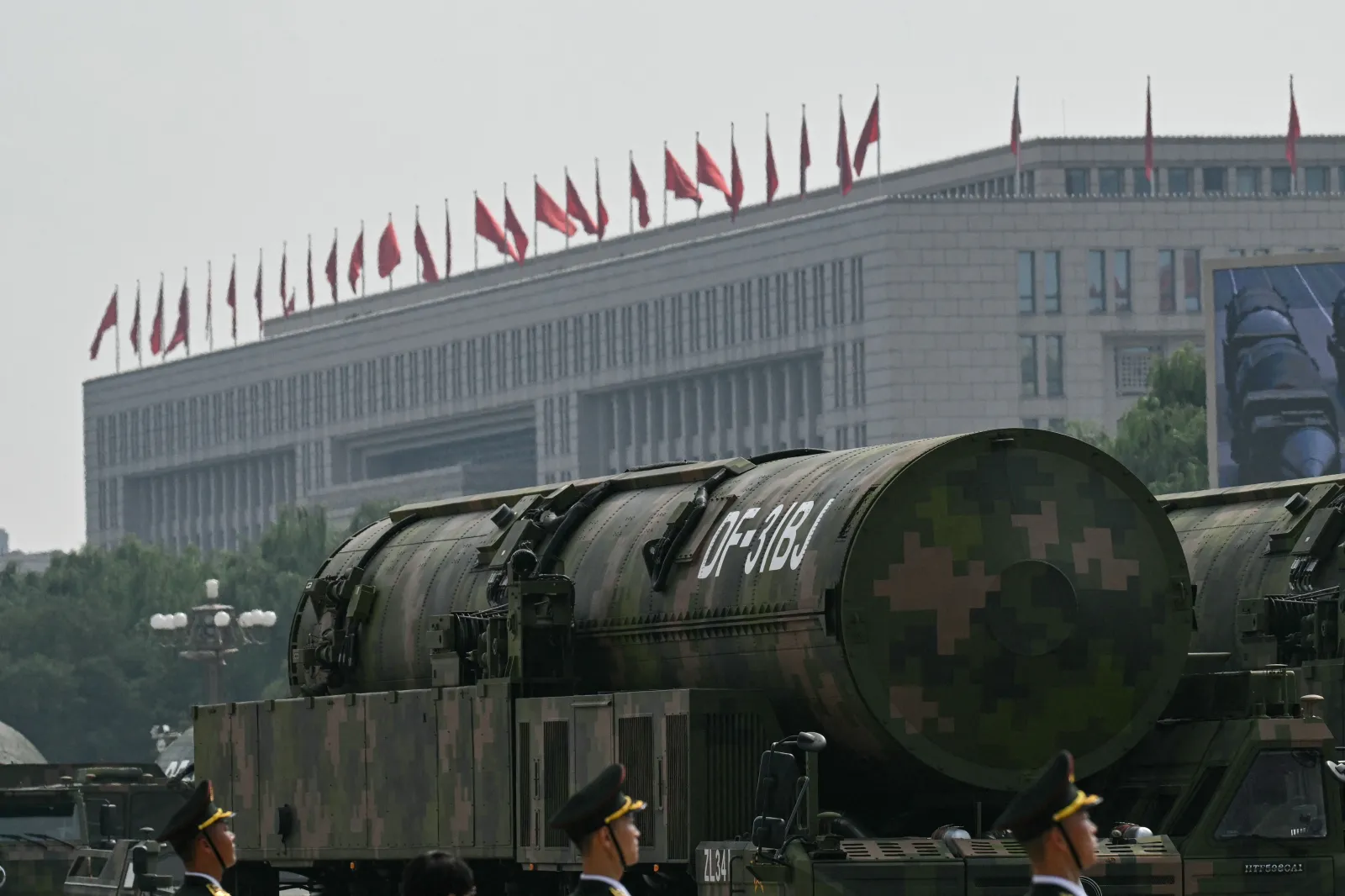
An ICBM (Intercontinental Ballistic Missile) is not itself a nuclear weapon, but rather a delivery vehicle designed to transport a payload over vast distances. While most ICBMs in modern military arsenals are equipped with nuclear warheads for strategic deterrence, they can theoretically carry conventional, chemical, or biological payloads. The missile is the "truck," and the nuclear device is the "cargo."
The Technical Distinction: Delivery Vehicle vs. Payload
To understand whether an ICBM is a nuclear weapon, one must distinguish between the propulsion system and the explosive package. In the world of aerospace and defense, these are two separate engineering disciplines that converge into a single weapon system. An ICBM is a guided ballistic missile with a minimum range of 5,500 kilometers (approximately 3,400 miles). This distance is traditionally defined by international arms control treaties, such as the original Strategic Arms Limitation Talks (SALT), as the distance required to strike the continental territory of a superpower from another continent.
The nuclear weapon part of the equation is the warhead—often referred to as the "physics package." This warhead is housed inside a Reentry Vehicle (RV) at the tip of the missile. When people ask if ICBMs are nuclear weapons, they are usually referring to the Strategic Nuclear Triad, where land-based missiles serve as one of the three pillars of nuclear delivery, alongside submarine-launched ballistic missiles (SLBMs) and strategic bombers.
While the technical possibility of a conventional ICBM exists, it is rarely realized in practice. The cost of building, maintaining, and launching a three-stage liquid or solid-fueled rocket is so high that using it to deliver a few thousand pounds of conventional explosives is rarely considered cost-effective. Furthermore, the "ambiguity problem" means that if a nation launches an ICBM, the receiving nation has no way of knowing if the warhead is conventional or nuclear until it detonates, which could inadvertently trigger a full-scale nuclear retaliation.
The Anatomy of an ICBM Flight Profile
To appreciate why ICBMs are primarily associated with nuclear payloads, it is helpful to examine how these machines function. An ICBM flight is divided into three distinct phases, each requiring immense precision and engineering.
1. The Boost Phase
This is the initial launch period where the missile’s rocket engines fire to lift the vehicle out of the Earth’s atmosphere. This phase typically lasts three to five minutes. During this time, the missile consumes a massive amount of fuel (either liquid or solid) to reach the speeds necessary for suborbital flight. By the end of this phase, the missile is traveling at approximately 7 kilometers per second (about 15,000 miles per hour).
2. The Midcourse Phase
Once the engines burn out and the final stage is jettisoned, the payload enters the midcourse phase. This is the longest part of the flight, lasting roughly 20 to 25 minutes. The warheads travel through the vacuum of space in a ballistic arc. It is during this phase that modern ICBMs may deploy multiple warheads or decoys. Because there is no atmospheric drag, objects of different weights travel at the same speed, making it difficult for missile defense systems to distinguish between a real nuclear warhead and a lightweight Mylar balloon decoy.
3. The Terminal Phase
The final phase begins when the Reentry Vehicle (RV) re-enters the Earth's atmosphere. This phase is brief, usually lasting less than a minute. The RV must be shielded with sophisticated heat-ablative materials to survive the extreme temperatures generated by atmospheric friction. At this point, the nuclear warhead is fuzed to detonate at a specific altitude (airburst) or upon impact (ground burst) to achieve the desired strategic effect.
Why Nuclear Payloads Dominate the ICBM Category
The historical and strategic evolution of the Cold War ensured that ICBMs and nuclear weapons became synonymous in the public consciousness. There are several reasons why ICBMs are almost exclusively nuclear-armed:
- Strategic Deterrence: The primary role of an ICBM is to ensure "Mutually Assured Destruction" (MAD). The threat of a nuclear-tipped ICBM reaching a target halfway around the world in 30 minutes acts as a deterrent against a first-strike attack. A conventional payload does not offer this same level of existential threat.
- Inaccuracy and Yield: In the 1950s and 60s, ICBMs were not particularly accurate. A missile might miss its target by several miles. To compensate for this "Circular Error Probable" (CEP), engineers equipped them with high-yield nuclear warheads. Even if the missile missed the exact target, the massive blast radius of a megaton-class nuclear weapon would still ensure the target's destruction.
- Weight and Efficiency: Lifting a payload into space requires immense energy. A nuclear warhead provides the most "bang for the buck" in terms of weight. A single nuclear warhead weighing a few hundred kilograms can produce an explosion equivalent to hundreds of thousands of tons of TNT. A conventional payload of the same weight would have a negligible effect on a strategic scale.
The Concept of MIRVs: One Missile, Multiple Weapons
One of the most significant developments in ICBM technology is the Multiple Independently Targetable Reentry Vehicle (MIRV). A single ICBM can carry several nuclear warheads, each capable of being directed at a different city or military installation.
When the missile reaches the midcourse phase, a "bus" (the post-boost vehicle) maneuvers in space and releases individual warheads one by one. This technology significantly complicates missile defense, as one interceptor can no longer neutralize the entire threat with a single hit. In the 2026 strategic landscape, the deployment of MIRVs remains a cornerstone of the arsenals of the United States, Russia, China, and France. This capability reinforces the status of the ICBM as the ultimate delivery system for nuclear mass destruction.
Comparing ICBMs to Other Strategic Delivery Systems
To better understand the role of the ICBM, it is useful to compare it with other systems that carry nuclear weapons. The "Nuclear Triad" is designed to ensure that even if one branch is destroyed in a surprise attack, the others can still retaliate.
| Feature | ICBM (Land-Based) | SLBM (Submarine-Based) | Strategic Bombers (Air-Based) |
|---|---|---|---|
| Launch Location | Fixed Silos or Mobile Launchers | Nuclear Submarines (SSBNs) | Airfields |
| Response Time | Very Fast (Minutes) | Fast (Minutes) | Slow (Hours) |
| Survivability | Low (Silos are mapped) | High (Underwater/Hidden) | Moderate (Can be moved/alerted) |
| Accuracy | Extremely High | High | High (with cruise missiles) |
| Primary Use | Immediate Deterrence/Strike | Second-Strike Capability | Flexible Signaling/Recallable |
| Range | >5,500 km | >5,500 km | Global (with refueling) |
The "Conventional Prompt Global Strike" Exception
While ICBMs are almost always nuclear, there has been significant debate in the 21st century regarding Conventional Prompt Global Strike (CPGS). The goal of CPGS is to provide a nation with the ability to strike any point on Earth with a conventional warhead within an hour.
The technology for this would involve using an ICBM-class booster to launch a high-precision conventional kinetic energy weapon. However, the international community has largely resisted this development. The primary concern is "warhead ambiguity." If a country like the United States or Russia launched a conventional ICBM at a terrorist target, an adversary might detect the launch on their early-warning satellites and assume it is a nuclear attack. This could lead to a retaliatory nuclear launch before the conventional nature of the incoming missile is ever confirmed. Consequently, the world remains in a state where an ICBM launch is universally interpreted as a nuclear event.
Are There Non-Weapon ICBMs?
Technically, the rockets used to launch satellites and astronauts into space are very closely related to ICBMs. For instance, the Soviet R-7 Semyorka, the world's first ICBM, was also the rocket that launched Sputnik 1 and Yuri Gagarin. Similarly, the American Atlas and Titan missiles were used for both nuclear deterrence and the Mercury and Gemini space programs.
In 2026, many of the heavy-lift launch vehicles used by space agencies share lineage with ICBM technology. However, once a missile is designated for space exploration and satellite deployment, it is referred to as a Space Launch Vehicle (SLV) rather than an ICBM. The core difference lies in the trajectory and the intent of the payload: one is designed to enter orbit and stay there (or go beyond), while the other is designed to travel through space briefly before falling back to a target on Earth.
Global Distribution and Modern Status (2026)
As of 2026, the club of nations possessing operational ICBMs remains small due to the extreme technical hurdles and costs involved. The primary operators include:
- United States: Maintains a fleet of Minuteman III missiles, which are currently being transitioned to the LGM-35A Sentinel program to modernize the land-based leg of the triad.
- Russia: Operates a diverse range of ICBMs, including the silo-based Sarmat and the road-mobile Yars. Russia has historically placed a heavy emphasis on land-mobile systems to increase survivability.
- China: Has rapidly expanded its ICBM force, including the DF-41, which is capable of carrying multiple MIRVed warheads and reaching any point in the United States.
- North Korea: Has demonstrated ICBM capabilities with the Hwasong series, specifically the Hwasong-17 and Hwasong-18, the latter being a solid-fueled missile that is easier to hide and faster to launch.
- India: Possesses the Agni-V, which, with a range of over 5,000-5,500 km, is classified as an ICBM and serves as a deterrent in the regional context.
International treaties, such as the New START (Strategic Arms Reduction Treaty), have historically governed the number of deployed ICBMs and warheads between the U.S. and Russia. However, the geopolitical environment of the mid-2020s has seen a shift toward modernization rather than further reduction, as nations seek to maintain the credibility of their nuclear deterrents against evolving missile defense technologies.
Frequently Asked Questions
Can an ICBM be stopped once it is launched?
While missile defense systems like the U.S. Ground-based Midcourse Defense (GMD) exist, intercepting an ICBM is extremely difficult. It is often described as "hitting a bullet with a bullet" at speeds exceeding Mach 20. These systems are designed to stop a limited attack from a "rogue state" rather than a massive salvo from a superpower.
Does every ICBM carry a nuclear bomb?
Technically, no, but for all practical and strategic purposes, yes. While they can be outfitted with conventional payloads, the cost and the risk of nuclear escalation mean that ICBMs are virtually always armed with nuclear warheads.
What is the difference between an ICBM and a cruise missile?
An ICBM is a ballistic missile; it follows a high, arching trajectory through space powered by a rocket. A cruise missile, such as the Tomahawk, is essentially a pilotless airplane that stays within the atmosphere and uses a jet engine for propulsion. ICBMs are much faster and have a much longer range than most cruise missiles.
How long does an ICBM take to reach its target?
An ICBM launched from one side of the world to the other typically takes between 25 and 35 minutes to reach its target. This short window of time is why early-warning systems and "launch on warning" policies are so critical to nuclear strategy.
Are ICBMs still relevant in 2026?
Yes. Despite the rise of hypersonic glide vehicles and advanced cyber warfare, ICBMs remain the most reliable and fastest way to deliver a strategic nuclear strike. They are a fundamental component of global security architecture and the concept of deterrence.
Summary and Next Steps
To summarize, while an ICBM is technically the delivery vehicle and a nuclear warhead is the weapon, the two are inextricably linked in modern military strategy. The ICBM provides the "reach"—the ability to strike anywhere on the globe in under 30 minutes—while the nuclear warhead provides the "punch"—a level of destruction that makes conventional war between nuclear-armed states unthinkable.
For those interested in the policy and safety aspects of these systems, further research into the Federation of American Scientists (FAS) or the Arms Control Association provides up-to-date data on global nuclear inventories and the status of international treaties. Understanding the distinction between the missile and its payload is the first step in comprehending the complex world of strategic arms and global security.