A good topic for research is one that is narrow enough to be manageable, significant enough to contribute to its field, and supported by available data or evidence. It must balance your personal interest with academic or professional relevance while addressing a specific "gap" in existing knowledge that can be realistically explored within your constraints.
The search for a research topic often feels like the most daunting phase of any project. Whether you are a graduate student embarking on a dissertation, a professional analyst, or an undergraduate student, the quality of your topic dictates the ease of your workflow and the ultimate impact of your findings. In 2026, where information is abundant but often fragmented, the ability to isolate a precise, high-value inquiry is a critical skill.
Defining the Core Attributes of a "Good" Research Topic
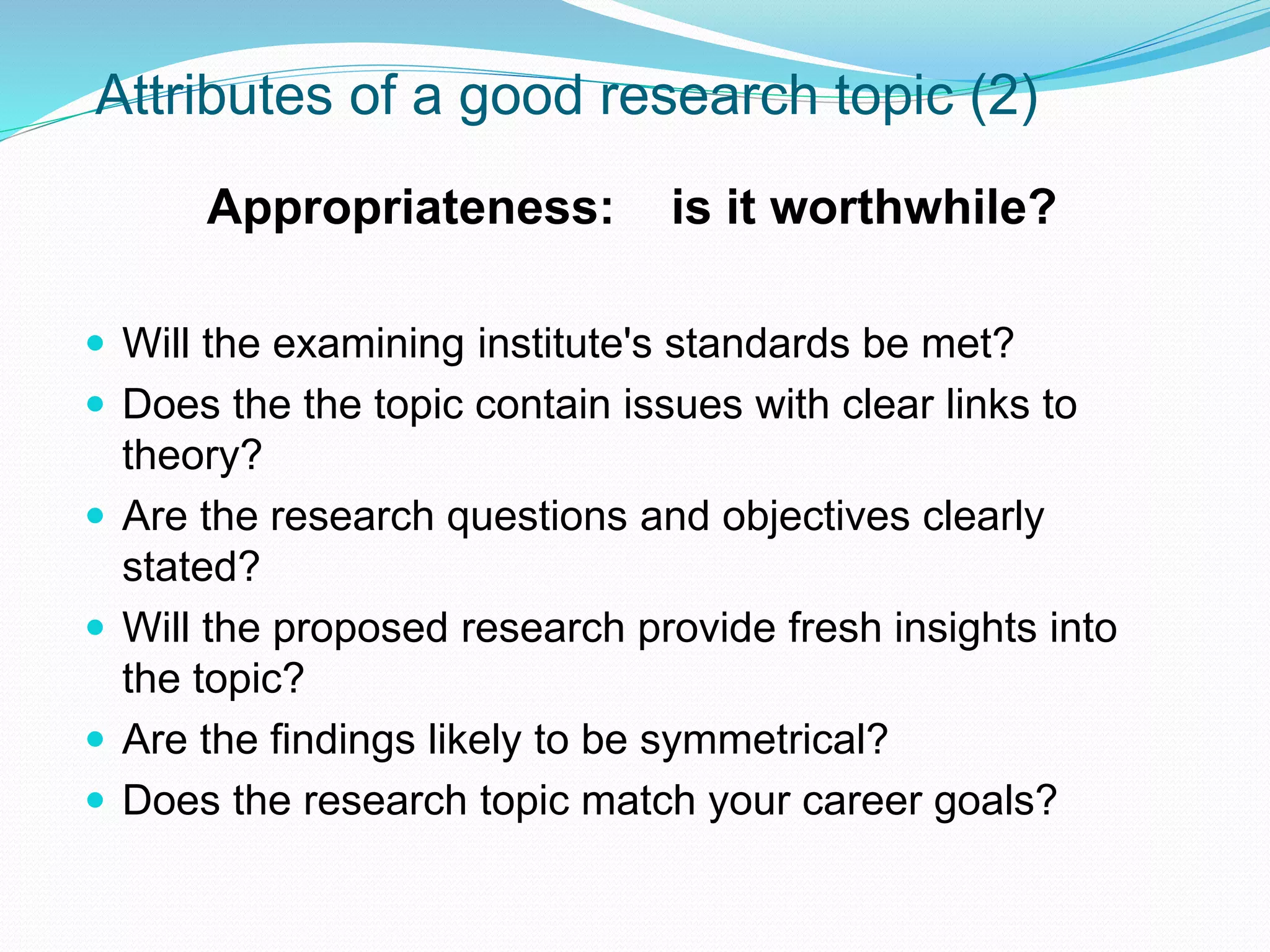
Not every interesting question makes for a good research topic. To ensure a project is academically viable and professionally credible, it must meet several foundational criteria. These are often summarized by the FINER criteria (Feasible, Interesting, Novel, Ethical, and Relevant), a framework widely used in both scientific and humanities research.
Feasibility and Scope
Feasibility is the most practical constraint. A topic might be fascinating—such as "The long-term effects of Mars colonization on human DNA"—but if you lack access to astronauts or specialized biological data, the research cannot be completed. You must evaluate your resources, including time, budget, and access to primary or secondary sources.
Scope is the second half of feasibility. A common mistake is choosing a topic that is too broad. For instance, "Climate Change" is a subject, not a research topic. "The impact of rising sea levels on coastal property values in Miami from 2015 to 2025" is a research topic. It limits the geography, the variables, and the timeframe, making it possible to collect specific data.
Originality and the "Research Gap"
A good topic must offer something new. This does not mean you must discover a new law of physics; rather, you should identify a "gap" in existing literature. This could involve:
- Applying an existing theory to a new context or population.
- Replicating a study with updated 2026 data to see if previous conclusions still hold.
- Resolving a contradiction between two competing studies.
- Analyzing a very recent phenomenon that has not yet been thoroughly documented.
Personal Interest and Motivation
Research is often a long, grueling process involving repetitive data collection and rigorous editing. If you are not genuinely curious about the answer to your research question, you are more likely to experience burnout. A good topic aligns with your long-term career goals or personal passions, providing the "internal fuel" necessary to overcome technical hurdles.
The Strategic Process of Topic Selection
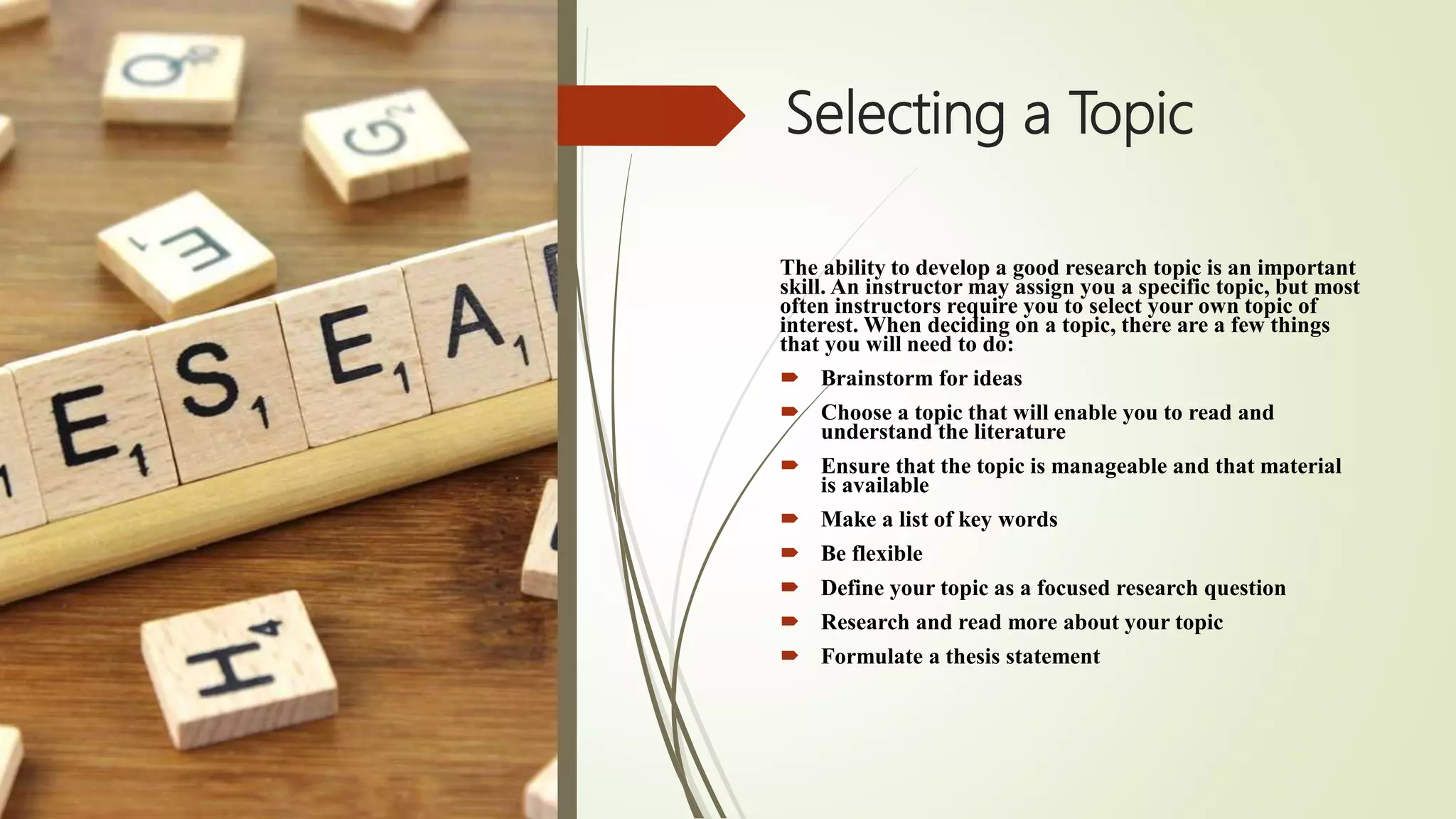
Choosing a topic is rarely a linear "eureka" moment. It is a systematic narrowing process that moves from broad interests to a specific, testable hypothesis or question.
Step 1: Broad Brainstorming and Environmental Scanning
Start by listing general areas that interest you. In 2026, look at current global trends, such as the ethics of generative AI, the logistics of renewable energy transitions, or the shifting paradigms of remote work. Read general news, attend webinars, and browse recent academic journals to see what scholars are currently debating.
Step 2: Preliminary Literature Review
Before committing, perform a "quick dive" into databases like Google Scholar or JSTOR. This step is not about reading every paper but about checking for "saturation." If there are already thousands of papers answering your exact question, you need to pivot. Conversely, if there are zero results, you might have a topic that is too obscure or lacks available data.
Step 3: Narrowing via the "Who, What, Where, When" Method
Take your broad interest and apply filters.
- Subject: Instead of "Education," try "Higher Education."
- Population: Instead of "Students," try "First-generation university students."
- Location: Instead of "The World," try "Urban centers in Southeast Asia."
- Variable: Instead of "Success," try "Retention rates after the introduction of AI tutoring."
Step 4: Formulating the Research Question
The transition from a "topic" to a "question" is the hallmark of a sophisticated researcher. A question demands an answer and provides a clear direction for your methodology. For example:
- Weak Topic: Artificial Intelligence in healthcare.
- Strong Question: To what extent does the implementation of diagnostic AI reduce wait times in emergency departments in rural hospitals compared to urban centers?
High-Value Research Areas for 2026
As we navigate 2026, certain fields are experiencing rapid transformation, making them fertile ground for new research. These areas often have high funding potential and significant societal impact.
Technology and Digital Ethics
With the stabilization of large-scale AI models, the focus has shifted from "what AI can do" to "how AI should be governed." Topics regarding algorithmic bias, the psychological effects of deep-dive virtual reality, and the security of post-quantum cryptography are in high demand.
Sustainability and Climate Adaptation
The conversation has moved beyond proving climate change to navigating its consequences. Research into "circular economies" (systems aimed at eliminating waste), the efficacy of carbon capture technologies in specific industrial sectors, and the sociology of climate migration offers significant opportunities for original work.
Public Health and Personalized Medicine
Following the global shifts in healthcare infrastructure over the last few years, there is a major focus on personalized medicine—tailoring treatments based on genetic profiles. Additionally, the long-term mental health impacts of the "digital-first" era on Gen Alpha provide a massive data set for social scientists.
Comparing Broad vs. Refined Research Topics
The following table illustrates how a general interest can be transformed into a high-quality, researchable topic.
| General Subject | Broad Interest | Refined Research Topic | Primary Research Question |
|---|---|---|---|
| Economics | Remote Work | Productivity in remote settings. | How has the transition to permanent remote work affected middle-management productivity in the US tech sector? |
| Psychology | Social Media | Mental health and teenagers. | What is the correlation between short-form video consumption (under 60 seconds) and attention spans in 13-15 year olds? |
| Environment | Solar Power | Effectiveness of solar panels. | A comparative analysis of solar panel efficiency in high-humidity vs. low-humidity tropical climates in 2026. |
| Education | AI in Schools | AI tools for teachers. | Does the use of AI-generated lesson plans reduce teacher burnout levels in public secondary schools? |
| Politics | Voting | Digital voting security. | How do blockchain-verified voting systems influence voter turnout among rural populations in the European Union? |
Evaluating Resources and Technical Feasibility
Once you have a refined topic, you must perform a "stress test" before starting the actual research. This involves a cold assessment of the tools and data you have at your disposal.
Data Accessibility
If your topic requires proprietary data (e.g., internal financial records of a private company) or sensitive information (e.g., medical records), do you have the necessary permissions? In 2026, data privacy laws like the GDPR and its subsequent global iterations have become stricter. Ensure your research plan complies with institutional review board (IRB) standards if you are dealing with human subjects.
Methodological Alignment
Does your topic suit a qualitative or quantitative approach?
- Quantitative: Best for topics involving trends, averages, and "how many." (e.g., "The impact of interest rates on housing starts.")
- Qualitative: Best for topics involving human experience, culture, and "why." (e.g., "The cultural significance of traditional textiles in modern fashion.")
Selecting a topic that aligns with your mathematical or linguistic strengths will significantly improve the quality of the final output.
Common Challenges and How to Avoid Them
The "Too Narrow" Trap
While narrowing your topic is generally encouraged, it is possible to go too far. If you try to research "The impact of a specific brand of organic fertilizer on the growth of three specific rose bushes in my backyard in July 2026," your findings will be statistically insignificant and of no interest to anyone else. Ensure your topic has "generalizability"—the ability for your findings to be applied to a larger context.
Avoid the "Double-Barrel" Question
A double-barrel research question tries to answer two unrelated things at once. For example: "How does remote work affect productivity and what is the best way to cook vegan meals?" While this is an extreme example, many researchers combine two complex variables that deserve separate studies. Stick to one primary relationship or phenomenon.
Lack of Academic Depth
Ensure your topic isn't just "descriptive." A paper that simply describes how a new technology works is a report, not a research paper. A good research topic must be analytical or argumentative. It should seek to explain why something happens or how one variable influences another.
Frequently Asked Questions
How do I know if my research topic is too broad?
If you can summarize your topic in one or two words (e.g., "Cybersecurity" or "Nutrition"), it is definitely too broad. A good sign that your topic is too wide is if you find yourself overwhelmed by the amount of literature available, or if you cannot identify a specific group of people or a specific timeframe you are studying. Try to add at least three "limiters" (who, where, and when) to narrow it down.
Can I change my research topic after I start?
Yes, and this is actually a common part of the process. As you begin your in-depth literature review, you may discover that your original question has already been answered or that the data is impossible to find. Most researchers "pivot" or "tweak" their topic within the first 20% of their project timeline. However, avoid making major changes late in the process, as this can lead to missed deadlines and disjointed analysis.
Is it better to choose a "safe" topic or a "risky" one?
A "safe" topic is one where there is plenty of existing data and established theories. These are easier to complete but harder to make an impact with. A "risky" topic involves new phenomena with little existing research. These are harder to execute but can lead to ground-breaking results. For undergraduate work, "safe but refined" is usually best. For doctoral or professional work, "calculated risk" is often preferred to demonstrate original thought.
How do I find a "gap" in existing research?
Look at the "Recommendations for Future Research" section at the end of recent academic papers. Authors almost always list the questions they couldn't answer and the limitations of their own studies. These are essentially "roadmaps" to good research topics that the academic community has already identified as necessary.
What role does AI play in selecting a research topic in 2026?
AI is a powerful brainstorming partner but a poor decision-maker. You can use generative AI to suggest sub-topics within a field or to help summarize the "state of the art" in a particular niche. However, AI cannot judge the "feasibility" of a topic for you—it doesn't know your specific access to data or your personal motivations. Use AI to expand your list of ideas, then use human critical thinking to narrow it down.
Practical Recommendation for Moving Forward
The most effective way to finalize a good topic for research is to write a one-page prospectus. In this document, state your proposed title, your primary research question, the gap you intend to fill, and a brief description of how you will collect your data.
Once written, present this one-pager to a mentor, supervisor, or peer. If they can understand your goal within two minutes of reading, you likely have a focused and viable topic. If they have dozens of clarifying questions about what you are actually studying, your topic needs more refinement. Remember: a clear topic is the foundation of a clear argument. Spend the extra time at the beginning to save yourself months of confusion at the end.