While many Elvis Presley albums are worth between $5 and $20 due to their massive production numbers, specific rare pressings, Sun Records originals, and pristine-condition first editions can command prices from $1,000 to over $20,000. Value is strictly determined by the record's pressing plant, label color, and "Goldmine" condition grade.
Determining the value of an Elvis Presley record collection in 2026 requires moving past the sentiment of "The King" and into the technical world of discography. Elvis was the most successful solo artist in history, which creates a unique paradox for collectors: because he sold hundreds of millions of records, the vast majority of his vinyl is common and carries low financial value. However, because his fanbase remains global and dedicated, the "Holy Grail" items have reached record-breaking prices at auction.
Understanding the Market for Elvis Presley Vinyl
The market for Elvis vinyl is bifurcated. On one side, you have the mass-produced RCA Victor releases of the 1960s and 1970s. On the other, you have the pre-RCA Sun Records era and the very first "Black Label" RCA pressings from 1956. As we sit in 2026, the market has stabilized significantly. The surge of interest surrounding the 2022 biopic has matured into a steady demand from serious "completist" collectors who are looking for specific matrix numbers and obscure regional variations.
To understand if your album is worth anything, you must first accept that "old" does not automatically mean "valuable." A scratched copy of the Blue Hawaii soundtrack from 1961—an album that sold millions—is worth almost nothing. Conversely, a 1954 78-rpm record of "That’s All Right" on the Sun label could be a life-changing financial asset.
The Core Factors That Determine Elvis Album Value
Before looking up individual titles, collectors and estate evaluators look at four primary pillars of value. If an album fails in any of these categories, its market price drops precipitously.
1. The Goldmine Grading Standard
In the vinyl world, condition is everything. A record that looks perfect but has "surface noise" (hissing or popping) is graded lower than one that plays silently. Collectors use the Goldmine Standard:
- Mint (M): Absolutely perfect in every way. Rarely used for Elvis records unless they are still sealed from the 1950s.
- Near Mint (NM): A nearly perfect record. No visible signs of wear or surface marks.
- Very Good Plus (VG+): Will show some signs that it was played but handled carefully. This is the "sweet spot" for most valuable Elvis sales.
- Very Good (VG) and Below: Significant surface noise, scratches, and jacket wear. Most Elvis records found in attics fall here and have minimal value.
2. The Label Variation (The Color Code)
RCA Victor changed their label designs frequently. Identifying the label is the fastest way to date an Elvis record:
- Black Label with Nipper (the dog) at the top: These are generally the earliest and most valuable RCA pressings (1956–1964).
- Black Label with Nipper on the side: Used in the mid-1960s.
- Orange Label: Used from 1968 to 1974. These are generally less valuable unless they are rare promos.
- Tan or Black (without Nipper) Labels: Used in the mid-to-late 1970s. Generally common and low value.
3. Mono vs. Stereo
In the late 1950s and early 1960s, records were released in both Mono and Stereo. For early Elvis titles, Mono copies are often more desirable because that is how the music was originally intended to be heard. However, for mid-60s releases, "True Stereo" versions can sometimes be rarer than their Mono counterparts. Beware of "Electronic Stereo" or "Simulated Stereo" reissues from the 1970s; these are almost universally disliked by audiophiles and hold little value.
4. Completeness (Inserts and Bonuses)
Elvis albums often came with "bonus" items like gatefold photos, calendars, posters, or even pieces of his clothing (as seen in the Elvis: Worldwide 50 Gold Award Hits Vol. 1 box set). In 2026, a record that still has its original 1950s or 60s photo insert can be worth three to five times more than the record alone.
The "Holy Grails": Elvis Records Worth Significant Money
If you find one of these in your collection, you should seek a professional appraisal from a member of the Appraisers Association of America or a specialized music auction house.
The Sun Records Singles (1954–1955)
Before Elvis signed with RCA, he recorded five singles for Sam Phillips at Sun Records in Memphis. These are the most valuable Elvis recordings.
- Sun 209: "That’s All Right" / "Blue Moon of Kentucky"
- Sun 210: "Good Rockin' Tonight" / "I Don't Care if the Sun Don't Shine"
- Sun 215: "Milkcow Blues Boogie" / "You're a Heartbreaker"
- Sun 217: "Baby, Let's Play House" / "I'm Left, You're Right, She's Gone"
- Sun 223: "Mystery Train" / "I Forgot to Remember to Forget"
An original 78-rpm or 45-rpm copy of any of these, in VG+ condition or better, can easily fetch $5,000 to $15,000. Authenticity is key here; thousands of reproductions exist. Genuine Sun copies have "push marks" (small indentations near the center hole) and specific matrix numbers etched into the run-out groove.
"Elvis Presley" (RCA Victor LPM-1254) - 1956
His debut album. To be highly valuable, it must be a first pressing with the "Pale Pink" and "Pale Green" lettering on the cover. If the "Elvis" text is bright neon or the RCA logo is the later "boxed" version, it is a reissue. A pristine 1956 first pressing can sell for $1,000 to $3,000.
"Stay Away, Joe" (RCA Promo) - 1967
This is an example of a "Promotional" record sent to radio stations. Because it was never intended for public sale and features a unique cover, it is incredibly rare. Collectors in 2026 have paid upwards of $5,000 for a Near Mint copy.
Common Elvis Records That Are Worth Very Little
It can be disappointing to discover that a 50-year-old record is only worth the price of a sandwich, but market saturation is a reality. The following types of Elvis records are rarely worth more than $5 to $15:
- RCA Camden / Pickwick Releases: These were "budget" labels. Elvis's manager, Colonel Tom Parker, licensed these tracks for mass-market sale in grocery stores and drug stores. Because they are budget reissues of older songs, they are extremely common.
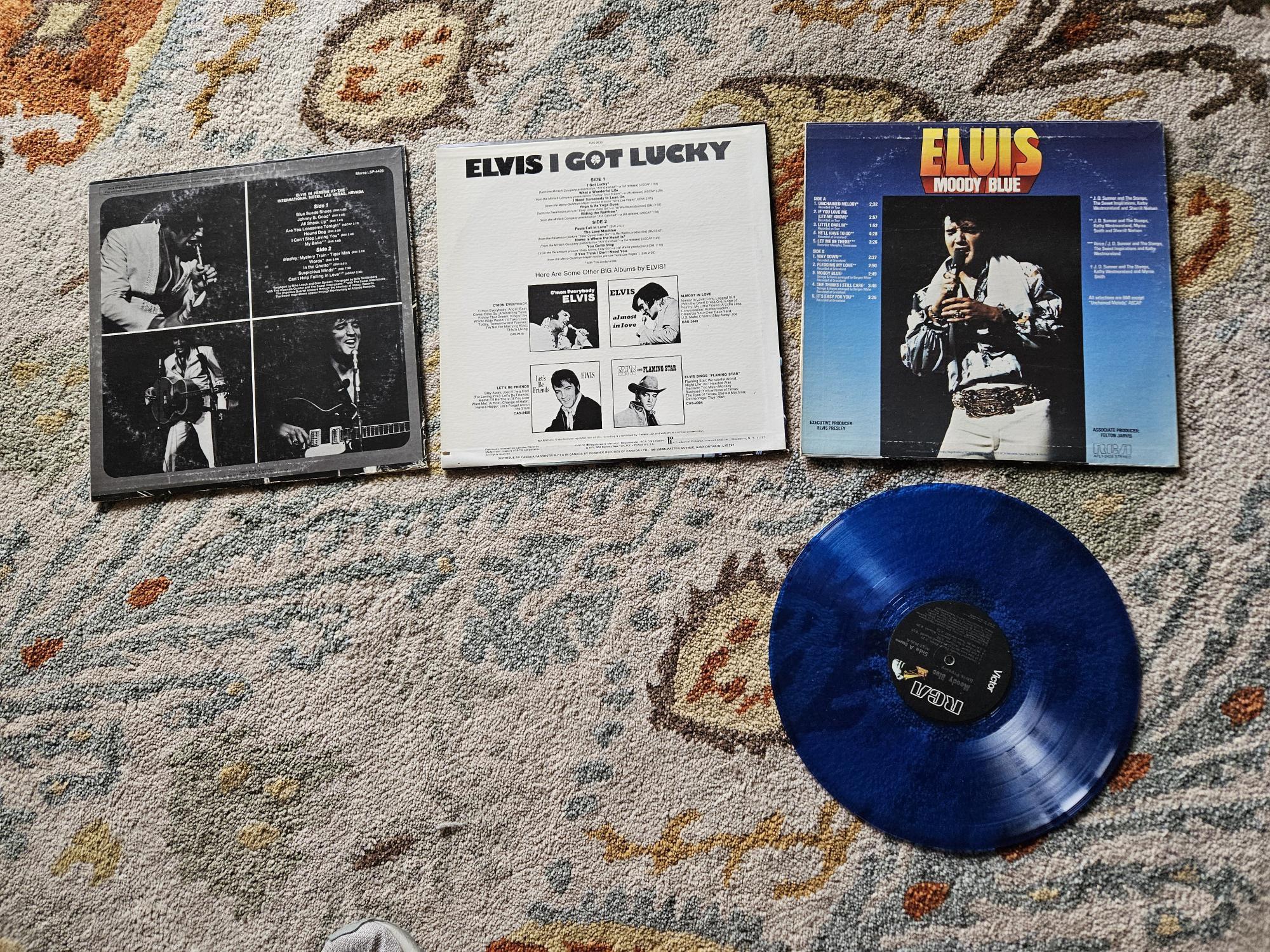
- 1977 Post-Death Pressings: When Elvis passed away in August 1977, RCA plants worked 24/7 to meet the sudden demand. Millions of copies of Moody Blue (on blue vinyl) and Elvis in Concert were produced. Despite the "Blue Vinyl" novelty, these are not rare.
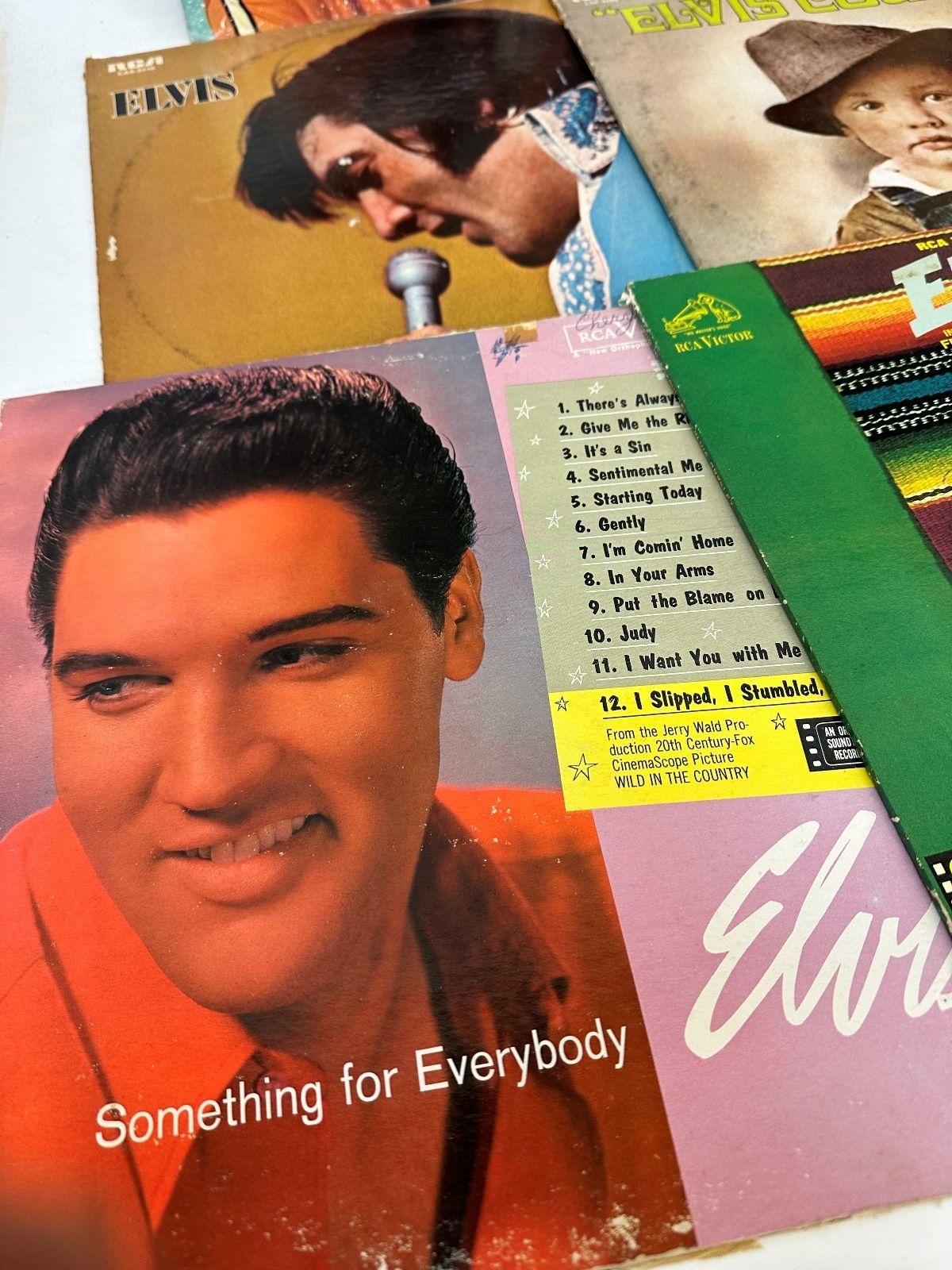
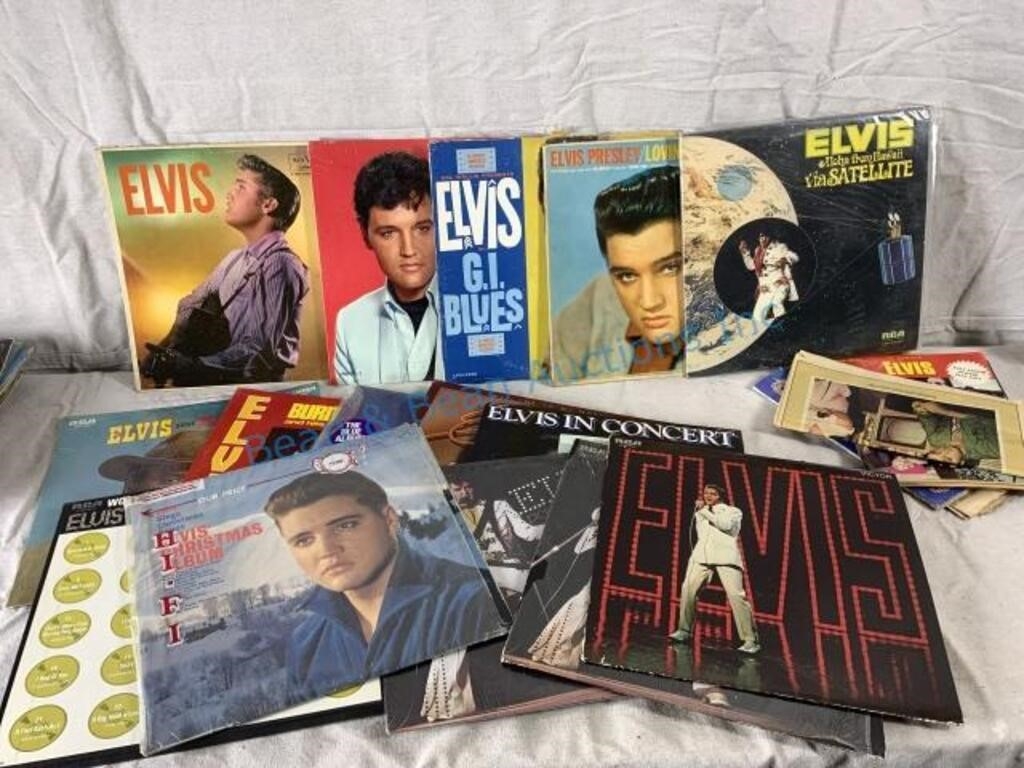
- Soundtrack Albums (Common Pressings): Blue Hawaii, G.I. Blues, and Roustabout sold so many copies that the market is flooded with them. Unless it is a factory-sealed first pressing, the value remains low.
Comparative Value Table (2026 Market Estimates)
The values below assume a VG+ to NM condition grade. Prices for "Fair" or "Good" condition records are typically 10-20% of these values.
| Album/Single Title | Label / Catalog No. | Key Identifying Feature | Estimated Value (2026) |
|---|---|---|---|
| That's All Right | Sun 209 (45 rpm) | "Push marks" on label; original Sun logo | $10,000 - $20,000+ |
| Elvis Presley | RCA LPM-1254 | 1956 Black label; "Long Play" at bottom | $800 - $2,500 |
| TV Guide Presents Elvis | RCA 7-inch | Rare promotional interview record | $1,500 - $4,000 |
| Speedway | RCA LSP-3989 | Original stereo with "bonus photo" | $200 - $500 |
| Moody Blue | RCA AFL1-2428 | Standard Blue Vinyl (Common 1977 version) | $10 - $25 |
| Blue Hawaii | RCA LSP-2426 | 1961 Stereo; must have original photo | $40 - $100 |
| Elvis' Christmas Album | RCA LOC-1035 | 1957 Deluxe "Book" cover with photos | $300 - $800 |
How to Identify a First Pressing
To determine if you have a valuable first pressing or a worthless reissue, you must look at the Matrix Numbers. These are the alphanumeric codes stamped or handwritten into the "dead wax" (the smooth area between the last song and the label).
You can cross-reference these numbers on Discogs, which is the industry standard for music cataloging. In 2026, the Discogs database is the most accurate reflection of "Sold" prices rather than "Asking" prices.
- Find the catalog number on the spine (e.g., LPM-1254).
- Look at the label color and logo.
- Read the matrix number in the run-out groove.
- Check for the presence of "RE" in the code, which often stands for "RE-issue."
Where and How to Sell Your Elvis Records in 2026
If you believe you have a high-value item, do not take it to a local used book store or a general antique mall. These venues rarely pay more than 20% of the actual market value.
- For High-Value Items (>$500): Contact Heritage Auctions or Gotta Have Rock and Roll. These auction houses specialize in music memorabilia and have access to high-net-worth collectors who are willing to pay a premium for authenticated items.
- For Mid-Range Items ($50 - $500): Sell on Discogs or eBay. eBay is better for "auction" style bidding if you think your item is in exceptional condition, while Discogs is better for set-price sales based on specific pressing data.
- For Low-Value "Bulk" Collections: Use Facebook Marketplace or a local record shop. Expect to get "wholesale" prices, which are usually $1 to $3 per disc for common Elvis titles.
Frequently Asked Questions
Is the "Blue Vinyl" version of Moody Blue rare?
No. While it is a common misconception that colored vinyl is rare, RCA pressed millions of copies of Moody Blue on translucent blue vinyl immediately after Elvis’s death in 1977. While it is a beautiful collector's piece, most copies sell for under $25 in 2026. However, the rare "Black Vinyl" version of that same album is actually more valuable because far fewer were made.
How much does the condition of the jacket matter?
The jacket (the outer cardboard sleeve) accounts for nearly 50% of the record's total value. A "Mint" record in a torn or water-damaged jacket will lose significant value. Collectors look for "split seams," "ring wear" (the circle of the record wearing through the ink), and "foxing" (brown age spots).
Are Elvis 78-rpm records worth more than 45s?
Generally, yes. By the time Elvis was popular, 78-rpm records were being phased out in favor of 45-rpm singles and LPs. Because they were made of brittle shellac and fewer were sold, surviving Elvis 78s—especially on the Sun or early RCA labels—are highly sought after.
What is the most expensive Elvis record ever sold?
Historically, the most expensive Elvis-related record is the original acetate of "My Happiness," the very first recording Elvis ever made (a one-off disc). It was purchased by musician Jack White at auction for $300,000 in 2015. For commercially released records, "Stay Away, Joe" and Sun singles remain the top price-getters.
Does "The King's" autograph on a record make it worth more?
Yes, but only if the autograph is authenticated by a reputable third party like PSA/DNA or JSA. Elvis signed thousands of items, but there are also thousands of forgeries. An authenticated signed 1950s album can easily reach $5,000 to $10,000.
Final Recommendation for 2026
If you are holding onto Elvis Presley albums as a financial investment, your best strategy is to focus on condition and documentation. The "middle" of the market—average records in average condition—is slowly declining in value as the older generation of collectors passes away. However, the "top end" of the market (Sun records, promo copies, and NM first pressings) continues to appreciate as these items are viewed as historical artifacts rather than just music.
Before selling, spend an afternoon with a high-intensity lamp and a magnifying glass checking those matrix numbers. You might just find a "Mystery Train" hiding in a pile of movie soundtracks.