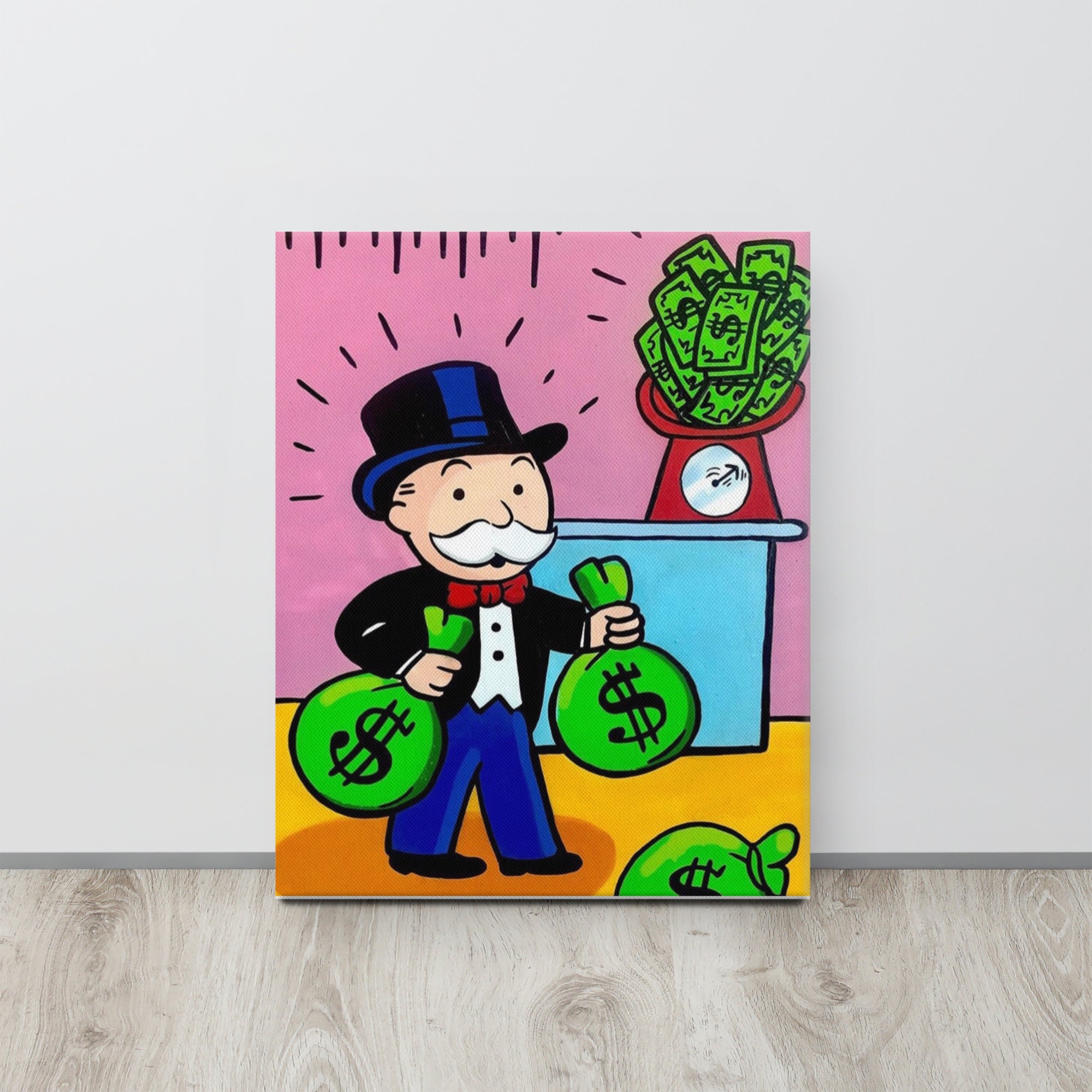
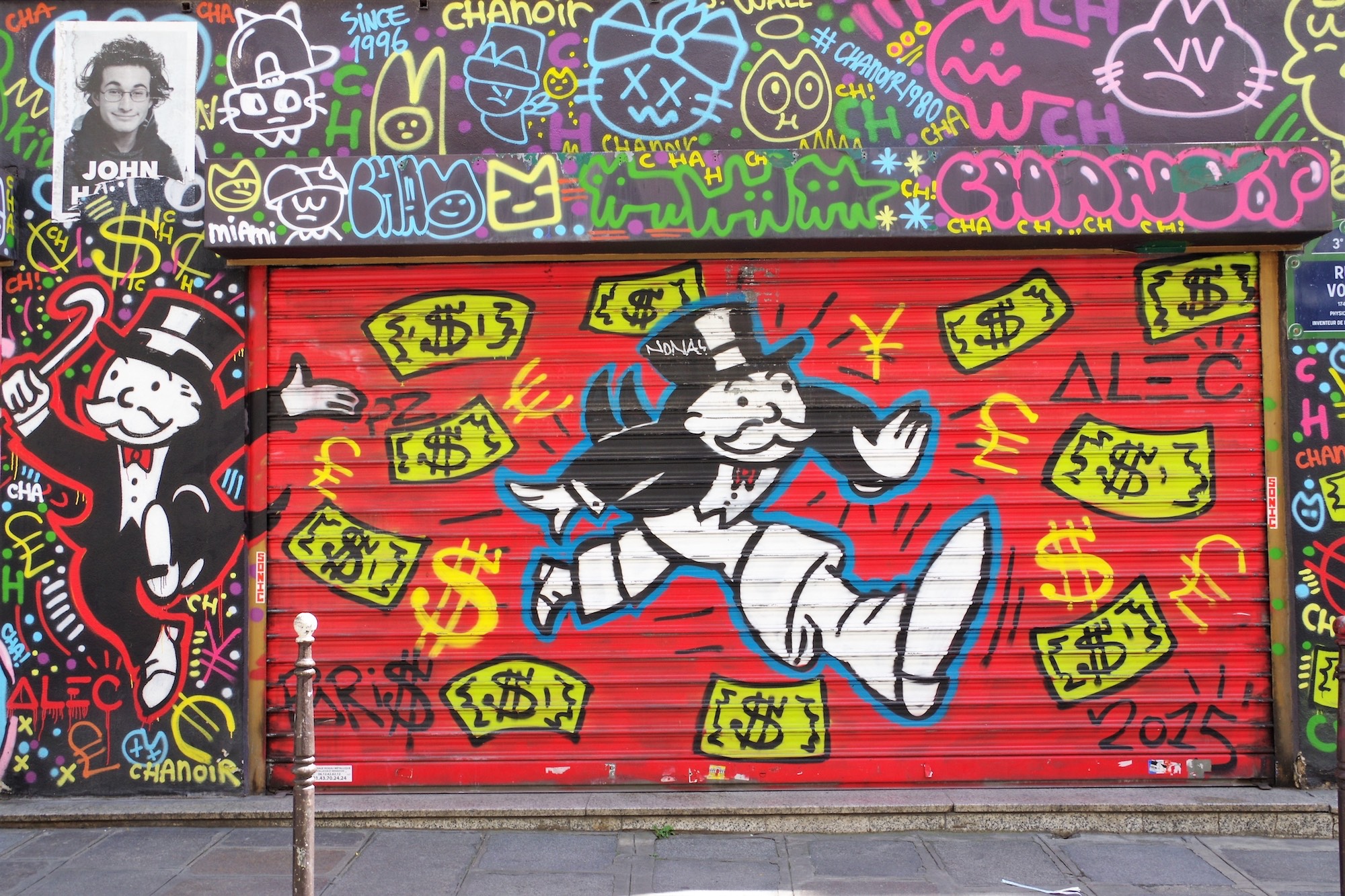
If you are looking for an artist like Alec Monopoly, you are likely drawn to the intersection of street art, pop culture appropriation, and themes of extreme wealth and luxury. The most prominent artists in this category include Mr. Brainwash, Kaws, Jerkface, Bradley Theodore, and Shepard Fairey, all of whom blend "high-low" culture by bringing graffiti-inspired techniques into high-end gallery spaces. These artists utilize vibrant palettes, iconic characters, and a "brand-first" approach to contemporary art that resonates with modern collectors and the luxury lifestyle market.
The Aesthetic and Cultural Blueprint of Alec Monopoly
To find artists similar to Alec Monopoly, one must first deconstruct the elements that define his work. Born Alec Andon, the artist rose to fame by utilizing the "Rich Uncle Pennybags" character from the Monopoly board game as a mascot for his critique—and eventual celebration—of capitalism. His work is characterized by the use of spray paint, stencils, and acrylics, often adorned with "Diamond Dust" or actual currency.
By 2026, the "Monopoly style" has evolved into a specific niche of the contemporary art market known as "Hype Art" or "Luxury Pop." This genre relies on three primary pillars:
- Iconographic Appropriation: Using pre-existing characters (Richie Rich, Scrooge McDuck, Mickey Mouse) to evoke nostalgia.
- Vibrancy and Texture: Utilizing neon colors, thick impasto, and glittering finishes to create a visual sense of opulence.
- The Street-to-Gallery Pipeline: Maintaining a rebellious "graffiti" edge while being represented by blue-chip galleries and collaborating with luxury brands like TAG Heuer or Hublot.
Understanding these pillars allows collectors to identify other artists who satisfy the same visual and investment criteria.
Top Tier Contemporaries: The Leaders of Pop-Street Fusion
Mr. Brainwash (Thierry Guetta)
Perhaps the closest parallel to Alec Monopoly is Thierry Guetta, known professionally as Mr. Brainwash. Rising to global prominence through the Banksy-directed documentary Exit Through the Gift Shop, Mr. Brainwash shares Monopoly’s penchant for high-energy, positive-message street art.
His work frequently features icons like Albert Einstein or Charlie Chaplin surrounded by "splatter" paint reminiscent of Jackson Pollock, mixed with the stencil work of Banksy. Like Monopoly, Mr. Brainwash’s work is highly commercialized and sits comfortably in luxury hotels and private collections of celebrities. His "Life is Beautiful" mantra serves as a thematic counterpart to Monopoly’s focus on the "American Dream" of wealth.
Kaws (Brian Donnelly)
While Alec Monopoly focuses on the symbols of wealth, Kaws focuses on the symbols of global consumerism. Kaws began his career subverting advertisements in bus shelters but has since become one of the most bankable artists in the world. His "Companion" character—a Mickey Mouse-like figure with X-ed out eyes—is as recognizable as Monopoly’s top-hatted mascot.
In terms of market trajectory, Kaws is a "step up" for Monopoly collectors. His work is more minimalist and focuses on precise lines and form, yet it retains that essential "Pop" energy. By 2026, Kaws has solidified his position in major museums, making his work a staple for those who enjoy the "toy-as-art" movement that Alec Monopoly often flirts with through his sculptures.
Shepard Fairey (OBEY)
If the draw to Alec Monopoly is his roots in stencil art and public wheat-pasting, Shepard Fairey is the essential senior figure to study. While Monopoly’s work is often viewed as apolitical or celebratory of wealth, Fairey’s work is deeply rooted in social commentary and propaganda aesthetics.
However, from a technical standpoint, the two share many similarities. Both rely heavily on the repetition of a single "brand" or "image" (the Andre the Giant face for Fairey; the Monopoly Man for Alec). Fairey’s transition from a skateboarding subculture icon to the creator of the "Hope" poster and a global gallery powerhouse mirrors the commercial success path that Monopoly has followed.
Emerging and Stylistic Alternatives
For collectors looking for a specific visual "vibe" that matches the neon-drenched, character-heavy world of Alec Monopoly, several other artists offer compelling alternatives.
Jerkface
Based in New York, Jerkface is a master of character "mashups." His work is cleaner and more geometric than Alec Monopoly’s often-chaotic spray patterns, but the subject matter is remarkably similar. Jerkface takes characters from The Simpsons, Looney Tunes, and Care Bears, repeating them in hypnotic, kaleidoscopic patterns. For a collector who loves Monopoly’s use of Richie Rich, Jerkface provides a more contemporary, graphic design-inspired take on the same nostalgia.
Bradley Theodore
Bradley Theodore brings a fashion-forward sensibility to the street art world. While Monopoly uses board game characters, Theodore uses fashion icons—Karl Lagerfeld, Anna Wintour, and Audrey Hepburn—often depicting them as vibrant skeletons.
His use of color is just as bold as Monopoly’s, but his brushwork is more expressive and painterly. This makes his work appealing to those who want the "street" energy but are looking for something that feels slightly more "fine art" in its execution. Theodore’s collaborations with brands like PUMA and Rolls-Royce put him in the same "luxury-adjacent" circle as Alec Monopoly.
Vexx (Vince Okerman)
A younger contemporary who represents the evolution of the style into the digital and "doodle" age is Vexx. His "doodle" style is incredibly dense, filled with characters, shapes, and bright pops of color. While his work lacks the specific focus on "wealth" imagery found in Monopoly's portfolio, the sheer visual density and the "hype" surrounding his releases (including high-profile NFT and physical toy drops) make him a favorite among the same demographic of younger, tech-savvy collectors.
Comparison of Key Artists in the "Pop-Street" Market
The following table compares these artists based on their primary motifs, price entry points as of 2026, and their overall market positioning relative to Alec Monopoly.
| Artist | Primary Motif | Core Technique | Market Position | Similarity to Monopoly |
|---|---|---|---|---|
| Mr. Brainwash | Pop icons & slogans | Stencil / Splatter | High Commercial | Extremely High |
| Kaws | "Companion" characters | Precision Painting | Blue-Chip / Museum | High (Market Wise) |
| Jerkface | Cartoon Mashups | Flat Graphic Spray | Mid-Tier Gallery | High (Subject Matter) |
| Bradley Theodore | Fashion Skeletons | Expressive Brushwork | Luxury Lifestyle | Moderate (Vibe) |
| Shepard Fairey | Propaganda / OBEY | Wheatpaste / Stencil | Established / Political | Moderate (Technique) |
| Retna | Script / Calligraphy | Ancient-Modern Text | High-End Design | Low (Stylistic) |
| Speedy Graphito | Pop Culture Critique | Mixed Media | European Pioneer | Moderate (Themes) |
The Role of Branding and Collaboration in this Genre
A defining characteristic of an artist like Alec Monopoly is their willingness to function as a lifestyle brand. This is a crucial factor for collectors who view art as part of a larger ecosystem of luxury assets (watches, cars, real estate).
In 2026, the "Artist-as-Brand" model is more prevalent than ever. Alec Monopoly’s partnership with TAG Heuer paved the way for other artists in this list to secure similar deals.
- Kaws has collaborated with Dior and Uniqlo.
- Shepard Fairey has his own massive apparel brand, OBEY.
- Mr. Brainwash has designed album covers for Madonna and partnered with Hublot.
When searching for "artists like Alec Monopoly," you are often searching for artists who understand the semiotics of luxury. They don't just paint on canvas; they apply their visual language to objects of desire. This makes their work particularly effective for staging in modern, high-gloss interior designs or as part of a "flex" culture investment portfolio.
Technical Elements: What to Look For
If you are evaluating a piece of art to see if it captures the "Monopoly" essence, look for these specific technical details:
- Mixed Media Layering: Look for canvases that aren't flat. Monopoly often uses newsprint, vintage comic book pages, or actual dollar bills as a base layer before applying paint.
- Epoxy and Resin Finishes: Many artists in this niche use a thick clear coat of resin to give the work a "wet," high-gloss look that mimics the finish of a luxury car.
- Fluorescent Pigments: The use of paints that react to UV light or simply have a high saturation level is a hallmark of this style, ensuring the art "pops" even in low-light environments.
- Crossover Imagery: The best artists in this genre don't just copy a character; they reinterpret it. Look for how the artist modifies the eyes, the clothing, or the environment of the appropriated character.
The Investment Landscape in 2026
The market for street-inspired pop art has undergone a period of "maturation" by 2026. The initial frenzy of the late 2010s and early 2020s has been replaced by a more discerning collector base. While Alec Monopoly remains a polarizing figure in the "traditional" art world, his secondary market performance remains stable because of his strong connection to the ultra-wealthy demographic in hubs like Dubai, Miami, and St. Barts.
When looking for similar artists for investment purposes, consider the "scarcity vs. ubiquity" balance. Alec Monopoly produces a significant amount of work; therefore, his unique, large-scale canvases typically hold value better than his mass-produced prints. The same logic applies to Mr. Brainwash and Kaws. Collectors should prioritize pieces with "provenance" (clear history of ownership) and those that feature the artist's most iconic motifs.
Frequently Asked Questions
Is Alec Monopoly's art considered "Fine Art" or "Street Art"?
By 2026, the distinction has blurred significantly. While his techniques are rooted in street art (graffiti, stencils), his distribution is purely fine art (galleries, auctions). He is best classified as a "Contemporary Pop Artist" with a street aesthetic. Most critics categorize him alongside "Commercial Pop" artists who prioritize brand recognition and marketability over traditional academic art standards.
Why does Alec Monopoly always wear a mask?
The mask is a holdover from his early days as an anonymous graffiti artist in New York and Los Angeles. Even as he became a global celebrity, the mask—often a patterned bandana—became part of his "brand," similar to how Marshmello or Deadmau5 use helmets. It maintains a sense of "outlaw" mystery that contrasts with his high-society lifestyle.
Where can I buy art from artists like Alec Monopoly?
Works by these artists are typically found in major contemporary galleries such as Eden Gallery (which represents Monopoly), Opera Gallery, or Perrotin (which represents Kaws). On the secondary market, they frequently appear at Sotheby’s, Christie’s, and Phillips in their "Contemporary Curated" or "Under the Influence" sales.
Are there more affordable artists with a similar style?
Yes. If the five-to-six-figure price tags of Kaws or Monopoly are out of reach, look for "emerging" street artists on platforms like Instagram or at local street art festivals (like Art Basel Miami’s Wynwood section). Artists like Seek One or Ghost often work with similar themes of pop culture and luxury at a more accessible entry point for new collectors.
What is "Diamond Dust" in this context?
Diamond Dust is a common medium used by Alec Monopoly and artists like Russell Young or even Andy Warhol in his later years. It consists of finely ground glass that is applied to the wet ink or paint of a screenprint or canvas. It creates a shimmering, glitter-like effect that enhances the "luxury" feel of the piece, though it contains no actual diamonds.
Next Steps for Collectors
If you are ready to expand your collection beyond Alec Monopoly, the first step is to identify which aspect of his work you love most. If it is the humor and character work, look into Jerkface. If it is the investment potential and global recognition, Kaws is your next logical acquisition. If you want the raw, chaotic energy of the street, Mr. Brainwash remains the gold standard.
Before purchasing, always request a Certificate of Authenticity (COA) and, if buying on the secondary market, ensure the piece has been verified by the artist's studio or a reputable gallery. The "Hype Art" market is prone to reproductions, so buying from established sources is essential for protecting your investment in 2026 and beyond.