Applying to college after a gap year involves updating your application materials to showcase the personal growth, professional skills, or service experiences you gained during your time away from formal schooling. You must submit a fresh application through platforms like the Common App, provide high school transcripts, and often write a supplemental essay explaining your gap year activities. Admissions committees in 2026 increasingly value the maturity and perspective that gap year students bring to campus life.
Understanding the Landscape of Post-Gap Year Admissions
The educational landscape in 2026 has shifted significantly toward recognizing non-traditional pathways. A gap year—a deliberate break between high school and college—is no longer viewed as a "year off," but rather as a "year on" for personal development. Admissions officers at competitive institutions have noted that students who take gap years often arrive with higher levels of self-reliance and academic focus.
When you apply after a gap year, you are essentially entering a different applicant pool than you would have as a high school senior. You are competing as an "independent" or "post-graduate" applicant. This status allows you to highlight experiences that your peers—straight out of high school—simply do not have. Whether you spent the year working to save for tuition, volunteering abroad, or completing an intensive certification program, these experiences serve as evidence of your readiness for the rigors of university life.
The Two Paths: Deferral vs. Reapplication
Before diving into the application mechanics, it is vital to distinguish between having a deferred enrollment and starting the application process from scratch.
1. The Deferral Path
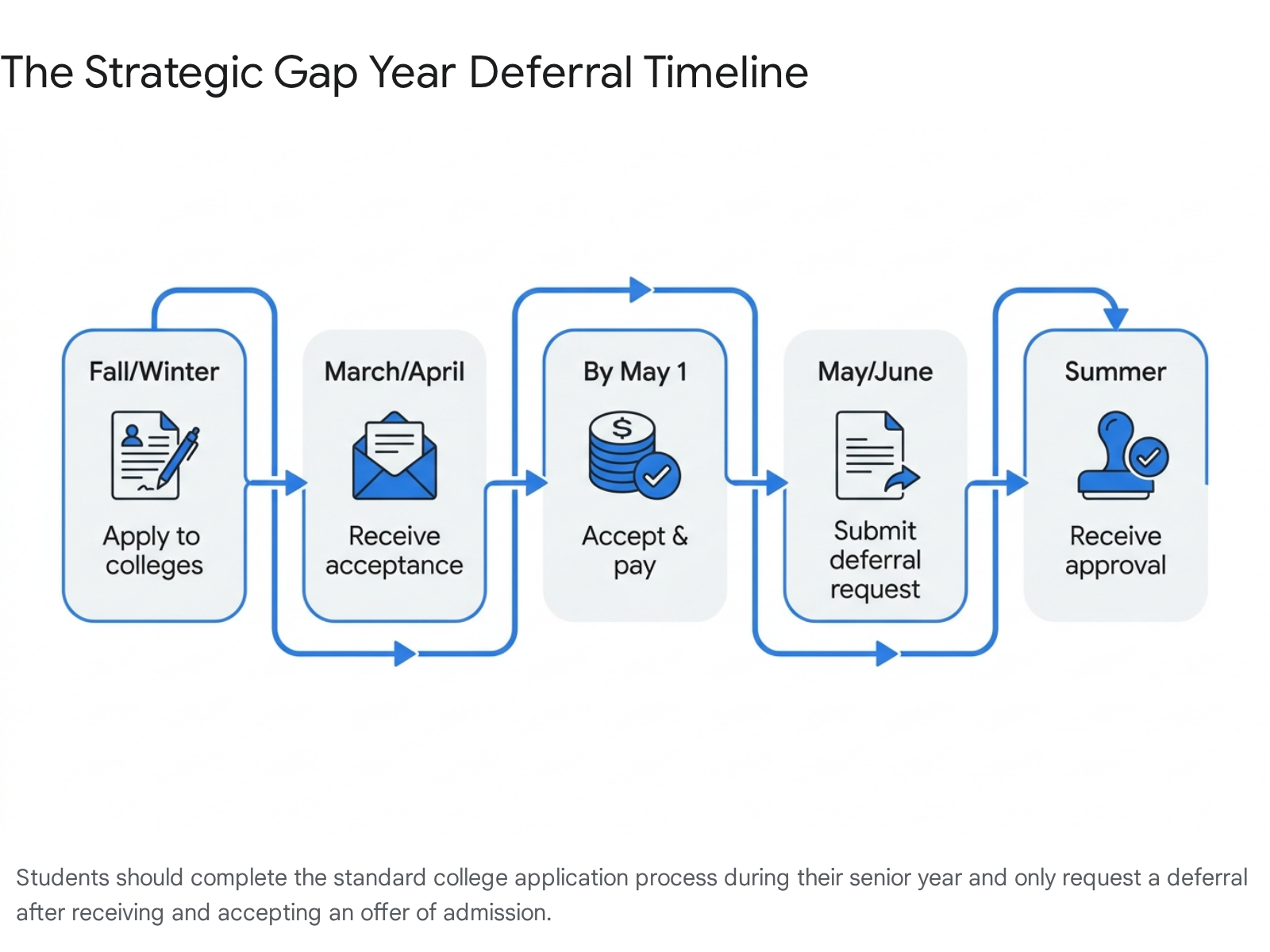
If you applied to college during your senior year of high school and were accepted, you might have requested a deferral. Most universities allow students to defer their start date for one year, provided they do not enroll in a degree-seeking program elsewhere. If you are in this position, you typically do not need to reapply. However, you must confirm your intent to enroll by the university’s 2026 deadline and may need to submit a brief report on your gap year activities.
2. The New Application Path
This guide focuses primarily on the second path: students who either did not apply during high school, were not satisfied with their initial results, or chose to decline all offers to take a gap year. For these individuals, the 2026 application cycle is a fresh start. You will be evaluated on your high school record, but your gap year experiences will act as the "bridge" that demonstrates your evolution since graduation.
Step-by-Step Guide to the Application Process
Navigating the application process after a gap year requires meticulous planning, as you no longer have the daily support of a high school guidance counselor.
Re-evaluating Your College List
The first step is to revisit the colleges you are interested in. Your priorities may have changed during your gap year. A student who spent six months working in a local clinic might now prioritize schools with stronger pre-med tracks or urban locations. Research current 2026 program rankings and admission requirements, as many schools have updated their prerequisite policies or shifted their focus toward specific interdisciplinary majors.
Navigating the Common App and Other Portals
In 2026, the Common Application remains the standard for most U.S. institutions. When filling out the "Education" section, you must indicate that you have already graduated from high school. There is a specific prompt that asks you to explain any gaps in your education. This is not a trick question; it is your primary opportunity to provide a high-level summary of your gap year.
- Be Concise: Use the dedicated space to list dates and primary activities.
- Be Professional: Treat it like a brief resume of your year.
- Be Honest: If your gap year didn't go as planned due to unforeseen circumstances, explain how you adapted.
Securing Updated Letters of Recommendation
This is often the most challenging logistical hurdle. You will still need recommendations from your high school teachers, but since you have been away for a year, you must reach out early.
- Reconnect Early: Send an email to your former teachers in the fall of 2025 or early 2026. Remind them of who you are, the class you took, and what you have been doing during your gap year.
- The "Third" Letter: Most colleges allow for an optional additional recommendation. This is the perfect place for a letter from a gap year supervisor, employer, or mentor who can speak to your growth outside the classroom.
Transcripts and Standardized Testing
Your high school is responsible for sending your final transcripts. Since you have already graduated, your transcript will include your final senior year grades—an advantage if you finished high school strongly.
Regarding standardized tests (SAT/ACT), the "test-optional" movement continues to be a major factor in 2026. However, some institutions have reverted to requiring scores. Check the specific 2026 requirements for each school. If you chose to retake the SAT or ACT during your gap year to improve your score, ensure the official reports are sent directly from the College Board or ACT.
Framing the Gap Year in Your Personal Statement
Your personal statement is the heart of your application. While high school seniors often write about their formative years or specific extracurriculars, a gap year applicant should use this space to demonstrate a "before and after" narrative.
Avoid writing a "travelogue" that merely lists the places you visited. Instead, focus on a specific moment of challenge or realization. If you worked a service job, write about what you learned about human interaction or financial responsibility. If you learned a new language or skill, focus on the discipline required for self-directed learning. Admissions officers want to see that you are entering college with a clear sense of purpose.
Financial Aid and Scholarships in 2026
The financial aid process for a gap year student is slightly different because your tax status or your family's financial situation may have changed since high school.
- FAFSA: You must file a new Free Application for Federal Student Aid (FAFSA) for the 2026-2027 academic year. Ensure you use the updated 2026 portal, which has been streamlined for faster processing.
- CSS Profile: Many private institutions require the CSS Profile. Be prepared to provide detailed financial information that reflects your current status.
- Scholarship Eligibility: Some "freshman" scholarships are only available to students applying directly from high school. However, many other merit-based awards are open to all incoming first-year students. Verify eligibility on the Federal Student Aid website or the specific university's financial aid page.
Comparison: High School Senior vs. Gap Year Applicant
| Feature | High School Senior (2026) | Gap Year Applicant (2026) |
|---|---|---|
| Primary Focus | Academic potential and school involvement | Maturity, real-world experience, and growth |
| Letters of Rec | Teachers and school counselor | Teachers + optional gap year supervisor |
| Transcripts | Initial and mid-year reports | Final high school transcript (complete) |
| Personal Statement | Growth during high school years | Transformation during the gap year |
| Extracurriculars | School clubs and sports | Professional work, volunteering, or independent projects |
| Financial Aid | Based on prior-prior year taxes | Based on updated 2026 FAFSA/CSS data |
Common Pitfalls to Avoid
Even with the best intentions, gap year applicants can run into trouble if they don't stay organized.
The "Drift" Factor
Without the structure of school, it is easy to miss deadlines. In 2026, many Early Action (EA) and Early Decision (ED) deadlines fall in November. If you are traveling, you must ensure you have reliable internet access and all necessary documents digitized.
Over-Explaining the Gap
While you need to account for your time, don't make your entire application about the gap year. You are still a student with academic interests. Ensure your application balances your past academic achievements with your recent personal growth.
Ignoring Deadlines for Housing and Orientation
Gap year students sometimes forget that once they are accepted, they must follow the same onboarding timeline as 18-year-olds. This includes housing deposits, health forms, and orientation registration, which typically occur in late spring and summer of 2026.
Strategic Benefits of Applying After a Gap Year
Applying in 2026 after a gap year offers several strategic advantages. First, you have the benefit of "hindsight" regarding your high school career. You can reflect on your academic record with more objectivity. Second, if your high school grades were not as high as you hoped, your gap year activities can serve as a "mitigating factor," proving to colleges that you have since gained the focus necessary to succeed.
Furthermore, many students use the gap year to build a portfolio. For those applying to art, architecture, or film programs, the extra twelve months provide invaluable time to refine their creative work without the pressure of high school homework.
Frequently Asked Questions
Do I need to retake the SAT or ACT during my gap year?
It depends on your previous scores and the requirements of your target schools. If your scores are below the median for your top-choice colleges, the gap year is an excellent time to study and retake the exams. However, with many schools remaining test-optional in 2026, you should only retake them if you are confident you can achieve a score that significantly strengthens your profile.
Can I earn college credits during my gap year?
Be careful with this. If you enroll as a "degree-seeking student" at a community college or another university, many colleges will classify you as a transfer student rather than a first-year applicant. Transfer admissions are often more competitive and have different financial aid structures. If you want to take classes, consider non-credit certificates or auditing courses to maintain your first-year status.
How do I handle my high school counselor's report?
You must contact your high school's guidance office to request that they submit your final transcript and the "Secondary School Report" through the Common App. Most high schools keep these records on file, but since you are no longer a current student, they may process the request more slowly. Reach out at least six weeks before your first deadline.
Will taking a gap year hurt my chances of getting into an elite university?
Generally, no. In fact, many Ivy League and top-tier institutions, such as Harvard University, actively encourage students to take a gap year. The key is to show that the time was used productively for personal, professional, or altruistic endeavors rather than just passive leisure.
What if I spent my gap year working a "regular" job like retail or food service?
Admissions committees highly value "real-world" work experience. Working 40 hours a week in a service industry demonstrates reliability, time management, and a grasp of financial reality. In your application, focus on the responsibilities you held, any promotions you received, and how the experience shaped your desire to pursue a specific degree.
Final Recommendations
If you are applying to colleges after a gap year in 2026, your primary goal is to demonstrate intentionality. Start by organizing your timeline: reach out to high school recommenders by September 2025, draft your updated personal statement by October, and submit your applications well before the January 2026 regular decision deadlines. Use your gap year supervisor as an additional reference to validate your growth. By framing your year away from the classroom as a period of purposeful development, you present yourself as a mature, prepared, and highly desirable candidate for any university community.