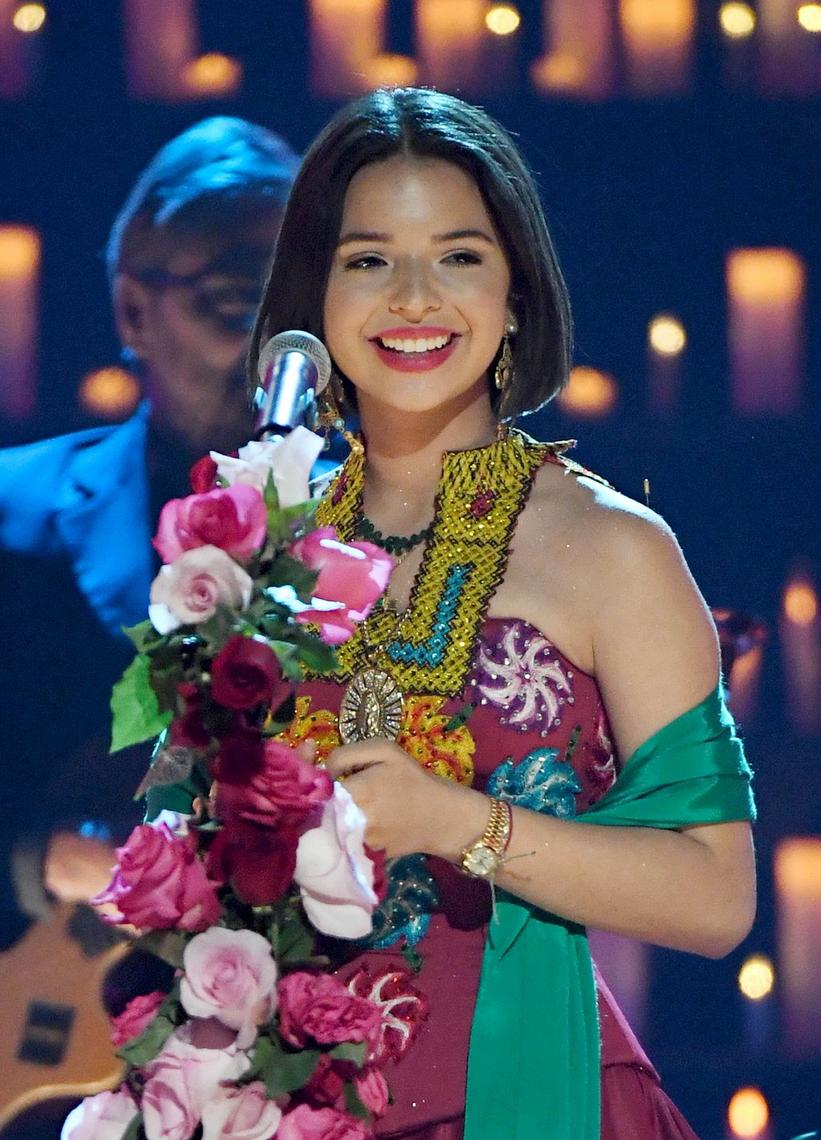
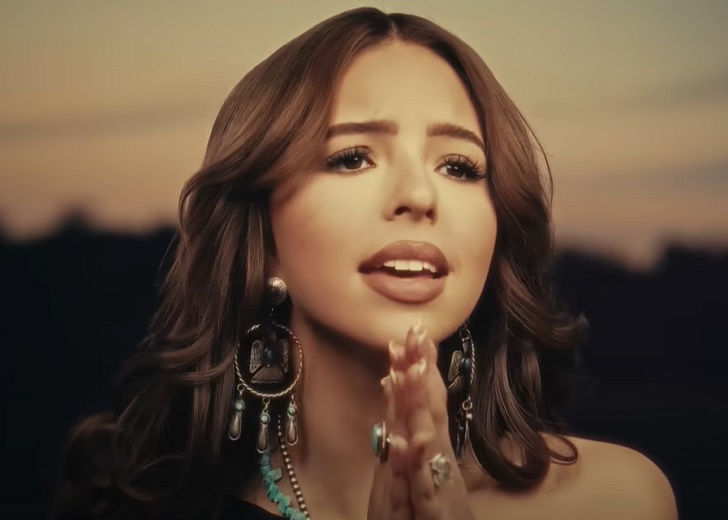
Angela Aguilar is a acclaimed Mexican-American singer specializing in Regional Mexican music, particularly Mariachi and Ranchera. Born into the iconic Aguilar music dynasty, she gained international fame for her expressive vocal range, earning Grammy and Latin Grammy nominations while bringing traditional Mexican roots music to a new generation of global listeners.
Early Life and the Aguilar Music Dynasty
Angela Aguilar Alvarez was born on October 8, 2003, in Los Angeles, California, while her father, legendary singer Pepe Aguilar, was on tour. Holding dual American and Mexican citizenship, Aguilar was immersed in musical traditions from early childhood. Her family lineage represents one of the most celebrated dynasties in Latin music history.
She is the granddaughter of Antonio Aguilar, the legendary singer and actor credited with popularizing the charrería (Mexican equestrian spectacle) and mariachi film genres worldwide, and Flor Silvestre, an iconic golden-age cinema star and ranchera vocalist. Her father, Pepe Aguilar, is a multi-Grammy-winning artist who expanded the regional Mexican genre across arena tours globally.
Growing up between Southern California and Mexico, Aguilar began performing live at a very young age. She joined her family on the Jaripeo Sin Fronteras tour—a massive live event combining traditional mariachi music, rodeo acts, and charrería traditions. This early environment exposed her to continuous vocal training, stage production, and rigorous performance disciplines alongside her father and brother, Leonardo Aguilar.
- Antonio Aguilar & Flor Silvestre (Grandparents / Ranchera Legends)
- Pepe Aguilar (Father / Latin Grammy Winner)
- Leonardo Aguilar
- Angela Aguilar
- Pepe Aguilar (Father / Latin Grammy Winner)
Musical Career and Solo Breakthrough
Aguilar began her recording career before reaching her teenage years. Her formal introduction to the music industry came in 2012 when she released Nueva Tradición at age nine alongside her brother Leonardo. Produced by Pepe Aguilar, the EP featured songs accompanied by full mariachi arrangements, signaling her dedication to traditional acoustic genres over mainstream pop trends.
The Impact of Primero Soy Mexicana (2018)
Her major solo breakthrough arrived in 2018 with the release of her first full-length solo studio album, Primero Soy Mexicana. The title was inspired by the 1950 classic film starring her grandmother, Flor Silvestre. Produced by her father, the album featured modern interpretations of classic Mexican standards originally rendered by legendary figures such as Lucha Villa, Rocío Dúrcal, and Chabuca Granda.
The album achieved both critical acclaim and commercial success:
- Critical Recognition: It earned a nomination for Best Ranchero/Mariachi Album at the 19th Annual Latin Grammy Awards and a nomination for Best Regional Mexican Music Album at the 61st Annual Grammy Awards.
- Historic Milestone: At just 15 years old, Aguilar became one of the youngest artists ever nominated for both awards in these categories.
- Showcase Performance: Her live vocal performance of "La Llorona" at the 2018 Latin Grammy Awards ceremony in Las Vegas garnered widespread acclaim from international critics for her pitch control, dynamic range, and emotional depth.
Expanding the Catalog: Baila Esta Cumbia and Mexicana Enamorada
In early 2020, Aguilar released Baila Esta Cumbia, a tribute EP dedicated to the late Tejano icon Selena Quintanilla. Aguilar adapted Selena's classic Tejano hits into mariachi and brass-backed arrangements, demonstrating her ability to bridge regional styles while honoring historic Latin icons.
She followed this in 2021 with Mexicana Enamorada, her second full-length solo album. Unlike her earlier cover-focused records, Mexicana Enamorada featured original compositions alongside traditional rancheras. The project incorporated acoustic instrumentation, traditional accordion lines, trumpet arrangements, and contemporary pop-ranchera songwriting.
Singles from this album achieved extensive radio airplay and digital streaming success:
- "Dime Cómo Quieres" (with Christian Nodal): A duet that reached the upper tiers of the Billboard Latin Airplay chart and accumulated hundreds of millions of views on streaming platforms, becoming a major cultural track in Latin music.
- "En Realidad": A country-ranchera fusion written by Ana Bárbara that inspired widespread dance trends across social media platforms.
- "Ahí Donde Me Ven": A dramatic ranchera ballad showcasing Aguilar’s vocal control and traditional narrative storytelling style.
In 2024, Aguilar expanded her artistic scope further with Bolero, an album and companion film project exploring classic Latin American boleros recorded in legendary studios across Cuba and Mexico, cementing her position as an interpreter of traditional Latin romance music.
Vocal Artistry, Musical Style, and Fashion
Angela Aguilar operates primarily within the Mariachi, Ranchera, and Bolero genres. Her artistic identity combines classical vocal technique with deep respect for historical Mexican folklore.
Vocal Range and Performance Style
Aguilar possesses a versatile soprano voice characterized by strong chest-voice power, agile ornamentation, and sustained vibrato suited to the high-demand dynamics of mariachi music. Unlike soft acoustic balladry, traditional Ranchera music requires high dynamic contrast—shifting rapidly from delicate head-tone phrasing to powerful chest beltings. Aguilar’s vocal control allows her to execute classic falsetto breaks without sacrificing intonation, an essential technique popularized by classic singers like Miguel Aceves Mejía and Flor Silvestre.
Visual Aesthetic and Cultural Wardrobe
Visual presentation is an integral component of Aguilar's brand. On stage, she is recognized for wearing elaborate, custom-designed dresses that incorporate traditional Mexican embroidery, indigenous textiles, and hand-woven details from various states across Mexico, including Oaxaca, Chiapas, and Michoacán.
Visual & Performance Elements:
- Traditional Crafting: Custom dresses made by Mexican artisans featuring hand embroidery.
- Modern Fashion: Sculpted corsetry paired with traditional wide ranchera skirts.
- Stage Production: Classic equestrian displays combined with high-end concert lighting.
By working directly with native Mexican artisans, Aguilar uses her global platform to highlight regional textiles. Her fusion of vintage corsetry with wide handcrafted skirts creates a distinct visual identity that appeals to younger fashion-conscious audiences while preserving traditional Mexican dress heritage.
Key Discography and Career Milestones
The following table outlines Angela Aguilar's principal discography, major hit singles, and career highlights:
| Year | Title / Project | Format | Primary Genre | Key Achievements & Nominations |
|---|---|---|---|---|
| 2012 | Nueva Tradición | EP (with Leonardo Aguilar) | Mariachi / Banda | Debut recording; early public showcase of the new Aguilar generation. |
| 2018 | Primero Soy Mexicana | Album | Mariachi / Ranchera | Nominated for Grammy Award & Latin Grammy Award; certified gold in Mexico. |
| 2020 | Baila Esta Cumbia | Tribute EP | Mariachi-Tejano | Reimagined hits of Selena Quintanilla; topped Latin digital sales charts. |
| 2020 | "Dime Cómo Quieres" | Single (with Christian Nodal) | Mariachi / Pop-Ranchera | Multi-platinum certification; reached #1 on Regional Mexican Airplay. |
| 2021 | Mexicana Enamorada | Album | Mariachi / Ranchera / Bolero | Nominated for Latin Grammy; featured hit singles "En Realidad" and "Ahí Donde Me Ven". |
| 2022 | "Qué Agonía" | Single (with Yuridia) | Mariachi Ballad | Nominated for Latin Grammy Song of the Year; certified Diamond in Mexico. |
| 2024 | Bolero | Album & Documentary | Classic Latin Bolero | Special project showcasing traditional bolero arrangements recorded across Latin America. |
Major Collaborations and Chart Success
Collaborations have played a central role in bringing Aguilar’s traditional sound to mainstream global charts.
Key Collaborative Tracks
- "Dime Cómo Quieres" (Christian Nodal): Released in late 2020, this track was a pivotal moment for both artists. Combining playful lyrics with full mariachi accompaniment, the song became the first Regional Mexican track to enter the Spotify Global Top 100 chart, proving that traditional acoustic Mexican music possessed massive streaming potential among Gen-Z listeners.
- "Qué Agonía" (Yuridia): Co-written by Aguilar alongside her father Pepe Aguilar and Pepe Garza, this dramatic mariachi duet with pop singer Yuridia gained widespread radio rotation throughout Latin America and the U.S. It earned multiple music awards and confirmed Aguilar's capability as a songwriter.
- "Tu Sangre en Mi Cuerpo" (Pepe Aguilar): A father-daughter duet that introduced a younger Angela to family concert audiences, highlighting the generational handover of the family legacy.
Detailed coverage of Latin chart performances and historical nominations can be found on the official records of the Recording Academy and the Latin Recording Academy.
Public Image, Personal Life, and Media Coverage
Given her upbringing inside one of Latin music’s most visible families, Aguilar's career has developed under intense media focus. Balancing international stardom with family tradition, she has frequently navigated high-profile public attention.
In mid-2024, Aguilar married Mexican singer-songwriter Christian Nodal, a partnership that drew intense international entertainment news coverage. Despite public scrutiny and constant tabloid attention, Aguilar has maintained her primary focus on live concert performance, touring schedules, and traditional musical preservation.
Beyond her entertainment career, Aguilar has used her visibility to advocate for music education programs and rural artistic preservation in Mexico. She frequently participates in cultural forums discussing the preservation of regional Mexican traditions, position as a prominent female voice in a historically male-dominated mariachi industry.
Strategic Significance in Regional Mexican Music
Historically, the Regional Mexican genre—specifically Mariachi and Norteño music—was commercially dominated by male soloists and vocal groups. Female ranchera icons such as Lola Beltrán, Lucha Villa, Aida Cuevas, and Flor Silvestre paved the path for women in the mid-to-late 20th century, but female representation on radio charts decreased significantly by the early 2000s.
Angela Aguilar’s emergence, along with contemporaries like Natalia Lafourcade (in folk revival) and Ana Bárbara, helped trigger a resurgence of female voices in Regional Mexican music. Aguilar’s strategic importance lies in several areas:
- Demographic Bridge: She brought traditional 20th-century rancheras to audiences under 25 via platforms like TikTok, YouTube, and Spotify.
- Preservation of Acoustic Mariachi: While modern Latin music relies heavily on electronic synthesis and urban beats, Aguilar maintains reliance on live acoustic instrumentation, including violins, trumpets, vihuelas, guitarróns, and harp.
- Cross-Border Cultural Continuity: Representing Mexican-American youth raised in the United States, she highlights how traditional Mexican heritage can thrive seamlessly within contemporary American pop culture.
Recommended Listening Guide for New Listeners
For listeners new to Angela Aguilar’s music catalog, the following tracks offer a complete perspective on her vocal capabilities and stylistic range:
ANGELA AGUILAR ESSENTIAL TRACKS:
- TRADITIONAL RANCHERA
- "La Llorona"
- "Ahí Donde Me Ven"
- "Cielo Rojo"
- MODERN COLLABORATIONS
- "Dime Cómo Quieres"
- "Qué Agonía"
- "En Realidad"
- ROMANTIC BOLEROS
- "Piensa en Mí"
- "Contigo en la Distancia"
- "Piel Canela"
1. Traditional Masterpieces
- "La Llorona" (Primero Soy Mexicana): Demonstrates her control over falsetto transitions and high-register sustained notes.
- "Cielo Rojo": A tribute to her grandmother Flor Silvestre, featuring dramatic vocal range demands and classic falsetto breaks.
2. Contemporary Hits
- "Dime Cómo Quieres" (feat. Christian Nodal): Ideal entry point for modern uptempo pop-mariachi production.
- "Qué Agonía" (with Yuridia): Showcases emotional power ballad techniques inside modern ranchera instrumentation.
3. Classic Interpretations
- "Piensa en Mí" / "Piel Canela" (Bolero project): Highlight her softer dynamic control, subtle phrasing, and historical Latin romance styles.
Frequently Asked Questions (FAQ)
What genre of music does Angela Aguilar sing?
Angela Aguilar primarily sings Regional Mexican music, with a specific focus on Mariachi, Ranchera, and Bolero. While she occasionally incorporates elements of Tejano, pop, and country music, her core identity rests on acoustic Mexican folk traditions featuring traditional mariachi orchestration.
How is Angela Aguilar related to Antonio Aguilar and Flor Silvestre?
Angela Aguilar is the paternal granddaughter of Antonio Aguilar and Flor Silvestre. Both were iconic figures in 20th-century Mexican cinema and music, helping establish ranchera music and equestrian spectacles across international venues.
Has Angela Aguilar won a Grammy Award?
As of current recording records, Angela Aguilar has been nominated for both a Grammy Award and multiple Latin Grammy Awards. She earned her first Grammy nomination at age 15 for Best Regional Mexican Music Album (Primero Soy Mexicana), marking one of the youngest nominations in the history of that category.
Is Angela Aguilar Mexican or American?
Angela Aguilar holds dual citizenship in Mexico and the United States. She was born in Los Angeles, California, while her father Pepe Aguilar was on tour, and she spent her childhood traveling between Southern California and Mexico.
What is Angela Aguilar's signature live performance style?
Aguilar is widely known for performing with full live mariachi ensembles rather than pre-recorded backing tracks. Her live shows often incorporate traditional Mexican equestrian culture through her family's Jaripeo production, accompanied by visual staging centered around handcrafted traditional Mexican embroidery and gowns.
Practical Recommendation for Further Exploration
To fully appreciate Angela Aguilar's contributions to Latin music, listeners should explore her performance evolution chronologically:
- Start with Live Performances: Watch her live orchestra performances of "La Llorona" from the 2018 Latin Grammy Awards or her NPR Music Tiny Desk Concert to hear her raw vocal stability without studio processing.
- Explore Full-Length Albums: Listen to Primero Soy Mexicana for classic Mexican standards, followed by Mexicana Enamorada for original compositions and contemporary songwriting.
- Watch the Bolero Visual Project: Experience her acoustic explorations of Latin American boleros to understand her work as a musical archivist preserving historical Latin genres for future generations.