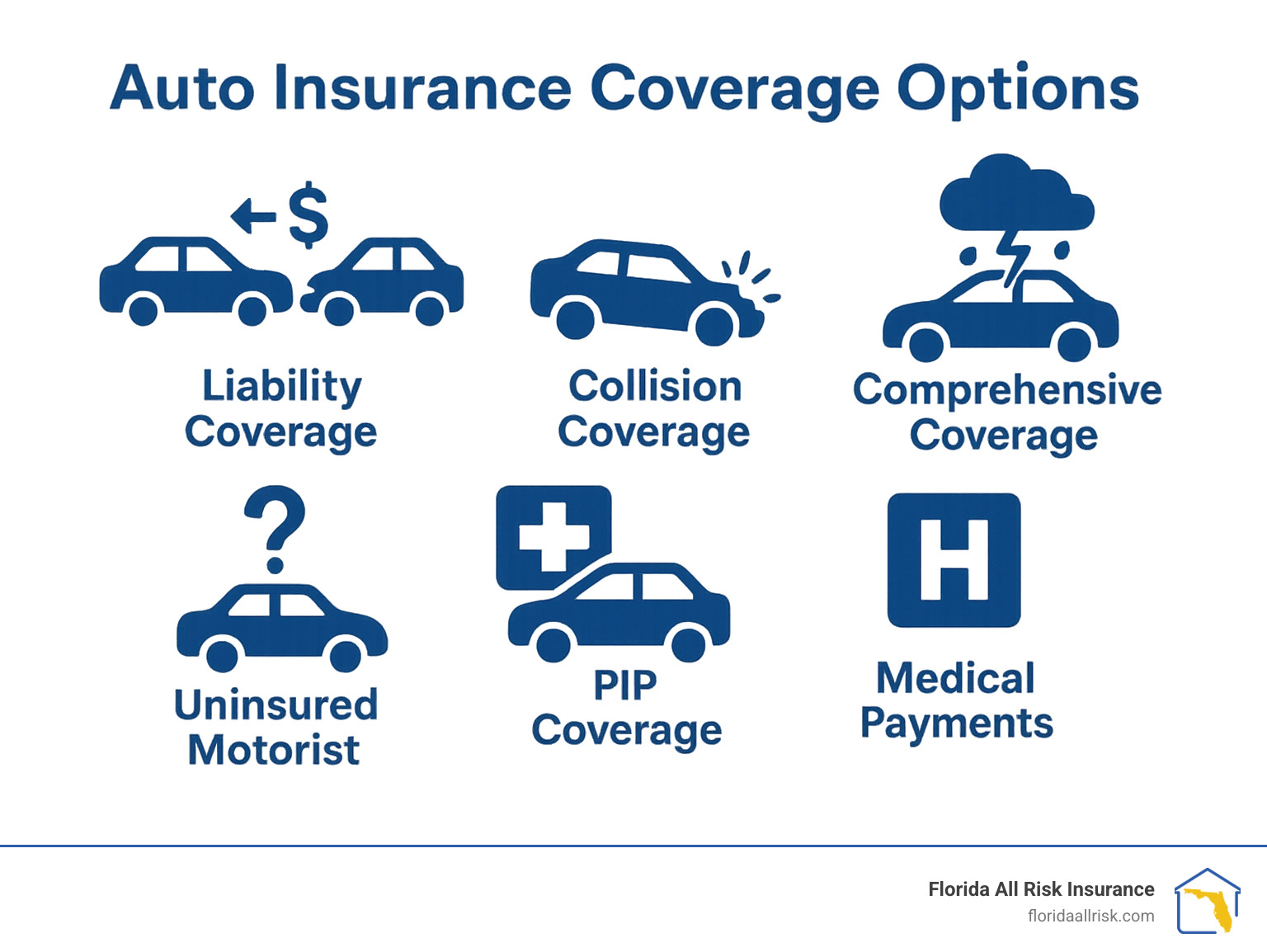
Deciding on the correct amount of collision coverage for your auto insurance policy relies primarily on the actual cash value of your vehicle, your out-of-pocket financial capacity, and whether you are financing or leasing your car. Collision coverage pays to repair or replace your vehicle if it is damaged in a crash with another vehicle or an object, such as a fence or tree, regardless of fault.
Auto insurance policies can feel like a labyrinth of acronyms, deductibles, and valuation clauses. For drivers trying to balance a monthly budget against potential catastrophic repair bills, determining how much collision coverage to carry is a high-stakes puzzle. Unlike liability insurance, which is mandated by state law to protect other drivers from your mistakes, collision coverage is an optional protection for your own asset. However, if you have a car loan or cannot afford to replace your vehicle overnight out of your own savings, this coverage shifts from optional to essential. Understanding how insurers calculate payouts, how deductibles manipulate your premiums, and how vehicle depreciation changes your calculus over time will help you build a policy that offers robust financial protection without wasting money on redundant or oversized coverage.
Understanding the Fundamentals of Collision Coverage
Collision coverage is a specific component of a comprehensive auto insurance policy. It is designed to cover the costs associated with repairing or replacing your vehicle when it is involved in a collision with another car or a stationary object. This applies whether you slide into a guardrail on an icy winter morning, back into a concrete pillar in a parking garage, or get T-boned at an intersection by a driver who ran a red light.
It is vital to distinguish collision coverage from liability coverage and comprehensive coverage. Liability insurance covers damage and injuries you cause to other people and their property. Comprehensive insurance covers damage to your car from events outside of your control, such as theft, vandalism, fire, hitting an animal like a deer, or windshield damage from flying gravel. Collision coverage strictly addresses physical damage resulting from vehicular impacts and rollovers.
How Insurers Determine Vehicle Value
When you purchase collision coverage, you do not insure the vehicle for what you paid for it or for what it would cost to buy a brand-new model off the dealership floor. Instead, insurers base their payouts on the Actual Cash Value (ACV) of the vehicle at the exact time of the loss.
Actual cash value is calculated by taking the replacement cost of a comparable vehicle in the current market and subtracting depreciation. Depreciation is driven by factors including:
- Vehicle age and mileage
- Overall condition before the accident
- Local market demand for that specific make and model
- Accident and repair history
If your car is severely damaged and the cost to repair it exceeds a certain percentage of its ACV—known as the total loss threshold, which varies by state and insurance company—the insurer will declare the car a total loss. They will then pay you the ACV of the car minus your deductible, rather than paying for repairs.
The Core Rule: When You Need Collision Coverage
The universal baseline rule for determining whether you need collision coverage centers on the financial reality of replacing your car and the encumbrances on the vehicle title.
Financing and Leasing Mandates
If you are financing or leasing your vehicle, your lender or leasing company will almost always require you to carry both collision and comprehensive coverage. Because they hold a financial interest in the vehicle until the loan is paid off, they mandate this insurance to ensure that their asset is protected against physical destruction. Allowing your collision coverage to lapse while carrying a car loan is a breach of your contract, which permits the lender to force-place expensive insurance on your behalf and bill you for it.
The Out-of-Pocket Replacement Test
If you own your car outright with no loan or lease, deciding whether to carry collision coverage comes down to a simple mathematical and economic test: Compare the cost of your annual collision premium plus your deductible against the actual cash value of your car.
If your car is worth $3,000, and your annual collision premium is $800 with a $500 deductible, paying for that coverage makes little financial sense. Over a few years, you would pay more in premiums and deductibles than the car is actually worth. Furthermore, if the car is totaled, the maximum payout you could receive from the insurance company would be $3,000 minus your $500 deductible, netting you just $2,500. For vehicles of very low market value, dropping collision coverage—often referred to as liability-only coverage—is a financially sound strategy, provided you have the savings to buy another cheap car if an accident occurs.
Selecting the Right Deductible
The amount of collision coverage you carry is directly tied to your deductible. The deductible is the out-of-pocket amount you agree to pay toward repairs before your insurance company steps in to cover the rest. Common collision deductibles range from $250 to $1,000, with some policies offering $1,500 or $2,000 options.
Choosing a deductible requires balancing your monthly premium expenses against your emergency savings.
| Deductible Amount | Impact on Monthly Premium | Out-of-Pocket Cost at Claim Time | Best Suited For |
|---|---|---|---|
| $250 | Highest | Lowest | Drivers with minimal emergency savings who prefer predictable monthly expenses. |
| $500 | Moderate | Moderate | The industry standard balance for average drivers. |
| $1,000+ | Lowest | Highest | Drivers with robust emergency funds who want to minimize fixed monthly costs. |
Raising your deductible from $500 to $1,000 can reduce your collision premium significantly, often by 10% to 20%. However, you must ask yourself a hard question: If you get into an accident tomorrow, do you have $1,000 sitting in a bank account to release your car from the repair shop? If the answer is no, a higher deductible creates a dangerous financial trap.
Evaluating Vehicle Depreciation and Timing
Vehicles depreciate rapidly, losing a substantial percentage of their value the moment they are driven off the lot and continuing to drop each year. Because collision payouts are tied to ACV, the value of your collision coverage naturally decreases over time, even though your insurance company may not automatically lower your rates to match.
The Trajectory of Vehicle Depreciation
- New Cars (0–1 years): Depreciation is sharpest here. A total loss early on can leave a gap between what you owe on your loan and what the insurer pays based on ACV. This is where GAP insurance (Guaranteed Asset Protection) becomes critical, supplementing your collision coverage.
- Mid-Life Vehicles (2–6 years): Depreciation slows down into a steady curve. The vehicle still holds significant market value, making collision coverage essential if financed or if replacement would strain personal finances.
- Older Vehicles (7+ years): Once a car's market value drops below roughly $3,000 to $4,000, or when the cost of collision and comprehensive insurance exceeds 10% of the car's total value, it is generally time to re-evaluate whether to drop the coverage entirely.
Regularly checking online valuation tools like Kelley Blue Book or Edmunds helps track your car’s current market value against your insurance declarations page. This prevents you from paying for coverage that exceeds the maximum possible payout.
Common Mistakes When Setting Collision Limits
Drivers frequently make avoidable errors when configuring their auto insurance policies, leading to either wasted money or severe financial exposure after a crash.
- Failing to adjust coverage as the car ages: Continuing to pay high collision premiums on a vehicle that has depreciated to a fraction of its former value wastes money.
- Choosing a deductible you cannot afford: Opting for a $1,000 or $2,000 deductible purely to lower the monthly bill can leave you unable to afford the repair costs if an accident occurs.
- Confusing collision with full coverage: "Full coverage" is not an official insurance term. It typically means liability, comprehensive, and collision combined. Assuming you are covered for everything without checking specific limits or exclusions leaves room for costly surprises.
- Overlooking GAP insurance needs: Relying solely on standard collision coverage when you have a high-balance car loan can leave you thousands of dollars underwater if the car is totaled.
Practical Steps to Determine Your Ideal Coverage
To settle on the exact parameters of your collision coverage, follow a structured review process:
- Pull Your Policy Documents: Review your current declarations page to see what you are currently paying for collision coverage and what your deductible is set at.
- Assess Your Vehicle's Current Value: Look up your vehicle's make, model, year, mileage, and condition on reputable valuation websites to estimate its actual cash value.
- Review Your Financial Cushion: Check your liquid savings account. Determine the maximum amount you could comfortably pay out of pocket on short notice for a car repair or replacement.
- Compare Loan Status: Check your remaining loan balance against your vehicle's estimated value. If you owe more than the car is worth, keep your collision coverage intact and verify whether you need GAP insurance.
- Get Multiple Quotes: Contact your current insurer and alternative providers to see how adjusting your deductible from $500 to $1,000 alters your premium. Weigh that savings against your risk tolerance.
Frequently Asked Questions
Is collision coverage required by law?
No state government requires collision coverage by law. State mandatory insurance laws only require liability coverage to pay for injuries and property damage you cause to others. However, if you finance or lease your vehicle, your lender or leasing company will contractually require you to carry collision coverage until the debt is fully paid.
What happens if the repair cost exceeds my car's value?
If the cost to repair your vehicle after a collision exceeds the insurance company's total loss threshold—usually between 75% and 80% of the car's actual cash value—the insurer will declare the vehicle a total loss. They will issue a payout equal to the actual cash value of the car immediately before the accident, minus your deductible, rather than paying for the repairs.
How can I lower the cost of my collision insurance?
You can lower your collision premiums by opting for a higher deductible, such as moving from $500 to $1,000. Additionally, maintaining a clean driving record, bundling your auto policy with renters or homeowners insurance, driving a vehicle with high safety ratings, and asking insurers about low-mileage discounts can all help reduce your overall rate.
Should I drop collision coverage on an older car?
You should consider dropping collision coverage when the annual cost of the coverage plus your deductible approaches or exceeds the total actual cash value of the vehicle. For example, if your car is worth $2,500 and your collision premium and deductible combined equal $1,500 annually, continuing the coverage is economically disadvantageous, provided you have savings to replace the vehicle if necessary.
Does collision coverage pay for rental cars while mine is being repaired?
Standard collision coverage pays only for the repair or replacement of your physical vehicle. It does not automatically cover a rental car while your vehicle is in the shop. To have rental car expenses paid after a covered collision, you must add rental reimbursement coverage to your policy for an extra fee.
Next Actions for Your Policy
Review your current auto insurance declarations page today to identify your existing collision deductible and premium costs. Run a quick market valuation check on your vehicle to compare its worth against what you are paying to insure it. If your vehicle has significantly depreciated or your financial situation has changed, contact your insurance agent to adjust your deductibles or discuss whether dropping collision coverage altogether is appropriate for your household budget.