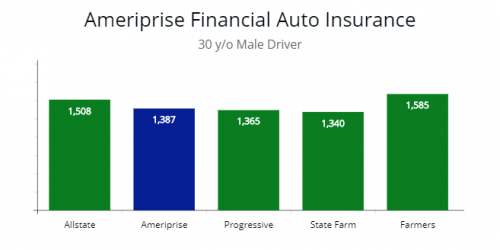
The size of the entity formerly known as Ameriprise Auto & Home Insurance—now operating under the brand Connect, powered by American Family Insurance—is best understood through its transition into the American Family Insurance Group. While it previously functioned as a subsidiary of Ameriprise Financial, its scale is now defined by the reach and capital strength of its parent company, which ranks among the largest property and casualty insurance providers in the United States.
The Evolution of the Ameriprise Insurance Brand
To understand the size and operational capacity of the insurance products formerly marketed as "Ameriprise Auto and Home," one must first recognize the structural shift that occurred in 2019. Ameriprise Financial made the strategic decision to exit the property and casualty insurance market, leading to the sale of its IDS Property Casualty Insurance Company and its affiliates to the American Family Insurance Group (AmFam).
Following the acquisition, the business transitioned to the "Connect" brand. Consequently, when researching the "size" of this entity today, you are essentially evaluating the market footprint of the American Family Insurance Group. As of 2026, this integration is complete, and the policies once identified under the Ameriprise name operate under the robust infrastructure of one of the nation’s largest mutual insurance holding companies.
Measuring Company Size: Key Metrics
In the insurance industry, size is rarely measured by headcount alone. Instead, it is gauged by Direct Premiums Written (DPW), total assets, and policyholder surplus. These metrics determine a company’s ability to pay claims during catastrophic events and its long-term financial stability.
1. Assets and Capital Reserves
American Family Insurance Group manages tens of billions of dollars in assets. By absorbing the Ameriprise book of business, the group increased its market share significantly in the personal lines sector. For the policyholder, this translates to a deeper pool of capital. Unlike smaller regional carriers, this size ensures that the company is not easily destabilized by localized natural disasters, such as severe storm seasons or wildfire events.
2. Geographic Footprint
The acquisition of the Ameriprise business allowed American Family to expand its geographic footprint. Historically, American Family had a strong presence in the Midwest. The integration of the Connect business provided a nationwide distribution capability, allowing the group to serve customers across all 50 states. This shift from a regional powerhouse to a national provider is a critical component of the entity’s current size and influence.
3. Market Share in Personal Lines
When considering auto and home insurance, size correlates with the number of policies in force. The group manages millions of policies across the United States. This scale provides the company with significant data sets for actuarial modeling, which helps in pricing premiums more accurately and developing sophisticated risk-assessment tools.
Why Company Size Matters to the Policyholder
When you purchase auto or home insurance, you are entering a long-term financial contract. The size of the insurance company serves as a proxy for its "promise to pay."
- Claims-Paying Ability: Larger companies with diverse portfolios are generally better positioned to handle a sudden influx of claims. If a major catastrophe occurs, a large insurer has the liquidity to settle claims without compromising its solvency.
- Technological Investment: Size dictates R&D budgets. Companies with larger market shares can afford to invest in advanced digital portals, mobile applications for rapid claims filing, and AI-driven underwriting. The current "Connect" platform benefits from the significant technological investment of the American Family Insurance Group.
- Regulatory Resilience: Larger insurance groups have legal and compliance teams dedicated to navigating the complex and varying insurance laws of all 50 states. Smaller regional carriers may sometimes struggle with the regulatory burden of expanding into new markets.
Comparative Scale in the Insurance Industry
To provide context, the table below compares the functional scale of major insurance groups operating in the U.S. market as of 2026. This data helps differentiate between regional providers and national-scale organizations.
| Insurance Group | Market Position | Primary Distribution Model | National Reach |
|---|---|---|---|
| American Family Insurance | Tier 1 (Large) | Multi-channel (Agents/Direct) | National |
| State Farm | Tier 1 (Largest) | Exclusive Agency | National |
| Progressive | Tier 1 (Large) | Direct/Independent Agents | National |
| Regional Mutuals | Tier 3 (Small) | Agency-based | State/Regional |
Note: Rankings based on industry standard data for Direct Premiums Written. American Family Insurance consistently places within the top tier of U.S. personal lines writers.
Financial Ratings: The Real Measure of Strength
While physical size and revenue are important, insurance analysts look primarily at financial strength ratings assigned by independent agencies like A.M. Best, Moody’s, and S&P Global. These ratings provide a more accurate picture of a company’s "size" in terms of its ability to meet policyholder obligations.
The American Family Insurance Group, which now backs the policies once known as Ameriprise Auto and Home, typically maintains high financial strength ratings. A high rating (e.g., an "A" or better) signifies a strong ability to meet contractual obligations. When you evaluate the "size" of an insurance provider, you should prioritize these ratings over raw revenue figures, as they are specifically designed to communicate risk and reliability to the consumer.
Potential Downsides of Large-Scale Operations
While larger companies offer stability, there are trade-offs that consumers should be aware of. As an organization grows, it can become less personalized.
- Bureaucracy: Larger entities often have more rigid processes for claims and underwriting. You may find that communication is more automated and less reliant on the personal touch of a local agent compared to a small, independent mutual insurer.
- Standardization: Large carriers often use standardized national or regional rating models. If your specific risk profile does not fit these "average" models, you might find that premiums are less flexible than they would be with a niche, boutique insurance provider.
Managing Expectations: The "Connect" Experience
If you are an existing customer or a prospect looking at insurance policies formerly managed by Ameriprise, you are essentially interacting with a national-scale operation. The transition to "Connect" represents a move away from the Ameriprise Financial corporate structure to a specialized insurance-only corporate structure. This focus allows the organization to dedicate 100% of its resources to property and casualty insurance, rather than balancing it against wealth management or banking services.
For most consumers, this change in size and ownership has resulted in more consistent service and a clearer path for digital policy management. The "size" of your insurer is not just about how many billions of dollars they manage; it is about how effectively they translate that scale into a seamless claims process for you when you need it most.
Frequently Asked Questions
1. Is Ameriprise Auto and Home still in business? No, Ameriprise Financial sold its auto and home insurance division to American Family Insurance. The business now operates under the "Connect" brand. If you were a previous policyholder, your coverage and service are now provided through the American Family Insurance Group.
2. How does the size of my insurance company affect my premiums? Size often allows for greater economies of scale. Large companies can distribute operational costs across a massive customer base, which can lead to competitive pricing. However, premiums are primarily dictated by your individual risk profile, local regulations, and historical loss data in your specific area.
3. Does a larger insurance company pay claims faster? Not necessarily. While a large company has the capital to pay, the speed of your claim depends more on the company’s internal claims-processing technology and staffing levels. Many large insurers now use mobile apps and AI to expedite simple claims, which can result in faster payouts than traditional, manual processes.
4. Can I find financial ratings for American Family Insurance online? Yes. You can visit the official websites of rating agencies such as A.M. Best, Fitch, or S&P Global. Search for "American Family Insurance" to view their latest financial strength reports and outlooks, which are updated annually.
5. Is my policy still the same after the brand transition? In most cases, existing policies were transitioned into the new corporate structure under "Connect." While the branding changed, the core terms and conditions of your policy remained in effect until the next renewal period, at which point they were brought into compliance with the new parent company’s underwriting standards.
Recommendation for Policyholders
If you are currently evaluating your insurance coverage, do not base your decision solely on the market size of the provider. While being backed by a large, financially stable group like American Family Insurance is a significant advantage for security, you should prioritize coverage adequacy.
Review your declarations page annually to ensure your coverage limits reflect the 2026 value of your home and the current replacement cost of your vehicle. Regardless of the insurer's size, the most important factor in your financial protection is ensuring that your deductibles are manageable and your liability limits are sufficient to protect your personal assets. For specific inquiries regarding your policy status or coverage adjustments, contact your dedicated agent or the official customer portal of the carrier.