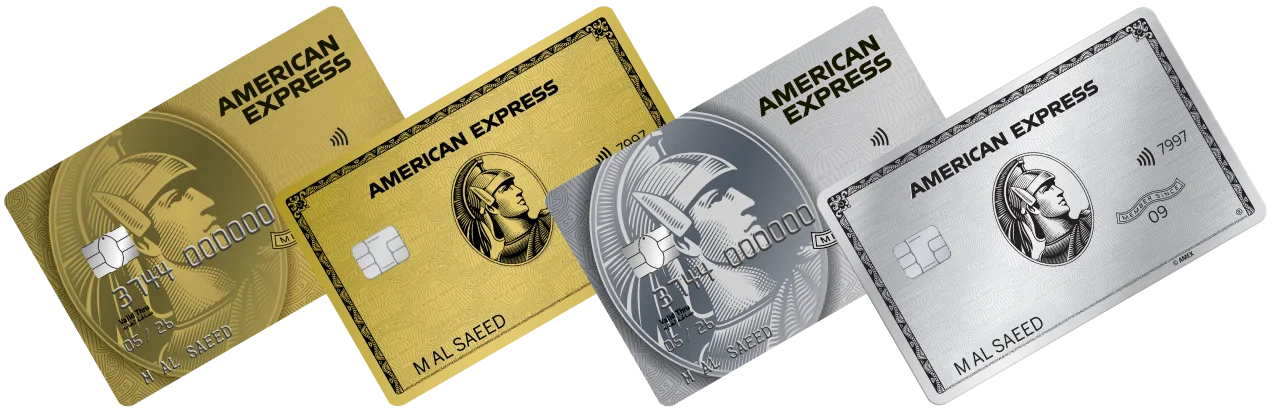
American Express Membership Rewards points are a flexible "transferable currency" earned through specific Amex credit cards. They work by accumulating on every purchase and can be redeemed for travel, gift cards, statement credits, or transferred to over 20 airline and hotel partners to maximize their financial value.
The American Express Membership Rewards (MR) program remains one of the most prestigious and versatile loyalty schemes in the financial world. Unlike fixed-value "cash back" programs, Membership Rewards points represent a form of private currency that fluctuates in value based on how you choose to deploy them. In 2026, as the travel landscape becomes increasingly integrated with digital ecosystems, understanding the mechanics of earning, valuing, and redeeming these points is essential for any savvy cardmember.
The Architecture of the Membership Rewards Ecosystem
At its core, the Membership Rewards program is designed to incentivizing card usage by rewarding consumers with points for every dollar spent. However, the program is not a monolith; it is an ecosystem that bridges the gap between daily expenses and luxury experiences.
The Role of the Primary Account
Your Membership Rewards account acts as a central hub. If you hold multiple American Express cards that earn MR points—such as the Platinum Card® and the American Express® Gold Card—the points earned from both accounts are automatically pooled into a single balance. This consolidation is a significant advantage, allowing users to reach high-value redemption thresholds faster than they would by spreading spend across unrelated loyalty programs.
The Life Cycle of a Point
Membership Rewards points do not expire as long as you have at least one active card account that participates in the program. This "evergreen" status makes them an excellent hedge against travel inflation. When you make a purchase, points typically appear as "pending" until your statement is paid, at which point they become available for use. This cycle ensures that the rewards are anchored to actual financial settlement rather than just the act of swiping the card.
Strategic Earning: How to Accumulate Points Rapidly
While every cardholder earns at least 1 point per dollar spent, the secret to mastering the program lies in "category multipliers." These are specific types of spending—such as dining, groceries, or airfare—that earn points at a much higher rate.
Leveraging the "Amex Trifecta"
Sophisticated users often utilize the "Amex Trifecta," a combination of three cards designed to cover almost every spending category with a multiplier. In 2026, the most common combination involves:
- The Platinum Card®: Used primarily for booking flights and prepaid hotels (often 5x points) and for its extensive suite of travel benefits.
- The American Express® Gold Card: The "workhorse" for daily life, offering high multipliers on global restaurants and U.S. supermarkets (often 4x points).
- The Blue Business® Plus Credit Card: Frequently used for all "non-bonus" spending, as it traditionally offers 2x points on the first $50,000 in purchases per year, making it the ideal catch-all card.
Beyond the Swipe: Rakuten and Amex Offers
One of the most overlooked ways to earn points is through the Rakuten partnership. By linking an Amex MR-earning card to a Rakuten account, users can choose to earn Membership Rewards points instead of cash back at thousands of online retailers. This often results in earning 10x or 15x points during promotional periods, far outpacing the rewards earned from the credit card spend alone.
Furthermore, Amex Offers are targeted promotions found within the American Express app. These offers provide bonus points for spending a specific amount at partner merchants, ranging from insurance providers to luxury boutiques. Activating these offers is a prerequisite for high-speed point accumulation.
The Mathematical Reality: Point Valuation and Redemption Tiers
Not all redemptions are created equal. The value of an Amex point can range from 0.5 cents to over 10 cents, depending on the complexity of the redemption.
Low-Value Redemptions (The Convenience Trap)
American Express makes it very easy to use points at checkout with partners like Amazon or PayPal, or to "Cover Your Charges" (statement credits). However, these methods typically offer a value of 0.6 to 0.7 cents per point. Using 10,000 points to cover a $60 charge is generally considered a poor financial move, as those same points could be worth significantly more in other contexts.
Moderate-Value Redemptions: Amex Travel
When you book travel directly through the American Express Travel portal, you generally receive 1.0 cent per point for flights. For those who hold the Business Platinum Card®, there is a unique benefit where a portion of points is rebated on certain flight bookings, effectively pushing the value higher. This method is "safe" and requires no specialized knowledge, but it rarely yields the "outsized value" that travel enthusiasts seek.
High-Value Redemptions: The Transfer Partner Strategy
The pinnacle of the MR program is the ability to transfer points to partner loyalty programs. Amex currently maintains partnerships with various airlines and hotel chains. By moving points to an airline partner—often at a 1:1 ratio—you can book award seats that would otherwise cost thousands of dollars.
| Redemption Method | Estimated Value Per Point | Recommendation |
|---|---|---|
| Statement Credits / "Cover Your Charges" | 0.6 cents | Avoid |
| Amazon / PayPal Checkout | 0.7 cents | Avoid |
| Gift Cards | 0.5 - 1.0 cents | Use only for 1.0c promos |
| Amex Travel Portal (Flights) | 1.0 cents | Acceptable |
| Transfer to Hotel Partners (Hilton/Marriott) | 0.6 - 1.2 cents | Situational |
| Transfer to Airline Partners (International Business Class) | 2.0 - 8.0+ cents | Optimal |
Master the Transfer: Airline and Hotel Partners
The true power of "how they work" lies in the transfer mechanism. American Express does not own the planes or hotels; they provide the "liquidity" that you move into other programs.
Major Airline Alliances
By transferring to a key member of one of the three major airline alliances, you gain access to a global network:
- Star Alliance: Transfer to Air Canada Aeroplan or Avianca LifeMiles to book United or Lufthansa flights.
- SkyTeam: Transfer to Delta Air Lines or Air France-KLM Flying Blue.
- Oneworld: Transfer to British Airways Executive Club or Qatar Airways Privilege Club to book American Airlines or Finnair.
The 2026 Transfer Process
To transfer points, you must first link your frequent flyer account to your Amex account. This process usually requires a name match and can take anywhere from a few minutes to several days, depending on the partner. Once linked, you can move points in increments of 1,000.
Important Note on Fees: For transfers to U.S. domestic airlines (like Delta or JetBlue), American Express is required to offset a federal excise tax. They charge a fee of $0.0006 per point (up to a maximum of $99). While small, this is a unique technicality of the U.S. Membership Rewards program that does not apply to international airline transfers.
Advanced Management: Rules, Restrictions, and Risks
While the program is flexible, there are strict guardrails that users must navigate to avoid losing their hard-earned rewards.
The "One-Way Street" Rule
Once you transfer Membership Rewards points to a partner like Delta or British Airways, they cannot be moved back to American Express. They are now subject to the rules, expiration policies, and devaluation risks of that specific airline. Therefore, you should never transfer points "speculatively." Only move them when you have confirmed that an award seat is available for the flight you want.
Account Closures and Point Forfeiture
If you decide to cancel an American Express card, you must be careful. If that is your only MR-earning card, your points will be forfeited immediately upon closure. To prevent this, you must either:
- Keep at least one other MR-earning card open (like the no-annual-fee Blue Business Plus or the Everyday Card).
- Redeem all points before closing the account.
- Transfer the points to a partner program before closing the account.
Pooling Points with Others
American Express does not allow you to "merge" your MR points directly with a friend or family member's MR account. However, there is a workaround: you can transfer your points to the frequent flyer account of an Authorized User. If you have added a spouse as an authorized user on your Platinum card for at least 90 days, you can transfer your points directly into their Delta or Marriott account.
Common Pitfalls to Avoid
Even experienced users can make mistakes that diminish the value of their points.
- Ignoring Transfer Bonuses: Several times a year, Amex offers "transfer bonuses" (e.g., a 30% bonus when transferring to Virgin Atlantic). Booking during these windows can turn a good redemption into an extraordinary one.
- Booking "Pay with Points" for Hotels: While flights often get 1 cent per point on the Amex portal, hotels often get only 0.7 cents. It is almost always better to pay cash for hotels or transfer to a partner like Hilton during a 1:2 bonus period.
- Forgetting the "Fine Hotels + Resorts" (FHR) Program: For Platinum cardholders, booking through FHR can be more valuable than using points. FHR bookings provide breakfast, room upgrades, and a $100 experience credit, which often outweighs the value of the points spent.
Frequently Asked Questions
Do Amex points expire?
No, Membership Rewards points do not expire as long as you have at least one active card account enrolled in the program. If you close all your MR-earning accounts, you typically have a 30-day grace period to use the points, but it is safer to have a "keeper" card with no annual fee to anchor the balance indefinitely.
Can I transfer Amex points to someone else?
You cannot transfer points directly to another person's Membership Rewards account. However, you can transfer points to the loyalty program account (airline or hotel) of an authorized user who has been on your account for at least 90 days.
What is the best way to use 100,000 Amex points?
The highest value is usually found in booking a round-trip Business Class ticket to Europe or Asia by transferring points to partners like Air France-KLM or ANA. While these points would only be worth $600-$700 as a statement credit, they can represent $3,000 to $5,000 in value when used for premium cabin international travel.
Is it worth it to use points for "Cover Your Charges"?
Generally, no. This redemption provides only 0.6 cents per point. For example, a $600 statement credit would cost 100,000 points. If you used those same points for a flight via Amex Travel, they would be worth at least $1,000. Using points for statement credits is one of the least efficient ways to use the currency.
How long do transfers to airline partners take?
Most transfers to major partners like Delta, British Airways, and Air France are instant. However, some partners, like ANA or Cathay Pacific, can take 48 to 72 hours. Always check the current transfer times before planning a time-sensitive booking.
Are Membership Rewards points taxable?
In the United States, points earned through consumer credit card spending are generally considered "discounts" rather than income, and therefore are not taxable. However, points earned through certain business activities or referral bonuses may occasionally be subject to different interpretations; it is always best to consult with a tax professional regarding large volumes of points earned through non-spending activities.
Final Recommendation
To maximize American Express Membership Rewards, you should treat them as a high-yield investment rather than a simple discount program. Your first step should be to identify a "placeholder" card with no annual fee, such as the Blue Business Plus, to ensure your points never expire. From there, focus your spending on category multipliers and save your points for international premium cabin travel. By avoiding the temptation of 0.6-cent statement credits and focusing on 2.0-cent airline transfers, you effectively triple the value of every dollar you spend with American Express.