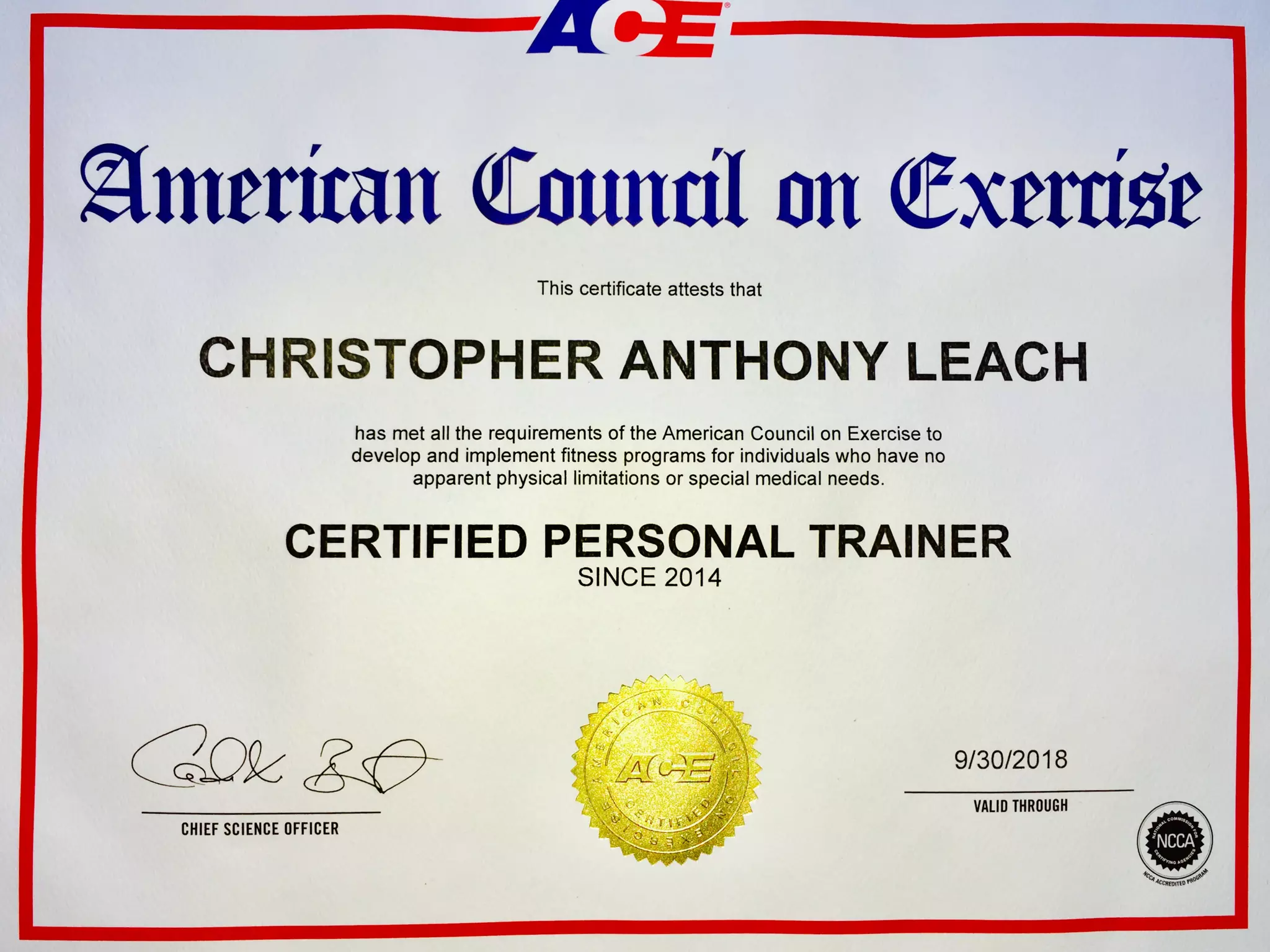
The American Council on Exercise (ACE) Personal Trainer Certification is a gold-standard credential accredited by the National Commission for Certifying Agencies (NCCA). In 2026, it remains a premier pathway for fitness professionals, focusing on the ACE Integrated Fitness Training® (IFT) model and behavior change science to help clients achieve sustainable, long-term health outcomes.
Obtaining an ACE Personal Training Certification (CPT) signifies that a fitness professional has met rigorous national standards for safety and competence. As the fitness industry evolves toward a more holistic approach to health, the ACE curriculum distinguishes itself by prioritizing not just physical programming, but also the psychological aspects of habit formation and client adherence. For those entering the workforce in 2026, this certification serves as a versatile foundation for working in commercial gyms, private studios, or independent coaching practices.
Understanding the ACE Professional Standard
The American Council on Exercise is a non-profit organization dedicated to "getting people moving." Unlike some for-profit entities, ACE focuses heavily on public health and advocacy. Their CPT program is specifically designed to provide trainers with the tools to work with the general population—ranging from sedentary adults to recreationally active individuals.
NCCA Accreditation
The cornerstone of the ACE-CPT’s value is its NCCA accreditation. The National Commission for Certifying Agencies is the body that ensures certification programs have a fair and valid evaluation process. For an aspiring trainer, this accreditation is vital because most major health clubs and specialized fitness boutiques require an NCCA-accredited credential as a prerequisite for employment. It ensures that the professional has demonstrated the knowledge necessary to protect the public from harm.
The ACE Integrated Fitness Training (IFT) Model
The ACE curriculum is built around the IFT Model, a comprehensive framework that simplifies the complex process of personalized exercise programming. As of 2026, the IFT model focuses on two primary components:
- Cardiorespiratory Training: Moving through functional, fitness, and performance phases.
- Muscular Training: Focusing on functional movement, resistance training for health and fitness, and training for athletic performance.
This systematic approach allows trainers to meet a client at any fitness level and progress them safely toward their specific goals, whether that is weight loss, improved mobility, or increased strength.
Eligibility and Prerequisites for 2026
Before registering for the exam, candidates must meet specific criteria to ensure they have the foundational maturity and safety knowledge required for the role.
- Age Requirement: Candidates must be at least 18 years of age.
- Educational Background: A high school diploma or its equivalent (GED) is required.
- CPR/AED Certification: This is perhaps the most critical prerequisite. Candidates must hold a current, valid CPR (Cardiopulmonary Resuscitation) and AED (Automated External Defibrillator) certification. In 2026, ACE continues to require a hands-on skills competency component for this certification. Online-only CPR courses that do not involve a practical assessment are generally not accepted.
- Identification: A valid government-issued photo ID is required at the time of the exam.
Failure to maintain a valid CPR/AED certification will result in the suspension of a trainer's active status, even if they have passed the ACE-CPT exam.
ACE Study Program Tiers and Investment
ACE offers several study packages tailored to different learning styles and budgets. While the core "ACE Personal Trainer Manual" remains the primary source of truth, the delivery methods vary from digital-only to comprehensive bundles including live support.
2026 Pricing and Package Comparison
| Feature | Self-Study (Basic) | Plus (Recommended) | Advantage (Premium) |
|---|---|---|---|
| Core Textbook | Digital Only | Digital + Hardcover | Digital + Hardcover |
| Practice Exams | 1 Exam | 2 Exams | 4 Exams |
| ACE University | Included (Basic) | Included (Standard) | Included (Full Access) |
| Live Support | No | Q&A Webinars | 1-on-1 Facilitated Study |
| Exam Voucher | Included | Included | Included |
| Estimated Cost | $489 - $599 | $589 - $749 | $849 - $974 |
Note: Prices often fluctuate based on seasonal promotions. These figures reflect the standard 2026 market rates for NCCA-accredited programs.
The Plus Package is historically the most popular choice as it includes the hardcover textbook and additional practice tests, which are instrumental in reducing exam-day anxiety. The Advantage Package is geared toward students who prefer a structured, classroom-like environment with more direct interaction with ACE experts.
The Science of Behavior Change: The ACE "Mover Method"
One area where ACE significantly outpaces competitors is its focus on behavior change science. In 2026, the fitness industry recognizes that the "why" behind a client's actions is just as important as the "how" of their workout.
The ACE Mover Method™ is a philosophy integrated into the certification that focuses on:
- Empathy and Communication: Building a strong rapport with clients to understand their internal motivations.
- Open-Ended Questions: Using motivational interviewing techniques to help clients discover their own reasons for change.
- Collaboration: Treating the client as an expert on their own life, rather than the trainer simply acting as a drill sergeant.
By mastering these skills, ACE-certified trainers are better equipped to handle client "relapses" or plateaus, leading to higher client retention rates and better long-term health outcomes.
Preparing for and Passing the Certification Exam
The ACE-CPT exam is a rigorous assessment consisting of 150 multiple-choice questions. Of these, 125 are scored, and 25 are "experimental" questions used by ACE for future test development (these do not affect your score). Candidates are given three hours to complete the computer-based exam.
Exam Domain Breakdown
The exam is divided into four major domains, each weighted differently:
- Client Interviews and Assessments (23%): Testing knowledge on health screenings, risk stratification, and initial physical assessments.
- Program Design and Implementation (31%): The largest section, focusing on creating exercise programs using the IFT model.
- Program Progression and Modifications (26%): Evaluating how a trainer adjusts a program as a client improves or encounters challenges.
- Professional Conduct, Safety, and Risk Management (20%): Focusing on legal issues, scope of practice, and emergency protocols.
Scoring and Results
The exam is scored on a scale from 200 to 800. A passing score is 500 or higher. In 2026, candidates can choose between taking the exam at a physical Meazure Learning testing center or via live remote proctoring from their home, provided they meet strict technical and environmental requirements.
Comparing ACE to Other Major Certifications
When choosing a certification, many students weigh ACE against the National Academy of Sports Medicine (NASM) or the International Sports Sciences Association (ISSA).
- ACE vs. NASM: NASM is often praised for its Optimum Performance Training (OPT) model, which is highly structured and focuses heavily on corrective exercise and posture. ACE is generally considered more "user-friendly" for general population clients and offers superior training in the psychology of behavior change.
- ACE vs. ISSA: ISSA is known for its open-book testing options (though they offer proctored exams for NCCA accreditation). ACE is strictly NCCA-accredited from the start, which some employers find more reputable. ACE's study materials are often cited as being more streamlined and easier to navigate than the very dense ISSA textbooks.
Maintaining Your Certification: CECs and Renewal
An ACE Personal Training Certification is valid for two years. To maintain an "Active" status, trainers must complete the recertification process, which involves continuing education.
Continuing Education Credits (CECs)
Trainers must earn 2.0 CECs (equivalent to 20 hours of professional development) every two years. These credits can be earned through:
- Attending fitness conferences.
- Completing specialist certifications (e.g., ACE Senior Fitness Specialist, Weight Management Specialist).
- Online courses and webinars.
- College-level courses in kinesiology or exercise science.
Recertification Fees
As of 2026, the renewal fee is approximately $129 if submitted on time. Maintaining your certification is not just a regulatory requirement; it ensures you stay current with the latest exercise science research and safety guidelines, which is critical in a field that evolves as rapidly as fitness.
Career Outlook and Earning Potential
The demand for certified personal trainers continues to grow in 2026 as health systems emphasize preventative care. ACE-certified professionals find opportunities in various sectors:
- Commercial Fitness: Working as an employee in clubs like Equinox, 24 Hour Fitness, or Life Time.
- Corporate Wellness: Designing health programs for large companies to improve employee productivity and reduce insurance costs.
- Online Coaching: Leveraging digital platforms to train clients globally, a sector that has seen exponential growth over the last five years.
- Specialized Populations: Working in medical fitness facilities alongside physical therapists or chiropractors.
While earnings vary significantly by location and experience, ACE-certified trainers often command higher hourly rates than uncertified peers due to their NCCA-recognized expertise. Many trainers use the ACE-CPT as a "stepping stone" toward more specialized roles in strength and conditioning or clinical exercise physiology.
Frequently Asked Questions
Is the ACE Personal Trainer exam difficult?
The ACE-CPT exam is considered moderately difficult, with a historical pass rate hovering between 65% and 70%. It requires a deep understanding of the IFT model and the ability to apply theoretical knowledge to practical, client-based scenarios. Rote memorization of facts is rarely enough; candidates must understand the application of exercise science.
Can I take the ACE exam online?
Yes, ACE offers live remote proctoring in 2026. You must have a stable internet connection, a webcam, and a private room free of distractions. A proctor will monitor your screen and your physical environment throughout the duration of the test to ensure academic integrity.
How long does it take to study for the ACE-CPT?
Most candidates spend between 3 to 6 months preparing for the exam. This allows enough time to read the manual, complete the online modules in ACE University, and take several practice exams. Those with a background in exercise science may be able to prepare in as little as 6 to 8 weeks.
What happens if I fail the exam?
If you do not pass, you can retake the exam after a waiting period. There is a retesting fee, which is typically lower than the initial registration cost. ACE provides a score report that breaks down your performance by domain, helping you identify which areas require more study before your next attempt.
Does ACE offer job placement?
While ACE does not guarantee job placement, they provide a "CEC and Career" portal that connects certified professionals with employers. Their status as an NCCA-accredited body means that your resume will be recognized by virtually all major gym chains and health clubs in the United States and many internationally.
Final Recommendation
For individuals looking to launch a career in fitness in 2026, the American Council on Exercise Personal Training Certification is an excellent investment. Its unique blend of exercise physiology and behavior change science creates a well-rounded professional capable of handling the complexities of modern client needs. To begin, ensure you meet the CPR/AED requirements and select a study package that aligns with your learning style—ideally one that includes the hardcover manual for easier long-term reference.