Mexican boxing history represents a century-long legacy of resilience, technical mastery, and unparalleled cultural impact. From early pioneers like Bert Colima to modern icons like Canelo Álvarez, Mexican fighters are defined by their "never-quit" attitude, relentless body punching, and deep connection to their national identity, making Mexico a perennial powerhouse in professional boxing.
The Cultural Foundation of Mexican Boxing
To understand the history of Mexican boxers, one must first recognize that boxing is more than a sport in Mexico; it is a vital part of the national fabric. While football (soccer) may hold the title of the most popular participation sport, boxing is often regarded as the sport that best reflects the Mexican spirit of "ganas" (desire or will). This connection began in the early 20th century, primarily in urban centers like Mexico City and border towns where the sport became a vehicle for social mobility.
The "Mexican Style" of boxing is a recognized technical term within the industry. It typically involves high-volume punching, a preference for fighting on the inside, and a signature focus on the liver shot—a left hook to the body designed to paralyze the opponent's diaphragm. This style was not born by accident; it was forged in the high-altitude training camps of the Otomi Mountains and the grueling "gym wars" of Romanza and other legendary training facilities. The history of Mexican boxers is, therefore, a history of these institutions as much as it is of the individuals who fought in them.
The Pioneer Era: Laying the Groundwork (1920s–1950s)
Before the era of televised mega-fights, the foundations of Mexican boxing were laid by men who fought frequently and often under harsh conditions. Bert Colima, active in the 1920s and 30s, was one of the first Mexican fighters to achieve international recognition, competing in over 100 professional bouts and paving the way for the next generation.
During the 1930s, Alberto "Baby" Arizmendi emerged as a central figure. Arizmendi was a featherweight who became known for his incredible durability and his five-fight series against the legendary Henry Armstrong. Although many of these early records are difficult to verify with modern precision, Arizmendi is credited by the International Boxing Hall of Fame as a champion who proved that Mexican fighters could compete at the highest level of the sport.
Following Arizmendi, the 1940s and 50s saw the rise of Ratón Macías (Raúl Macías). Macías was perhaps the first true "idol" of Mexican boxing. His popularity was so immense that his fights would literally stop traffic in Mexico City. He captured the NBA (now WBA) Bantamweight title in 1955. His humble demeanor and deep religious faith set a template for the "people’s champion" that later fighters would follow.
The Golden Age of Bantamweights and Featherweights (1960s–1980s)
As the sport evolved into the 1960s and 70s, Mexico began to dominate the lower weight classes. This period saw a transition from regional stars to global icons.
Ruben "Púas" Olivares and the 118-lb Dominance
Ruben Olivares is widely considered the greatest bantamweight in history. Known as "Púas" (The Spikes), he possessed devastating knockout power in both hands. Olivares was a three-time world champion and a central figure in the fierce rivalries that defined the division. His battles against Chucho Castillo and Alexis Argüello are essential viewing for any student of the sport. Beyond his physical gifts, Olivares’ charisma made him a massive cultural figure, appearing in films and becoming a permanent fixture in Mexican media.
Salvador Sanchez: The Legend Interrupted
The story of Mexican boxing cannot be told without the tragedy of Salvador Sanchez. In the early 1980s, Sanchez was the reigning WBC Featherweight champion and was rapidly ascending toward pound-for-pound greatness. His clinical dismantling of Wilfredo Gomez in 1981 remains one of the most significant victories in Mexican sporting history.
Sanchez was a defensive genius who possessed incredible stamina and counter-punching ability—a deviation from the traditional "slugger" mold. His life and career were cut short at the age of 23 by a car accident in 1982. Despite his short career, he is almost universally ranked among the top three Mexican boxers of all time.
Julio César Chávez: The "Gran Campeón Mexicano"
If Mexican boxing were a religion, Julio César Chávez would be its primary deity. Emerging in the 1980s and dominating through the mid-1990s, Chávez became the gold standard for what a Mexican fighter should be. He holds several records that may never be broken, including the most successful defenses of world titles (27) and the longest undefeated streak in boxing history (89-0-1 before his first official loss).
Chávez was the master of the "war of attrition." He would systematically break opponents down with relentless pressure and a body attack that was clinically precise. His 1990 victory over Meldrick Taylor, where he scored a TKO with only two seconds remaining in the final round, is often cited as the greatest comeback in boxing history. Chávez didn't just win titles in three different weight classes; he unified the spirit of a nation, drawing a record-setting 132,247 fans to the Estadio Azteca in 1993.
The Modern Rivalries: Morales, Barrera, and Márquez
The late 1990s and early 2000s ushered in a "Second Golden Age" characterized by a series of internal rivalries that captured the world's attention.
- Erik "El Terrible" Morales: The first Mexican to win world titles in four different weight classes. Morales was a fearless warrior known for his willingness to trade punches even when a tactical approach would have been safer.
- Marco Antonio Barrera: Initially a knockout artist, Barrera reinvented himself as a technical boxer-puncher. His rivalry with Morales (a legendary trilogy) and his victory over Prince Naseem Hamed solidified his legacy as a tactical master.
- Juan Manuel Márquez: Often overshadowed early in his career, Márquez became a household name through his four-fight saga with Manny Pacquiao. Márquez was a master counter-puncher, culminating in his 2012 knockout of Pacquiao, which remains one of the most iconic moments in the sport.
These three men, along with the undefeated Ricardo "El Finito" López, who retired with a record of 51-0-1 after defending his strawweight title 22 times, ensured that Mexico remained at the pinnacle of the sport during the transition into the 21st century.
The Era of Canelo Álvarez and Beyond
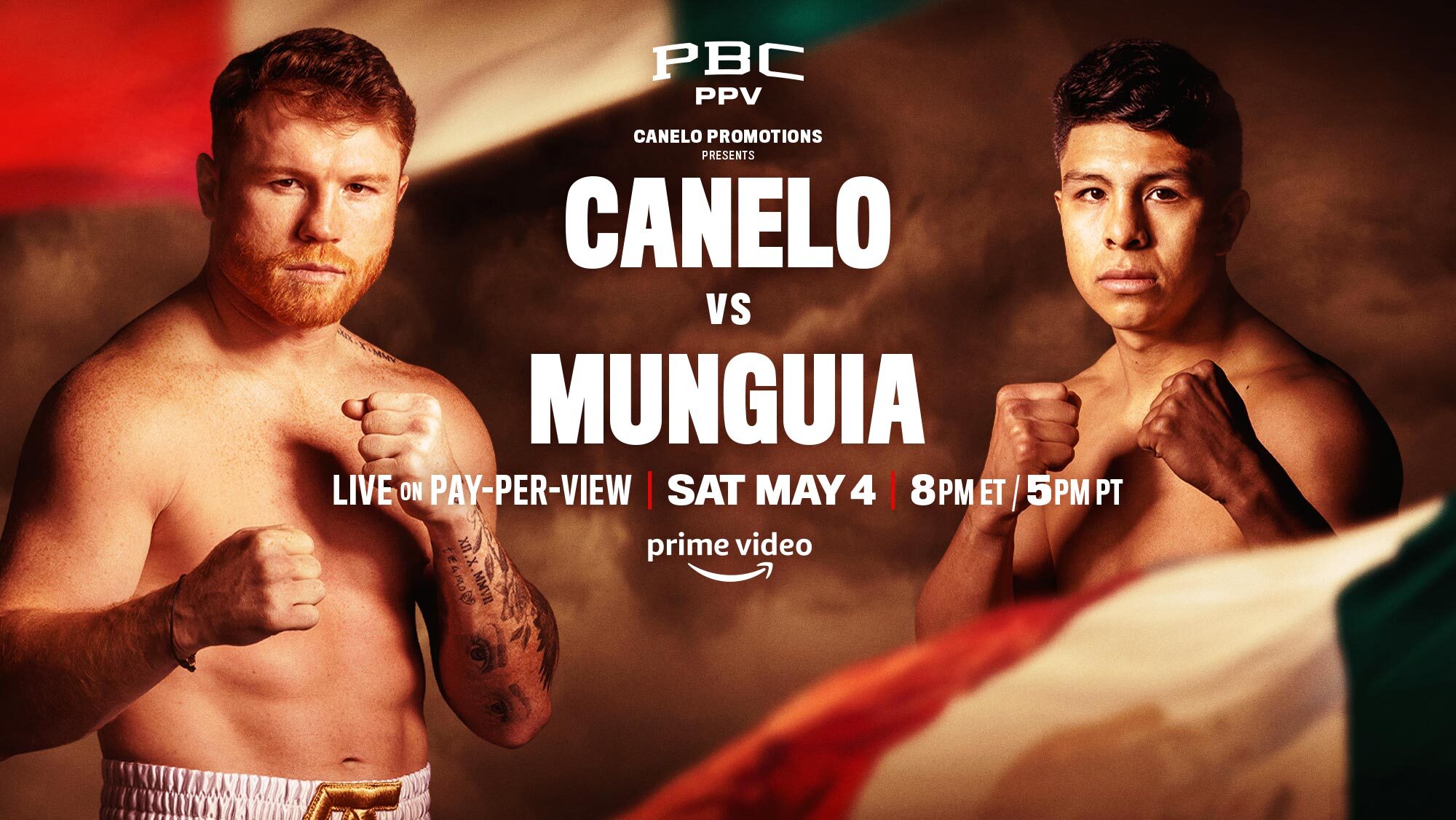
As of 2026, the dominant figure in the sport remains Saúl "Canelo" Álvarez. Since his debut as a teenager, Canelo has evolved from a popular regional star into a global conglomerate. He has won world titles in four weight classes (Junior Middleweight to Light Heavyweight) and became the first undisputed super middleweight champion in history.
Canelo’s career represents a shift in how Mexican boxers operate. He has taken control of his own promotion and has been a pioneer in using streaming platforms and independent distribution. While some purists initially criticized his move away from the traditional high-volume style toward a more patient, counter-punching power game, his longevity and consistency have forced a re-evaluation of his place in history. By 2026, his resume includes wins over a staggering number of world champions, placing him in the conversation with Chávez and Sanchez.
Comparative Snapshot of Mexican Boxing Legends
The following table compares the career achievements of four of the most influential Mexican boxers in history.
| Boxer | Career Span | Major Titles | Record (W-L-D) | Key Characteristic |
|---|---|---|---|---|
| Julio César Chávez | 1980–2005 | 3-Division Champ | 107–6–2 | Relentless body attack & iron chin |
| Salvador Sanchez | 1975–1982 | Featherweight | 44–1–1 | Technical mastery & stamina |
| Juan Manuel Márquez | 1993–2014 | 4-Division Champ | 56–7–1 | Elite counter-punching |
| Canelo Álvarez | 2005–Present* | 4-Division Champ | 60+ Wins | Head movement & power punching |
Note: Statistics for Canelo Álvarez reflect his status as a continuing professional as of 2026.
The Rise of Mexican Women in the Ring
The history of Mexican boxing is incomplete without acknowledging the massive growth of the women’s circuit. Mexico has produced more female world champions than almost any other nation. Jackie Nava ("The Aztec Princess") and Mariana "Barby" Juárez were the vanguard of this movement in the early 2000s. Their technical proficiency and high-action fights proved that the "Mexican Style" was not gender-dependent. By 2026, women's boxing in Mexico is a major television draw, with fighters like Yamileth Mercado continuing the tradition of excellence.
Frequently Asked Questions
Who is considered the greatest Mexican boxer of all time?
While subjective, most historians point to Julio César Chávez due to his 89-0-1 start and his cultural impact. However, those who value technical perfection often cite Salvador Sanchez or Ricardo "El Finito" López as the superior boxers.
Why does Mexico produce so many great boxers in lower weight classes?
Socioeconomic factors play a role, but geographically, the average stature in Mexico historically aligned with the bantamweight through welterweight divisions. Additionally, the deep-rooted infrastructure of small gyms across the country focuses heavily on the fundamentals required for these fast-paced weight classes.
What is the "Mexican Style" of boxing?
The Mexican style is characterized by aggressive forward pressure, a high volume of punches, and a specific focus on body punching (particularly the left hook to the liver). It prioritizes "winning the round" through activity and toughness rather than purely defensive movement.
How many Mexican boxers are in the International Boxing Hall of Fame?
As of 2026, over 20 Mexican-born boxers have been inducted into the International Boxing Hall of Fame (IBHOF), including legends like Olivares, Chávez, Barrera, and Morales. This is one of the highest totals for any nation outside of the United States.
Has a Mexican boxer ever been an undisputed heavyweight champion?
Historically, Mexico’s dominance was in the lighter divisions. However, Andy Ruiz Jr. made history in 2019 by becoming the first boxer of Mexican heritage to win the unified heavyweight championship. While he was born in the U.S., he has always represented Mexico in the ring.
Final Recommendations for Fans and Researchers
To truly appreciate the history of Mexican boxers, one should look beyond the win-loss records. The sport is deeply tied to the World Boxing Council (WBC), which is headquartered in Mexico City and has been instrumental in shaping the rules of modern boxing. For those looking to study the "Mexican Style," watching the film of Salvador Sanchez or the early fights of Julio César Chávez provides the best technical blueprint. As we move further into 2026, the next generation of fighters continues to train in the same high-altitude environments, ensuring that the pipeline of talent remains as robust as it was a century ago.