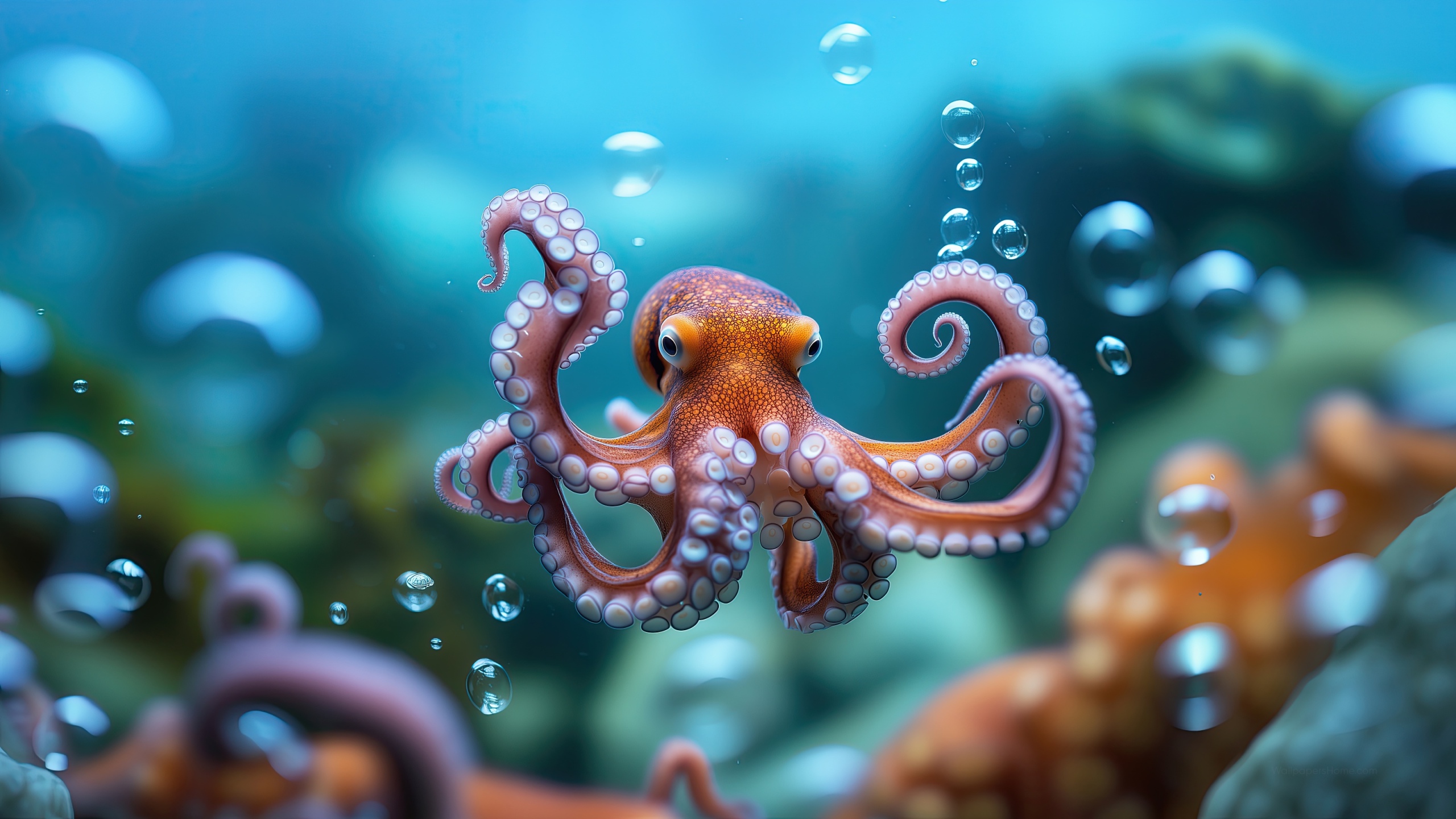
Octopuses are among the most captivating and "beautiful creatures" inhabiting our oceans, renowned for their high intelligence, camouflage abilities, and alien-like physiology. From the vibrant patterns of the mimic octopus to the ethereal grace of the deep-sea Dumbo octopus, these cephalopods represent a pinnacle of evolutionary complexity and aesthetic wonder in the marine environment.
As of 2026, our understanding of these "beautiful creatures" has expanded significantly through advanced deep-sea imaging and neurobiological research. Octopuses are no longer viewed merely as solitary hunters but as sentient beings with complex problem-solving skills and distinct personalities. This exploration covers the biological marvels, the most striking species, and the ecological importance of the octopus.
The Biological Artistry of Cephalopod Aesthetics
The beauty of the octopus is not merely skin deep; it is a functional masterpiece of evolution. Their ability to transform their appearance in milliseconds is one of the most sophisticated displays in the animal kingdom. This transformation is made possible by a specialized set of cells: chromatophores, iridophores, and leucophores.
The Mechanism of Camouflage
Chromatophores are sac-like organs containing pigment. When the octopus’s brain sends a signal, muscles around these sacs contract or relax, expanding the color or hiding it. Below the chromatophores lie iridophores, which produce shimmering, metallic colors through light interference, and leucophores, which provide a white background to enhance the contrast of the colors above.
By 2026, researchers have utilized high-speed spectral imaging to prove that octopuses don't just match the color of their surroundings; they match the texture and luminance. Through the use of papillae—tiny bundles of muscle in the skin—an octopus can change its skin from smooth to rugose, mimicking the texture of kelp, coral, or sand. This "dynamic beauty" serves as both a primary defense mechanism and a sophisticated tool for hunting.
A Body Without Bones
The octopus’s physical form is a marvel of "hydrostatic skeleton" engineering. Lacking a skeletal structure (except for a hard beak), they can squeeze through openings no larger than their eye. This fluid beauty allows them to occupy niches that other predators cannot reach, moving through the water with a jet-propulsion system that is as efficient as it is graceful.
Iconic Species: The Most Beautiful Creatures Under the Sea
While there are over 300 recognized species of octopus, several stand out for their extraordinary visual appeal and unique biological traits. These species represent the vast diversity found across different oceanic zones, from sunlit reefs to the midnight depths of the abyss.
The Blanket Octopus (Tremoctopus)
The Blanket Octopus is perhaps one of the most aesthetically stunning animals on Earth. The females possess long, transparent webs connecting their arms, which they can unfurl like a shimmering cape to intimidate predators. This "blanket" can be detached if the octopus is under attack, serving as a distraction. Interestingly, this species exhibits extreme sexual dimorphism; while the female can grow up to two meters, the male is only a few centimeters long.
The Blue-Ringed Octopus (Hapalochlaena)
Small and deceptively docile, the Blue-Ringed Octopus is a master of "lethal beauty." Normally a pale yellow or sand color, it flashes bright, iridescent blue rings when threatened. These rings are a warning sign (aposematism) of its potent neurotoxin, tetrodotoxin, which is strong enough to be fatal to humans. Their beauty serves as a biological "keep away" sign, illustrating the balance between elegance and danger.
The Mimic Octopus (Thaumoctopus mimicus)
First discovered in the late 1990s and heavily studied through the mid-2020s, the Mimic Octopus is the ultimate performer. It does not just change color; it assumes the shape and movement of other animals. It has been observed imitating sea snakes, lionfish, and flatfish. This cognitive beauty—the ability to assess a threat and decide which "character" to play—sets it apart from almost any other invertebrate.
The Dumbo Octopus (Grimpoteuthis)
Residing in the extreme depths of the ocean (up to 7,000 meters), the Dumbo Octopus earns its name from the ear-like fins protruding from its mantle, which it uses to "fly" through the water. They lack the ink sacs of their shallow-water cousins because, in the total darkness of the deep sea, ink is an unnecessary defense. Their soft, pastel-colored bodies and large eyes give them a haunting, "beautiful creature" aesthetic that feels almost supernatural.
Comparison of Notable Octopus Species
The following table highlights the diversity of these creatures across various metrics as documented in marine biology records through 2026.
| Species Common Name | Scientific Name | Primary Habitat | Unique Aesthetic Feature | Typical Lifespan |
|---|---|---|---|---|
| Giant Pacific Octopus | Enteroctopus dofleini | Temperate Coastal | Massive size and deep red hues | 3–5 Years |
| Blue-Ringed Octopus | Hapalochlaena | Indo-Pacific Reefs | Iridescent blue warning rings | 1–2 Years |
| Mimic Octopus | Thaumoctopus mimicus | Tropical Estuaries | Dynamic shape-shifting | 9–12 Months |
| Blanket Octopus | Tremoctopus | Open Ocean (Pelagic) | Large, cape-like iridescent webs | 2–3 Years |
| Wonderpus | Wunderpus photogenicus | Indo-Malayan Reefs | Distinct white-on-rusty-brown patterns | 1 Year |
| Dumbo Octopus | Grimpoteuthis | Abyssal Zone | Ear-like fins and "ghostly" appearance | 3–5 Years (Est.) |
Intelligence: The Beauty of the Cephalopod Mind
A significant part of why we categorize the octopus among "all the beautiful creatures" is its profound intelligence. By 2026, the scientific community has reached a consensus on the sentience of cephalopods, leading to increased legal protections in many jurisdictions.
Distributed Neural Processing
Unlike humans, whose neurons are concentrated in the brain, two-thirds of an octopus's neurons are located in its arms. This means each arm can "think" and act independently—tasting, touching, and moving—without waiting for instructions from the central brain. This decentralized intelligence allows for a level of multitasking that is unique in the animal kingdom.
Problem Solving and Tool Use
Octopuses have been observed using tools, such as carrying coconut shells to use as portable armor or using jellyfish tentacles as defensive weapons. In laboratory settings, they have demonstrated the ability to solve complex mazes, open child-proof jars, and even recognize individual human faces. This mental acuity creates a "beauty of character" that divers and researchers often describe as a deep, mutual connection when encountering them in the wild.
The Role of Octopuses in Marine Ecosystems
As predators and prey, octopuses are vital to the health of marine environments. They control populations of crustaceans and mollusks, ensuring that no single species dominates the seafloor. In turn, they provide a high-protein food source for sharks, seals, and large fish.
Ecological Indicators
Because of their short lifespans and sensitivity to water quality, octopuses serve as "sentinel species." Changes in their population density or health often signal broader issues within the ecosystem, such as ocean acidification or rising temperatures. In the current 2026 climate landscape, monitoring the "all the beautiful creatures" of the cephalopod family is essential for early warning systems regarding coral reef health.
The Ethics of Cephalopod Farming
By 2026, a major global debate has emerged regarding the industrial farming of octopuses. Given their high intelligence and solitary nature, many marine biologists and ethicists argue that intensive farming is inhumane. The "beauty" of these creatures—specifically their need for mental stimulation and space—makes them ill-suited for traditional aquaculture. This remains a critical area for environmental policy and consumer awareness.
Protecting the "Beautiful Creatures" of the Sea
Despite their adaptability, octopuses face significant threats from human activity. Protecting these animals requires a multifaceted approach focusing on habitat preservation and sustainable practices.
- Marine Protected Areas (MPAs): Establishing "no-take" zones in critical habitats like the Indo-Pacific "Coral Triangle" is vital for species like the Mimic and Blue-Ringed Octopus.
- Reducing Plastic Pollution: Octopuses often mistake plastic debris for shells or dens, which can lead to ingestion or entanglement. 2026 initiatives have focused on "Cephalopod-Safe" coastal zones.
- Climate Mitigation: Reducing carbon emissions is the only long-term way to combat ocean acidification, which threatens the shell-building prey that octopuses rely on for food.
- Sustainable Diving Tourism: Encouraging "look but don't touch" policies ensures that human curiosity does not disrupt the delicate life cycles of these shy creatures.
Frequently Asked Questions
Why is the octopus called a "beautiful creature"?
The term refers to their unique combination of aesthetic diversity, complex intelligence, and the graceful way they move and interact with their environment. Their ability to change color and texture makes them one of the most visually fascinating animals on the planet.
Do octopuses have personalities?
Yes. Research has consistently shown that individual octopuses exhibit distinct behavioral traits. Some are bold and curious, while others are shy and cautious. These traits remain consistent over time, suggesting a level of individuality rarely seen in invertebrates.
How do octopuses see if they change color to match their surroundings?
Octopuses have sophisticated eyes that are remarkably similar to human eyes in structure, though they evolved independently (convergent evolution). Interestingly, most evidence suggests they are colorblind. They likely perceive "color" through chromatic aberration or by detecting the polarization of light, allowing them to match their background with incredible precision.
How long do these beautiful creatures live?
Most octopus species have surprisingly short lives, typically ranging from six months to five years. They are "semelparous," meaning they reproduce once and then die shortly after (a process known as senescence). This short lifespan makes their high level of intelligence even more remarkable, as they must learn everything they know in a very short period.
Can an octopus really remember a human face?
Yes. Studies in aquariums have shown that octopuses can distinguish between different keepers, even if they are wearing identical uniforms. They may behave playfully toward a person who feeds them and display avoidant or "ink-spraying" behavior toward someone who has treated them poorly.
Recommendation for Further Action
To truly appreciate "all the beautiful creatures" of the octopus family, interested readers should support reputable marine conservation organizations such as the Ocean Conservancy or the Marine Megafauna Foundation. For those wishing to see these animals firsthand, prioritize visiting AZA-accredited (Association of Zoos and Aquariums) facilities that emphasize cephalopod enrichment and ethical housing. If you are a diver, always follow "Green Fins" guidelines to ensure your presence does not stress these sensitive and intelligent animals.