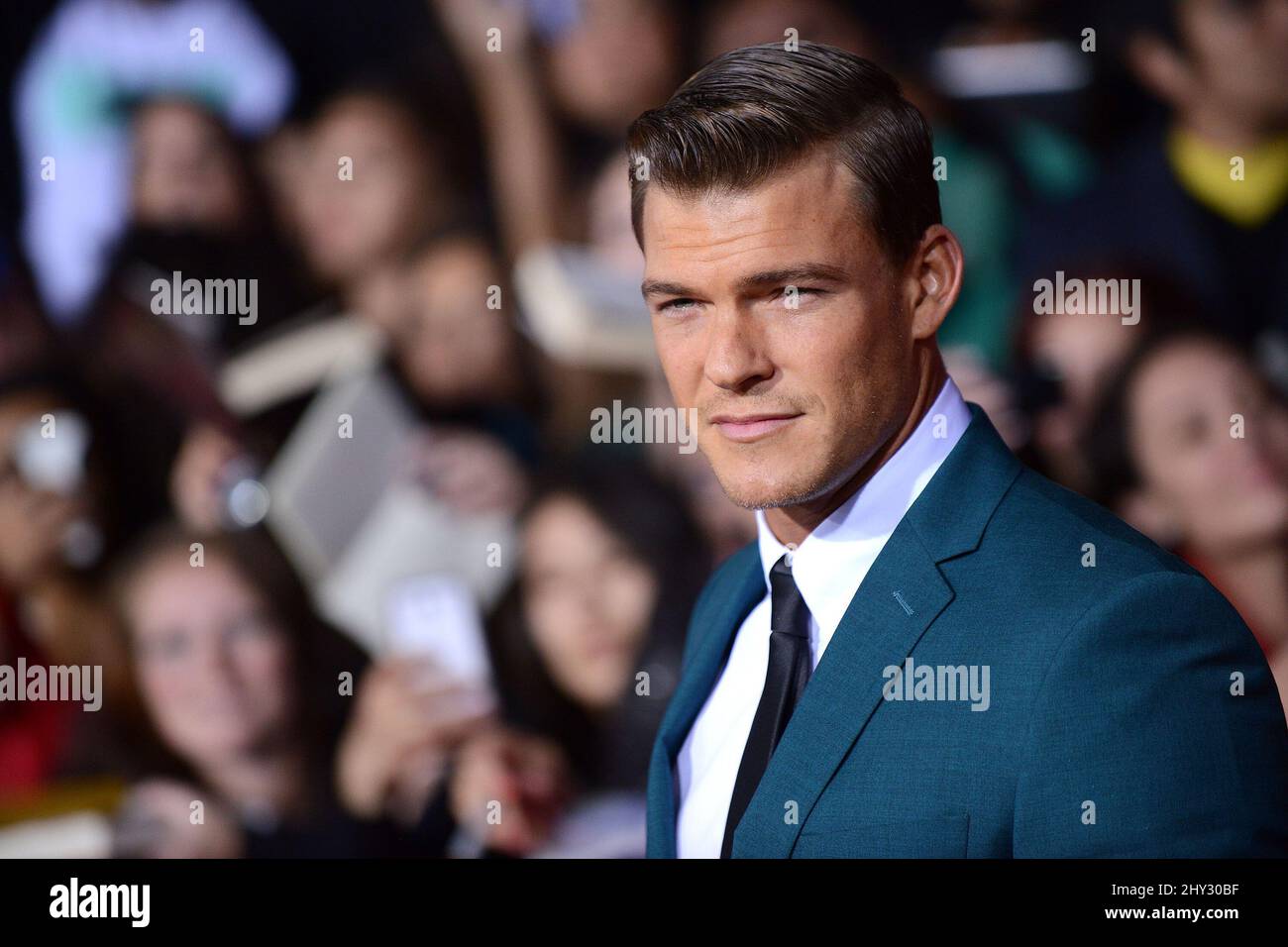
In the 2013 film The Hunger Games: Catching Fire, Alan Ritchson portrays Gloss, a formidable "Career" tribute from District 1. As a former victor of the 63rd Hunger Games, Gloss returns to the arena for the Third Quarter Quell alongside his sister, Cashmere, serving as a secondary antagonist to Katniss Everdeen.
The Hunger Games franchise remains one of the most significant cultural touchstones of the 21st century, and as we look back from 2026, the casting of Alan Ritchson has taken on new significance. While Ritchson is now a household name thanks to his titular role in Reacher, his portrayal of the lethal, polished, and arrogant Gloss offered an early glimpse into his ability to command the screen through physical presence and understated intensity. Understanding his role requires looking beyond the action sequences and into the lore of Panem’s most elite tributes.
Who was Gloss? Understanding District 1’s Career Tribute
Gloss was not a typical tribute; he was a Victor. In the lore of Suzanne Collins’ universe, District 1 is responsible for producing "luxury" items for the Capitol. This proximity to the Capitol’s wealth fostered a unique culture where children often volunteered for the Hunger Games, viewing the brutal competition as a path to glory rather than a death sentence. These individuals are known as "Careers."
Gloss won the 63rd Hunger Games through a combination of sheer physical strength and tactical skill. His victory was followed immediately by his sister Cashmere’s win in the 64th Hunger Games. This back-to-back success made them Capitol darlings, embodying the "Golden Child" archetype that the citizens of Panem’s central city adored. When President Snow announced the Third Quarter Quell—a twist that forced existing victors back into the arena—Gloss and Cashmere were selected as the male and female tributes for District 1.
For Gloss, the 75th Hunger Games was a different beast entirely. Unlike his first time in the arena, where he fought children and amateurs, he was now pitted against seasoned killers, survivors, and rebels. His role in the film serves to illustrate the "Career Pack" mentality: a group of highly trained warriors who form an early alliance to eliminate the "weaker" tributes before turning on one another.
The Casting of Alan Ritchson in Catching Fire
When Alan Ritchson was cast as Gloss in 2012, he was primarily known for his role as Thad Castle in the comedy series Blue Mountain State and his portrayal of Arthur Curry (Aquaman) in Smallville. The transition to a blockbuster franchise like The Hunger Games required a shift in tone. Gloss needed to be more than just a "tough guy"; he needed to possess a chilling, practiced elegance.
Ritchson’s physicality was a primary factor in his casting. Standing at 6'3" with a muscular build, he visually represented the "peak human" ideal that District 1 was known for. In the film, Gloss is often seen wearing ornate, shimmering fabrics that reflect his district’s luxury status. Ritchson managed to balance the arrogance of a celebrity with the lethal instincts of a trained assassin.
From a production standpoint, casting Ritchson allowed the director, Francis Lawrence, to establish an immediate physical threat to the protagonists. While characters like Peeta Mellark relied on charisma and Katniss Everdeen on survival skills, Gloss represented the raw, manufactured power of the Capitol’s propaganda machine.
Key Scenes and Plot Contributions
Gloss’s impact on Catching Fire is felt most heavily during the training sequences and the eventual chaos of the arena. His role can be broken down into three distinct phases: the pre-game posturing, the psychological warfare of the interviews, and the physical confrontation in the arena.
The Training Center and the Interviews
In the training center, Gloss and Cashmere are depicted as the leaders of the Career alliance. They are seen observing the other victors with a mixture of disdain and professional curiosity. During the televised interviews with Caesar Flickerman, Gloss presents a polished, almost sympathetic facade. This was a calculated move—victors from District 1 were masters at playing to the audience to secure sponsors. Ritchson’s performance here is subtle; he plays Gloss as a man who knows he is a pawn but intends to be the most beautiful pawn on the board.
The Cornucopia Bloodbath
Once the 75th Hunger Games begin, Gloss is at the forefront of the initial slaughter at the Cornucopia. He is one of the few tributes who navigates the "spoke" system of the clock-shaped arena with ease. Armed primarily with throwing knives and a sword, he demonstrates the efficiency that won him his original games.
The Death of Wiress and Gloss’s End
The most pivotal moment for Gloss occurs during the "Clock" phase of the games. As the rebellion-aligned victors (Katniss, Peeta, Finnick, Johanna, Wiress, and Beetee) attempt to decipher the arena’s mechanics at the beach, the Careers launch an ambush. Gloss manages to sneak up on the group and slits the throat of Wiress, the eccentric but brilliant tribute from District 3.
This act of violence is his final contribution to the games. Almost instantaneously, Katniss Everdeen reacts, firing an arrow directly into Gloss’s chest. He dies within seconds, followed shortly by his sister Cashmere, who is killed by Johanna Mason. Their deaths signify the end of the Career dominance in the arena and the shift toward the full-scale rebellion that would define Mockingjay.
The Relationship Between Gloss and Cashmere
One of the more tragic, albeit understated, elements of Alan Ritchson’s role is the sibling dynamic. The Hunger Games are designed to isolate individuals, but Gloss and Cashmere are forced to face their potential deaths together.
In the books and the film, there is a sense that the siblings are inseparable. Their synchronized movements in the arena and their shared resentment toward the Capitol (hinted at in the books as they were likely "sold" or trafficked to Capitol elites like Finnick Odair) suggest a deep bond. While Gloss is portrayed as a villain, his primary motivation in the 75th Games is the survival of himself and his sister. This adds a layer of humanity to Ritchson’s character; he isn't just a killing machine, but a brother trying to protect the only family he has left in a world that treats them like disposable entertainment.
Comparing Gloss to Alan Ritchson’s Later Career
In 2026, it is impossible to discuss Alan Ritchson without mentioning Reacher. However, the DNA of his performance as Gloss can be seen in his more recent work. Gloss required a high level of physical choreography and the ability to convey a sense of "dangerous stillness."
| Feature | Gloss (The Hunger Games) | Jack Reacher (Reacher) |
|---|---|---|
| Primary Motivation | Survival and District Loyalty | Justice and Truth |
| Combat Style | Disciplined, Career-trained, Bladed Weapons | Brutal, Efficient, Hand-to-Hand |
| Personality | Arrogant, Polished, Public-facing | Stoic, Laconic, Reclusive |
| Physical Presence | Elegant but intimidating | Massive, unmovable, and imposing |
| Role Type | Secondary Antagonist | Primary Protagonist |
While Gloss was a man defined by the "luxury" of his district, Jack Reacher is a man defined by his lack of possessions. Yet, both characters rely on Ritchson’s unique ability to look like a person who can solve any problem with their hands. For fans revisiting Catching Fire in 2026, seeing a leaner, younger Ritchson as Gloss provides a fascinating origin story for the action star he has become.
The Significance of the 75th Hunger Games (Third Quarter Quell)
To truly appreciate Ritchson’s role, one must understand the stakes of the 75th Games. This wasn't just another year of the Capitol’s cruelty; it was a desperate attempt by President Snow to eliminate the Victors who were becoming symbols of hope for the districts.
Gloss and Cashmere represented the "Old Guard" of the games—the loyalist victors who benefited from the system. By putting them back in the arena, Snow proved that no one was safe, not even those who played by the rules and won. Gloss’s death at the hands of Katniss was not just a tactical victory for her; it was a symbolic destruction of the Capitol’s favorite type of hero.
Technical Aspects of Ritchson’s Performance
Ritchson has often spoken about the intense physical training required for the role. Even though Gloss has limited dialogue, his movement had to be distinct from the other tributes.
- Weapon Proficiency: Ritchson had to train with throwing knives to ensure his movements looked instinctual. Career tributes start training at birth, and Gloss needed to look like he had been holding a blade for twenty years.
- Stunt Coordination: The beach battle was one of the most difficult sequences to film due to the heat and the sand. Ritchson performed many of his own stunts, contributing to the visceral realism of the fight.
- Visual Storytelling: Because the script focused heavily on Katniss and Peeta, actors like Ritchson had to use their screen time to tell a story through facial expressions and posture. His cold stare during the opening ceremonies helped establish the "Career" threat without needing a single line of dialogue.
Frequently Asked Questions
Which Hunger Games did Gloss win?
Gloss won the 63rd Hunger Games, approximately 12 years before the events of Catching Fire. His victory brought prestige and wealth to District 1, and he was followed the very next year by his sister, Cashmere, who won the 64th Hunger Games.
How does Gloss die in the movie?
In The Hunger Games: Catching Fire, Gloss is killed by Katniss Everdeen. After Gloss slits the throat of Wiress (the female tribute from District 3) at the beach, Katniss immediately fires an arrow into his chest, killing him instantly.
Was Alan Ritchson a well-known actor when he played Gloss?
At the time of Catching Fire's release in 2013, Ritchson was a rising star but not yet a top-tier Hollywood lead. He was best known for the cult classic comedy Blue Mountain State and his role as Aquaman on Smallville. His role as Gloss helped bridge the gap between television comedy and major film franchises.
Is the character of Gloss different in the books?
The character is very similar in both mediums. In Suzanne Collins' novel, Gloss is described as being "classic Beauty" and extremely lethal. The film remains faithful to this, though the book provides more internal monologue from Katniss regarding how much the Capitol loved the "sibling victors" from District 1.
Why did Gloss and Cashmere join the Career alliance in the 75th Games?
As tributes from District 1, Gloss and Cashmere were culturally predisposed to align with the other Careers from Districts 2 and 4. This alliance was a standard strategy to eliminate non-Career threats early in the game. Furthermore, as victors who were generally loyal to (or controlled by) the Capitol, they had little initial incentive to join the burgeoning rebellion led by Plutarch Heavensbee.
Final Perspective: The Legacy of a Victor
Alan Ritchson’s role as Gloss may be a smaller part of his overall filmography in 2026, but it remains a vital piece of the Hunger Games cinematic puzzle. He brought a level of grounded physicality and quiet menace to a character that could have easily been a one-dimensional villain. Gloss serves as a reminder of the tragedy of Panem: a man who was once a hero to his people, forced back into a cycle of violence, only to become a casualty of a war he helped sustain.
For viewers today, re-watching Ritchson’s performance offers a chance to see a master of the action genre in his early prime, contributing to one of the most successful film adaptations of all time. Whether you view Gloss as a ruthless killer or a victim of the Capitol’s whims, there is no denying the presence Ritchson brought to the role.