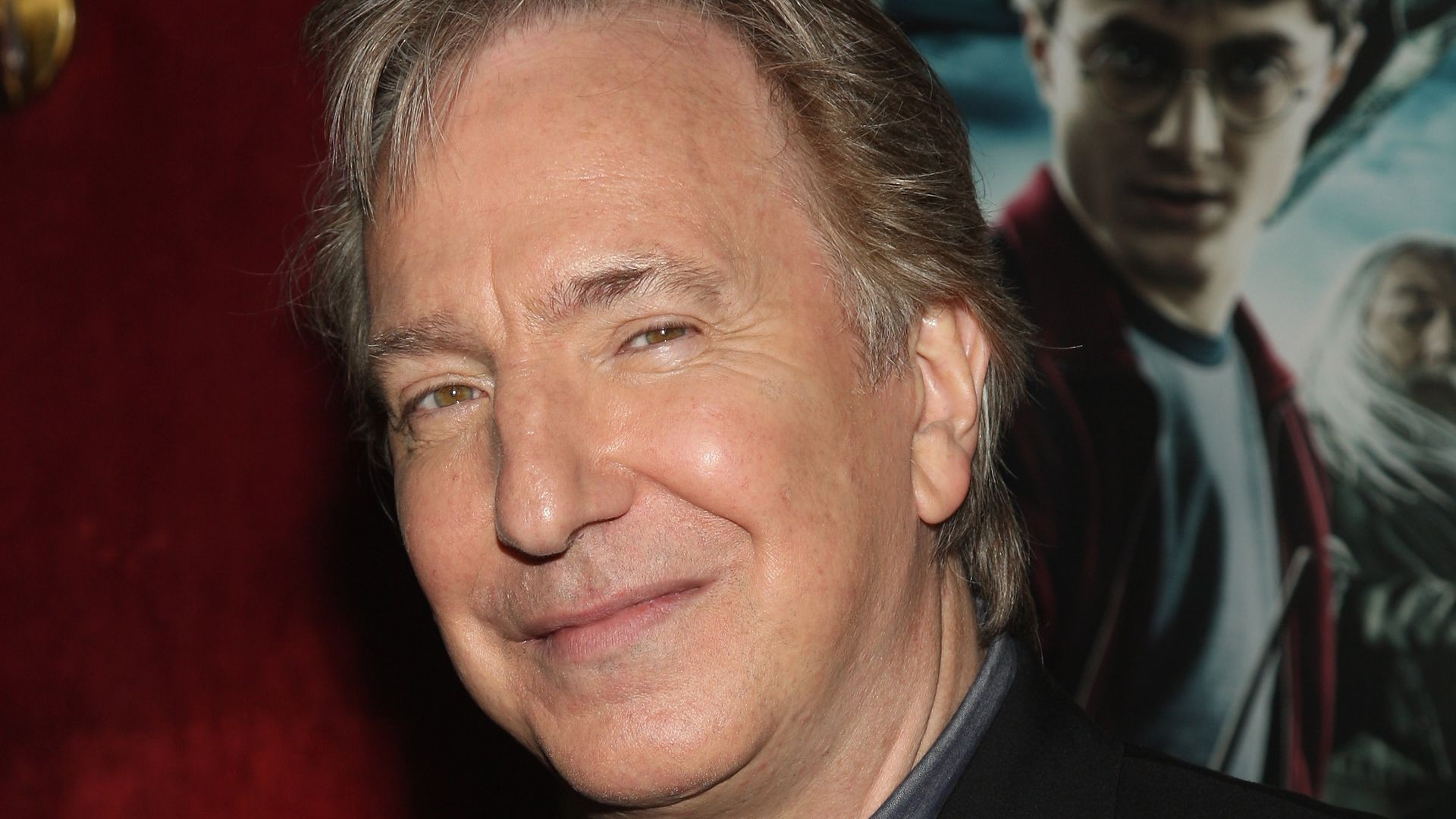
Alan Rickman earned an estimated $25 million to $30 million in total for his iconic portrayal of Severus Snape across all eight Harry Potter films. As an established veteran of stage and screen prior to casting, Rickman secured a high-tier salary and back-end participation that contributed significantly to his reported £12.9 million ($16 million) net estate at the time of his death.
The financial legacy of Alan Rickman is inextricably linked to the Harry Potter franchise, a series that redefined global box office expectations and the earning potential for character actors in blockbuster cinema. Unlike the three young leads—Daniel Radcliffe, Emma Watson, and Rupert Grint—who grew into their wealth alongside their characters, Rickman entered the Wizarding World as a "prestige" hire. His salary reflected a decade of established success in Hollywood and London’s West End. Understanding his earnings requires looking beyond simple per-movie figures and examining the structure of high-level talent contracts, the impact of residuals, and the specific leverage he held during production.
The Foundation of the Deal: Casting a Legend
When Warner Bros. began casting Harry Potter and the Sorcerer’s Stone in the late 1990s, they faced the challenge of balancing unknown child actors with a supporting cast that commanded respect and lent the production gravitas. Alan Rickman was the first and only choice for Severus Snape, largely at the insistence of J.K. Rowling herself.
Because Rickman was already a household name due to roles in Die Hard (1988) and Robin Hood: Prince of Thieves (1991), his starting point was significantly higher than the industry standard for supporting roles. While early reports suggested his initial salary for the first film was in the low seven-figure range (approximately $1 million), his contract included "favored nations" clauses and escalators that ensured his pay remained competitive as the franchise's revenue skyrocketed.
The "leverage" Rickman held was also intellectual. It is well-documented that J.K. Rowling shared a specific secret with Rickman regarding Snape’s ultimate motivation and his love for Lily Potter long before the final books were written. This insider knowledge not only informed his performance but also made him an indispensable part of the production. Replacing Rickman would have been unthinkable for the studio, providing him with a strong position during contract renewals for the later sequels.
Breaking Down the Film-by-Film Estimates
While Warner Bros. does not publicly disclose the specific contracts of its stars, industry analysts and archival reports from the production period provide a clear picture of the salary trajectory. For a character actor of Rickman’s stature, the pay structure typically involves a guaranteed "upfront" fee, followed by bonuses based on box office milestones.
The Early Years (Films 1–3)
In the first three films—The Sorcerer’s Stone, The Chamber of Secrets, and The Prisoner of Azkaban—Rickman’s role was essential but provided relatively limited screen time compared to the student characters. During this period, his salary is estimated to have hovered between $1 million and $2 million per film. These years established the character as a fan favorite, increasing Rickman’s "bankability" for the middle of the series.
The Middle Phase (Films 4–6)
As the plot darkened and Snape’s role became more antagonistic and central to the mystery of the Half-Blood Prince, Rickman’s compensation increased. By Harry Potter and the Order of the Phoenix, he was likely earning in the range of $3 million to $4 million per film. This period also saw the rise of massive international licensing and merchandising, where likeness rights for action figures, posters, and video games began to contribute to his total compensation package.
The Grand Finale (Films 7 & 8)
The decision to split The Deathly Hallows into two films was a financial boon for the cast. Rickman’s presence in the final film was arguably the emotional core of the series. Estimates suggest he earned a combined $8 million to $10 million for the final two installments, which included significant performance bonuses as The Deathly Hallows – Part 2 crossed the $1 billion mark at the global box office.
| Film Title | Release Year | Estimated Role Significance | Estimated Salary Range |
|---|---|---|---|
| The Sorcerer's Stone | 2001 | High (Introduction) | $1.0M - $1.5M |
| The Chamber of Secrets | 2002 | Supporting | $1.5M - $2.0M |
| The Prisoner of Azkaban | 2003 | Supporting | $2.0M - $2.5M |
| The Goblet of Fire | 2005 | Supporting | $2.5M - $3.0M |
| The Order of the Phoenix | 2007 | High (D.A. Conflict) | $3.0M - $4.0M |
| The Half-Blood Prince | 2009 | Critical (Title Role) | $4.0M - $5.0M |
| The Deathly Hallows (1 & 2) | 2010/2011 | Maximum (Redemption Arc) | $8.0M - $10.0M |
The Role of Residuals and Long-Term Royalties
In the world of high-budget filmmaking, the upfront salary is often only half the story. As a member of the Screen Actors Guild (SAG-AFTRA) and British Equity, Rickman was entitled to residuals—payments made when the films are broadcast on television, sold on physical media (DVD/Blu-ray), or licensed to streaming services like Max.
In 2026, the Harry Potter series remains a staple of global streaming and holiday television rotations. For a veteran actor with a well-negotiated contract, residuals can provide a "long tail" of income that lasts for decades. Rickman’s estate likely continues to receive six-figure or even seven-figure annual payments based on the continued popularity of the franchise.
Furthermore, "back-end points" (a percentage of the film’s net or gross profits) are common for top-tier talent. If Rickman’s agents secured even a small fraction of a percentage of the "pool," his total earnings would have easily eclipsed his base salaries. Given the franchise has grossed over $7.7 billion globally, even 0.5% of the profit pool would represent a massive sum.
Comparing Rickman’s Pay to the "Golden Trio"
To understand the scale of Rickman’s earnings, it is helpful to contrast them with the salaries of the child stars. Daniel Radcliffe famously earned approximately $1 million for the first film, but by the final movie, his salary had jumped to an astounding $20 million to $25 million per film.
Rickman’s pay was more stable. While he didn't see the exponential 2,000% growth that the children did, he also didn't start at a "discovery" rate. As an established professional, Rickman was paid for his expertise and the specific brand of menace he brought to the screen. His total earnings from the franchise were likely higher than those of most other supporting cast members, including Maggie Smith or Michael Gambon, due to Snape's larger narrative arc and Rickman's consistent presence across every single movie.
Net Worth vs. Gross Earnings: The Financial Reality
When Alan Rickman passed away in January 2016, probate records in the UK revealed that he left an estate valued at approximately £12.9 million (roughly $16 million to $18 million USD at the time). To many fans, this number seemed low given that he had earned an estimated $25 million+ from Harry Potter alone. However, this discrepancy highlights the difference between gross earnings and net wealth.
Several factors influenced this final figure:
- Taxation: As a UK resident for much of his life, Rickman would have been subject to high income tax brackets, which can take up to 45% of earnings.
- Management Fees: Standard industry practice involves paying 10% to agents, 5% to lawyers, and often 10% to managers.
- Lifestyle and Real Estate: Rickman owned properties in London and New York, assets that are often valued separately from liquid cash in probate summaries.
- Philanthropy: Rickman was a notable supporter of the arts and various charities, including Saving Faces and the International Performers' Aid Trust. His will specifically designated £100,000 to various charities.
Even with these deductions, his Harry Potter earnings provided the financial security that allowed him to pursue smaller, more artistic projects later in his career, such as directing A Little Chaos (2014) or performing in niche theater productions.
The Impact of the "Deathly Hallows" Split
The decision to split the final book into two movies (released in 2010 and 2011) was a pivotal moment for the actors' finances. Standard contracts for a single film often do not cover a split production without significant renegotiation.
For Rickman, this meant he essentially received two salaries for what was originally conceived as one story arc. Because the production for both films happened concurrently (back-to-back), he was able to maximize his time on set while doubling his appearance fees. This "double-dip" contributed to the significant spike in his earnings toward the end of his life. It also allowed him to participate in two separate worldwide press tours, which often include additional stipends or promotional bonuses.
Merchandise and Likeness Rights
One of the often-overlooked aspects of Alan Rickman’s earnings was the use of his likeness. Severus Snape is one of the most marketed characters in the franchise. Every time a Snape "wand" is sold at Universal Studios, or a Funko Pop figure is purchased, the estate traditionally receives a royalty based on the likeness agreement signed at the start of the production.
These likeness rights are separate from the film salary and serve as a perpetual revenue stream. Given that the Harry Potter brand continues to expand with new theme park attractions and digital experiences in 2026, the Snape likeness remains a highly valuable intellectual property asset managed by his estate and heirs.
Rickman’s Earnings Outside the Wizarding World
While Snape was his most lucrative role, Rickman’s career was diverse. His earnings from films like Love Actually (2003), Sweeney Todd: The Demon Barber of Fleet Street (2007), and the Alice in Wonderland series (where he voiced the Blue Caterpillar) added several million more to his total career earnings.
In his later years, Rickman was famously selective. He often chose roles based on the quality of the script rather than the paycheck. However, his "Harry Potter money" acted as a "f*** you fund"—a common industry term for wealth that allows an actor to turn down massive studio roles in favor of passion projects without worrying about financial stability.
Frequently Asked Questions
Was Alan Rickman the highest-paid supporting actor in Harry Potter?
While official figures are not public, Rickman is widely believed to have been among the top three highest-paid supporting actors in the series, alongside Dame Maggie Smith (Professor McGonagall) and Sir Michael Gambon (Professor Dumbledore). His earnings were bolstered by the fact that he appeared in all eight films, whereas other major actors appeared in fewer installments.
Did Alan Rickman receive a portion of the box office profits?
Yes, it is standard for actors of his caliber to have "performance bonuses" or "box office escalators" in their contracts. These clauses trigger additional payments once a film reaches certain milestones, such as $500 million or $1 billion in global receipts. With several Potter films crossing these thresholds, Rickman likely received substantial bonuses.
Who inherited Alan Rickman’s Harry Potter earnings?
The majority of Alan Rickman’s estate, including his future royalties and residuals from the Harry Potter franchise, was left to his wife, Rima Horton. The couple had been together since 1965 and were married in a private ceremony in 2012. He also left significant sums to his three nieces and various charitable organizations.
How much did Alan Rickman make per word in Harry Potter?
While this is a fun metric for fans, it isn't how Hollywood contracts work. However, analysts have noted that because Snape was a character of few, deliberate words, his "pay-per-word" was exceptionally high. In Deathly Hallows – Part 2, his pivotal "Always" scene lasted only a few minutes but was the culmination of a decade of character work, essentially making those few lines worth millions in the context of his career-long contract.
Did he make more from Harry Potter than Die Hard?
Yes, significantly. While Die Hard made him a star, he was a relatively unknown stage actor at the time of his casting as Hans Gruber and was reportedly paid around $375,000. Adjusting for inflation, his Harry Potter earnings represent a massive increase in his market value.
Summary of Financial Legacy
The story of Alan Rickman’s earnings is a testament to the value of "prestige" in Hollywood. By bringing a Shakespearean depth to a fantasy franchise, he made himself indispensable. For fans and researchers in 2026, his financial success serves as a blueprint for how character actors can navigate the blockbuster era—leveraging talent, secrecy, and consistency into a multi-million dollar legacy.
If you are researching the financial history of the Harry Potter cast, it is important to distinguish between the "starting salaries" often cited in tabloids and the "total compensation" which includes residuals, bonuses, and likeness rights. Rickman’s estate remains a primary beneficiary of the "Potter-mania" that continues to sweep through new generations of viewers.