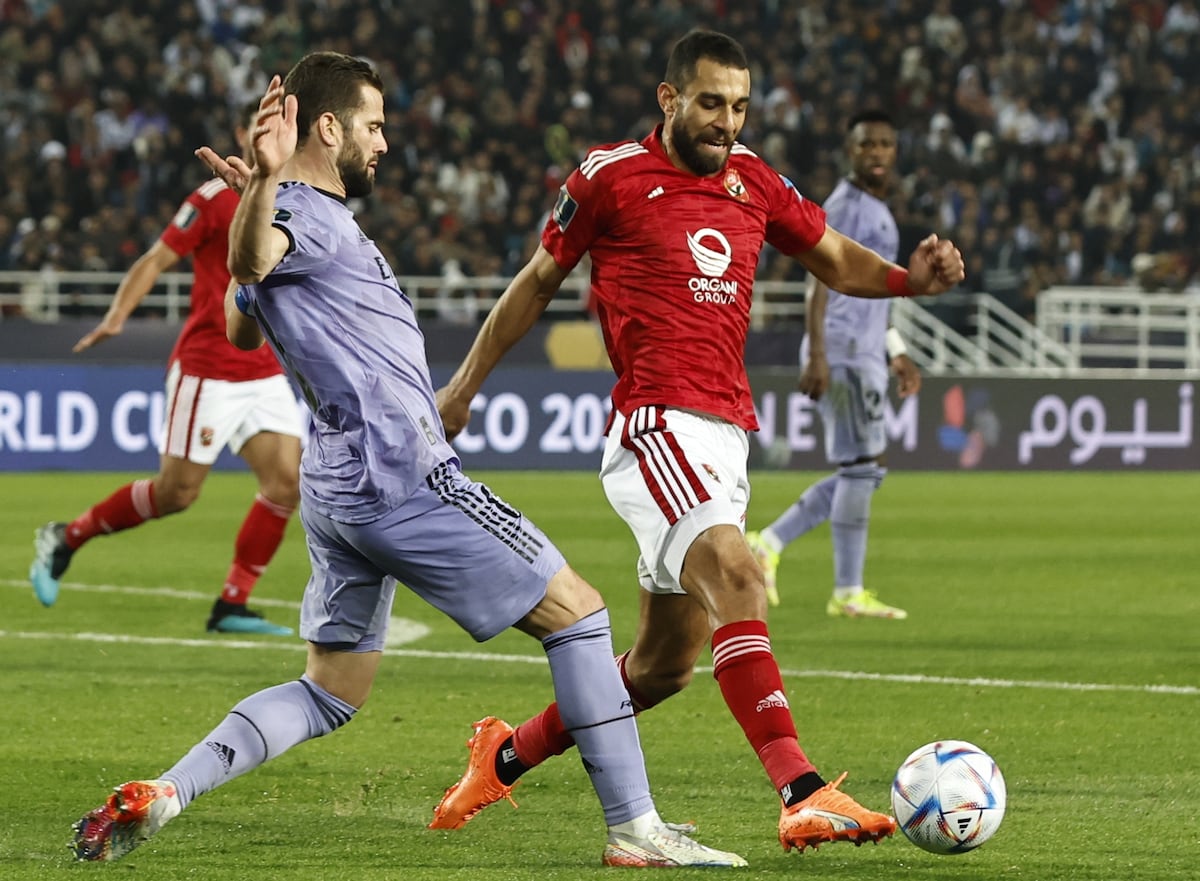
Al Ahly and Real Madrid represent the pinnacle of club football in Africa and Europe, holding more continental championships than any other teams on Earth. Historically, the two powerhouses have met twice in senior competition: an iconic 1-0 friendly victory for Al Ahly in 2001, and an official 4-1 victory for Real Madrid at the 2022 FIFA Club World Cup semifinal played in February 2023.
The Clash of Continental Royalty
When Al Ahly Sporting Club and Real Madrid Club de Fútbol share a pitch, the match transcends a simple fixture. It brings together two organizations crowned as the "Club of the Century" by their respective governing confederations at the turn of the millennium. Al Ahly, based in Cairo, Egypt, dominates the Confederation of African Football (CAF), while Madrid commands the Union of European Football Associations (UEFA).
Despite playing on different continents and operating in radically distinct financial ecosystems, their historical stature creates a natural comparison. Both clubs shoulder extreme expectations from massive domestic and international fanbases. For both institutions, finishing as runners-up in any tournament is viewed as a crisis.
Their meetings serve as a rare measurement of how the tactical discipline and physical resilience of Africa’s top dynasty fares against the individual brilliance, structural depth, and high-tempo execution of Europe’s standard-bearer.
Official and Historical Head-to-Head Match Record
Al Ahly and Real Madrid have crossed paths on the senior pitch on two notable occasions. While their first meeting was an exhibition organized to celebrate their continental accolades, their second match was a high-stakes, competitive tournament fixture.
Summary Head-to-Head:
| Total Matches | Al Ahly Wins | Real Madrid Wins | Draws | Real Madrid Goals | Al Ahly Goals |
|---|---|---|---|---|---|
| 2 | 1 | 1 | 0 | 4 | 2 |
1. August 4, 2001: The Friendly of the Century (Cairo International Stadium)
In the summer of 2001, Real Madrid traveled to Cairo to face Al Ahly in a match arranged to celebrate both clubs receiving their respective "Club of the Century" awards. Madrid, managed by Vicente del Bosque, fielded a full-strength side featuring their Galácticos: Zinedine Zidane, Luís Figo, Raúl González, Roberto Carlos, Claude Makélélé, and Fernando Hierro.
Al Ahly, managed by Portuguese coach Manuel José in his first stint with the club, approached the fixture with a disciplined mid-block designed to absorb Madrid’s technical possession and break rapidly down the flanks.
- The Decisive Moment: In the 51st minute, Egyptian midfielder Hossam Ghaly broke past Madrid's high defensive line, rounded goalkeeper César Sánchez, and unselfishly squared the ball to Nigerian forward Sunday Chibuike, who tapped into an empty net.
- The Result: Al Ahly held on for a historic 1-0 victory in front of more than 75,000 spectators. The match remains one of the most famous results in African club history, demonstrating that tactical organization and collective work-rate can neutralize overwhelming individual pedigree.
2. February 8, 2023: The 2022 FIFA Club World Cup Semifinal (Prince Moulay Abdellah Stadium, Rabat)
More than two decades passed before the teams met in an official competitive match. The semifinal of the delayed 2022 FIFA Club World Cup in Morocco pitted Carlo Ancelotti’s UEFA Champions League winners against Marcel Koller’s Al Ahly.
Madrid arrived missing key figures, including Karim Benzema and Thibaut Courtois, but started a lineup driven by Vinícius Júnior, Rodrygo, Federico Valverde, and Luka Modrić. Al Ahly matched Madrid’s tempo for large stretches of the first half, creating dangerous counter-attacking opportunities through Mohamed Sherif and Hussein El Shahat.
- Match Progression:
- In the 42nd minute, a defensive error from Al Ahly allowed Vinícius Júnior to chip goalkeeper Mohamed El Shenawy for the opener.
- Seconds after the second-half restart, Federico Valverde capitalized on a rebound to make it 2-0.
- Al Ahly responded with composure. In the 65th minute, Hussein El Shahat was brought down inside the penalty area, and left-back Ali Maâloul converted the spot-kick to reduce the deficit to 2-1.
- Al Ahly pressed forward for an equalizer, squandering two clear headers. In the 87th minute, El Shenawy kept Al Ahly alive by saving a Luka Modrić penalty.
- With Al Ahly overextended in stoppage time, Real Madrid exploited the open transitions. Rodrygo scored a sublime team goal in the 92nd minute, and substitute Sergio Arribas scored in the 98th minute to seal a 4-1 victory.
While the scoreline reflected Madrid's ruthless finishing, the competitive phase between minutes 50 and 85 demonstrated the narrow margins separating top African champions from European giants when operating on neutral ground.
Tale of the Tape: Comparative Achievements and Trophy Cabinets
To understand the weight of an Al Ahly versus Real Madrid encounter, one must look at their sustained dominance over domestic and international competition. Both clubs sit atop the all-time list of international trophies won by football clubs worldwide.
| Measurement / Competition | Al Ahly SC (Egypt / CAF) | Real Madrid CF (Spain / UEFA) |
|---|---|---|
| Year Founded | 1907 | 1902 |
| Primary Continental Championship | CAF Champions League (12 Titles) | UEFA Champions League (15 Titles) |
| Secondary Continental Cups | African Cup Winners' Cup (4 Titles) | UEFA Cup / Europa League (2 Titles) |
| Continental Super Cups | CAF Super Cup (8 Titles) | UEFA Super Cup (6 Titles) |
| FIFA Club World Cup / Intercontinental | 0 Titles (Multiple Bronze Medals) | 8 Titles (3 Intercontinental, 5 Club World Cups) |
| Domestic League Championships | Egyptian Premier League (44+ Titles) | La Liga (36 Titles) |
| Primary Domestic Cups | Egypt Cup (39+ Titles) | Copa del Rey (20 Titles) |
| Total Official Trophies | 150+ | 100+ |
| Continental Award | CAF Club of the 20th Century | FIFA Club of the 20th Century |
Note: Trophy figures reflect verified records through recent historical baselines.
The Continental Hegemony
Real Madrid’s relationship with the European Cup began with five consecutive titles between 1956 and 1960, spearheaded by Alfredo Di Stéfano and Ferenc Puskás. Decades later, their modern dominance yielded six UEFA Champions League titles in an eleven-season span (2014–2024), establishing a psychological advantage in European knockout football that has no equal on that continent.
Al Ahly holds an equivalent aura across Africa. Since winning their first African Cup of Champions Clubs in 1982, the "Red Devils" have established unmatched consistency. Their dominance peaked during the golden generation of the 2000s under Manuel José—featuring legends like Mohamed Aboutrika, Mohamed Barakat, and Wael Gomaa—and resumed in the modern era with frequent runs to the CAF Champions League final.
Tactical Dynamics: How Their Styles Intersect
When analyzing matches between these two clubs, stark tactical and structural differences emerge. European elite football prioritizes rapid positional interchanges, intense counter-pressing, and asymmetric full-back deployments. African elite football, led by Al Ahly, emphasizes collective low-to-mid defensive blocks, high-leverage physical duels, and devastating vertical counter-attacks.
Real Madrid's Operating Principles
Under managers like Zinedine Zidane and Carlo Ancelotti, Real Madrid has traditionally avoided rigid systemic dogma. Instead, they rely on:
- Dynamic Rest Defense: Utilizing press-resistant midfielders (such as Toni Kroos, Luka Modrić, and later Aurélien Tchouaméni) to control the tempo while maintaining structure behind the ball.
- Channel Exploitation: Feeding wide attackers into isolated 1v1 situations against opposing full-backs. The speed and direct dribbling of wingers like Vinícius Júnior create defensive overloads that collapse organized lines.
- Punishing Transition Efficiency: Madrid rarely needs prolonged dominance to win. They thrive on capitalizing immediately on isolated turnovers in the opponent’s defensive third.
Al Ahly's Strategic Counters
Facing Real Madrid forces Al Ahly out of their usual domestic dynamic, where they hold upwards of 65% possession. Against European opposition, Al Ahly relies on:
- Compact Horizontal Lines: Compacting the space between the central defensive pairing and the double pivot to deny Madrid central passing lanes into the half-spaces.
- Targeted Flank Transitions: Bypassing Madrid’s midfield press with direct balls into the channels, utilizing wingers who can turn defensive moments into rapid offensive breaks.
- Set-Piece Specialization: Because open-play chances are limited against Madrid's backline, dead-ball opportunities (corners, wide free kicks) serve as primary offensive threats, utilizing tall center-backs and well-drilled blocking schemes.
In the 2023 encounter, Al Ahly proved capable of carving through Madrid's defensive transition, registering 8 total shots and forcing several key saves. However, the difference between the two sides emerged in stamina, concentration, and defensive execution across the final 15 minutes of the match.
Institutional Models and Global Economic Realities
The sporting rivalry between Al Ahly and Real Madrid highlights the economic divide between European club football and the rest of the world.
The Member-Owned Structure
Both Al Ahly and Real Madrid share a common structural foundation: they are owned and run by club members (socios in Spain) rather than private equity funds, sovereign states, or corporate oligarchs.
- Real Madrid’s president is elected by members who hold official shares in the club.
- Al Ahly operates under an elected board of directors chosen by the membership base in Gezira, Cairo.
This democratic structure places relentless pressure on leadership. Neither club’s fanbase tolerates transitional rebuilds or multi-year projects that do not deliver silverware immediately.
The Financial Disparity
Despite similar organizational frameworks, the financial environments in which they operate are vastly separated:
- Real Madrid generates hundreds of millions of euros annually through global broadcasting deals (La Liga and UEFA Champions League), massive worldwide merchandising, corporate sponsorships, and matchday operations from the modernized Santiago Bernabéu Stadium.
- Al Ahly commands an audience of tens of millions across Egypt, North Africa, and the Middle East, generating premier commercial revenues for an African side. However, the Egyptian pound's international conversion rates and regional broadcast contracts cap revenue far below Western European standards.
Consequently, while Real Madrid acquires world-class talent developed across South America and Europe, Al Ahly must identify and secure the best domestic and pan-African talent, develop academy products, and make precise foreign recruitments—often having to sell top assets if European clubs come calling.
Future Clashes: The Expanded FIFA Club World Cup Era
For years, competitive meetings between Al Ahly and Real Madrid were constrained by the structure of the annual FIFA Club World Cup, which featured only seven clubs and placed the European champion directly into the semifinal. This meant the African champion had to navigate an elimination round just to earn the opportunity to play the UEFA champion.
The implementation of FIFA's expanded 32-team Club World Cup fundamentally shifts this dynamic. Both clubs qualified for the tournament through their respective continental championship titles:
- Al Ahly qualified by winning multiple editions of the CAF Champions League.
- Real Madrid qualified by securing multiple UEFA Champions League crowns.
In a four-team group stage followed by a single-elimination knockout bracket, future Al Ahly vs Real Madrid matchups become far more probable. These games will occur in summer tournament settings, complete with group-stage stakes, direct qualification routes, and level preparation phases.
This expanded competitive platform allows Al Ahly to test its progression against Madrid under conditions closer to a traditional World Cup, providing real competitive stakes beyond an isolated, mid-season semifinal.
What Football Fans Can Learn from This Matchup
Analyzing the historical encounters between Al Ahly and Real Madrid offers valuable strategic takeaways for supporters, coaches, and sports analysts:
- Reputation Does Not Dictate Single Matches: The 2001 match proved that tactical preparation, physical conditioning, and environmental adaptation can overcome significant talent deficits over 90 minutes.
- Defensive Concentration Decides Elite Games: The 2023 semifinal remained an open contest at 2-1 until Al Ahly committed players forward late in the match. Top-tier European opposition capitalizes on mistakes with surgical efficiency when games stretch.
- The Global Expansion of Quality: Despite the financial gap, elite clubs from CAF, CONMEBOL, and AFC possess the technical ability to construct chances against European champions. The tactical gap has narrowed, even if the finishing depth remains disparate.
Frequently Asked Questions
Has Al Ahly ever defeated Real Madrid in an official competitive match?
No. Al Ahly’s sole victory over Real Madrid occurred on August 4, 2001, in an international friendly match in Cairo, which Al Ahly won 1-0. Their only official competitive fixture took place on February 8, 2023, in the FIFA Club World Cup semifinal, where Real Madrid won 4-1.
Why are both Al Ahly and Real Madrid called the "Club of the Century"?
At the end of the 20th century, the international governing bodies evaluated historical performances to crown the top club of the preceding 100 years. FIFA named Real Madrid the "FIFA Club of the 20th Century" in December 2000, primarily due to their European Cup and domestic league achievements. Around the same time, the Confederation of African Football (CAF) conducted a mathematical points-based evaluation of continental competitions and named Al Ahly the "African Club of the Century."
How many international trophies do Al Ahly and Real Madrid have?
Both clubs rank at the very top of worldwide international trophy standings. Real Madrid has won more than 30 official international and intercontinental titles, including 15 UEFA Champions Leagues. Al Ahly has claimed more than 25 official CAF and intercontinental titles, including 12 CAF Champions League titles.
Who scored in the 2023 Club World Cup semifinal between Al Ahly and Real Madrid?
In their 4-1 meeting on February 8, 2023, the goals were scored by Vinícius Júnior (42'), Federico Valverde (46'), Rodrygo (90+2'), and Sergio Arribas (90+8') for Real Madrid. Ali Maâloul scored for Al Ahly via a penalty kick in the 65th minute.
When will Al Ahly and Real Madrid play each other next?
Fixtures between Al Ahly and Real Madrid cannot be scheduled on an annual domestic calendar because they compete under different confederations (CAF and UEFA). Their most frequent opportunity to play occurs through FIFA-governed international competitions, specifically the expanded 32-team FIFA Club World Cup and the annual FIFA Intercontinental Cup, contingent on tournament draws and knockout advancement.
Practical Takeaway: Tracking Future Fixtures
To follow and verify upcoming matches, head-to-head records, and official scheduling between Al Ahly and Real Madrid:
- Monitor Official Tournament Calendars: Follow the draw releases for the expanded FIFA Club World Cup and the FIFA Intercontinental Cup on the official FIFA Match Centre. Matches are only finalized once group stages are drawn or knockout paths cross.
- Check Official Club Portals: Confirm confirmed friendly arrangements through the official portals of Al Ahly SC or Real Madrid CF. Avoid unverified exhibition rumors reported across social platforms during mid-season breaks.
- Review Historical Archives: For full tactical data, lineups, and substitution timing from past clashes, consult official historical repositories maintained by CAF and UEFA.