Transporting a pet as cargo involves booking the animal through an airline’s cargo division rather than as "checked baggage." This method is often required for large breeds, international relocations to countries like the UK or Australia, or when the pet is traveling unaccompanied. It offers specialized climate-controlled environments and professional handling protocols.
Understanding Pet Cargo vs. Checked Baggage
To navigate the complexities of pet travel in 2026, it is essential to distinguish between manifest cargo and excess baggage. When a pet travels as excess baggage, it is linked to a passenger’s ticket, and the owner is on the same flight. However, when a pet flies as cargo, it is issued an Air Waybill (AWB).
Flying a pet as cargo is often the more expensive option, but it is frequently the only legal way to transport animals into specific jurisdictions or for animals that exceed the weight limits for checked baggage. In 2026, many major carriers have transitioned exclusively to cargo-only models for animal transport to ensure higher safety standards and better tracking. This shift allows airlines to utilize dedicated staff trained in the IATA Live Animals Regulations (LAR), the global standard for transporting animals by air.
Top Airlines Offering Dedicated Pet Cargo Services
Several global airlines have established themselves as leaders in live animal logistics. These carriers provide specialized facilities, climate-controlled holding areas, and tracking systems that allow owners to monitor their pets' progress in real-time.
1. Lufthansa (Lufthansa Cargo)
Lufthansa remains the "gold standard" for pet cargo in 2026. Operating out of its primary hub in Frankfurt, the airline utilizes the Frankfurt Animal Lounge, a 4,000-square-meter facility dedicated entirely to animal welfare. This facility employs veterinarians and professional animal handlers who ensure pets are fed, exercised, and comforted during layovers. Lufthansa's "Live/td" service is designed specifically for domestic animals, ensuring they are the last to be loaded and the first to be unloaded.
2. Delta Air Lines (Delta Cargo/PetFirst)
Delta has streamlined its pet offerings, focusing heavily on its PetFirst cargo service. In 2026, Delta Cargo is a primary choice for domestic US transport of large animals. They utilize temperature-controlled transport vehicles on the tarmac to protect pets from extreme weather during loading. Delta requires that all international cargo shipments be booked through a professional pet shipper registered with the International Pet and Animal Transportation Association (IPATA) to ensure all customs and health documentation is accurate.
3. Emirates (Emirates SkyCargo)
For those moving pets between the West and the East, Emirates SkyCargo offers the Emirates Pets service. Based in Dubai, the airline has developed specialized "cool dollies" to transport pets across the tarmac, protecting them from the high temperatures common in the Middle East. Their facilities include premium kenneling and 24/7 veterinary support for animals in transit.
4. KLM Royal Dutch Airlines (KLM Cargo)
KLM operates a sophisticated animal hotel at Amsterdam Airport Schiphol. This facility is crucial for long-haul flights where pets require a break for hydration and rest. KLM’s staff are trained to handle a wide variety of species, and their booking system integrates seamlessly with partner airlines like Air France, providing one of the most extensive global networks for pet cargo.
5. British Airways (IAG Cargo)
British Airways, through IAG Cargo, is the primary gateway for pets entering the United Kingdom. Because the UK has strict "cargo-only" entry requirements for pets (with few exceptions), IAG Cargo has refined the process of navigating the UK’s Animal Receiving Centres (ARC). Their service is highly regulated, focusing on compliance with the UK Pet Travel Scheme.
Comparison of Major Airline Cargo Programs
| Airline | Primary Hub | Specialized Facility | IPATA Agent Required? | Best For |
|---|---|---|---|---|
| Lufthansa | Frankfurt (FRA) | Animal Lounge | Recommended | Global transit & medical care |
| Delta Cargo | Atlanta (ATL) | PetFirst Centers | Yes (International) | US Domestic & Large Breeds |
| Emirates | Dubai (DXB) | SkyCargo Pets | Yes | Middle East & Asia routes |
| KLM | Amsterdam (AMS) | Schiphol Animal Hotel | Highly Recommended | European layovers |
| Qantas | Sydney (SYD) | Qantas Freight | Yes (International) | Australia & Oceania |
| United | Chicago (ORD) | PetSafe (Enhanced) | Yes | Comprehensive US coverage |
Technical Requirements for Cargo Kennels
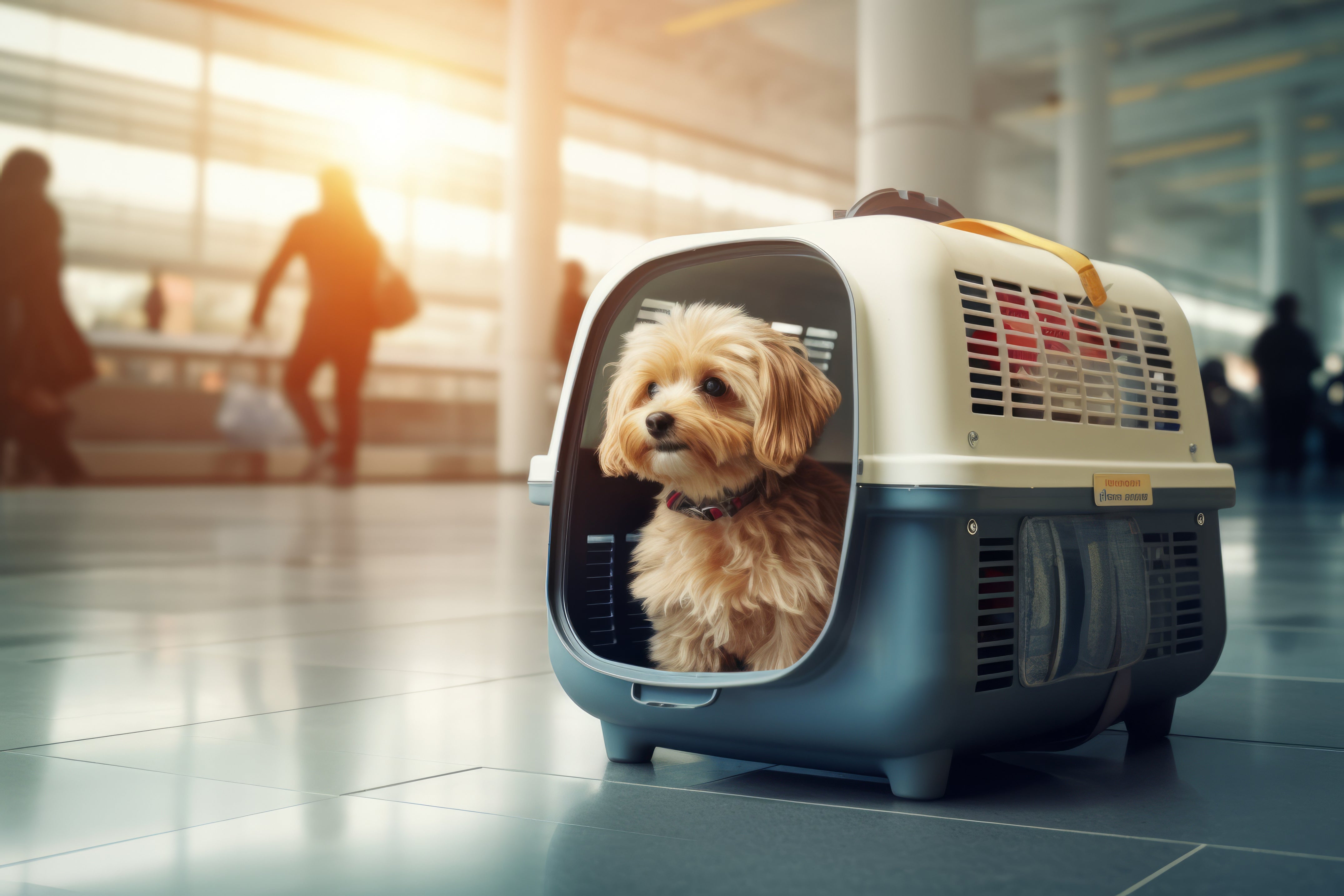
When shipping a pet as cargo, the kennel is the most critical piece of equipment. In 2026, airlines strictly enforce IATA Container Requirement 1 (CR1) for dogs and cats. A crate that fails to meet these specifications will result in a "refusal to fly" at the cargo terminal.
- Size and Space: The pet must be able to stand, turn around, and lie down in a natural position. For many airlines, this means there must be at least 2-3 inches of clearance above the pet's head or ears when standing.
- Construction: Kennels must be made of rigid plastic, metal, or wood (though many airlines now prohibit wooden crates for hygiene). The door must be made of heavy-gauge metal and be "nose and paw-proof."
- Ventilation: At least 16% of the total surface area of the four sides must be ventilated. For international flights, many airlines require ventilation on all four sides.
- Fasteners: The top and bottom of the kennel must be secured with metal nuts and bolts. Plastic "snap-on" clips are strictly prohibited for cargo travel.
- Accessories: Two empty bowls (one for food, one for water) must be attached to the inside of the door and be accessible from the outside without opening the kennel.
Mandatory Documentation and Health Compliance
The "cargo" designation means your pet is treated as a shipment, requiring significant paperwork. Failure to provide even one document can lead to the pet being quarantined or returned to the origin at the owner’s expense.
The International Health Certificate (CVI)
Most countries and airlines require a Certificate of Veterinary Inspection (CVI) issued within 10 days of travel. In the United States, this certificate usually must be endorsed by the USDA (APHIS). For travel to the European Union, a specific "EU Health Certificate" is required, which often involves a multi-step process including microchipping and rabies vaccinations.
Rabies Titre Tests
For "rabies-free" destinations like Japan, Australia, or New Zealand, a rabies titre test (FAVN) is mandatory. This test proves that the rabies vaccine has produced sufficient antibodies. In 2026, these tests must often be performed 3 to 6 months before the flight date, making cargo travel a long-term planning project.
The Air Waybill (AWB)
Unlike a passenger ticket, the AWB is a contract between the shipper and the carrier. It contains the shipper’s contact info, the consignee’s info (who is picking up the pet), and the specific flight routing. This document is the primary way the airline tracks the "shipment" through their logistics network.
Understanding the Costs of Pet Cargo
Shipping a pet as cargo is significantly more expensive than taking them in the cabin. Costs in 2026 are determined by "volumetric weight"—meaning the airline charges based on how much space the crate takes up in the hold, rather than just the pet's actual weight.
- Air Freight Fees: These are the base costs for the flight itself. For a medium-sized dog on a transatlantic flight, expect freight fees between $1,200 and $2,500.
- Fuel and Security Surcharges: These are variable fees added to the AWB.
- Handling Fees: Charged by the ground handling agents at the origin and destination airports.
- IPATA Agent Fees: Since many airlines (like Delta and United) require booking through a professional shipper, you must factor in their service fees, which cover logistics, document verification, and airport transport.
- Customs and Terminal Fees: Upon arrival, the destination country will often charge fees for processing the "import" of the animal.
Environmental and Seasonal Limitations
One of the most important aspects of flying a pet as cargo is the Temperature Restriction Policy. Most airlines will not fly pets if the forecast temperature at the origin, transit point, or destination is above 85°F (29°C) or below 45°F (7°C).
While the cargo holds themselves are pressurized and climate-controlled to the same level as the passenger cabin, the danger lies on the tarmac. Pets can be exposed to the elements during the transfer from the warehouse to the aircraft. Some airlines allow an "Acclimation Letter" from a vet to bypass the lower-end temperature limits, but almost no airline will waive the high-temperature safety ceiling.
Common Mistakes to Avoid
- Sedating the Pet: The IATA and most major airlines strongly discourage or flatly prohibit the sedation of animals. Sedatives affect a pet's ability to balance and can cause respiratory issues at high altitudes.
- Incorrect Crate Sizing: This is the #1 reason for pets being denied boarding at the cargo terminal. When in doubt, always buy the next size up.
- Missing the Booking Window: Cargo space for live animals is limited. While humans can book months in advance, cargo bookings often open only 14 to 30 days before departure. However, the planning should start six months out.
- Ignoring Breed Restrictions: Brachycephalic (snub-nosed) breeds like Bulldogs, Pugs, and Persian cats are banned from cargo on many airlines (including Delta and United) due to the high risk of respiratory distress.
Frequently Asked Questions
Is the cargo hold dark and scary for pets?
While the hold is dark once the doors are closed, this actually helps most pets stay calm. The darkness, combined with the white noise of the engines, often induces a sleep-like state. The temperature is kept between 50°F and 70°F on most modern aircraft used by major carriers.
Do I need a professional pet shipper to book cargo?
In 2026, many airlines have moved to a "closed loop" system where they only accept bookings from IPATA-certified agents. This reduces the risk of documentation errors that lead to animals being stuck in transit. Even if an airline allows a private booking, using a professional is highly recommended for international travel.
How long can a pet stay in a cargo kennel?
IATA guidelines suggest that pets should not be in a kennel for more than 12-16 hours without a break. This is why airlines like KLM and Lufthansa require "comfort stops" or "animal hotel" stays for long-haul routes. During these stops, pets are taken out, fed, and their kennels are cleaned.
Can I track my pet during the flight?
Most premium cargo services now offer GPS tracking or at least milestone tracking. You can enter your Air Waybill number on the airline’s cargo website to see when your pet has been "Accepted," "Loaded," "Arrived," and "Cleared for Pick-up."
What happens if the flight is delayed?
If a flight is delayed, pets are the priority. They are typically kept in a climate-controlled warehouse or moved back to an animal lounge until the new departure time is confirmed. Airlines have protocols to ensure pets are fed and watered during these periods.
Next Steps for Your Pet’s Travel
If you are planning to fly your pet as cargo in 2026, your first step should be to visit your veterinarian to confirm the pet is healthy enough for air travel. Once cleared, contact a registered IPATA agent to get quotes and check the specific requirements for your destination country. Early preparation is the only way to ensure a stress-free experience for both you and your animal companion.