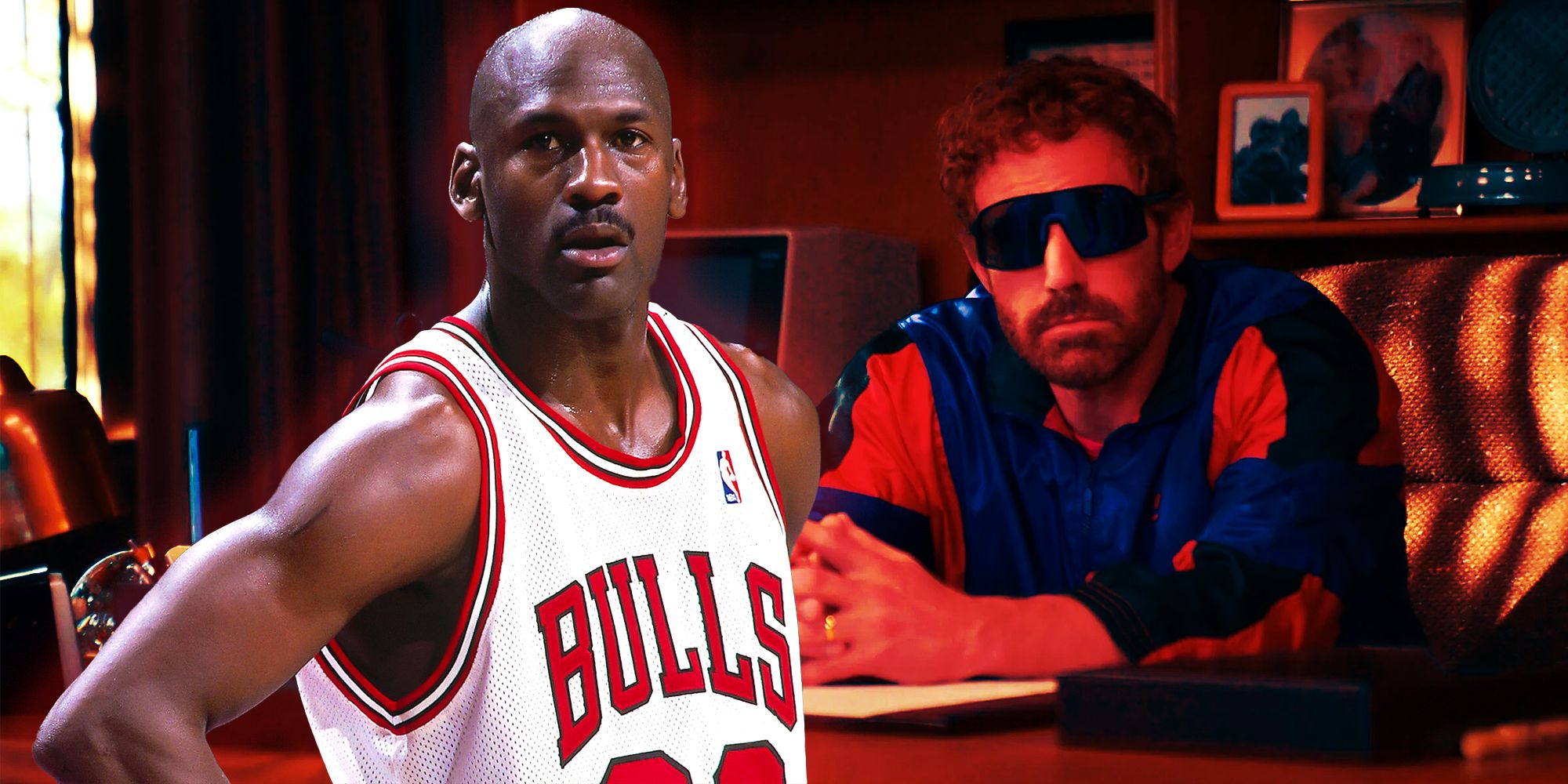
The 2023 film Air is a biographical sports drama that explains the high-stakes origin story of Nike’s partnership with Michael Jordan. It follows marketing executive Sonny Vaccaro as he risks his career to sign a then-rookie Jordan by creating a revolutionary sneaker line, the Air Jordan, which fundamentally transformed the sports marketing industry and athlete compensation.
In the mid-1980s, the landscape of athletic footwear was vastly different than the corporate juggernaut we recognize in 2026. Air, directed by Ben Affleck and written by Alex Convery, strips away the modern polish of the multi-billion-dollar Jordan Brand to show a desperate, underdog Nike struggling to find its footing in the basketball market. To truly understand the film, one must look past the 1980s nostalgia and examine the business maneuvers, the cultural shifts, and the pivotal role of Deloris Jordan in securing her son’s legacy.
The 1984 Basketball Landscape: Nike as the Underdog
To explain the urgency behind the events in Air, we must first understand Nike’s precarious position in 1984. Today, Nike is the undisputed leader in global sports apparel, but in the early 80s, it was primarily a running shoe company. Its basketball division was failing, capturing less than 20% of the market.
At the time, Converse was the "official" shoe of the NBA, boasting a roster that included superstars like Magic Johnson and Larry Bird. Meanwhile, Adidas was the "cool" brand, preferred by urban youth and high-profile athletes for its European flair and fashion appeal. Nike was viewed as a "track and field" brand that lacked the "soul" required for the basketball court.
Sonny Vaccaro (played by Matt Damon) was tasked with finding a player who could save the division. The company had a limited budget of $250,000 to sign three or four players from the 1984 NBA Draft. Vaccaro’s radical idea—which serves as the film’s central conflict—was to spend the entire budget on a single player: Michael Jordan.
Sonny Vaccaro’s Vision and the Scouting Process
The film explains that Vaccaro’s conviction didn’t come from a standard scouting report. Instead, it came from a moment of pure intuition while watching tape of the 1982 NCAA Championship game. He saw Jordan, then a freshman at North Carolina, hit the winning shot. Vaccaro didn't just see a great player; he saw a person with the competitive "clutch" gene who would eventually outshine the established legends of the era.
Vaccaro’s gamble was seen as professional suicide by his colleagues, including Nike co-founder Phil Knight (Ben Affleck) and marketing executive Rob Strasser (Jason Bateman). At this stage, Jordan had not yet played a single professional minute. Furthermore, Jordan himself had no interest in Nike; he was a self-proclaimed "Adidas nut" who famously said he would sign with them even for less money.
The film meticulously details the "backdoor" tactics Vaccaro used to get a meeting. Bypassing Jordan’s powerful agent, David Falk (Chris Messina), Vaccaro traveled to Wilmington, North Carolina, to speak directly with Michael’s parents, Deloris and James Jordan. This move was a breach of industry etiquette, but it established the personal connection that would eventually win the deal.
The Character Dynamics: Phil Knight, Rob Strasser, and Howard White
While Vaccaro is the engine of the film, the supporting characters provide the necessary friction and context for Nike’s internal culture.
- Phil Knight: The film portrays Knight as a man caught between his "Zen" philosophy and the harsh realities of a public company answerable to a board of directors. His hesitation to spend the entire basketball budget on one rookie represents the traditional corporate risk-aversion that Vaccaro had to overcome.
- Rob Strasser: As the VP of Marketing, Strasser represents the personal stakes of the deal. The film explains his fear of losing his job and his desire to provide a stable life for his daughter, grounding the high-level business negotiations in human emotion.
- Howard White: Played by Chris Tucker, White was the bridge between Nike’s corporate office and the players. His role was crucial in understanding the cultural nuances of the basketball world, providing Vaccaro with the insight needed to navigate the social circles surrounding the Jordan family.
The Invention of the Air Jordan 1
A significant portion of Air is dedicated to the creation of the shoe itself. Peter Moore (Matthew Maher), Nike’s creative director, was tasked with designing something that had never been seen before. The film explains that the "Air Jordan" wasn't just a shoe; it was a personality.
The design featured more red than was traditionally allowed by the NBA’s "uniformity of dress" rule, which required shoes to be at least 51% white. This led to the famous "Banned" marketing campaign. Nike decided they would pay the $5,000-per-game fine Michael would incur for wearing the shoes, turning a legal violation into a badge of rebellion. This "outlaw" status was a masterstroke of marketing that made the shoes a must-have item for teenagers across America.
The Negotiation: How Deloris Jordan Changed History
The climax of the film isn't a basketball game, but a boardroom meeting. While the Nike team delivers a passionate pitch—highlighting Michael’s future as a global icon—the real "explanation" of the film’s significance lies in the post-pitch phone call.
Deloris Jordan (Viola Davis) informed Vaccaro that Michael would sign with Nike, but with one unprecedented condition: he must receive a percentage of the revenue from every shoe sold. This was a revolutionary demand. At the time, athletes were paid flat fees for endorsements. They were treated as "talent," not as business partners.
By securing a 5% royalty on sales, Deloris Jordan ensured that her son would not just be a wealthy athlete, but a billionaire entrepreneur. This deal paved the way for the modern "athlete-as-a-brand" model that we see in 2026 with figures like LeBron James and Steph Curry.
Fact vs. Fiction in Air (2023)
While the film is based on true events, it takes some creative liberties to heighten the drama. Understanding these differences is key to explaining the full history.
| Feature | Film Depiction | Historical Reality |
|---|---|---|
| Sonny Vaccaro's Role | He is the sole architect and "hero" of the deal. | While central, others like George Raveling and Rob Strasser also played significant roles. |
| The NC Visit | Vaccaro's visit to the Jordans was a spontaneous, high-risk move. | It happened, but it was slightly more coordinated than the "ambush" shown in the film. |
| Phil Knight's Personality | Portrayed as a quirky, barefoot-in-the-office Zen seeker. | Generally accurate to Knight's early public persona and management style. |
| Michael Jordan's Presence | His face is never shown, keeping him as a "mythic" figure. | A creative choice by Affleck to keep the focus on the business gamble rather than a biopic of Michael. |
| The "Banned" Shoe | The Air Jordan 1 was the shoe the NBA banned. | Technically, the NBA banned a similar red and black shoe called the "Air Ship"; Nike used the controversy to market the AJ1. |
The Ending Explained: The Legacy of the Deal
The ending of Air provides a series of "where are they now" updates that highlight the astronomical success of the partnership. Nike originally hoped to make $3 million in Air Jordan sales over three years. Instead, they made $126 million in the first year alone.
By 2026, the Jordan Brand has become a cultural staple, transcending basketball to influence high fashion, music, and global lifestyle trends. The film explains that this success wasn't just about Michael Jordan's talent on the court, but about the vision to treat an athlete as a permanent partner in a brand's identity.
The "win" for Nike in the film is not just the signing of a player, but the realization of a new corporate philosophy: betting on individual excellence rather than market trends. When the film concludes, we see the transition of Nike from a struggling footwear company to a global power, and the transition of Michael Jordan from a promising rookie to a cultural deity.
The Significance of the "Air" Title
The title Air serves a dual purpose. On the surface, it refers to "Air" Jordan and the innovative pressurized air technology used in the soles of Nike shoes. Symbolically, however, it represents the "rarefied air" that Michael Jordan would eventually breathe—a level of success and global recognition that no athlete had ever reached before. It also refers to the "leap of faith" taken by Vaccaro and the Nike team; they were essentially "walking on air" with no safety net if the Jordan deal fell through.
Impact on Sports Marketing in 2026
Looking back from 2026, the events of Air are the blueprint for the current "NIL" (Name, Image, and Likeness) era in collegiate and professional sports. The film explains the genesis of the idea that a player’s personal brand can be more valuable than the team they play for. The revenue-sharing model introduced by the Jordans is now the standard for elite-level endorsement deals across all sports, from soccer to e-sports.
FAQs About Air (2023)
Why is Michael Jordan's face never shown in the movie?
Director Ben Affleck chose not to show Michael Jordan's face to maintain his "legendary" and "larger-than-life" status. Affleck felt that any actor playing Jordan would inherently fail to capture his specific essence, and by keeping him in the periphery, the audience focuses on how the world reacted to him rather than a performance of him.
Was the revenue share deal actually Deloris Jordan’s idea?
Yes. In real life, Michael Jordan has credited his mother with the idea of the revenue share. He initially wanted to sign with Adidas and was reluctant to even visit the Nike campus. Deloris convinced him to listen to their pitch and then negotiated the groundbreaking royalty clause that defined his financial future.
Did Sonny Vaccaro really give that "Greatness" speech during the meeting?
The climactic "Greatness" speech delivered by Matt Damon is a dramatization. While the actual meeting was persuasive and focused on Jordan's potential, the specific monologue was written for the film to encapsulate the theme of the movie: that greatness is a burden that requires immense sacrifice and a partner who believes in you.
What happened to the $5,000 fines for the "banned" shoes?
Nike leaned into the controversy. Every time Jordan wore the "banned" colorway, the NBA sent a letter and a fine. Nike paid the fines and used the letters in their television commercials, creating a "rebel" image for the shoe that made it incredibly popular with consumers.
Where is Sonny Vaccaro now?
As of 2026, Sonny Vaccaro is retired but remains a legendary figure in the sports world. After leaving Nike, he had successful stints at Adidas (where he helped sign Kobe Bryant) and Reebok. He later became a prominent advocate for college athletes' rights, playing a key role in the legal battles that eventually led to the NIL era.
Final Practical Recommendation
For anyone interested in business strategy, negotiation, or the history of sports, Air (2023) is a masterclass in risk management and visionary thinking. To get the most out of the film, viewers should watch it alongside the documentary series The Last Dance, which provides the athlete's perspective of the same era. Together, these works offer a complete picture of how Michael Jordan and Nike fundamentally changed the world of sports and commerce—a legacy that remains more relevant than ever in 2026.