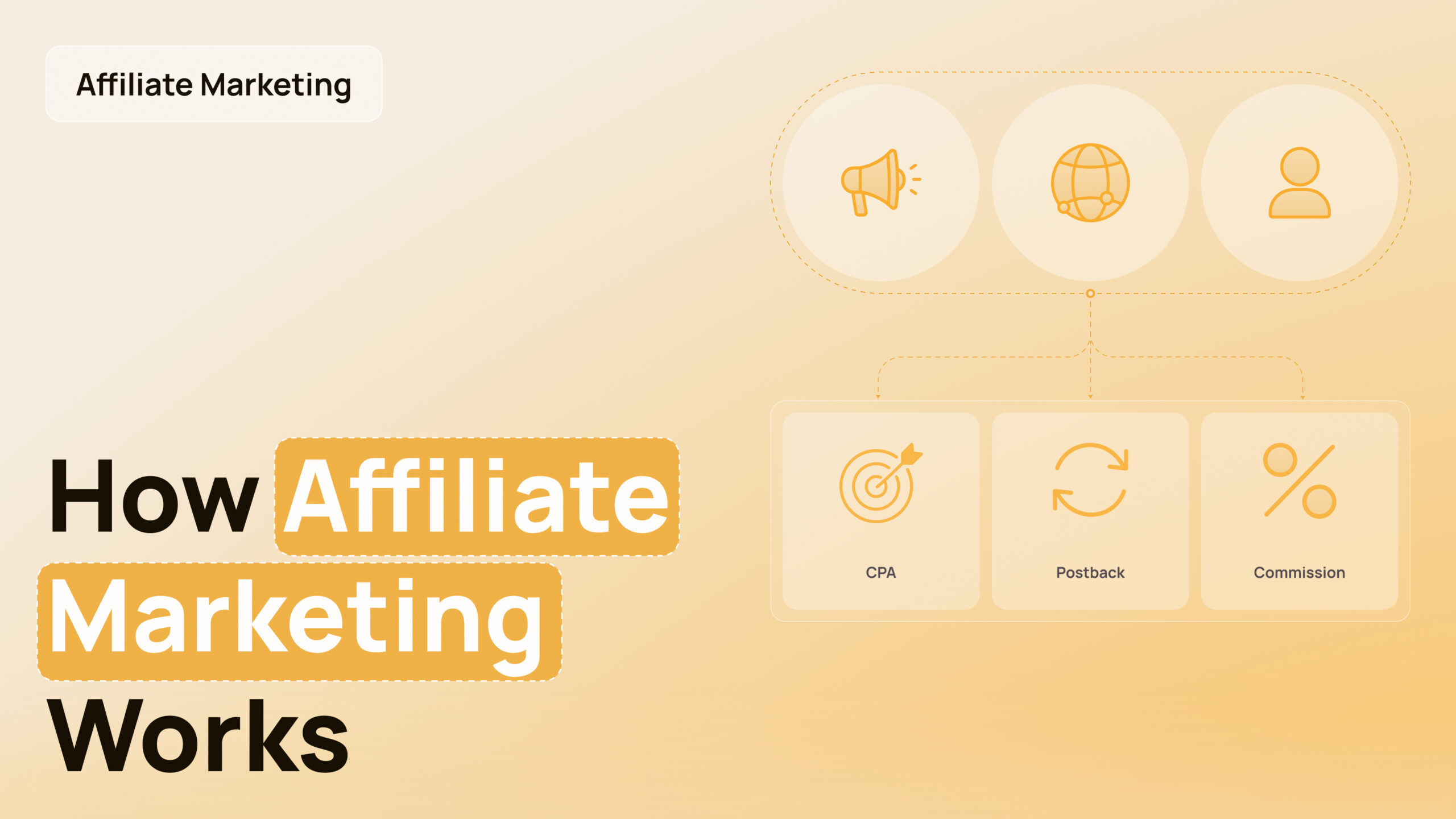
Understanding affiliate marketing commission structures involves analyzing how specific payout models—like Cost Per Acquisition (CPA), Cost Per Lead (CPL), and Revenue Share—align with your business goals, risk tolerance, and cash flow requirements. Choosing the correct financial structure ensures that marketing efforts result in sustainable profit margins rather than just high gross revenue.
The landscape of affiliate marketing in 2026 is more sophisticated than ever. With the total elimination of third-party cookies and the rise of advanced AI-driven attribution models, the financial side of the industry has shifted from simple "click-and-pay" mechanics to complex data-driven financial ecosystems. To succeed as an affiliate or a merchant, one must look beyond the surface-level commission percentage and understand the underlying financial engineering that dictates long-term profitability.
The Core Pillars of Affiliate Marketing Finance
Affiliate marketing finance is the intersection of performance marketing and financial management. At its heart, it is about managing the spread between the cost of traffic (COA) and the earnings generated from that traffic. In 2026, the most successful entities are those that treat their affiliate accounts like investment portfolios, diversifying their commission structures to balance immediate cash flow with long-term residual income.
The primary goal of any commission structure is to incentivize the "right" behavior from the affiliate while protecting the merchant’s margins. For the affiliate, the goal is to maximize Earnings Per Click (EPC) and Return on Ad Spend (ROAS). For the merchant, the goal is to acquire customers at a Customer Acquisition Cost (CAC) that is significantly lower than the Lifetime Value (LTV) of that customer.
Understanding these structures requires a grasp of financial metrics such as net profit margins, churn rates, and payout thresholds. Without this financial foundation, an affiliate may find themselves generating thousands of leads that never convert into payable actions, or worse, spending more on advertising than they receive in payouts.
Decoding Primary Commission Structures
Commission structures are the contractual agreements that determine when and how an affiliate gets paid. Each model carries a different risk profile and requires a specific tactical approach.
Cost Per Acquisition (CPA)
The Cost Per Acquisition (CPA) model is the industry standard for performance-based marketing. In this structure, the merchant pays a flat fee for a specific action, usually a completed sale or a paid subscription.
From a financial perspective, CPA is highly attractive for affiliates who can drive high-intent traffic. It offers immediate liquidity, as the payout is triggered the moment the transaction is verified. However, the risk lies in the conversion rate. If the merchant’s landing page is poorly optimized, the affiliate absorbs all the financial risk of the advertising costs without any guaranteed return. In 2026, CPA rates have generally increased to account for higher media buying costs, but merchants have also implemented stricter verification periods to mitigate the risk of fraudulent transactions or immediate "friendly fraud" chargebacks.
Cost Per Lead (CPL)
The Cost Per Lead (CPL) model pays for the acquisition of a prospective customer’s information, such as an email address, phone number, or a completed application. This is common in high-ticket industries like insurance, legal services, and B2B software.
The financial benefit of CPL is that the barrier to entry is lower than a sale. You are not asking a user to reach for their wallet, only their keyboard. However, CPL structures often include "scrubbing" or lead validation processes. If the leads do not meet specific quality criteria—such as a valid phone number or a specific credit score—the merchant may not pay for them. This creates a financial variable that affiliates must account for in their profit-and-loss (P&L) statements.
Revenue Share (RevShare)
Revenue Share is a model where the affiliate receives a percentage of the revenue generated by the customer over a specific period, or sometimes for the "lifetime" of the customer. This is the cornerstone of the iGaming, SaaS, and subscription-box industries.
RevShare is a long-term wealth-building strategy. While the initial payout might be lower than a flat CPA, the cumulative earnings can be massive if the customer remains active. In 2026, the shift toward first-party data has made RevShare more transparent, as affiliates can often track the ongoing activity of their referred users with greater precision. The financial risk here is "churn." If the merchant’s product is poor and customers leave after one month, the affiliate’s revenue stream evaporates.
Cost Per Click (CPC) and Hybrid Models
While rarer in traditional affiliate marketing, Cost Per Click (CPC) still exists in specific niches like travel and price comparison. However, the most significant trend in 2026 is the Hybrid Model. A hybrid model might offer a small CPA upfront to cover the affiliate’s immediate advertising costs, combined with a smaller RevShare percentage for long-term incentive. This balances the cash flow needs of the affiliate with the retention goals of the merchant.
The Math of Affiliate Profitability: Key Financial Metrics
To truly understand commission structures, one must master the metrics that define them. These are the numbers that professional media buyers and finance managers monitor daily.
- EPC (Earnings Per Click): This is calculated as
Total Commission / Total Clicks. It is the most critical metric for comparing different offers. An offer with a $100 CPA and a 1% conversion rate has an EPC of $1.00. An offer with a $50 CPA and a 3% conversion rate has an EPC of $1.50. Despite the lower commission, the second offer is financially superior. - CR (Conversion Rate): The percentage of visitors who complete the desired action. In 2026, conversion rates are heavily influenced by mobile-first design and frictionless payment methods like digital wallets.
- AOV (Average Order Value): In RevShare models, AOV dictates the size of your commission check. Affiliates often target higher AOV products to ensure that even a small percentage results in a significant dollar amount.
- Attribution Window (Cookie Duration): This is the timeframe during which an affiliate is credited for a sale after the initial click. With the decline of cookies, 2026 tracking relies on Server-to-Server (S2S) postbacks and probabilistic modeling. A longer attribution window (e.g., 60 days vs. 24 hours) drastically changes the financial value of a commission structure.
Comparison of Commission Structures
The following table compares the four dominant models across several financial and operational dimensions to help you determine which structure fits your current business capacity.
| Model | Primary Risk | Payout Timing | Cash Flow Impact | Best For |
|---|---|---|---|---|
| CPA | Conversion Rate | Immediate / Net-30 | High Liquidity | E-commerce, Gadgets |
| CPL | Lead Quality | Short-term | Moderate | Finance, Insurance, Education |
| RevShare | Customer Churn | Long-term | Residual Wealth | SaaS, iGaming, Subscriptions |
| Hybrid | Low Initial ROI | Mixed | Balanced | High-Ticket B2B, Specialized Tech |
Navigating Payment Terms and Cash Flow Management
In affiliate marketing, revenue is not the same as cash. The "Net" payment term is a crucial concept in affiliate finance. Net-30 means you receive your commissions 30 days after the end of the month in which they were earned. If you are spending $1,000 a day on Google Ads to drive traffic, a Net-30 or Net-60 term creates a massive "cash gap."
By 2026, many top-tier affiliate networks have introduced Weekly Payouts or even Daily Payouts for trusted partners. Accessing these terms usually requires a proven history of low fraud and high volume. Shortening the payout cycle allows an affiliate to reinvest profits back into their campaigns faster, leading to exponential growth.
Furthermore, affiliates must account for Thresholds and Fees. Many networks will not release funds until a certain amount (e.g., $100 or $500) is reached. Additionally, payment processing fees (wire transfer fees, currency conversion, or digital wallet percentages) can eat into thin margins. A 3% currency conversion fee on a 10% margin campaign reduces your actual profit by nearly a third.
Risk Management and Fraud in Affiliate Finance
Affiliate marketing finance is not without its hazards. The two most significant financial risks are Chargebacks and Fraud.
A chargeback occurs when a customer disputes a transaction with their bank. In many CPA and RevShare agreements, if a customer initiates a chargeback, the affiliate's commission is "clawed back" or deducted from their balance. High chargeback rates can lead to an account being banned and the freezing of all pending funds.
Fraud involves the use of bots or stolen credit cards to mimic real transactions. In 2026, merchants use sophisticated AI to detect non-human behavior patterns. If an affiliate is caught—even inadvertently—sending fraudulent traffic, the financial consequences are severe. Professional affiliates mitigate this risk by using their own tracking software (such as Voluum or Binom) to filter out suspicious traffic before it ever reaches the merchant's page.
Professional Advice Limitation: The financial information provided here is for educational purposes regarding affiliate marketing structures and does not constitute legal, tax, or professional investment advice. Regulations regarding affiliate disclosures and financial reporting vary by jurisdiction, such as the FTC guidelines in the United States or the GDPR in Europe.
Frequently Asked Questions
Which commission structure is most profitable for beginners?
CPL (Cost Per Lead) is often the most accessible for beginners. Because it doesn't require the user to make a purchase, conversion rates are typically higher, allowing new affiliates to see data and small wins faster. This provides the necessary feedback loop to learn traffic optimization without the high stakes of a CPA model where "no sale" means "no pay."
How do I calculate my break-even point in a RevShare model?
To calculate the break-even point for RevShare, you must estimate the average retention time of a customer. For example, if you spend $50 to acquire a customer and earn $10/month in RevShare, your break-even point is 5 months. You must ensure the merchant's average customer lifespan is significantly longer than 5 months to turn a profit.
What is a "Clawback" and how does it affect my earnings?
A clawback is a reversal of a previously credited commission. This usually happens due to a customer return, a cancelled subscription within a "cooling-off" period, or a fraudulent transaction. In your financial planning, you should always set aside a "reserve" (usually 5–10%) of your gross earnings to account for these inevitable reversals.
Can I negotiate my commission structure with a merchant?
Yes, and you should. Once you have proven that your traffic is high-quality and converts well, you have leverage. You can negotiate for a higher CPA, a "bump" in RevShare percentage, or better payment terms (e.g., moving from Net-30 to Net-7). Merchants prefer reliable, high-quality affiliates and are often willing to reduce their own margins to keep you on their program.
How has the 2026 privacy landscape changed commission tracking?
The total phasing out of third-party cookies has forced the industry toward Server-to-Server (S2S) tracking. This is more secure and accurate but requires more technical setup. Financially, it means that "leakage" (sales that happen but aren't tracked) has decreased for tech-savvy affiliates, leading to a more accurate reflection of their marketing performance in their commission checks.
Practical Recommendation for Next Actions
To master affiliate marketing finance, your first step should be a thorough audit of your current or intended niche's standard EPC. Do not be blinded by high CPA numbers; instead, focus on the Profit Margin after traffic costs.
- Analyze the Funnel: Before signing an affiliate agreement, go through the merchant’s checkout process yourself. Is it fast? Does it accept modern payment methods? A poor checkout process will kill your conversion rate regardless of the commission structure.
- Diversify Your Portfolio: Don't rely solely on one model. Balance your income by having 60% of your effort in "Cash Flow" offers (CPA/CPL) and 40% in "Wealth Building" offers (RevShare).
- Implement Advanced Tracking: Ensure you are using S2S postback tracking to capture every conversion in the 2026 cookie-less environment.
- Review the Legal Terms: Specifically look for "Negative Carryover" in RevShare agreements (where a "big winner" in an iGaming context could put your balance in the negative) and "Deduction Clauses" for lead scrubbing.
By treating affiliate marketing as a disciplined financial endeavor rather than a simple sales job, you position yourself to thrive in the complex digital economy of 2026.