The impact of the #AerieREAL campaign has been a definitive shift in the global retail landscape, transforming Aerie from a secondary lingerie label into a multi-billion-dollar lifestyle powerhouse. By eliminating digital retouching in 2014 and prioritizing authentic representation, Aerie achieved unprecedented brand loyalty, sustained double-digit revenue growth, and forced a fundamental restructuring of marketing standards across the entire fashion industry.
The Genesis of #AerieREAL: A Strategic Pivot to Authenticity
In 2014, Aerie, a sub-brand of American Eagle Outfitters (AEO), launched the #AerieREAL campaign with a bold promise: to stop retouching its models and to showcase diverse body types. At the time, the intimate apparel market was dominated by Victoria’s Secret and its "Angels" imagery, which relied heavily on airbrushing, hyper-sexualized aesthetics, and a narrow definition of beauty.
Aerie’s decision was not merely a social statement but a calculated strategic pivot led by Jen Foyle, then the Global Brand President. The brand identified a growing disillusionment among Millennial and Gen Z consumers regarding unattainable beauty standards. By removing the digital veil, Aerie positioned itself as the "antithesis" of the industry standard. This transparency established an immediate psychological bond with its target demographic, who began to view the brand as an ally rather than a judge of their physical appearance.
The campaign's initial impact was a surge in earned media. Because the "no retouching" pledge was so radical for the mid-2010s, it generated significant global press coverage without a commensurate increase in traditional advertising spend. This established a foundation of high brand equity that would fuel its growth for the next decade.
Quantifiable Financial Impact and Market Share Disruption
The most significant evidence of the #AerieREAL campaign's success is found in its financial performance. Since the campaign's inception, Aerie has consistently outperformed its parent company and many of its peers in the retail sector.
- Revenue Growth: Aerie's revenue trajectory shifted dramatically post-2014. By the early 2020s, the brand reached the $1 billion annual revenue milestone and continued to scale toward $2 billion by 2025. This growth was characterized by over 25 consecutive quarters of double-digit comparable sales growth, a feat rarely seen in the volatile apparel market.
- Market Share Acquisition: As Aerie's star rose, legacy competitors saw a corresponding decline. Victoria’s Secret, which initially dismissed the shift toward inclusivity, lost significant market share to Aerie. While Victoria’s Secret eventually attempted to rebrand with its "VS Collective" in 2021, Aerie’s multi-year head start on authenticity gave it an unshakeable foothold among younger shoppers.
- Profitability and Efficiency: By focusing on "realness," Aerie reduced its reliance on expensive, high-production photo shoots and post-production editing. While they invested in diverse talent, the operational efficiency gained by streamlining the creative pipeline contributed to healthy margins.
The halo effect of #AerieREAL also benefited American Eagle as a whole. The positive sentiment associated with the lingerie line bled into the denim and apparel segments, strengthening the overall corporate portfolio during a period when many mall-based retailers were struggling with store closures.
The Evolution of Inclusivity: Beyond Body Size
Aerie did not stop at simply showing unretouched photos. The campaign’s impact deepened as the brand expanded its definition of "realness" to include various dimensions of human diversity. This evolution ensured the campaign remained relevant as cultural conversations around inclusivity matured.
Representation of Disabilities and Chronic Illnesses
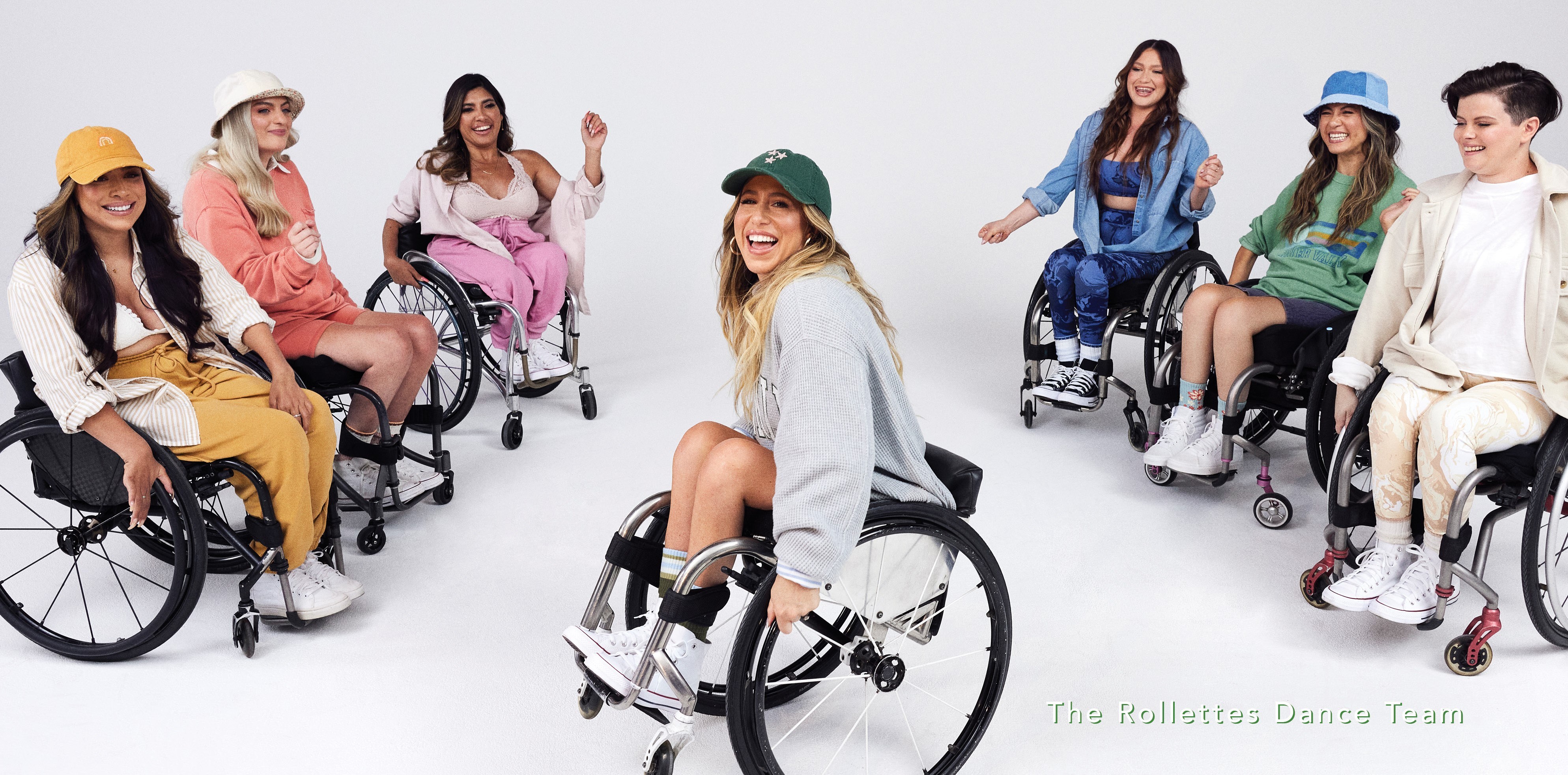
In 2018, Aerie received widespread acclaim for featuring models with visible disabilities and chronic illnesses, such as insulin pumps, ostomy bags, and wheelchairs. This was a watershed moment for the industry. It moved the needle from "body positivity" (which often focused on size) to "body neutrality" and "universal representation." By acknowledging the lived realities of its customers, Aerie moved beyond aesthetic diversity into genuine social advocacy.
The Role Model Program
Transitioning from traditional celebrity spokespeople to "Aerie Real Role Models" was another strategic masterstroke. Instead of choosing models based solely on their looks, the brand partnered with activists, athletes, and entrepreneurs—such as Iskra Lawrence, Aly Raisman, and Jameela Jamil. These individuals were chosen for their voices and their contributions to social change, further solidifying the brand’s identity as a community-driven organization rather than just a clothing retailer.
Psychological Impact on Consumer Behavior
The psychological impact of #AerieREAL has been studied by marketing experts and sociologists alike. The campaign effectively mitigated the negative effects of "social comparison theory," which suggests that individuals determine their own social and personal worth based on how they stack up against others.
When consumers are exposed to idealized, retouched imagery, it often triggers a sense of inadequacy. Aerie’s commitment to showing stretch marks, tattoos, and natural skin textures lowered the barrier to purchase by making the products feel accessible. Consumers weren't buying a "fantasy"; they were buying a product they could actually see working on a body like their own.
This psychological safety translated into high levels of customer retention. Once a consumer feels seen and respected by a brand, their switching costs increase. For Aerie, this meant that their customers were less likely to be swayed by a competitor’s temporary discounts because they had an emotional investment in the brand’s mission.
Industry-Wide Ripple Effects: The "Aerie Effect"
Aerie’s success forced a reckoning in the fashion world. The "Aerie Effect" can be seen in how other major brands eventually adopted similar strategies to survive.
- Competitor Pivots: Brands like Dove (with the Real Beauty campaign) preceded Aerie, but Aerie proved the model could work in the high-stakes, fashion-forward world of lingerie. Following Aerie’s success, newer entrants like Savage X Fenty and ThirdLove entered the market with inclusivity as a core pillar, further squeezing legacy brands that failed to adapt.
- Advertising Regulations: The cultural impact of #AerieREAL contributed to broader conversations about advertising ethics. In several jurisdictions, there has been a push for "anti-retouching" laws or mandatory labeling for digitally altered images. Aerie proved that such transparency was not only ethical but also highly profitable.
- Retail Environment: Aerie’s physical stores—often featuring "Aerie Real" mirrors with positive affirmations—redefined the brick-and-mortar experience. This shift from a "judging" fitting room to a "supportive" one has since been emulated by various retailers looking to improve their in-store conversion rates.
Comparative Impact: Aerie vs. Legacy Industry Standards
The following table highlights the fundamental differences in approach and impact between the legacy retail model and the #AerieREAL model as observed through 2026.
| Metric | Legacy Retail (Pre-2014 Standard) | #AerieREAL Campaign Model |
|---|---|---|
| Marketing Philosophy | Aspirational / "Fantasy" imagery | Authentic / "Real" representation |
| Photo Editing | Heavy digital retouching (liquifying, skin smoothing) | Zero digital retouching policy |
| Model Selection | Uniformly thin, cisgender, able-bodied | Diverse sizes, abilities, and backgrounds |
| Consumer Relationship | Top-down (Brand dictates beauty) | Peer-to-peer (Brand reflects community) |
| Growth Driver | Trend-cycling and sex appeal | Brand loyalty and values-alignment |
| Primary Demographic | Broad Millennial / Gen X | Gen Z and "Values-First" Millennials |
| Economic Outcome | Declining market share for non-adopters | Consistent double-digit revenue growth |
Potential Criticisms and the Future of Body Positivity
Despite its success, the campaign has faced scrutiny. Some critics argue that while Aerie is "real," it is still a multi-billion-dollar corporation leveraging social issues for profit—a phenomenon often called "commodity activism." Others have pointed out that while the brand shows diverse bodies, it still primarily utilizes "conventionally attractive" individuals who happen to be in larger sizes.
However, as of 2026, Aerie has addressed many of these concerns by broadening its casting calls to include more intersectional identities. The challenge for the brand moving forward is to maintain the "radical" feel of its 2014 launch in a world where body positivity is now a standard marketing trope. To stay ahead, Aerie has shifted its focus toward sustainability and mental health, ensuring that "realness" encompasses the emotional and environmental impact of the brand as well.
FAQ: Understanding the Aerie Body Positivity Impact
When did the #AerieREAL campaign officially start?
The #AerieREAL campaign was launched in January 2014. It began with the announcement that the brand would no longer use digital retouching for its models in any advertising materials, including websites, social media, and in-store displays.
Was Aerie the first brand to stop retouching photos?
While Aerie was not the first brand globally to address body image—Dove’s "Campaign for Real Beauty" started in 2004—Aerie was the first major retail apparel brand to make "no retouching" its core business strategy and identity. They proved that this approach could be sustained over a decade as a primary growth engine.
How did the campaign affect Aerie's sales?
The campaign led to a massive financial turnaround. Aerie’s comparable sales grew significantly year-over-year, often exceeding 20% growth per quarter. This performance allowed Aerie to become one of the most profitable segments of American Eagle Outfitters, Inc.
Who are the "Aerie Real Role Models"?
The Role Model program, started around 2016 and expanded in later years, includes a rotating group of influential women like Iskra Lawrence, Aly Raisman, and Barbie Ferreira. These women are chosen for their advocacy in mental health, body image, and social justice, rather than just their physical appearance.
Has Aerie’s campaign influenced other brands?
Yes, this is often called the "Aerie Effect." Major competitors, most notably Victoria’s Secret, were forced to overhaul their marketing strategies to include more diverse models and reduce airbrushing to remain competitive with the standards Aerie set.
Strategic Recommendation for Brand Managers
For organizations looking to replicate the impact of the #AerieREAL campaign, the key lesson is consistency over time. Many brands attempt "inclusive" marketing as a one-off campaign, which often results in accusations of "performative activism." Aerie’s success was built on a decade-long commitment where every touchpoint—from the CEO’s letters to the tags on the underwear—aligned with the core message of authenticity.
To achieve similar results, brands should:
- Identify a core friction point in their industry (e.g., unrealistic beauty standards).
- Commit to a radical transparency that directly addresses that friction.
- Ensure operational alignment, making sure the "inclusive" message is reflected in sizing availability, store design, and corporate hiring practices.
- Engage the community by elevating the voices of real customers rather than just paid celebrities.
By following this blueprint, brands can move beyond transactional relationships with their customers and build a loyal community that perceives the brand as an essential part of their identity.