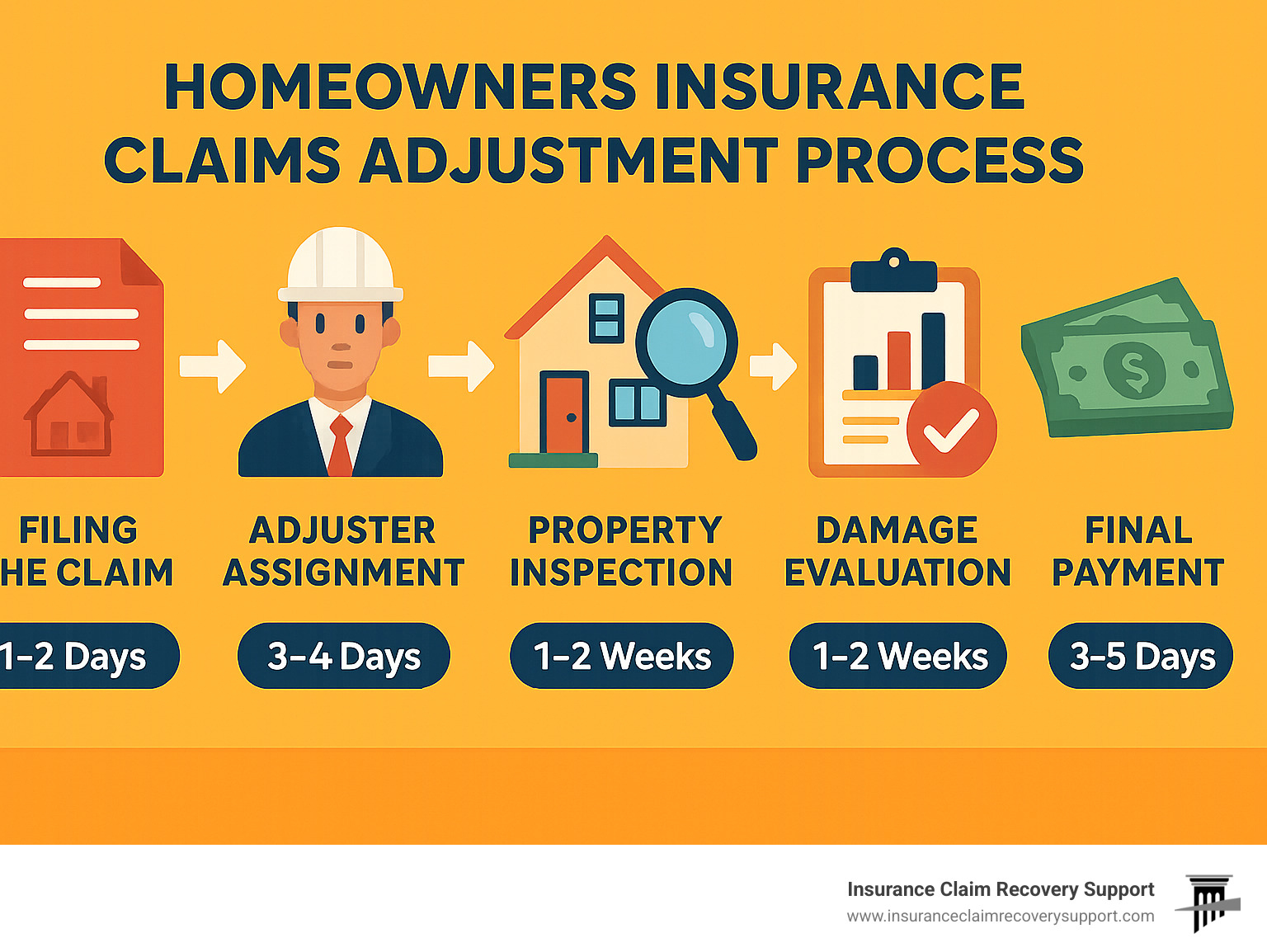
Adjusting auto insurance claims today involves a highly integrated process of digital data collection, artificial intelligence (AI) damage assessment, and traditional investigative verification to determine liability and financial compensation. In 2026, this workflow emphasizes "touchless" processing for minor accidents while utilizing human adjusters for complex liability disputes, ensuring that settlements are reached faster and with greater data-driven accuracy than in previous years.
The landscape of insurance has shifted significantly toward transparency and speed. Whether you are a policyholder navigating a recent collision or a professional looking to understand the modern standards of the industry, understanding the mechanics of how claims are adjusted is essential for ensuring fair treatment and accurate payouts.
The Modern Workflow of Auto Insurance Claim Adjustment
The process of adjusting a claim in 2026 is no longer a linear path of phone calls and physical inspections. It has evolved into a multi-streamed data operation. When an accident occurs, the "adjustment" begins almost instantly, often triggered by the vehicle itself or a mobile application.
Initial Incident Reporting (FNOL)
The First Notice of Loss (FNOL) is the critical starting point. In 2026, most vehicles are equipped with advanced telematics that automatically notify the insurer if an airbag deploys or a significant G-force impact is detected. For less severe incidents, claimants use high-resolution mobile interfaces to upload 360-degree video and photos of the scene. The adjuster’s role at this stage is to verify the digital footprint of the accident against the policyholder’s statement.
Data-Driven Investigation
Once the claim is logged, the adjustment process moves into the investigation phase. Adjusters today rely on a "digital twin" of the accident. By accessing telematics data—such as braking speed, steering angle, and GPS location—insurers can reconstruct the seconds leading up to the impact. This reduces the reliance on subjective witness testimony and helps adjusters determine fault with surgical precision.
Damage Assessment and Estimating
For the majority of partial-loss claims, AI vision models now perform the initial damage appraisal. These systems analyze photos to identify specific parts that require replacement versus those that can be repaired. They cross-reference these needs with real-time parts databases and local labor rates to generate a preliminary estimate within minutes. A human adjuster typically reviews these AI-generated estimates for high-value claims or when supplemental damage is discovered during teardown at a repair facility.
The Role of Technology in 2026 Claims Adjusting
Technology is the backbone of modern adjusting. It has moved beyond being a mere tool to becoming the primary environment in which claims are resolved.
Artificial Intelligence and Computer Vision
Computer vision algorithms have reached a level of maturity where they can detect structural damage that might be invisible to the untrained eye in a photograph. By analyzing pixel deformation and shadows, AI can suggest that an internal frame rail might be compromised, prompting a more thorough physical inspection. This prevents "hidden damage" surprises that used to delay repairs for weeks.
Telematics and the "Black Box"
Telematics data has become the "silent witness" in auto insurance. In 2026, insurers use this data to confirm whether a driver was distracted (e.g., mobile phone usage detection) or if they were complying with local speed limits. This objective data helps adjusters settle "he-said, she-said" disputes quickly, often allowing for liability to be determined within 24 to 48 hours of the incident.
Blockchain for Fraud Prevention
To combat the rising sophistication of insurance fraud, adjusters use blockchain-based ledgers to verify repair histories and previous claims. If a vehicle was previously "totaled" and surreptitiously rebuilt, the adjuster will see a permanent, unalterable record of that history, preventing fraudulent payouts for pre-existing damage.
Understanding the Different Types of Adjusters
Not all adjusters serve the same interest. Understanding who is evaluating your claim is vital for managing your expectations and protecting your financial interests.
- Staff Adjusters: These are direct employees of the insurance company. Their goal is to handle claims efficiently and according to the company’s internal guidelines. They have the authority to issue payments but operate under the financial constraints of their employer.
- Independent Adjusters (IAs): Often hired by insurance companies during periods of high claim volume (such as after a natural disaster) or for specialized inspections. While they are paid by the insurer, they are third-party contractors.
- Public Adjusters: These professionals are hired by the policyholder, not the insurance company. They advocate for the claimant to ensure the maximum possible settlement, usually taking a percentage of the final payout as their fee. They are most commonly used in complex, high-value total loss disputes.
| Feature | Staff Adjuster | Independent Adjuster | Public Adjuster |
|---|---|---|---|
| Employer | Insurance Company | Third-party Firm | Policyholder |
| Primary Goal | Efficient resolution per policy | Accurate damage appraisal | Maximizing claimant payout |
| Cost to Claimant | Included in premium | Included in premium | Percentage of settlement (often 10-15%) |
| Authority | High (can often settle on-site) | Medium (submits reports for approval) | None (acts as an advocate) |
| Availability | Standard claims | Overflow/Specific expertise | Disputes and large losses |
The Valuation Process: ACV vs. Replacement Cost
One of the most contentious parts of adjusting is determining the value of the vehicle, particularly in the event of a "Total Loss." In 2026, adjusters primarily use Actual Cash Value (ACV) to determine payouts.
How ACV is Calculated
ACV is not what you paid for the car, nor is it what it costs to buy a brand-new version of that car. It is the market value of the vehicle immediately before the accident. Adjusters use sophisticated market-scanning software that looks at thousands of local "comparables"—similar vehicles sold in your geographic area—adjusting for mileage, condition, and optional equipment.
The Total Loss Threshold
In 2026, a vehicle is typically deemed a total loss if the cost of repairs, plus the projected salvage value, exceeds a certain percentage of the ACV (usually 70% to 80%, depending on state regulations). With the rising cost of sensors, cameras, and lidar units in modern cars, even relatively minor-looking fender benders can result in a total loss because the calibration costs for these safety systems are so high.
Diminished Value Claims
Adjusters also have to consider Diminished Value. Even if a car is perfectly repaired, its resale value is often lower because it now has an accident history on reports like Carfax or AutoCheck. In certain jurisdictions, adjusters are required to calculate this loss in value and include it in the settlement, though this often requires the claimant to explicitly request it.
Common Challenges and How to Navigate Them
The adjustment process is not always seamless. Disagreements can arise regarding liability, the necessity of specific repairs, or the valuation of the vehicle.
Disputing Liability
If the adjuster determines you are 50% at fault but you believe you were 0% at fault, the "Comparative Negligence" laws of your state come into play. In 2026, the best way to challenge a liability finding is to provide dashcam footage or telematics data from your own vehicle’s manufacturer (if it differs from what the insurer has). You can find more information on state-specific negligence laws at the National Association of Insurance Commissioners (NAIC).
Handling "Lowball" Estimates
If an AI-generated estimate seems too low, it is usually because the software failed to account for OEM (Original Equipment Manufacturer) parts requirements or specialized labor. You have the right to take your vehicle to a repair shop of your choice. If your shop’s estimate is higher than the adjuster’s, the shop will file a "supplement." The adjuster then reviews the supplemental request to see if the additional costs are justified.
Total Loss Disputes
If you believe your car is worth more than the adjuster's ACV offer, you must provide evidence. This evidence should include receipts for recent major improvements (like a new engine or transmission) and listings for similar vehicles in your area that are priced higher than the offer. Adjusters are often willing to negotiate if you can provide data that their automated system may have missed.
Legal and Regulatory Standards in 2026
Auto insurance adjusting is heavily regulated to ensure consumer protection. The Insurance Information Institute (III) provides updated guidelines on how these regulations impact claim timelines.
- Timely Communication: Most states require adjusters to acknowledge a claim within 10 to 15 days and provide a decision on the claim within 30 to 40 days.
- Unfair Claims Settlement Practices: Adjusters are legally prohibited from misrepresenting policy facts, failing to conduct a reasonable investigation, or offering "substantially less" than what a reasonable person would expect based on the evidence.
- Right to Appraisal: Most policies include an "appraisal clause." If you and the adjuster cannot agree on the value of the loss, both parties hire an appraiser, and those two appraisers select an "umpire." The decision of any two of these three individuals becomes binding.
Practical Steps for a Smooth Adjustment Process
To ensure your claim is adjusted fairly and quickly in 2026, follow these expert-vetted steps:
- Document Everything Immediately: Use your smartphone to take wide-angle and close-up photos of all vehicles involved, the road conditions, and any relevant signage.
- Protect the Salvage: If your car is not drivable, ensure it is towed to a secure location to prevent further damage or theft of components, which can complicate the adjustment.
- Be Honest but Concise: When speaking with an adjuster, stick to the facts. Do not speculate about your speed or the other driver’s intentions. Let the telematics and physical evidence do the talking.
- Review the "Dec Page": Read your Policy Declarations page carefully. Know your deductible and whether you have "Rental Reimbursement" or "New Car Replacement" coverage, as these significantly impact the final settlement.
- Keep a Claim Log: Record every interaction with the adjuster, including the date, time, and a summary of what was discussed. This is invaluable if you need to escalate the claim to a supervisor or a state regulator.
Frequently Asked Questions
How long does the average auto claim adjustment take in 2026?
For simple, "touchless" claims where AI can verify damage via photos, a settlement can be reached in as little as 48 hours. However, complex claims involving bodily injury or disputed liability still typically take 2 to 4 weeks to fully adjust and resolve.
Can I refuse an AI-generated estimate?
Yes. AI estimates are considered preliminary. If you feel the AI missed specific damages, you can request a physical inspection by a human staff adjuster or have your chosen repair shop submit a detailed supplement for review.
What happens if the repair costs exceed the initial adjustment?
This is very common and is handled through a "supplemental claim." The repair shop sends photos and a revised estimate to the adjuster while the car is being disassembled. The adjuster then approves the additional funds directly to the shop.
Will using a public adjuster speed up my claim?
Generally, no. Hiring a public adjuster often slows down the process initially because it adds another layer of communication. However, it can result in a higher settlement for complex cases where the insurance company’s offer is significantly below market value.
Does my driving data always help the adjuster?
Not necessarily. Telematics data is a double-edged sword. While it can prove you weren't at fault, it can also show if you were speeding or failed to use a turn signal, which may allow the adjuster to assign a percentage of "comparative negligence" to you, reducing your payout.
Can I choose my own parts for the repair?
This depends on your policy. Standard policies often allow for "Quality Recycled Parts" or "Aftermarket Parts." If you want strictly OEM (Original Equipment Manufacturer) parts, you usually need to have a specific OEM endorsement on your policy, or be willing to pay the price difference out of pocket.
Final Recommendation for Claimants
If you are dealing with an auto insurance claim today, your most powerful tool is comprehensive documentation. In an era where AI and data dominate the adjustment process, providing clear, high-resolution visual evidence and being proactive in requesting your vehicle's telematics report will ensure that the technology works for you rather than against you. Always verify the adjuster's valuation against independent market data before signing a final release.