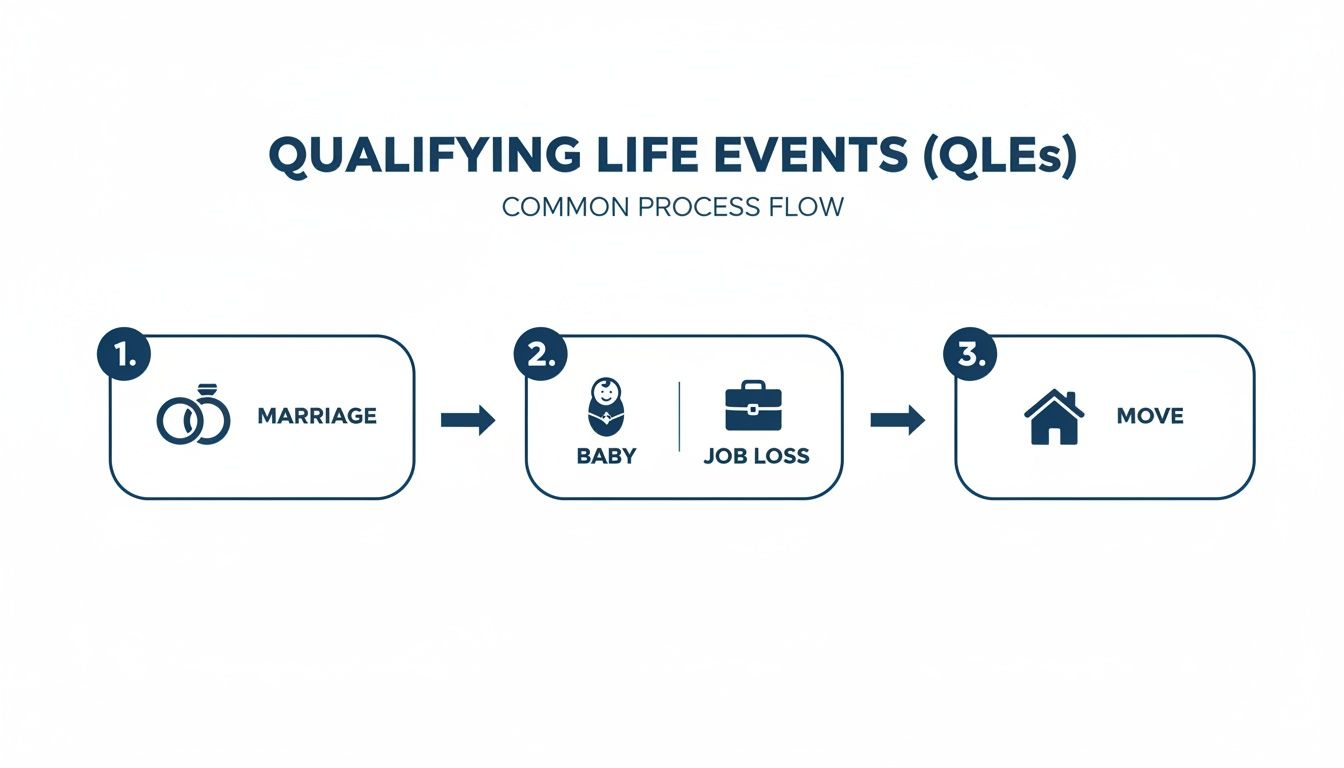
Adding a girlfriend to your health insurance policy typically does not qualify as a "Qualifying Life Event" (QLE) that allows for mid-year enrollment changes. In most insurance frameworks, including the Affordable Care Act (ACA) marketplace and standard employer-sponsored plans, QLEs are limited to specific life transitions—such as marriage, the birth of a child, or the involuntary loss of other coverage—that grant a Special Enrollment Period (SEP).
The Reality of Qualifying Life Events
A Qualifying Life Event is a legal designation that permits individuals to enroll in a new health insurance plan or make changes to an existing plan outside of the standard Open Enrollment Period. These events are strictly regulated to prevent "adverse selection," a scenario where individuals only purchase insurance when they anticipate high medical costs.
For a partner to be eligible for coverage under a standard insurance plan, they usually must meet the legal definition of a "dependent," which generally requires a formal domestic partnership or marriage. Because a girlfriend does not automatically meet these definitions, simply deciding to share insurance costs or provide coverage does not trigger the regulatory mechanism required to add a person to an active policy mid-year.
Why Standard Health Plans Reject Girlfriend Enrollment
Health insurance providers operate under strict contract terms, often dictated by both state and federal law. When you sign up for a plan, you are signing a contract that covers specific, defined individuals. Adding someone else requires either a QLE or the arrival of the next Open Enrollment Period.
Most plans define eligible dependents as:
- Legal Spouses: Those who are married according to state law.
- Dependent Children: Typically unmarried children under age 26.
- Domestic Partners: Only in specific jurisdictions or under specific employer policies that have explicitly expanded their definitions of "family."
If your plan does not recognize "unmarried domestic partners" as eligible dependents, you cannot add your girlfriend to the plan even if you wanted to, regardless of whether a life event occurred.
Domestic Partnerships and Employer Policies
While the federal government and many insurance carriers do not recognize a girlfriend as an eligible dependent, some employers offer "Domestic Partner Benefits." This is not a QLE in the sense of the ACA, but rather a voluntary benefit provided by the company.
If your employer offers these benefits, you must check their specific policy regarding the documentation required to prove a domestic partnership. This often involves:
- Affidavits of domestic partnership.
- Evidence of shared financial obligations, such as a joint lease, mortgage, or joint bank account.
- Proof of shared residency.
If your employer does allow domestic partner coverage, they may treat the addition of that partner as a valid reason to alter your coverage, but this is an internal policy rule rather than a government-mandated QLE.
The Impact of Marriage as a QLE
Marriage is universally recognized as a Qualifying Life Event. If you and your girlfriend decide to marry, this changes her status to "Legal Spouse," which is a qualifying event under federal law and virtually all employer-sponsored and private health insurance plans.
When you marry, you are granted a Special Enrollment Period, usually lasting 60 days from the date of the wedding. During this window, you can:
- Add your new spouse to your existing employer-sponsored plan.
- Switch your plan entirely to a new one that better suits the needs of a two-person household.
- Enroll in a plan together on the Health Insurance Marketplace.
Financial and Tax Implications
Adding a girlfriend to your health insurance, even if permitted by your employer, carries tax consequences that differ significantly from adding a legal spouse. Under the Internal Revenue Code, the value of employer-provided health coverage for a legal spouse is generally tax-free.
Conversely, if an employer covers a domestic partner who does not qualify as a tax dependent, the fair market value of that coverage is often treated as "imputed income." This means the cost the employer pays for your girlfriend’s coverage is added to your gross income, and you will be taxed on that amount. Always consult with your HR department or a tax professional to understand how your paycheck might be affected by these tax rules.
Alternatives for Unmarried Partners
If you cannot add your girlfriend to your plan, she has several alternatives to ensure she maintains health coverage:
- Individual Marketplace Plans: She can purchase her own policy through the Health Insurance Marketplace. If she is currently uninsured, she may need to wait for the next Open Enrollment Period unless she has her own QLE, such as moving to a new ZIP code or losing her own previous job-based coverage.
- Employer-Sponsored Insurance: She should check if her own employer offers health benefits. In the long run, having separate policies is often more cost-effective than attempting to navigate the complex tax and eligibility hurdles of domestic partner coverage.
- Medicaid: If she meets income requirements, she may be eligible for state-provided Medicaid, which has year-round enrollment for those who qualify.
Comparison of Coverage Options
| Feature | Legal Spouse | Girlfriend/Domestic Partner |
|---|---|---|
| QLE Status | Guaranteed (Marriage) | Rarely (Unless employer-specific) |
| Tax Status | Tax-free premiums | Often taxable (Imputed Income) |
| Eligibility | Universal | Varies by employer/state |
| Required Proof | Marriage Certificate | Affidavits/Financial records |
Troubleshooting Enrollment Difficulties
If you believe you have a valid reason to change your plan—for example, if you or your partner have recently lost other coverage—ensure you have the appropriate documentation ready. Insurance providers are strict about verifying these claims.
Common mistakes include:
- Missing the Deadline: Most SEPs are time-sensitive (usually 60 days). If you miss this window, you must wait for the next Open Enrollment.
- Assuming Eligibility: Never assume your plan covers domestic partners. Read your Summary of Benefits and Coverage (SBC) or contact your HR department before making life decisions based on the assumption that she will be added to your insurance.
- Failing to Verify Proof: If your employer does allow domestic partner coverage, not having the required documentation (like proof of cohabitation) can lead to the request being denied.
FAQ
Can I just add my girlfriend to my plan if I pay the extra cost? No. Most insurance contracts forbid adding ineligible individuals to a plan. Even if you are willing to pay the premium, the insurance carrier will not authorize the enrollment unless your specific policy recognizes domestic partners as eligible dependents.
Is there any way to change my insurance mid-year for her? Only if you have an independent QLE, such as marriage or your girlfriend losing her own employer-sponsored coverage. The act of "adding a girlfriend" is not a QLE in itself.
What happens if I get married later this year? Marriage is a clear Qualifying Life Event. You will be able to add your spouse to your plan within 60 days of the wedding date. You will need a copy of your marriage certificate to finalize the enrollment.
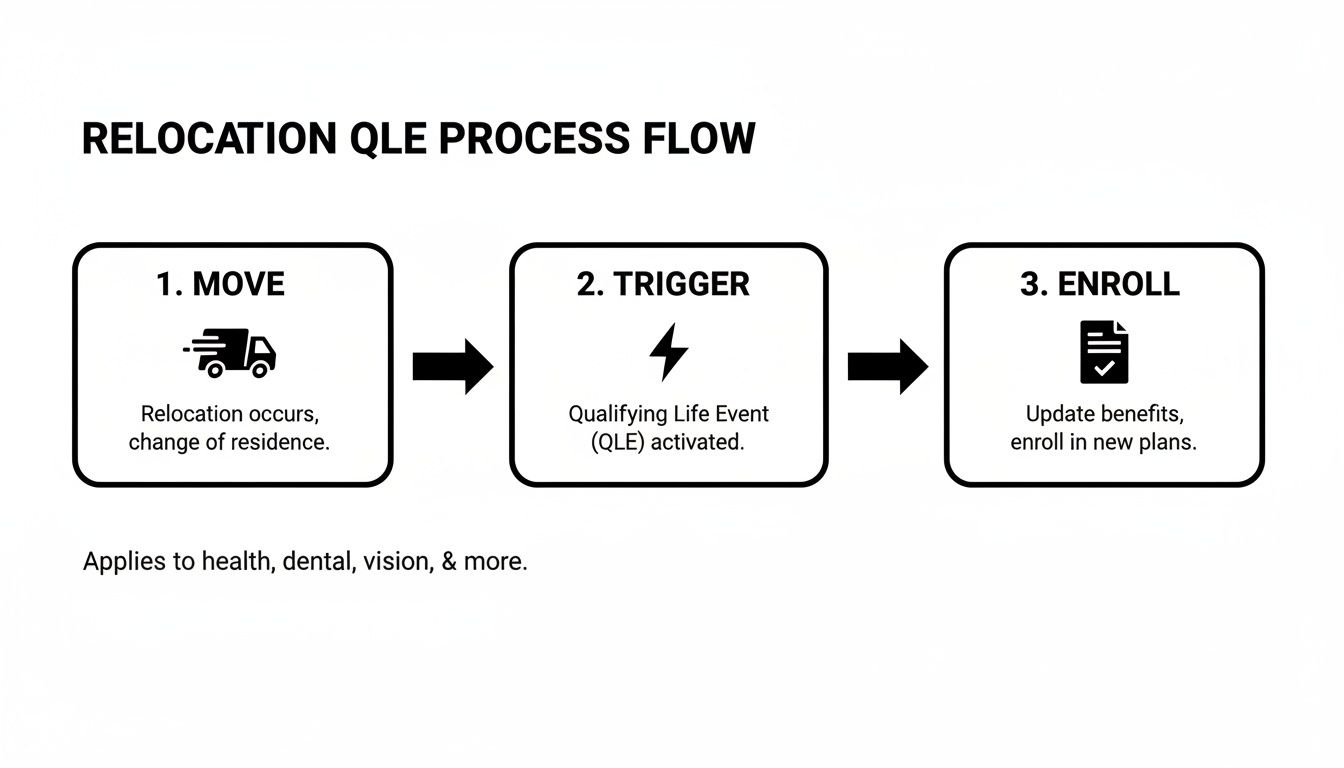
Does living together qualify as a QLE? Moving to a new permanent residence is sometimes a QLE, but living together in the same home does not change the marital status or dependent eligibility for health insurance carriers.
How do I find out if my employer allows domestic partner coverage? Review your employee handbook or contact your company’s benefits administrator. They can clarify the exact definitions of "family" and "dependent" as stipulated in your specific contract.
Final Recommendation
Do not rely on the expectation of adding a girlfriend to your health insurance as a primary strategy for her healthcare. Because this is not a federal Qualifying Life Event, you are entirely dependent on the specific, discretionary policies of your employer, which may also carry tax disadvantages. The most reliable path for coverage is for your partner to maintain her own policy through her employer or the public marketplace. If marriage is in your future, use that as the official window to consolidate your health insurance coverage legally and effectively.