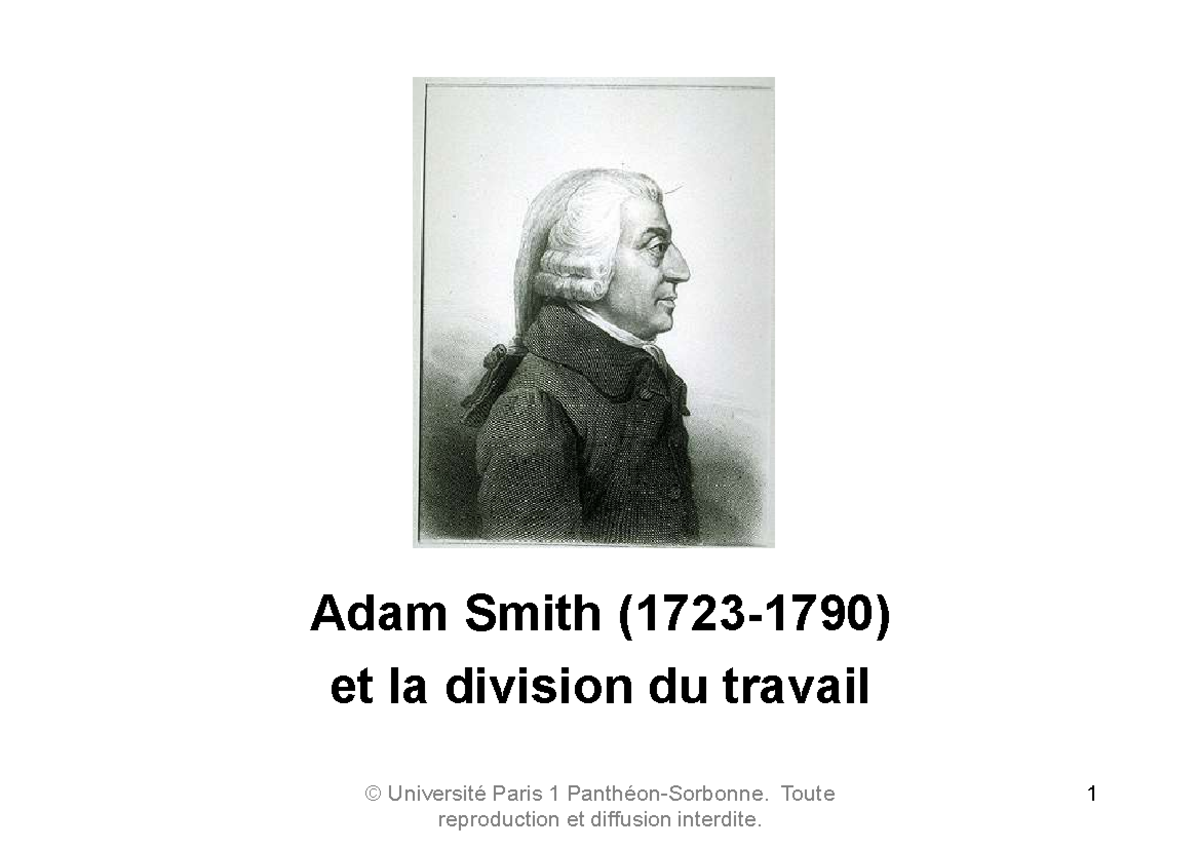
Adam Smith’s theory on the division of labor, most famously articulated in his 1776 work An Inquiry into the Nature and Causes of the Wealth of Nations, identifies the fragmentation of production tasks as the primary driver of economic productivity. By breaking complex manufacturing processes into specialized, repetitive steps, workers increase their dexterity, reduce time lost transitioning between tasks, and facilitate the invention of machinery that streamlines labor.
The Foundational Concept: The Pin Factory Example
To illustrate his argument, Adam Smith famously opens The Wealth of Nations with the example of a pin factory. He contrasts a solitary workman—who might struggle to make a single pin in a day—with a specialized operation where the task is divided into eighteen distinct operations. In the latter, ten men working together could produce upwards of 48,000 pins in a single day.
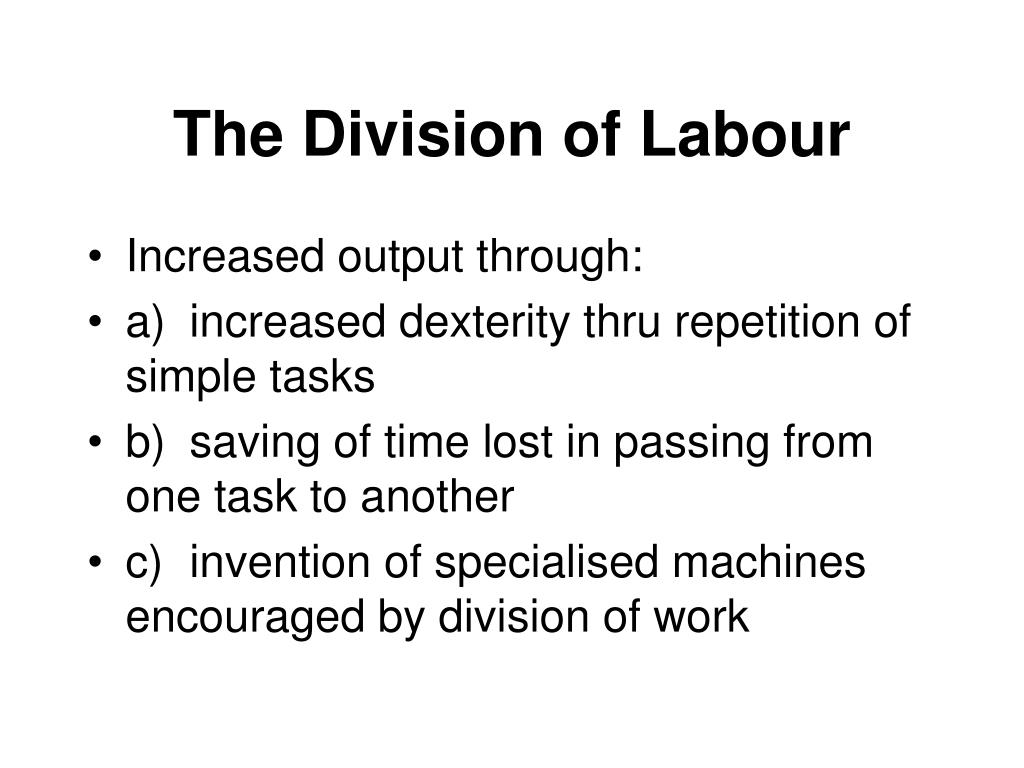
This observation serves as the cornerstone of Smith’s economic philosophy. He posits that the immense increase in the quantity of work resulting from the division of labor is due to three specific circumstances:
- Increased Dexterity: When a worker’s entire attention is focused on a single, simple object, their physical aptitude for that specific task improves significantly.
- Time Savings: Moving from one type of work to another often involves a loss of time and focus; specialization eliminates the "strolling" or adjustment period required when switching tools or physical locations.
- Technological Innovation: Because workers are intimately acquainted with the specific motions of their task, they are better positioned to invent or improve machinery that makes those tasks easier, faster, or more efficient.
The Mechanics of Market Expansion
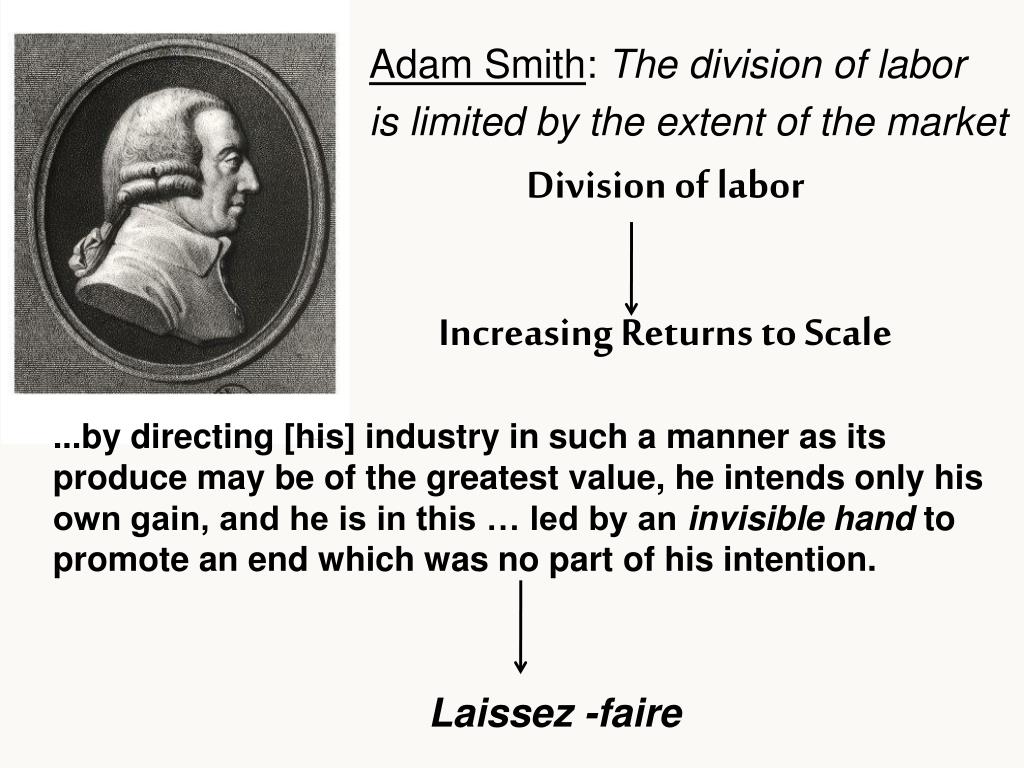
Smith argues that the division of labor is not an act of human foresight but rather the result of a "propensity to truck, barter, and exchange." As productivity increases through specialization, society produces a surplus of goods. This surplus necessitates trade, which in turn leads to a deeper division of labor.
The extent of this specialization is limited by the "extent of the market." In a small village, a blacksmith may be forced to also perform the duties of a carpenter or a farrier because the local demand is insufficient to support a full-time specialist in each field. However, in a larger metropolitan center, the market is vast enough to sustain a variety of specialized trades. As transportation networks and trade infrastructure expand, the division of labor deepens, creating a virtuous cycle of economic growth and wealth accumulation.
Comparing Traditional Craftsmanship and Industrial Specialization
The shift from artisanal production to the specialized division of labor marked a departure from the traditional model where one worker was responsible for the entire lifecycle of a product. The following table illustrates the conceptual differences between these two modes of production.
| Feature | Traditional Craftsmanship | Industrial Division of Labor |
|---|---|---|
| Worker Scope | Comprehensive; entire process | Narrow; single task |
| Skill Requirement | Mastery of multiple tools/steps | Mastery of one repetitive motion |
| Production Speed | Low; limited by manual transition | High; optimized by repetition |
| Innovation Source | General experience | Task-specific engineering |
| Product Uniformity | Variations inherent in manual work | High consistency through standards |
The Social and Cognitive Implications
While Smith championed the division of labor for its capacity to generate "universal opulence," he was not blind to the potential drawbacks. In later sections of The Wealth of Nations, he offers a critique that is often overlooked in modern discussions. Smith acknowledges that a person whose life is spent performing a few simple operations inevitably loses the habit of exertion and generally becomes as stupid and ignorant as it is possible for a human creature to become.
Smith recognized that the monotony of specialized labor could degrade the human spirit and cognitive agility. He suggested that, without government intervention in public education, the "torpor of mind" caused by industrial routine could render the workforce incapable of active, intellectual participation in society. Thus, Smith’s view was a nuanced balance between the necessity of economic efficiency and the potential for social regression.
Division of Labor in the Modern Workplace
By 2026, the principles of Smith’s division of labor have evolved from the factory floor to the digital office and global supply chain. Modern "hyper-specialization" allows companies to operate with extreme efficiency, but it also creates dependencies on specialized roles that are increasingly susceptible to automation or AI-driven streamlining.
The Evolution of Roles
- Vertical Integration: Businesses often outsource non-core, specialized tasks to companies that can perform them more efficiently (e.g., specialized logistics or cloud computing providers).
- Knowledge Work: The division of labor today applies to information processing. Analysts, developers, and project managers operate within specialized silos, requiring high-level coordination to synthesize output into a finished product.
- Global Decentralization: The "extent of the market" now includes the entire globe. An engineer in one region can design a component that is manufactured in another and assembled in a third, representing the ultimate expansion of Smith’s trade-driven specialization.
Challenges and Troubleshooting the Specialized Model
Organizations today often face a paradox: high specialization leads to high efficiency but can result in "siloing." When departments or individuals become too specialized, they often lose sight of the broader organizational goals, leading to miscommunication and a lack of innovation across boundaries.
To mitigate these risks, management structures have had to adapt:
- Cross-Functional Teams: By bringing together experts from different specialized fields, companies attempt to maintain the benefits of high-level expertise while fostering the collaboration necessary for solving complex problems.
- Continuous Upskilling: To address Smith’s concern regarding the "torpor of mind," modern firms invest in rotations and professional development to ensure that specialized workers maintain a broad understanding of the business ecosystem.
- Process Integration Tools: The use of shared digital platforms and project management methodologies serves to bridge the gaps between disparate specialized tasks, ensuring that the division of labor does not lead to a fractured product.
Frequently Asked Questions
Does the division of labor always increase worker wages? Not necessarily. While it increases the total wealth of a society, the individual worker's bargaining power may decline if their skill set is highly specialized and easily replaced by automation or other workers, potentially putting downward pressure on wages in specific sectors.
What did Adam Smith mean by "the extent of the market"? He meant the size of the population and the accessibility of trade routes. The larger the number of potential consumers, the more viable it is for a business to specialize deeply, as they can rely on a consistent volume of sales to justify the focus on a single niche.
Is the division of labor applicable to services or only manufacturing? Smith focused on manufacturing, but the principles apply universally. In modern services—such as healthcare or software development—tasks are partitioned among specialists (e.g., frontend vs. backend developers) to improve speed and quality.
How does AI impact the division of labor? AI acts as an accelerant for specialization. By automating routine components of a specialized task, it allows the human worker to focus on higher-order decision-making, effectively pushing the division of labor into deeper, more cognitive layers of work.
Did Smith advocate for the division of labor despite its negative effects? Smith viewed it as a necessary trade-off. He believed that the rise in general living standards was worth the cost, provided that society utilized the surplus wealth to support public education and address the potential mental stagnation of the labor force.
Practical Application for Professionals
If you are looking to apply these principles to your own organizational structure or personal career, start by conducting a "task audit." List every step involved in your primary output. Identify which steps require unique expertise and which are repetitive.
For repetitive tasks, seek out automation or standardized templates. For high-expertise tasks, prioritize deep-work periods to leverage the benefits of concentration that Smith identified. Finally, guard against the "silo effect" by scheduling regular time to synthesize your specialized work with the broader objectives of your team or organization. By balancing extreme focus with periodic horizontal engagement, you can achieve the productivity gains Smith envisioned while avoiding the pitfalls of narrow specialization.