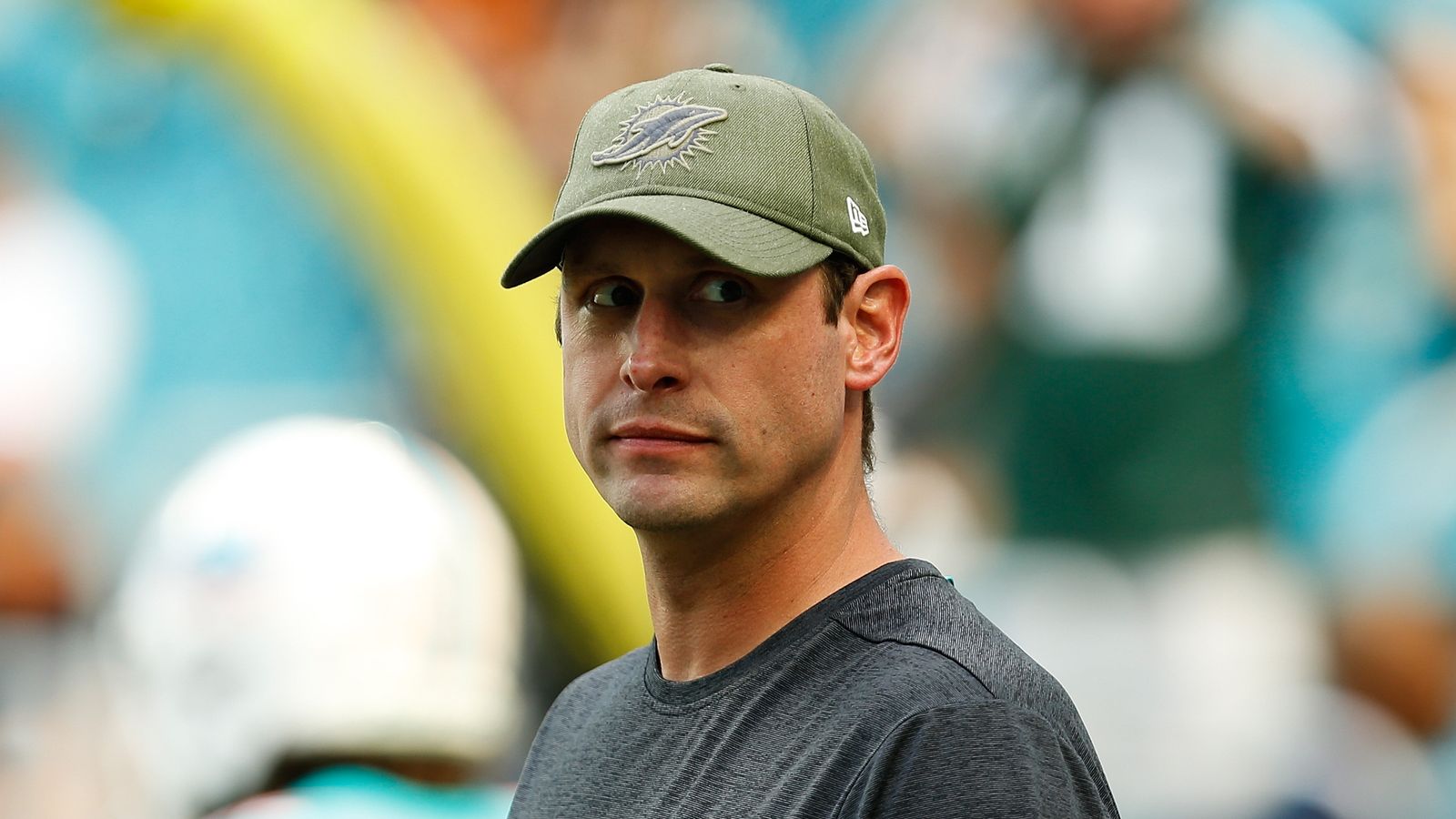
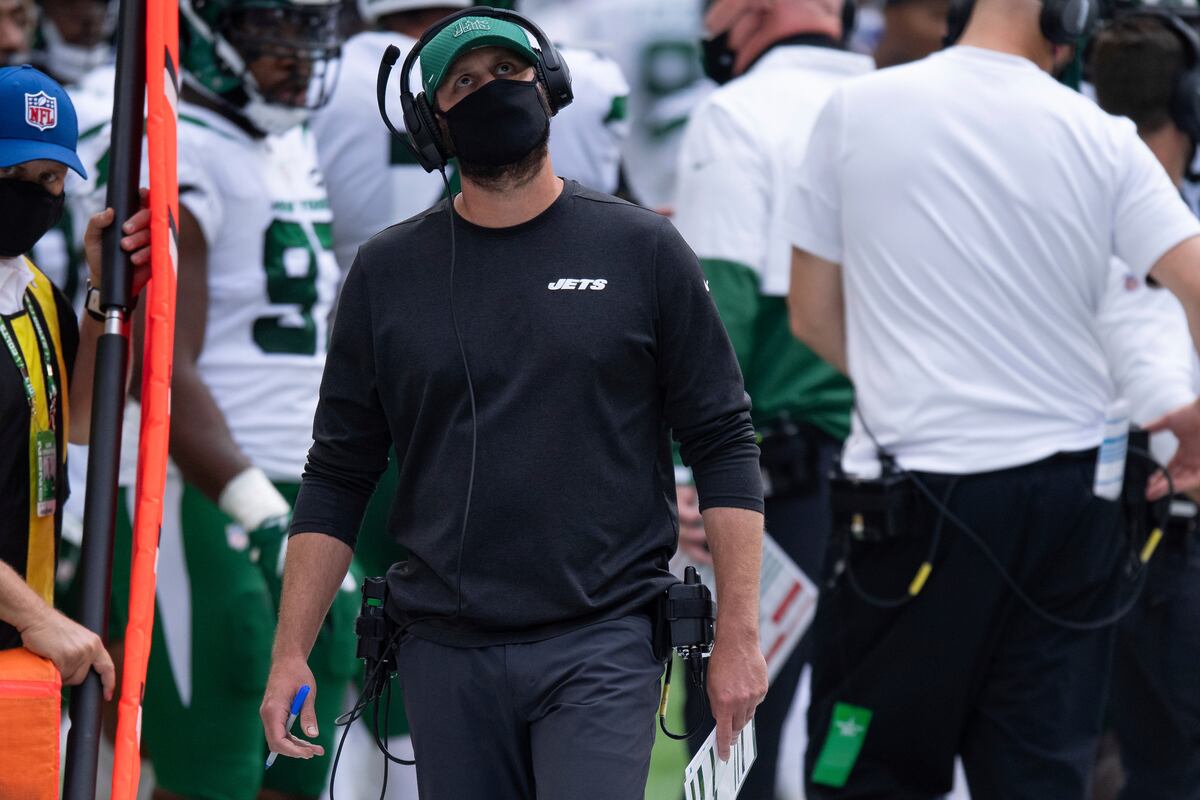
Adam Gase compiled an overall NFL head coaching record of 32 wins and 48 losses (.400 winning percentage) across five regular seasons, along with a 0-1 record in the postseason. His head coaching tenure included three seasons with the Miami Dolphins (23-25) and two seasons with the New York Jets (9-23).
Despite earning a reputation as an offensive genius prior to his head coaching career, Gase’s teams consistently struggled on offense. His tenures were defined by negative point differentials, unsustainable record trends in close games, and public debate over quarterback development. Examining his record requires looking beyond basic win-loss totals to understand how offensive efficiency metrics, roster decisions, and situational execution shaped his head coaching legacy.
The Rise of Adam Gase: From Assistant to "Quarterback Whisperer"
To understand why NFL franchises repeatedly invested in Adam Gase as a head coach, one must examine his swift trajectory through the coaching ranks during the early 2010s. Gase began his coaching career as a graduate assistant under Nick Saban at Louisiana State University before transitioning to the NFL in low-level administrative and offensive assistant roles with the Detroit Lions and San Francisco 49ers.
His profile rose dramatically when he joined the Denver Broncos staff in 2009. After serving as wide receivers coach and quarterbacks coach, Gase was promoted to offensive coordinator in 2013 under head coach John Fox.
The Denver Broncos Era (2013–2014)
During the 2013 NFL season, the Denver Broncos produced the highest-scoring offense in NFL history. Led by future Hall of Fame quarterback Peyton Manning, the Broncos scored 606 points and accumulated 7,317 total offensive yards. Manning set single-season NFL records with 5,477 passing yards and 55 touchdown passes.
While football analysts debated how much credit belonged to Manning's pre-snap processing versus Gase's play-calling structure, NFL front offices viewed Gase as the architect of a modern, fast-tempo system. In 2014, the Broncos offense remained elite, finishing 2nd in points scored (482) and 4th in total yards (6,366).
The Chicago Bears Resurgence (2015)
When John Fox was named head coach of the Chicago Bears in 2015, he brought Gase along as his offensive coordinator. Gase's task was to stabilize veteran quarterback Jay Cutler, who had struggled with turnovers and inconsistent decision-making throughout his career.
Under Gase’s direction, Cutler delivered one of the most efficient seasons of his career:
- Passer Rating: Recorded a career-high 92.3 rating.
- Interception Rate: Reduced his interception percentage to 2.3%, throwing only 11 interceptions in 15 games.
- Completion Percentage: Achieved a 64.4% completion rate.
This successful rehabilitation of Cutler cemented Gase’s status as a "quarterback whisperer." In January 2016, the Miami Dolphins hired the 37-year-old Gase as the 12th head coach in franchise history.
The Miami Dolphins Era (2016–2018)
Adam Gase's three-year tenure with the Miami Dolphins yielded an overall regular-season record of 23 wins and 25 losses (.479), accompanied by one playoff appearance.
Adam Gase's Miami Dolphins Head Coaching Record:
- 2016: 10-6 (AFC Wild Card Spot, Lost 30-12 to Steelers)
- 2017: 6-10 (Missed Playoffs)
- 2018: 7-9 (Missed Playoffs)
The 2016 Season: Initial Success and Playoff Berth
Gase’s inaugural season in Miami was his most successful as an NFL head coach. After starting the season 1-4, the Dolphins rallied to win 9 of their final 11 games, finishing with a 10-6 record and securing the franchise's first playoff berth since 2008.
Key factors driving the 2016 success included:
- Running Game Breakthrough: Second-year running back Jay Ajayi delivered back-to-back 200-yard rushing games in Weeks 6 and 7, serving as the focal point of the offense.
- Situational Execution: Miami excelled in tight games, going 7-2 in contests decided by seven points or fewer.
- Quarterback Stabilization: Starting quarterback Ryan Tannehill completed 67.1% of his passes for 2,995 yards, 19 touchdowns, and 12 interceptions before suffering a knee injury in Week 14.
In the AFC Wild Card round against the Pittsburgh Steelers, Miami was forced to start backup quarterback Matt Moore due to Tannehill’s injury. The Dolphins lost 30-12, bringing an end to Gase’s lone postseason appearance as head coach.
The 2017–2018 Seasons: Injury Setbacks and Roster Friction
The momentum of 2016 faded quickly over the next two seasons due to quarterback injuries, declining offensive metrics, and growing internal friction.
- 2017 (6-10): Tannehill re-injured his ACL during training camp, requiring season-ending surgery. Gase convinced retired veteran Jay Cutler to sign a one-year deal. The Dolphins offense regressed severely, ranking 25th in total yards (307.7 YPG) and 28th in points scored (17.6 PPG).
- 2018 (7-9): Tannehill returned but missed five games due to a shoulder injury. Despite memorable moments like the "Miracle in Miami" victory over the New England Patriots, the team's underlying metrics continued to plunge. The Dolphins ranked 31st in total offense (289.9 YPG) and 26th in scoring (19.9 PPG).
Compounding on-field struggles were high-profile disputes with star players. Key contributors including Jay Ajayi, Jarvis Landry, Mike Pouncey, and Ndamukong Suh were either traded, released, or allowed to walk in free agency amid reports of strained relationships with the head coach. On December 31, 2018, Miami owner Stephen Ross dismissed Gase.
The New York Jets Era (2019–2020)
Despite his firing in Miami, Gase did not remain unemployed long. In January 2019, the New York Jets hired Gase as head coach, primarily to oversee the development of second-year quarterback Sam Darnold, whom the team had selected 3rd overall in the 2018 NFL Draft.
Gase’s two-year tenure in New York proved disastrous, yielding a 9-23 record (.281) and historical offensive futility.
Adam Gase's New York Jets Head Coaching Record:
- 2019: 7-9 (Finished 3rd in AFC East, Missed Playoffs)
- 2020: 2-14 (Finished 4th in AFC East, Missed Playoffs)
The 2019 Season: False Hope and Late Rallies
The Jets' 2019 campaign opened with severe adversity when Sam Darnold was diagnosed with infectious mononucleosis after Week 1, forcing him to miss three games. Under backup quarterbacks Trevor Siemian and Luke Falk, the offense stumbled to an 0-4 start.
After Darnold returned, New York showed late-season resilience, winning 6 of its final 8 games to end with a 7-9 record. However, the record masked deep structural offensive weaknesses:
- The Jets ranked 32nd (last) in total offensive yards per game (273.0).
- The team ranked 31st in scoring offense (17.3 PPG).
- The late-season surge was primarily fueled by a strong defense coordinated by Gregg Williams, rather than Gase's offensive system.
The 2020 Season: Near-Historical Collapse
The 2020 season marked one of the worst campaigns in New York Jets franchise history. Opening the season with 13 consecutive losses, the team flirted with an 0-16 winless record before securing back-to-back upset victories over the Los Angeles Rams and Cleveland Browns in Weeks 15 and 16.
The 2020 Jets offense finished dead last across almost every major statistical category:
- Total Offense: 32nd (279.9 YPG)
- Scoring Offense: 32nd (15.2 PPG)
- Pass Offense: 31st (174.8 YPG)
- Third-Down Efficiency: 32nd (31.2%)
Darnold struggled significantly under Gase's tutelage in 2020, throwing 9 touchdowns against 11 interceptions with a 72.7 passer rating. Following a 2-14 finish, the Jets officially fired Gase on January 3, 2021.
Complete Year-by-Year Head Coaching Record Table
The following table synthesizes Adam Gase's complete record, detailing win-loss records, team point differentials, national offensive rankings, and postseason results across his five seasons as an NFL head coach.
| Season | Franchise | Regular Record | Win % | Point Diff. | Offense Rank (Yards) | Offense Rank (Points) | Postseason Result |
|---|---|---|---|---|---|---|---|
| 2016 | Miami Dolphins | 10-6 | .625 | -17 | 24th (332.9 YPG) | 17th (22.7 PPG) | Lost AFC Wild Card (0-1) |
| 2017 | Miami Dolphins | 6-10 | .375 | -115 | 25th (307.7 YPG) | 28th (17.6 PPG) | Missed Playoffs |
| 2018 | Miami Dolphins | 7-9 | .438 | -114 | 31st (289.9 YPG) | 26th (19.9 PPG) | Missed Playoffs |
| 2019 | New York Jets | 7-9 | .438 | -83 | 32nd (273.0 YPG) | 31st (17.3 PPG) | Missed Playoffs |
| 2020 | New York Jets | 2-14 | .125 | -214 | 32nd (279.9 YPG) | 32nd (15.2 PPG) | Missed Playoffs |
| Total | Career Summary | 32-48 | .400 | -543 | N/A | N/A | 0-1 (.000) |
Deeper Analysis: Why the Record Tells Only Part of the Story
Evaluating Adam Gase's head coaching career requires analyzing specific underlying statistical patterns that explain why his teams consistently underperformed relative to expectations.
Key Factors Behind Adam Gase's Record:
- Cumulative Point Differential (-543 over 5 Yrs)
- One-Score Game Luck Regression (7-2 in 2016)
- Chronic Offense Ranking Bottom-8 (2016–2020)
- Post-Gase Quarterback Resurgences (Tannehill, etc)
1. Cumulative Point Differential Deficit
Point differential—the total number of points scored by a team minus the points allowed—is one of the most reliable indicators of a team's true structural quality. Over five head coaching seasons, Gase’s teams surrendered 543 more points than they scored.
Even during his winning season with the 2016 Dolphins (10-6), Miami finished with a -17 point differential. This metric demonstrated that when Gase's teams won, they did so narrowly, but when they lost, they frequently suffered double-digit blowout defeats.
2. Regression in One-Score Games
A primary reason for Gase's early success in Miami was an extraordinary, unsustainable record in close games. In 2016, Miami went 7-2 in games decided by 7 points or less. Advanced analytics show that performance in close games varies widely from year to year. When Miami's luck in one-score games normalized in 2017 and 2018, the team's record dropped to 6-10 and 7-9, reflecting their true underlying roster caliber.
3. Systematic Offensive Underperformance
The most glaring contradiction of Gase’s head coaching career was the persistent failure of his offenses. Hired primarily as an offensive strategist, his teams finished in the bottom eight of total offensive yardage in all five of his seasons as head coach:
- 2016: 24th
- 2017: 25th
- 2018: 31st
- 2019: 32nd
- 2020: 32nd
Gase’s offensive system relied heavily on quick-release short passes, wide receiver screens, and run plays on early downs designed to set up manageable third-down scenarios. However, opposing defenses quickly adapted to the predictable play-calling. Without Peyton Manning audibling at the line of scrimmage, Gase's schemes struggled to produce explosive plays or sustain long scoring drives, putting intense pressure on his defensive units.
4. Post-Gase Quarterback Trajectories
A significant factor in the evaluation of Gase’s record is how quarterbacks performed after leaving his system.
- Ryan Tannehill: After being traded from Gase’s Dolphins to the Tennessee Titans in 2019, Tannehill experienced a career rebirth. He led the NFL in passer rating (117.5) in 2019, earned a Pro Bowl selection, won Comeback Player of the Year, and guided Tennessee to the AFC Championship Game.
- Sam Darnold: Struggled with regressing footwork and mechanics under Gase in New York, famously caught on microphone stating he was "seeing ghosts" during a 33-0 loss to the Patriots in 2019. Darnold later established himself as a capable NFL starter in different offensive systems, such as with the Minnesota Vikings.
These post-Gase career revivals led analysts to conclude that Gase’s offensive systems held back young quarterbacks rather than developing them.
Lessons from the Adam Gase Era for NFL Front Offices
The trajectory of Adam Gase's head coaching career provided valuable takeaways that influenced how NFL owners and general managers approach executive hires:
Distinguishing Assistant Execution from System Ownership
Gase’s initial success in Denver was heavily tied to Peyton Manning's unique ability to read defenses and change plays dynamically. Front offices now apply greater scrutiny to offensive coordinators who work alongside elite, veteran quarterbacks, seeking to isolate a coordinator's true scheme innovation from a Hall of Fame player's execution.
Roster Management and Organizational Culture
In both Miami and New York, Gase clashed with key personnel and front office members. His tenure emphasized that tactical knowledge alone cannot substitute for effective communication, adaptability, and locker room leadership.
The Fallacy of the "Offensive Genius" Hiring Trend
For years, NFL teams favored hiring young offensive play-callers over defensive or special teams coordinators. Gase’s persistent bottom-tier offensive rankings highlighted that success as a play-caller does not automatically translate into successful overall team management.
Frequently Asked Questions
What was Adam Gase's final head coaching record in the NFL?
Adam Gase accumulated a regular-season head coaching record of 32-48 (.400 winning percentage) across five seasons. Including his single playoff game, his overall record stands at 32-49 (.395).
Did Adam Gase ever win a playoff game as an NFL head coach?
No. Adam Gase was 0-1 in the postseason. His only playoff appearance came during the 2016 season with the Miami Dolphins, where they lost 30-12 to the Pittsburgh Steelers in the AFC Wild Card round.
Which teams did Adam Gase manage as a head coach?
Adam Gase served as head coach for two NFL franchises:
- Miami Dolphins (2016–2018): 23-25 regular season record.
- New York Jets (2019–2020): 9-23 regular season record.
Why was Adam Gase hired by the New York Jets after being fired by Miami?
The New York Jets hired Gase in 2019 primarily because of his background as an offensive coordinator and his reputation as a quarterback developer. Jets leadership wanted an offensive-minded coach to mentor quarterback Sam Darnold, who had been drafted third overall in 2018.
What was Adam Gase's record against division opponents?
During his five seasons in the AFC East, Gase posted a 12-18 record against division opponents (Bills, Patriots, and Jets/Dolphins). While he earned occasional upset wins—such as the 2018 "Miracle in Miami" against New England—his teams struggled to maintain consistent competitiveness against division rivals.
Final Summary
Adam Gase's NFL head coaching record of 32-48 reflects a career that began with high expectations but ultimately was hampered by scheme inflexibility, negative point differentials, and bottom-tier offensive production. While Gase achieved success as an offensive coordinator alongside Peyton Manning in Denver and Jay Cutler in Chicago, his five-year tenure as a head coach in Miami and New York showed that success as a coordinator does not guarantee effective head coaching performance.