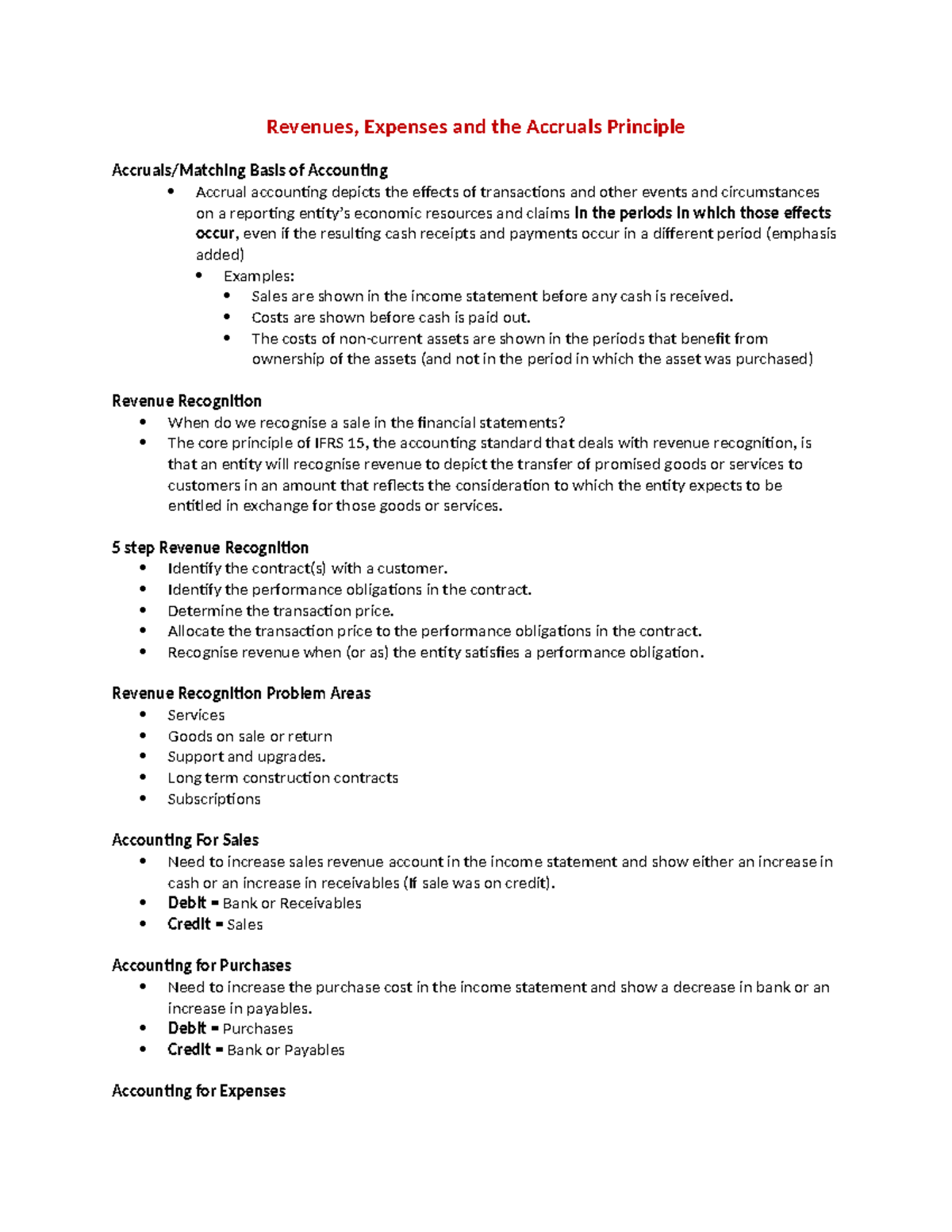
Accruals are the fundamental accounting mechanism used to record financial transactions in the period they occur, rather than when cash changes hands. By aligning revenue and expenses with the activities that generate them, accrual accounting provides a precise view of a company’s economic performance, allowing stakeholders to see true profitability independent of payment delays or prepayments.
The Core Concept of Accrual Accounting
In the context of financial reporting, the "accrual basis" of accounting stands in direct contrast to the "cash basis." While cash accounting records transactions only when money physically enters or leaves a bank account, accrual accounting is governed by the revenue recognition principle and the matching principle.
The revenue recognition principle dictates that revenue must be recorded when it is earned, regardless of whether the customer has paid. Conversely, the matching principle mandates that expenses should be recognized in the same period as the related revenue. This synchronization is critical for businesses operating in 2026, as it prevents the distortion of financial statements that would otherwise occur if a large project were completed in one month but paid for months later.
Why Accruals Matter for Financial Health
For investors, creditors, and management, the timing of revenue and expenses is the primary indicator of a firm’s operational stability. If a business only reported cash flows, its financial reports would be volatile. For example, a construction company might show a massive loss in a month where it pays for significant materials, followed by a massive profit the following month when a client pays a final invoice.
Accruals smooth out these inconsistencies. By spreading the impact of transactions across the periods in which value is actually created, accrual-based financial statements—such as the income statement and balance sheet—offer a reliable assessment of a company’s long-term sustainability. Without accruals, it would be impossible to perform accurate trend analysis or compare the financial health of different companies across an industry.
Distinguishing Accrued Revenue from Accrued Expenses
Accruals fall into two primary categories based on the nature of the transaction. Understanding the distinction is essential for interpreting a company's balance sheet, where these items appear as assets or liabilities until they are settled.
Accrued Revenue (Accrued Assets)
Accrued revenue occurs when a company provides a service or delivers goods to a customer, but has not yet issued an invoice or received payment. In this scenario, the revenue is "earned" because the performance obligation has been satisfied.
- Example: A software consultancy completes a project in November but does not send the invoice until December. They must record the revenue in November to reflect the work performed.
Accrued Expenses (Accrued Liabilities)
Accrued expenses are costs that have been incurred by the business but have not yet been paid or recorded through a standard accounts payable invoice. These are obligations that the company knows it must satisfy.
- Example: An employee works the final week of the fiscal year, but the payroll cycle falls into the first week of the new year. The company must record an accrued expense for those wages in the current period to accurately reflect the cost of labor utilized to generate revenue.
Table: Comparison of Cash Basis vs. Accrual Basis Accounting
| Feature | Cash Basis Accounting | Accrual Basis Accounting |
|---|---|---|
| Revenue Recognition | When cash is received | When revenue is earned |
| Expense Recognition | When cash is paid | When the expense is incurred |
| Financial Accuracy | Simple but potentially misleading | Comprehensive and high-fidelity |
| Primary Utility | Small businesses with no inventory | Corporations and standard tax reporting |
| Reporting Complexity | Low | High |
Regulatory and Compliance Context
In many jurisdictions, specifically under the Generally Accepted Accounting Principles (GAAP) in the United States and the International Financial Reporting Standards (IFRS) used globally, large organizations are mandated to use the accrual method. The 2026 regulatory environment continues to emphasize transparency, meaning that accrual accounting is not merely a choice for many firms but a requirement for maintaining legal compliance.
Auditors examine accrual accounts—often referred to as "accruals and deferrals"—with high scrutiny. They look for evidence that revenue has truly been earned and that expenses are accurately estimated. If a company overestimates its accrued revenue, it could artificially inflate its profit margins, leading to misleading disclosures for shareholders.
Common Challenges and Adjusting Entries
The primary challenge in managing accruals is the necessity of "adjusting entries." At the end of each accounting period, accountants must identify transactions that have not yet been processed through the formal billing system. This requires a deep understanding of operational workflows, such as checking time-tracking logs for labor costs or shipping manifests for completed deliveries.
Common mistakes in managing accruals include:
- Over-accrual: Estimating an expense higher than the final invoice, which necessitates a correction in the subsequent period.
- Timing Errors: Recording an accrual in the wrong fiscal quarter or year, which can trigger tax complications.
- Lack of Documentation: Failing to keep adequate records justifying why a specific accrual was made, which can lead to audit failures.
The Role of Automation in 2026
By 2026, enterprise resource planning (ERP) systems have significantly reduced the manual burden of managing accruals. Modern platforms automatically trigger accrual entries based on project completion milestones or recurring service contracts. However, technology does not remove the need for human oversight. Finance managers must still review these automated entries to ensure they align with actual business performance and that no "off-book" liabilities are omitted.
Frequently Asked Questions
Does accrual accounting change the actual amount of cash a company has? No. Accrual accounting changes only the timing of when revenue and expenses are recognized on financial statements. The actual cash balance remains the same regardless of which method is used, but accruals provide a more accurate picture of the business’s performance during a specific interval.
Why is an accrued expense recorded as a liability? An accrued expense is a liability because it represents a debt the company owes for services or products it has already received. Since the obligation to pay exists, it must appear on the balance sheet as an amount owed, even if the formal invoice has not yet been processed.
What is the difference between an accrual and a deferral? An accrual is for revenue or expenses that have occurred but have not yet been recorded in the cash ledgers. A deferral, such as "prepaid expenses" or "unearned revenue," is for cash that has already been exchanged, but the associated revenue or expense has not yet been earned or incurred.
Can a business switch between cash and accrual accounting? While possible, switching between methods is complex and often requires approval from tax authorities. It is generally recommended to stick to one consistent method to ensure that financial comparisons over time remain valid.
What happens if an accrual estimate is wrong? If an estimate is found to be inaccurate when the actual invoice arrives, an adjusting entry is made in the next period to correct the difference. While small discrepancies are common, large or consistent errors can lead to questions from auditors or investors regarding the internal controls of the finance department.
Practical Next Steps
If you are responsible for financial oversight, start by conducting a monthly audit of your "accruals schedule." Ensure that every accrued item is linked to a verifiable business event, such as a signed contract, a shipping confirmation, or a time-tracking report. If your business relies on manual spreadsheets for these entries, prioritize transitioning to an automated accounting system to reduce human error and improve the reliability of your fiscal reporting. Consult with a certified public accountant (CPA) to ensure your specific recognition practices align with the latest 2026 standards applicable to your industry and jurisdiction.