Accredited online nursing programs are generally worth the investment for students who require flexibility while maintaining the same licensure eligibility and clinical standard as traditional students. The value depends entirely on the program's accreditation status, the student’s self-discipline, and the local requirements for supervised clinical rotations, which must be completed regardless of the delivery format.
The Foundation of Value: Understanding Accreditation
The primary determinant of an online nursing program’s worth is not its delivery method, but its accreditation. In the United States, nursing education is regulated by rigorous standards to ensure that graduates are prepared for the complexities of patient care. Accreditation acts as a seal of approval, signifying that a program has undergone a comprehensive review by a third-party agency recognized by the U.S. Department of Education or the Council for Higher Education Accreditation (CHEA).
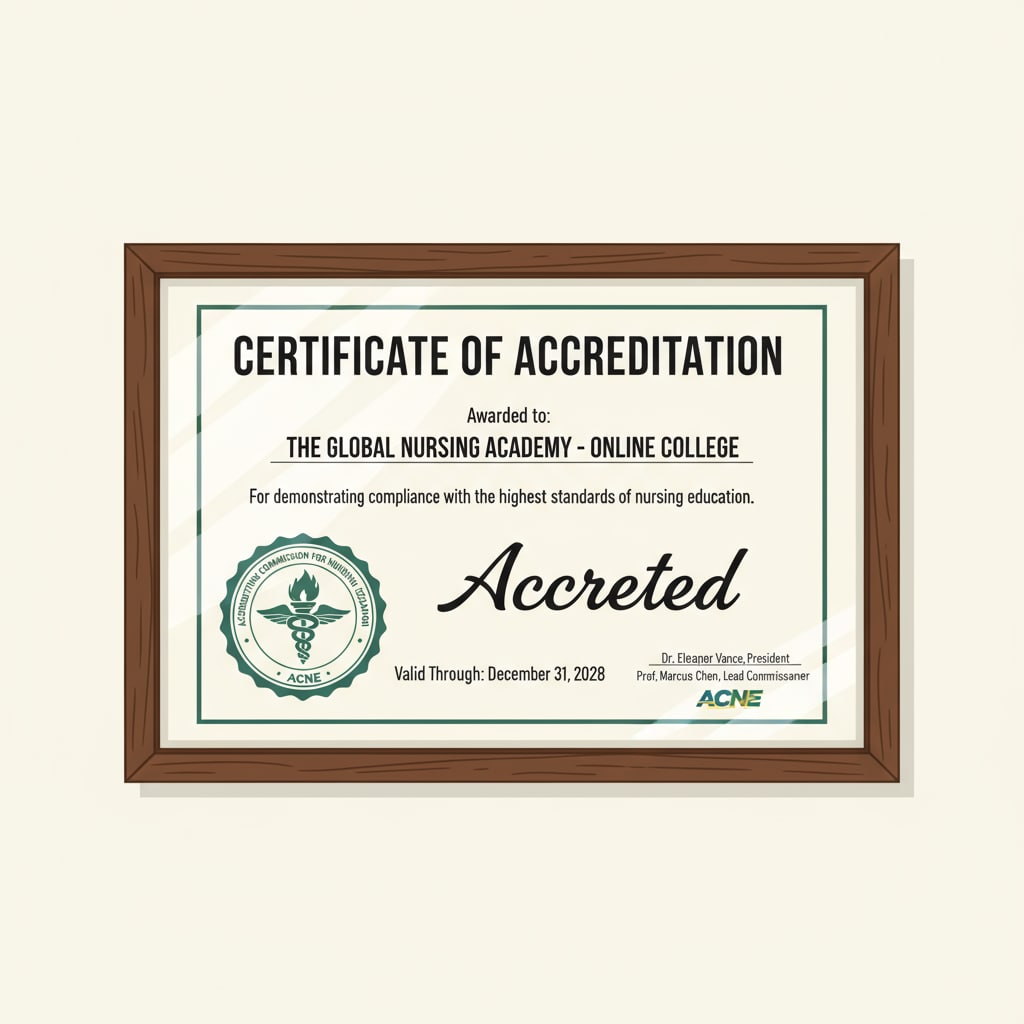
For nursing specifically, you should look for programmatic accreditation from the Commission on Collegiate Nursing Education (CCNE) or the Accreditation Commission for Education in Nursing (ACEN). These organizations evaluate the curriculum, faculty qualifications, clinical partnerships, and student outcomes. If a program lacks this accreditation, you may encounter significant hurdles when attempting to sit for the National Council Licensure Examination (NCLEX), applying for advanced degrees, or securing employment at magnet-status hospitals. Therefore, the "worth" of an online program is binary: if it is accredited, it holds equal weight to a campus-based degree in the eyes of licensing boards and employers.
Comparing Traditional and Online Educational Delivery
The transition to online nursing education does not mean that the core competencies—such as pathophysiology, pharmacology, and ethics—are watered down. Instead, the delivery mechanism changes. Online programs typically utilize asynchronous learning, allowing students to access lectures and materials on their own schedules. This is the primary driver of value for working professionals or those with family obligations.
However, a critical distinction exists between didactic instruction and clinical training. Nursing is a practice-based profession. No online program can legally or ethically replace the physical requirement of clinical hours. Accredited online nursing programs manage this by securing clinical placements in the student's local area. Before enrolling, it is essential to determine who is responsible for securing these sites: the student or the institution. Programs that assist with clinical placement coordination are generally considered more "worth it" than those that place the burden of finding preceptors and sites entirely on the student.
Financial Considerations and Return on Investment (ROI)
The financial value of an online nursing degree involves a comparison of tuition, fees, and opportunity costs. Many online programs offer lower overhead costs compared to residential universities, as they do not require students to pay for campus housing, meal plans, or physical facility maintenance.
However, you must be wary of "for-profit" institutions that may charge exorbitant tuition rates despite having regional accreditation. The ROI for an online nursing degree is calculated by comparing the total cost of the program against the increase in earning potential and job security that a BSN or MSN provides. In the current 2026 job market, the demand for nurses with at least a Bachelor of Science in Nursing (BSN) remains high. Consequently, an online program that allows you to continue working while you study effectively eliminates the "opportunity cost" of leaving your current job to attend classes full-time.
Comparison of Program Characteristics
| Feature | Accredited Online Program | Non-Accredited Program |
|---|---|---|
| Licensure Eligibility | Guaranteed (if state-approved) | Uncertain / Often ineligible |
| Employer Recognition | High (Industry standard) | Low (Often screened out) |
| Clinical Placements | Institutional support provided | Usually student-led (difficult) |
| Transfer Credits | Generally accepted by other schools | Rarely accepted |
| Financial Aid | Federal aid usually available | Rarely eligible for federal aid |
The Human Element: Discipline and Time Management
One of the most frequently overlooked factors in the "worth" of online education is the requirement for autonomy. Online nursing programs require significant self-discipline. Unlike a physical classroom, where an instructor provides face-to-face cues and deadlines, the online format requires you to manage your own pacing.
If you thrive in a highly structured, social environment, you might find that the lack of constant peer and faculty interaction diminishes your learning experience. However, for those who are self-starters, the flexibility of studying in the evening or on weekends often results in a higher quality of life and less burnout during the rigors of nursing school. Before enrolling, conduct a self-assessment: can you reliably meet deadlines without a professor reminding you in person? If the answer is yes, the flexibility of the online model will significantly increase the program's value for you.
Clinical Rotations: The Practical Reality
Perhaps the most crucial aspect of the online nursing experience is the clinical rotation. Whether you are in an online RN-to-BSN program or an accelerated BSN (ABSN) program, you will spend a significant amount of time in actual hospital or clinic settings. This is non-negotiable.
The value of an online program is often dictated by the quality of its clinical network. A program that has long-standing partnerships with local healthcare systems in your area is superior to one that requires you to cold-call facilities to find your own preceptors. When evaluating a program, ask specifically about their clinical placement team and their success rate in placing students within a reasonable driving distance of your home. If a program cannot guarantee clinical support, the risk of failing to graduate on time increases, which immediately lowers the ROI of the degree.
Identifying Program Red Flags
Not all online programs are created equal. Even if a program claims to be accredited, you must verify the type of accreditation. Some institutions boast "national accreditation" but lack the "regional" or "programmatic" accreditation that hospitals and graduate schools require.
Avoid programs that:
- Promise accelerated timelines that ignore state board requirements: Every state has a minimum number of clinical hours required for licensure. If a program promises to fast-track your degree by skipping these, it is a major red flag.
- Lack clinical placement support: As mentioned, if you are left entirely to your own devices to find a mentor, you may struggle to complete the program.
- Have low NCLEX pass rates: State Boards of Nursing publish the NCLEX pass rates for all approved programs. A program with a pass rate consistently below the national average is not worth your time or money, regardless of how convenient the online platform is.
Steps to Verify and Select the Right Program
If you have decided that an online nursing program is the right path for your career, follow these steps to ensure you choose a high-value institution:
- Check the Board of Nursing (BON): Visit the website of your state’s Board of Nursing. They maintain a list of pre-licensure programs that are approved to operate in that state. If your online program is based in another state, ensure it is authorized to offer clinical rotations in yours.
- Verify Programmatic Accreditation: Go to the CCNE or ACEN search portals and confirm the program is listed. Do not rely solely on the school’s website.
- Interview Current Students or Alumni: Reach out to graduates on professional networking sites. Ask specifically about the quality of the online platform and the support they received for clinical placements.
- Analyze Total Cost: Calculate the "all-in" price, including technology fees, clinical lab fees, and travel costs for mandatory on-campus residencies, if any exist.
Frequently Asked Questions (FAQ)
Do employers look down on online nursing degrees? Generally, no. As of 2026, most healthcare employers prioritize whether a candidate graduated from an accredited institution and passed the NCLEX. Because online programs utilize the same clinical requirements as traditional programs, your diploma will look exactly the same as one earned on campus.
Can I complete an entire nursing degree from home? No. While the theoretical or "didactic" portion of the curriculum is delivered online, you must complete in-person clinical rotations to fulfill the requirements for licensure. You should expect to be in a hospital or clinic setting for a significant portion of your education.
Is it harder to get into an accredited online program? Yes, often it is. Because accredited online programs must maintain strict standards, they are usually just as competitive as traditional brick-and-mortar nursing schools. They often require a solid GPA, prerequisites in the hard sciences (like anatomy and microbiology), and sometimes an entrance exam.
How do I know if an online nursing program is legitimate? Check for accreditation from the CCNE or ACEN, and verify that the program is approved by the State Board of Nursing in the state where you intend to practice. If a school cannot provide these credentials, it is likely not a legitimate or valuable investment for your nursing career.
Does the online format affect my ability to get a job? The online format does not affect your ability to get a job provided you have obtained your license. In fact, many employers view online nursing students as highly motivated and disciplined, as the format requires significant time-management skills.
Final Recommendation
Accredited online nursing programs are absolutely worth it, provided you do the necessary due diligence. They offer a legitimate, highly effective pathway to a nursing career or an advanced degree without requiring you to sacrifice your current employment or life commitments. The key to success lies in choosing a program with programmatic accreditation (CCNE/ACEN) and robust, institutionalized clinical placement support. Before you apply, verify the program's status with your state’s Board of Nursing and confirm that the curriculum aligns with your career goals. If these boxes are checked, the flexibility and value provided by the program will likely serve as a significant catalyst for your professional growth.