Accounting for Amazon Fulfillment by Amazon (FBA) in the United States requires managing multi-state sales tax compliance, deciphering complex Amazon settlement reports, and tracking inventory across various fulfillment centers. Sellers must reconcile platform fees, monitor cost of goods sold, and maintain accurate financial records to ensure profitability and compliance with US tax laws.
Operating an Amazon FBA business in the United States opens doors to millions of active buyers, but it also introduces a layer of financial complexity that standard retail accounting methods cannot handle. Unlike traditional brick-and-mortar storefronts or even simple e-commerce websites, Amazon acts as a marketplace facilitator, logistics provider, and payment processor all at once. This multi-faceted role creates distinct bookkeeping challenges, particularly regarding fee structures, inventory management, and tax compliance across multiple jurisdictions. Establishing a robust accounting system from day one prevents costly errors, simplifies tax preparation, and provides the clear financial visibility required to scale an e-commerce brand successfully.
Understanding the Amazon FBA Ecosystem and Financial Data
To master accounting for Amazon FBA, you must first understand how money moves through your seller account. Amazon does not pay you immediately when a customer buys your product. Instead, transactions accumulate over a two-week settlement period, after which Amazon disburses your net earnings—minus a myriad of fees—directly to your bank account.
The Anatomy of an Amazon Settlement Report
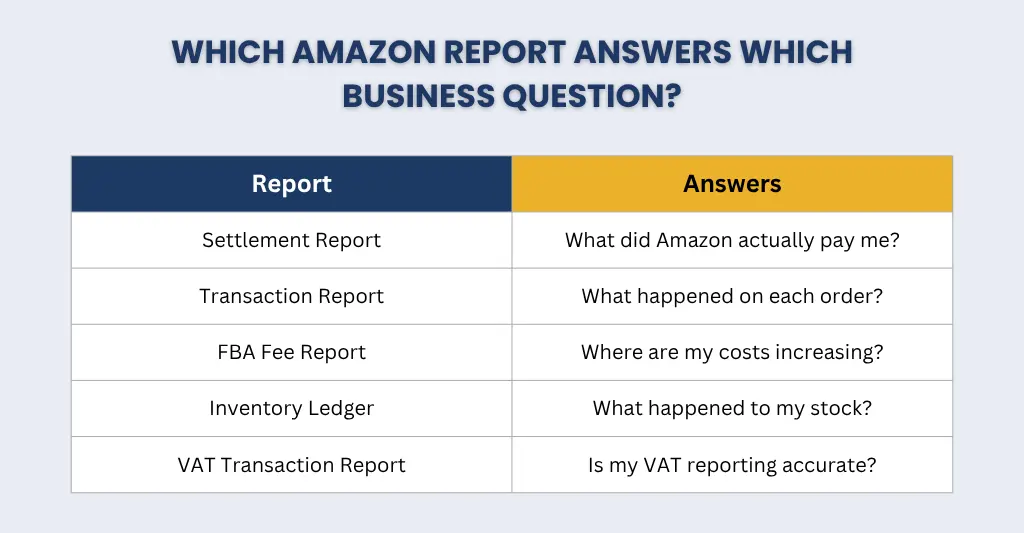
The settlement report is the most critical document in Amazon accounting. It details every financial event that occurred during a specific payout cycle. However, reading a settlement report can feel overwhelming because it aggregates numerous transaction types into a single ledger:
- Product Charges: The gross revenue collected from customers for your items, including product price and gift-wrap charges.
- Promotional Rebates: Discounts or coupons you offered to buyers, which reduce your gross revenue.
- Amazon Fees: Referral fees (percentage of the sale price paid to Amazon), fulfillment fees (picking, packing, and shipping costs), and storage fees (monthly and long-term storage charges for inventory sitting in fulfillment centers).
- Other Fees: Subscription fees for professional seller accounts, advertising costs (Sponsored Products and Sponsored Brands), and removal or disposal fees for unsellable inventory.
- Refunds and Adjustments: Charges and credits associated with customer returns, lost or damaged inventory reimbursements, and SAFE-T claim payouts.
Relying solely on your bank deposits to record revenue is a foundational accounting mistake. When a $10,000 product sale results in a $4,000 bank deposit after fees, advertising, and refunds, recording only the $4,000 deposit distorts your top-line revenue and misrepresents your operational expenses. Professional e-commerce accounting requires recording the gross sales and individual expenses separately using accrual or cash-basis methods.
Sales Tax Compliance and Economic Nexus in the US
Sales tax is one of the most heavily scrutinized areas for US-based and foreign Amazon FBA sellers alike. The legal landscape shifted dramatically following the 2018 Supreme Court ruling in South Dakota v. Wayfair, Inc., which allowed states to enforce sales tax collection based on economic activity rather than physical presence.
Physical Presence vs. Economic Nexus
Before Wayfair, companies only needed to collect sales tax in states where they had a physical presence, such as an office, employee, or warehouse. Because Amazon stores inventory in various fulfillment centers across the country, many sellers inadvertently triggered physical nexus in multiple states just by using FBA.
Today, every state with a general sales tax (except for non-sales-tax states like Oregon, Montana, New Hampshire, and Delaware) has enacted economic nexus laws. Under these rules, you must register, collect, and remit sales tax if your business exceeds a specific threshold in a given state, typically:
- $100,000 in gross or retail sales, or
- 200 separate transactions within the calendar or previous year.
The Role of Marketplace Facilitator Laws
Fortunately, Amazon operates as a marketplace facilitator in all US states that levy a sales tax. This means Amazon is legally responsible for calculating, collecting, and remitting sales tax on your behalf for all transactions originating on the platform within the United States.
However, marketplace facilitator laws do not completely absolve you of sales tax responsibilities:
- State Registrations: Depending on the state, you may still be required to register for a sales tax permit even if Amazon remits the tax for you.
- Exemptions and B2B Sales: Wholesale or tax-exempt sales made through Amazon Business require valid exemption certificates (such as resale certificates) to avoid tax miscalculations.
- Off-Platform Channels: If you sell products through your own Shopify store, Walmart marketplace, or social media channels alongside Amazon, you are entirely responsible for collecting and remitting sales tax for those platforms.
Inventory Management and Cost of Goods Sold (COGS)
Inventory is typically an e-commerce seller's largest asset and its most complex accounting variable. To maintain accurate profit and loss statements, you must correctly track your Cost of Goods Sold (COGS) rather than expensing inventory purchases the moment you pay your manufacturer.
Cash Basis vs. Accrual Accounting for Inventory
Under strict US tax rules (Internal Revenue Service Section 471), businesses that maintain merchandise inventory are generally required to use the accrual method for tax purposes regarding purchases and sales, even if they use the cash method for other business operations.
- Inventory Purchase: When you pay a supplier in China or the US for 1,000 units of a product, that money is not an immediate business expense. It is an asset transfer: cash leaves your bank account, and inventory asset increases on your balance sheet.
- Cost of Goods Sold Recognition: COGS is recognized only when the product is actually sold to a customer. If you buy 1,000 units in December and sell 400 units by December 31, the COGS for your year-end financial statement covers only those 400 units. The remaining 600 units remain on your balance sheet as inventory assets.
Factoring In Landed Cost
Calculating accurate COGS requires determining your total landed cost per unit. Landed cost includes every expense incurred to get the inventory ready for sale and delivered to an Amazon fulfillment center:
- Manufacturer unit cost
- Custom packaging and labeling (such as FNSKU barcodes)
- Freight forwarding, shipping, and drayage fees
- Customs duties, tariffs, and import broker fees
- Inspection services at the factory level
- Inbound shipping from your port of entry or warehouse to Amazon FBA fulfillment centers
Failing to include freight and import tariffs in your unit cost calculation artificially inflates your short-term profit margins and leads to inaccurate tax reporting.
| Expense Category | What It Includes | Accounting Treatment |
|---|---|---|
| Manufacturer Cost | Raw materials, production labor, supplier markup | Capitalized as inventory asset; becomes COGS upon sale |
| Shipping & Logistics | Ocean freight, trucking, air express, import duties | Capitalized into landed cost of inventory |
| Amazon Fees | Referral fees, FBA fulfillment fees, monthly storage | Operating expense recorded in the period incurred |
| Advertising | Amazon Sponsored Products, PPC campaigns, Vine fees | Operating expense (Marketing/Advertising) in the period incurred |
| Software & Services | Repricers, inventory tools, accounting subscriptions | Operating expense (Software/SaaS) in the period incurred |
Choosing the Right Tech Stack for Amazon Accounting
Doing Amazon bookkeeping manually is virtually impossible beyond the very first month of operations. Because a single sale involves dozens of underlying micro-transactions, automated software is mandatory for sustainable growth.
Essential Software Integration Layers
A modern Amazon FBA accounting stack relies on three core layers working in harmony:
- The E-commerce Marketplace: Amazon Seller Central serves as the point of sale and operational hub.
- The Subledger Connector: Specialized e-commerce accounting connectors (such as A2X or Webgility) bridge the gap between Amazon and your general ledger. Instead of pulling raw bank deposits, these tools decode Amazon settlement reports and post clean, summarized journal entries to your accounting software.
- The General Ledger: Cloud-based accounting platforms like QuickBooks Online or Xero serve as the single source of truth for your business finances, housing your balance sheet, profit and loss statement, and cash flow reports.
Why Direct Bank Feeds Fail for Amazon Sellers
Many new sellers attempt to reconcile their Amazon accounts by matching bank deposits in QuickBooks to payouts from Amazon. This approach fails for several reasons:
- Gross vs. Net Discrepancy: You lose visibility into your true gross revenue and total fees.
- Timing Differences: Settlement periods often overlap calendar months. A payout arriving on October 3rd usually covers sales made between September 18th and October 2nd, skewing monthly financial statements.
- Refunds and Reserves: Amazon frequently holds account-level reserves for chargeback protection, meaning your bank deposit does not equal the sales generated during the payout window.
Managing Multi-State Tax Obligations and Franchise Taxes
Beyond sales tax, operating an LLC or corporation in the United States exposes your business to income taxes, state-level franchise taxes, and annual report fees.
State Income Tax and Physical Nexus
While economic nexus governs sales tax, physical nexus generally governs state income tax. If you store inventory in Amazon fulfillment centers located in Texas, California, Florida, or New Jersey, those states may argue that you have a physical presence (inventory ownership within their borders) and require you to file state income tax returns or franchise tax returns.
State laws vary wildly regarding whether storing FBA inventory creates corporate income tax nexus. Some states have specific safe harbor laws (such as Public Law 86-272, though its application to modern digital warehousing remains a subject of ongoing legal debate), while others aggressively pursue out-of-state sellers. Consulting a certified public accountant (CPA) specializing in e-commerce is essential to navigate multi-state tax filings correctly.
US Tax Requirements for Foreign Sellers
If you operate an Amazon FBA business in the US from an international location, your structural requirements differ significantly:
- EIN (Employer Identification Number): You must obtain an EIN from the IRS to open a US bank account and register your business.
- US Business Formation: Many international sellers form a US Limited Liability Company (LLC)—frequently in tax-friendly states like Wyoming or Delaware—to manage liability and streamline banking.
- Forms 5425 / 1120: Non-US resident single-member LLC owners must file informational returns with the IRS, while corporations face separate federal filing obligations.
Common Amazon Accounting Mistakes to Avoid
Avoiding common pitfalls saves time, reduces audit risk, and protects your bottom line.
- Ignoring Inventory Counts: Writing off inventory purchases immediately instead of tracking ending inventory on the balance sheet violates accounting standards and misstates profitability.
- Mixing Personal and Business Finances: Using personal credit cards for inventory purchases or paying personal expenses from your business checking account pierces the corporate veil, destroying your liability protection and creating a bookkeeping nightmare.
- Neglecting FBA Reimbursements: Amazon frequently loses or damages inventory within its fulfillment network. Failing to track and claim reimbursements leaves thousands of dollars on the table and distorts inventory valuation.
- Overlooking Storage Fees: Long-term storage fees and aged inventory surcharges can quietly erode product margins if not monitored monthly.
Frequently Asked Questions About Amazon FBA Accounting
How do I account for Amazon settlement reports in QuickBooks?
Instead of matching bank deposits manually, use an integration tool like A2X or configure automated clearing house rules that ingest settlement reports and post summarized journal entries. These entries break out gross sales, refunds, FBA fees, advertising costs, and merchant fees into their respective accounts, ensuring accurate profit and loss reporting.
Do I need to collect sales tax on Amazon FBA sales in every state?
No. Because Amazon is classified as a marketplace facilitator in all states with a general sales tax, Amazon automatically calculates, collects, and remits sales tax on your behalf for all transactions on the platform. However, you must still monitor your economic nexus thresholds to determine if you need to register for sales tax permits in certain states.
How is Cost of Goods Sold (COGS) calculated for Amazon sellers?
COGS is calculated by taking your beginning inventory value, adding inventory purchases and landed costs (freight, customs, packaging) incurred during the period, and subtracting your ending inventory value. You only record COGS for units that have actually been sold to customers during that accounting period.
Can I use cash-basis accounting for my Amazon FBA business?
While you may use the cash method for general operational expenses, IRS rules generally require businesses that maintain merchandise inventory to use the accrual method for purchases and sales. This ensures that inventory assets and Cost of Goods Sold are matched correctly to the periods in which revenue is earned.
What documents do I need to give my CPA at tax time?
You should provide year-end financial statements (Profit and Loss, Balance Sheet) generated from your accounting software, a year-end inventory valuation report showing ending stock quantities and costs, 1099-K forms issued by Amazon, bank and credit card statements, and records of any off-platform business expenses.
Next Actions for Your Amazon Business
To implement a professional accounting framework for your Amazon FBA business, start by auditing your current bookkeeping setup. If you are relying on bank feeds or manual deposit matching, invest in a dedicated e-commerce subledger tool like A2X and connect it to QuickBooks Online or Xero. Next, perform a complete physical inventory count, calculate your true landed costs per SKU, and establish a monthly reconciliation routine. Finally, schedule a consultation with a qualified CPA who specializes in e-commerce and multi-state taxation to review your corporate structure, sales tax obligations, and year-round tax strategy.