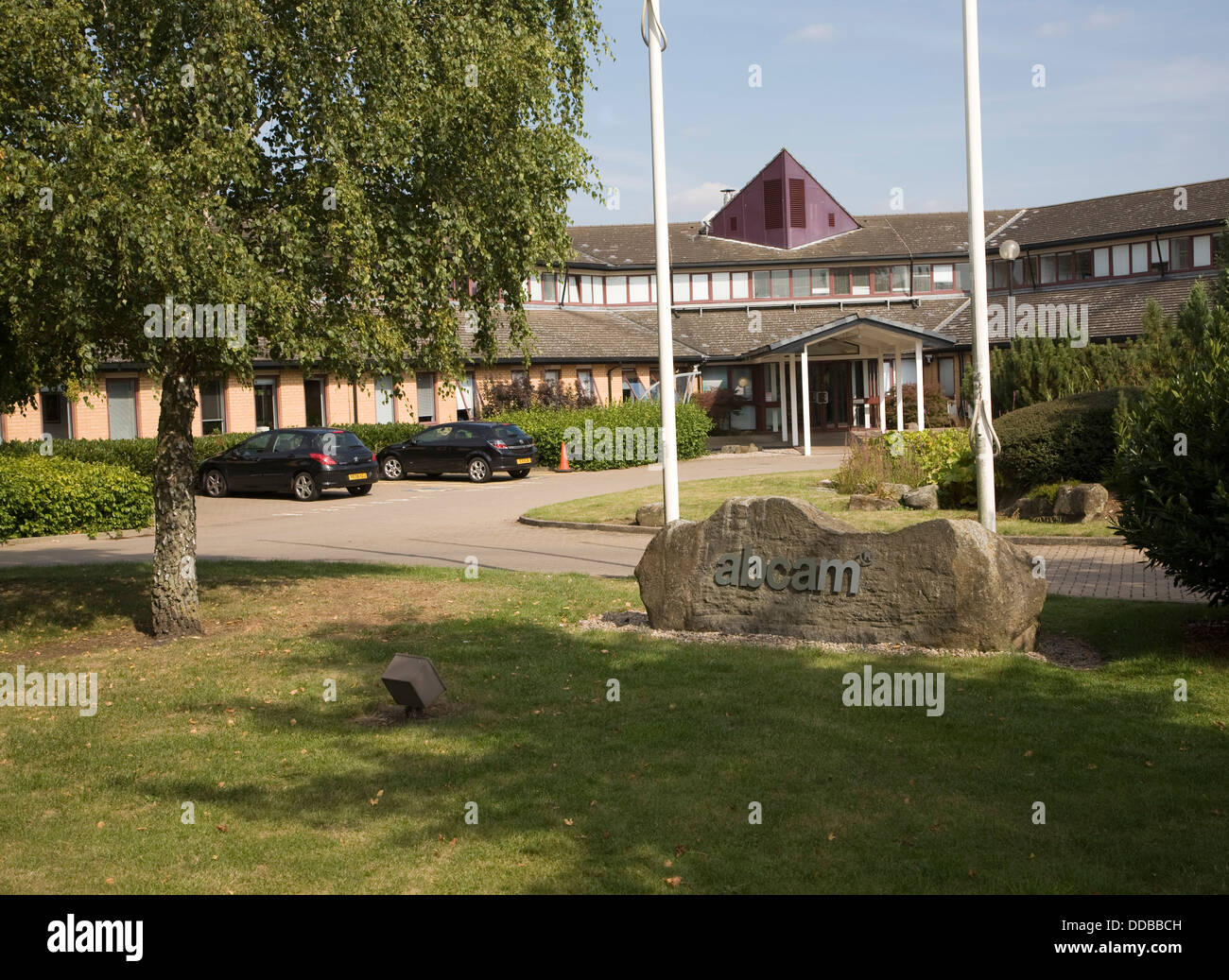
Abcam, a global life sciences company renowned for its extensive catalog of high-quality antibodies and protein research tools, maintains a significant operational and historical presence in Cambridge, United Kingdom. While the company has expanded globally with major hubs in the United States, China, and across Europe, its Cambridge roots remain central to its identity, housing critical functions in research, development, and corporate strategy. For scientists, procurement officers, and industry stakeholders, understanding the scope of Abcam’s Cambridge operations is essential for navigating logistics, quality control, and potential research partnerships.
The Significance of the Cambridge Biotech Ecosystem
Cambridge, often referred to as the "Silicon Fen," is a world-leading cluster for biotechnology and life sciences. Abcam’s presence within this ecosystem—most notably at its Discovery Drive facility on the Cambridge Biomedical Campus—places it at the epicenter of collaborative research. This location is not merely an office; it is a specialized hub designed to facilitate the rapid development of monoclonal antibodies, recombinant proteins, and assay kits that power global academic and clinical research.
The Cambridge Biomedical Campus provides a unique environment where academic institutions, such as the University of Cambridge, coexist with international pharmaceutical companies and innovative biotech firms. For Abcam, being situated here allows for immediate access to high-caliber talent from the university’s scientific departments and proximity to clinicians conducting translational research. This integration is vital for the company’s business model, which relies on staying at the forefront of biological discovery to anticipate the needs of researchers working on complex pathologies, including oncology, neurology, and immunology.
Core Operational Functions in Cambridge
Abcam’s Cambridge facilities are specialized, differing from its global distribution centers. While regional offices handle local logistics, the Cambridge headquarters serves as a nerve center for the following key functions:
- Research and Development (R&D): The primary focus in Cambridge involves the validation and engineering of protein-based tools. Scientists here work on refining recombinant antibody technology, which provides higher batch-to-batch consistency than traditional hybridoma-derived products.
- Strategic Corporate Management: As the central hub for the organization, the Cambridge office manages global investor relations, corporate strategy, and compliance frameworks.
- Scientific Support and Technical Expertise: The Cambridge team provides high-level technical support for complex assays. Researchers encountering issues with antibody specificity or cross-reactivity often engage with the specialized knowledge base developed within these UK-based laboratories.
- Quality Assurance and Regulatory Compliance: Ensuring that research tools meet international standards—such as ISO certifications—is a process heavily governed by teams based in or reporting to the Cambridge regulatory center.
Navigating Procurement and Logistics for UK Researchers
For researchers working within the United Kingdom, particularly those in the Cambridge area, the local operations offer specific advantages regarding supply chain efficiency. Understanding how to interact with the Cambridge supply chain can reduce lead times and improve experimental outcomes.
When sourcing materials, researchers should verify product specifications through the company’s digital catalog. While the products are globally available, specific batch information and validation data are often managed through the centralized systems anchored in Cambridge. Researchers are encouraged to utilize the "Batch-Specific Data" feature on the company website, which provides access to validation images, such as Western blots or immunohistochemistry (IHC) staining, performed in internal labs.
Considerations for UK-Based Procurement
| Feature | Consideration | Impact on Research |
|---|---|---|
| Lead Times | Proximity to local distribution hubs | Reduced shipping duration for critical reagents. |
| Technical Support | Time-zone alignment with GMT | Faster resolution of troubleshooting queries. |
| Custom Services | Direct consultation for bespoke projects | Improved project scope alignment for custom antibodies. |
| Validation Data | Access to in-house R&D reports | Greater confidence in antibody specificity. |
Technical Excellence: The Role of Recombinant Technology
A major driver of Abcam’s reputation is its commitment to recombinant technology. In the Cambridge labs, the focus has shifted significantly toward moving away from traditional animal-based immunization methods toward synthetic biology and recombinant techniques. This evolution is not merely an ethical consideration but a technical imperative.
Recombinant antibodies are produced from sequenced DNA, allowing for a defined, immutable product. In Cambridge, the technical teams focus on the rigorous validation of these clones. The process involves comprehensive testing across multiple applications—Western blotting, flow cytometry, and immunofluorescence—to ensure that the product performs reliably in the user’s hands. For scientists, this means that the "Cambridge-validated" status of a product often carries the highest level of assurance regarding reproducibility, a critical factor in the current landscape of scientific publication requirements.
Engaging with Custom Services
Beyond its off-the-shelf catalog, Abcam operates a custom services division that can be accessed through its UK headquarters. This is particularly relevant for research groups engaged in early-stage drug discovery or specialized diagnostic development.
- Project Scoping: Initial consultations typically cover target identification, requirements for species cross-reactivity, and desired application performance.
- Feasibility Analysis: Experts in Cambridge review the protein sequences and structural characteristics to determine the likelihood of producing a high-affinity antibody.
- Development and Validation: The team utilizes proprietary platforms to generate and test candidates.
- Scaling: Once a lead candidate is identified, the transition from milligram-scale production to larger quantities is managed through standardized, scalable protocols developed in the Cambridge facility.
Troubleshooting and Technical Support
When scientific experiments fail, distinguishing between reagent failure and procedural error is paramount. Because the primary knowledge repository for Abcam’s product line is maintained in the Cambridge facility, the technical support team possesses a deep level of institutional memory regarding product performance.
If you are experiencing unexpected results—such as non-specific background noise, lack of signal, or unexpected band sizes in Western blotting—it is advised to prepare the following documentation before contacting the support team:
- Product Batch Number: Located on the vial or certificate of analysis.
- Experimental Protocol: A detailed list of buffers, incubation times, temperatures, and antibody dilutions.
- Imaging Data: High-resolution scans of blots or microscopy images.
- Positive/Negative Control Data: Evidence that the experimental system is functioning as intended.
Providing this level of detail allows the Cambridge-based technical specialists to cross-reference your results with internal validation data, often identifying minor protocol adjustments that can save weeks of repeat experimentation.
Future Directions in Life Science Innovation
As of 2026, the biotech landscape in Cambridge continues to evolve toward higher automation and predictive biological modeling. Abcam’s role in this shift involves the integration of artificial intelligence into antibody discovery pipelines. By using machine learning to predict how specific sequences will behave in complex biological environments, the R&D teams are accelerating the timeline from sequence to validated product.
Furthermore, the expansion of "digital biology"—where the data accompanying a physical product becomes just as valuable as the product itself—is a major initiative. The Cambridge office is currently centralizing the efforts to ensure that every antibody or assay kit is paired with comprehensive, machine-readable validation data. This ensures that the global research community can integrate Abcam’s tools into automated high-throughput screening platforms with minimal risk.
Frequently Asked Questions
1. Is Abcam’s headquarters still located in Cambridge? Yes, as of 2026, the company maintains a significant corporate and research presence in Cambridge, UK. It serves as a global hub for its strategic operations and advanced R&D initiatives.
2. How can researchers request custom antibody development in the UK? Researchers should reach out via the official website’s "Custom Services" portal. This will initiate a consultation with the regional account management team, who will facilitate discussions with the technical specialists based in the Cambridge facility to assess project feasibility.
3. Does proximity to Cambridge provide faster shipping for UK universities? Yes, the geographic proximity of distribution centers to Cambridge-based research institutions generally results in faster transit times for standard catalog items compared to international shipments, provided the items are in stock at the local facility.
4. Why is the "recombinant" label important for my research? Recombinant antibodies offer superior reproducibility because they are produced from a consistent DNA sequence. Unlike traditional hybridomas, which can drift genetically over time, recombinant clones provide a permanent, defined resource, which is increasingly mandatory for high-impact journal submissions.
5. Where can I find validation data for a specific product? Validation data is available on the product-specific page on the official website. If a specific data set or validation application is missing, you may contact the technical support team, who can verify if additional internal data exists within the Cambridge testing archives.
Recommendation for Researchers
To maximize the value of your interaction with Abcam’s Cambridge-based resources, prioritize the use of recombinant products for any long-term or high-stakes projects. Before beginning your benchwork, always cross-reference your intended application (e.g., IHC-P, WB, ELISA) with the specific data provided on the product page. If you are conducting novel research, engage with the company’s technical support team early in the experimental design phase to ensure that your choice of primary and secondary antibodies is optimized for your specific target protein and sample type. This proactive approach ensures that your research benefits from the precision engineering developed at the company’s Cambridge research hub.