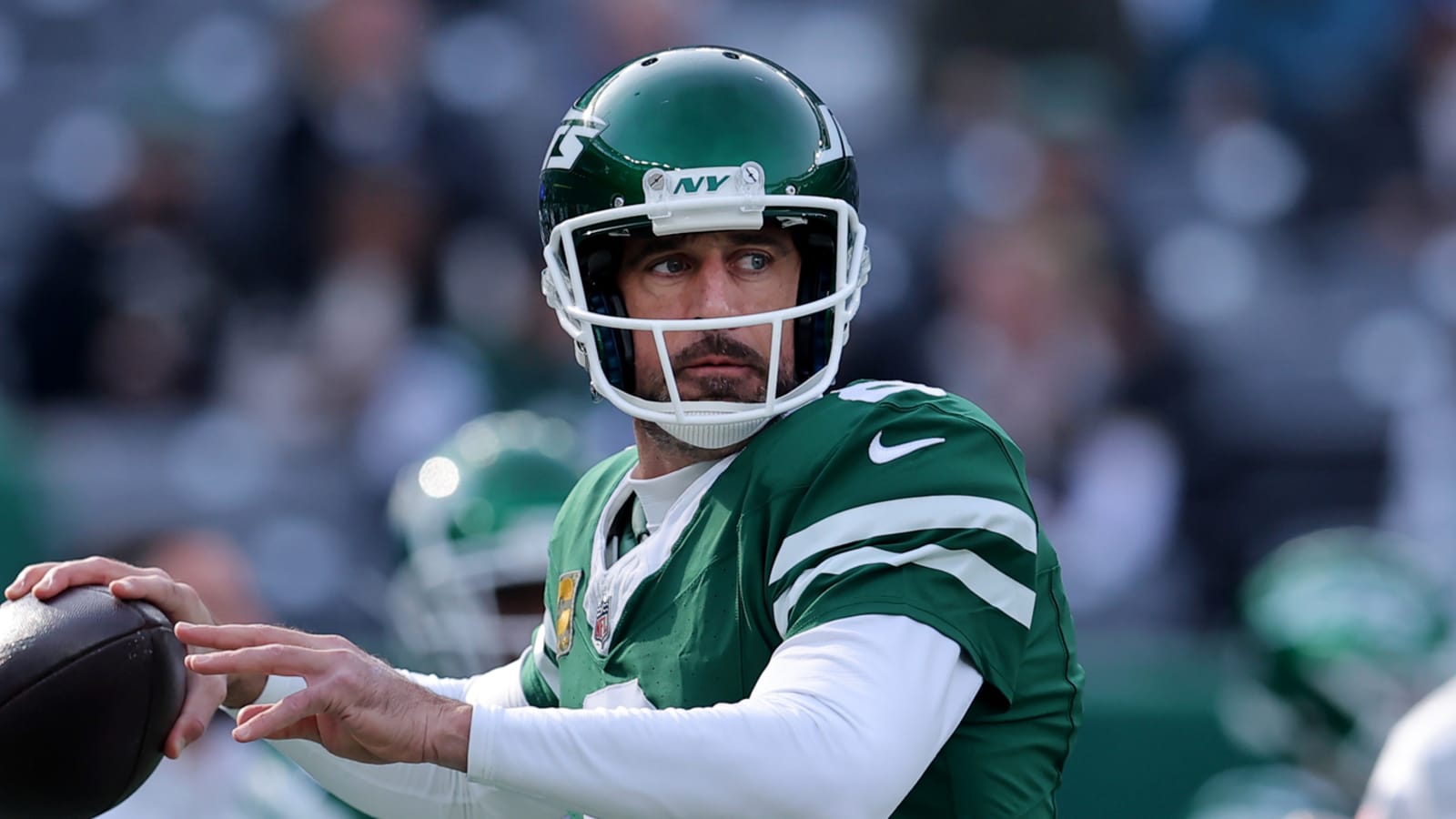
As of the 2026 NFL season, Aaron Rodgers is officially the starting quarterback for the New York Jets. Following his high-profile trade from the Green Bay Packers in 2023, Rodgers has continued to lead the franchise's offensive efforts, navigating the complexities of the AFC East while working toward the team's long-term goal of championship contention.
The Genesis of the New York Jets and Aaron Rodgers Era
The transition of Aaron Rodgers to the New York Jets represents one of the most significant personnel shifts in recent NFL history. After 18 seasons with the Green Bay Packers, where he earned four NFL Most Valuable Player awards and a Super Bowl championship, Rodgers’ arrival in East Rutherford, New Jersey, signaled a massive pivot for a franchise that had been searching for stability at the quarterback position for over a decade.
The trade, finalized in April 2023, involved a complex exchange of draft picks, demonstrating the immense value the Jets placed on securing a veteran of Rodgers' caliber. For the organization, the move was not merely an attempt to secure an elite passer; it was an organizational commitment to an aggressive, win-now philosophy. By bringing in a seasoned leader, the Jets aimed to leverage his extensive knowledge of pro-style offenses and his ability to diagnose defensive coverages at the line of scrimmage.
Since that time, the relationship has evolved through distinct phases: the initial transition, the challenge of team integration, and the focus on offensive output. By 2026, the partnership is defined by deep familiarity with the team's scheme, the coaching staff, and the specific demands of the New York media market, which provides a unique pressure environment for any high-profile athlete.
Tactical Integration and Offensive Identity
Under the leadership of head coach Robert Saleh and the broader offensive staff, the integration of Aaron Rodgers required a fundamental shift in how the Jets prepared for weekly opponents. Rodgers’ style of play—characterized by quick releases, "hard counts" to draw offsides, and the utilization of complex pre-snap motion—demanded a high level of synchronization with his receiving corps and offensive line.
Offensive Philosophy
The Jets' offensive strategy revolves around maximizing the efficiency of the passing game. Rodgers’ ability to extend plays outside the pocket, a hallmark of his career, remains a focal point. Even as he has matured in his career, his decision-making process under pressure has allowed the Jets to emphasize:
- Rhythm Passing: Reducing the time between snap and throw to mitigate pass-rush pressure.
- Audibles at the Line: Leveraging Rodgers’ veteran experience to change plays based on the defensive look.
- Personnel Groupings: Utilizing versatile tight ends and running backs to force mismatches in coverage.
This tactical approach has forced the organization to refine its scouting and roster construction to support a quarterback who demands precision from his teammates. The synergy between the quarterback and the wide receiver room is the most critical component in this ecosystem, as Rodgers relies heavily on "sight adjustments"—where both the receiver and quarterback must recognize the same defensive coverage and adjust their routes instantaneously.
The AFC East Landscape and Competitive Challenges
Playing for the New York Jets places Rodgers directly into the AFC East, widely considered one of the more competitive divisions in professional football. Between 2023 and 2026, the division has featured perennial contenders, requiring the Jets to maintain high standards of performance throughout the 17-game regular season schedule.
Rivalry Dynamics
- Buffalo Bills: A team defined by physical play and explosive offensive output, often serving as the benchmark for divisional success.
- Miami Dolphins: Known for high-speed skill position players and an innovative, motion-heavy offensive scheme.
- New England Patriots: A divisional opponent that historically prioritizes defensive structure and disciplined game management.
Navigating these opponents requires the Jets to maintain a high floor of performance. Injuries along the offensive line and the durability of the receiving corps have been consistent themes discussed by analysts. For the Jets to be successful, they must manage the physical toll of an NFL season while maintaining the high level of execution required to overcome divisional rivals.
Comparative Overview: Quarterback Expectations
When analyzing the impact of Aaron Rodgers on the New York Jets, it is useful to look at the historical context of veteran quarterback acquisitions in the NFL. The following table provides a comparison of key metrics that influence the performance and success of such high-profile transitions.
| Metric | Impact Area | Requirement for Success |
|---|---|---|
| Pass Completion Rate | Offensive Efficiency | High percentage of accurate, low-risk throws. |
| Sack Mitigation | Protection/Safety | Quick decision-making and awareness of pass rushers. |
| Red Zone Efficiency | Scoring Potential | Execution within the 20-yard line and goal line. |
| Pre-Snap Recognition | Tactical Control | Identification of blitz packages and coverage shifts. |
| Injury Resilience | Long-Term Stability | Proper conditioning and offensive line blocking schemes. |
Organizational Impact and Media Environment
The presence of a future Hall of Fame quarterback like Aaron Rodgers has transformed the media profile of the New York Jets. In a city where professional sports teams are under constant scrutiny, the team has had to manage increased national attention, greater ticket demand, and higher expectations from a fan base that has long awaited a return to championship-level contention.
For the player, this environment demands a specific type of leadership. Rodgers has utilized his platform to influence team culture, emphasize mental health and preparation, and mentor younger players on the roster. The "New York experience" is distinct from his time in Green Bay, necessitating a different approach to community engagement and public communication.
Frequently Asked Questions
Does Aaron Rodgers still have a contract with the New York Jets? Yes, Aaron Rodgers is under contract with the New York Jets as of 2026. His contractual status is part of the long-term commitment made by both parties during the initial trade agreement in 2023, which was structured to provide salary cap flexibility for the team while ensuring the veteran quarterback remained the focal point of the franchise.
How does Rodgers’ style of play benefit the Jets' younger players? Rodgers’ approach emphasizes high-level detail, such as body language, route depth, and the nuances of the "hard count." Younger receivers benefit from his tendency to hold them to a rigorous standard, which theoretically prepares them for the high-pressure situations encountered during the postseason.
What are the primary logistical requirements for a trade of this magnitude? An NFL trade involving a franchise quarterback requires comprehensive negotiation regarding salary cap allocation, the transfer of signing bonuses, and the coordination of compensation picks in the NFL Draft. These moves are strictly regulated by the NFL's Collective Bargaining Agreement, ensuring all financial and draft-capital exchanges meet league-wide compliance standards.
How has the offensive line been adapted to support Rodgers? The Jets have prioritized interior offensive line strength and depth to ensure the quarterback has a "clean pocket." This involves specific draft investments and free-agent signings focused on pass-blocking techniques that specifically benefit a pocket-passer who utilizes deep-developing routes.
Is Aaron Rodgers the primary play-caller on the field? While the coaching staff establishes the game plan and communicates plays, Aaron Rodgers possesses significant autonomy at the line of scrimmage. He is frequently given the authority to check into different plays based on his analysis of the opposing team's defensive formation, a common trait for veteran quarterbacks with extensive knowledge of NFL defensive schemes.
Future Outlook and Final Recommendations
As of 2026, the trajectory of the New York Jets remains tied to the on-field performance and leadership of Aaron Rodgers. For fans and observers tracking the team, the primary indicator of progress remains the efficiency of the offensive unit against high-level defensive schemes in the AFC.
The most critical factor for the organization moving forward is health—both in terms of roster depth and the physical longevity of the starting quarterback. Success at the professional level requires a balanced combination of high-level talent at the quarterback position and a robust infrastructure of blockers and pass-catchers who can execute at the same speed.
For those interested in following the team’s progress, the best course of action is to monitor the team's official injury reports and depth charts, which are updated weekly during the season on the official NFL website. Understanding these nuances provides a more accurate picture of the team's weekly viability than general speculation.