The competitive legacy of Tekken 7 is anchored by seven major tournament series: the Evolution Championship Series (EVO), the Tekken World Tour (TWT) Finals, Combo Breaker, CEO (Community Effort Orlando), EVO Japan, REV Major, and The MIXUP. These events served as the primary stages for professional play throughout the game’s decade-long lifecycle.
Even in 2026, with the fighting game community (FGC) having largely migrated to newer iterations, the historical impact of Tekken 7’s competitive circuit remains a blueprint for modern esports. Tekken 7 was the first title in the franchise to truly embrace a globalized tour structure, moving away from localized arcade dominance to a worldwide console and PC ecosystem. This transition was facilitated by a series of high-stakes "Major" tournaments that offered the ranking points, prize pools, and prestige necessary to sustain a professional career.
To understand the competitive history of Tekken 7, one must analyze the specific tournaments that shaped its meta-game and crowned its champions.
1. The Evolution Championship Series (EVO) – Las Vegas
The Evolution Championship Series, commonly known as EVO, is the largest and longest-running fighting game tournament in the world. For Tekken 7, EVO Las Vegas was the undisputed "World Cup" of the FGC. Held annually in Nevada, it attracted thousands of entrants, ranging from casual enthusiasts to the highest-paid professionals from South Korea, Japan, Pakistan, and the United States.
EVO was often the site of major balance announcements and character reveals by Bandai Namco, but its primary draw was the "Open Bracket" format. Unlike invitational events, any player could register, meaning a dark horse could theoretically fight their way through thousands of matches to reach the "Top 8" Sunday finals on the main stage.
The 2019 EVO tournament is perhaps the most famous in Tekken 7 history. It was here that Arslan Ash, a then-unknown player from Pakistan, defeated the legendary Korean player Knee to win the championship. This moment fundamentally shifted the global Tekken hierarchy, proving that elite talent existed outside the traditional strongholds of East Asia and North America.
2. The Tekken World Tour (TWT) Finals
While EVO represents the pinnacle of the FGC at large, the Tekken World Tour (TWT) Finals was the official conclusion to the Bandai Namco-sanctioned circuit. The TWT Finals utilized a point-based qualification system where players competed in "Master," "Challenger," and "Dojo" events throughout the year to earn a spot in the top 19 (with one spot reserved for a Last Chance Qualifier).
The format of the TWT Finals differed from open majors. It typically featured a group stage followed by a double-elimination bracket, ensuring that every match was played at the highest possible level of technical execution. In the Tekken 7 era, the TWT Finals were known for their massive prize pools and the "prestige" of the trophy, which officially designated the winner as the best player in the world for that season. By the end of the TWT 2023 season, the tour had visited nearly every continent, solidifying Tekken 7’s status as a global phenomenon.
3. Combo Breaker
Based in the Chicago area, Combo Breaker is often cited by professional players as their favorite tournament due to its "community-first" organization. For Tekken 7, Combo Breaker was a "Master" tier event on the TWT circuit, consistently pulling in over 500 entrants for the Tekken bracket alone.
What set Combo Breaker apart was its atmosphere and the high density of high-level American talent. It served as a gatekeeper event; if a player could win Combo Breaker, they were considered a favorite for EVO later that summer. The tournament was also famous for its 24-hour venue access, allowing for "money matches" and casual sets that often pushed the technical boundaries of Tekken 7’s movement and "Korean Backdash" (KBD) mechanics in an informal setting.
4. CEO (Community Effort Orlando)
Founded by Alex Jebailey, CEO is known for its professional wrestling-inspired presentation. The "Top 8" finalists for Tekken 7 would make their way to a literal wrestling ring, complete with custom entrance music and pyrotechnics.
Beyond the spectacle, CEO was a critical stop for the Tekken World Tour in the Southeast United States. The tournament was notorious for its "pressure-cooker" environment. The proximity of the crowd to the ring created an auditory experience that tested the mental fortitude of the competitors. Many legendary Tekken 7 rivalries, such as those between the American "Anakin" and various international invaders, were forged or settled in the CEO ring.
5. EVO Japan
As the birthplace of Tekken, Japan held a special significance in the competitive circuit. EVO Japan was launched to bring the prestige of the Las Vegas event to the heart of the arcade-gaming world. For Tekken 7, EVO Japan was often more difficult than its American counterpart because of the sheer density of "hidden bosses"—extremely high-level Japanese and Korean players who did not have the sponsorship to travel internationally.
EVO Japan tournaments were characterized by a defensive, fundamental-heavy playstyle. While the Western meta often favored aggression and "poking," the matches at EVO Japan showcased the surgical precision of character-specific movement and whiff punishing. Winning EVO Japan was often seen as a badge of honor that carried more "street cred" among the hardcore community than almost any other title.
6. REV Major – Philippines
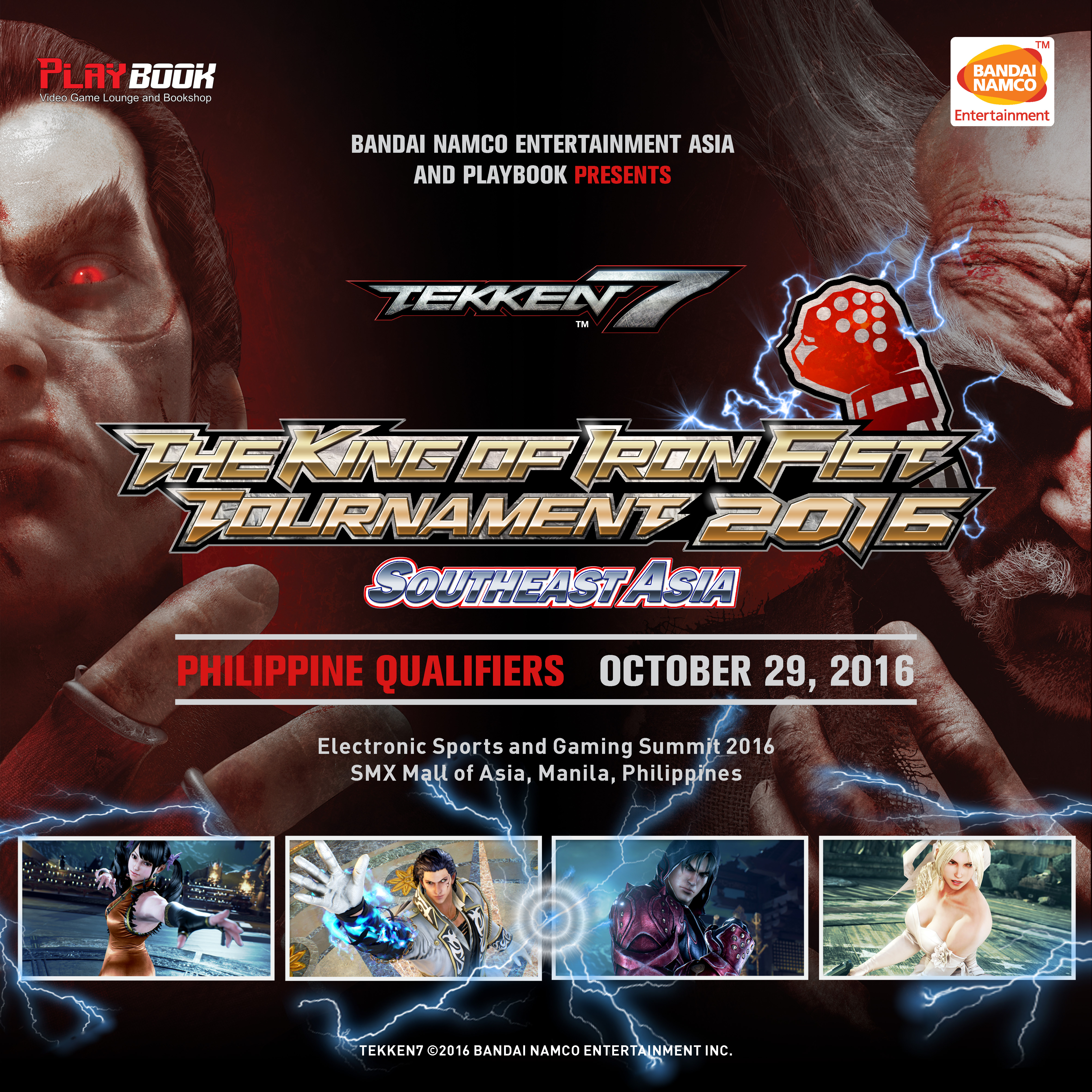
The Philippines has long been a powerhouse in the Tekken scene, and REV Major became the premier event for the Southeast Asian region. As a "Master" event on the TWT, it became a mandatory stop for any player serious about qualifying for the finals.
REV Major was significant because it highlighted the incredible depth of the Philippine Tekken talent pool. Local heroes like AK and Doujin frequently protected their home turf against the best players in the world. The energy of the Philippine crowd is legendary in the FGC; they are known for their deep knowledge of the game, cheering not just for victory, but for high-level technical maneuvers like frame-perfect "Electric Wind God Fists" (EWGF).
7. The MIXUP – France
To understand the European Tekken 7 scene, one must look at The MIXUP in Lyon, France. Europe was a diverse and often fragmented region in terms of playstyles, with the United Kingdom, Italy, and France all contributing unique approaches to the game. The MIXUP acted as the central hub where these styles clashed.
The tournament was a vital part of the Tekken World Tour's European leg. It was here that the world saw the rise of the European "specialists"—players who mastered unorthodox characters like Zafina, Claudio, or Eliza to disrupt the standard meta. The MIXUP provided the platform for European players to earn enough points to compete on the global stage, ensuring that the TWT Finals weren't just a contest between Korea and America.
Comparison of Major Tekken 7 Tournament Structures
The following table compares the defining characteristics of these seven major events during the peak of the Tekken 7 era.
| Tournament | Primary Location | Type | Key Significance |
|---|---|---|---|
| EVO (Vegas) | USA (Nevada) | Open Major | Largest entry count; global prestige. |
| TWT Finals | Variable | Invitational | The official world championship conclusion. |
| Combo Breaker | USA (Illinois) | Open Major | Renowned for organization and community spirit. |
| CEO | USA (Florida) | Open Major | Unique wrestling-ring presentation and hype. |
| EVO Japan | Japan (Tokyo/Osaka) | Open Major | High density of elite Asian talent; technical meta. |
| REV Major | Philippines | Open Major | Epicenter of Southeast Asian Tekken passion. |
| The MIXUP | France (Lyon) | Open Major | Premier European stop for the TWT circuit. |
Technical Evolution Across These Tournaments
The seven majors listed above were more than just trophies; they were the laboratories where the Tekken 7 meta evolved. In the early years (2015–2017), the game was defined by high-damage characters like Jack-7 and Dragunov. Tournaments like EVO 2017 saw a "sea of Jacks" in the Top 8, leading to community outcry for more variety.
As the years progressed and Bandai Namco introduced "Season Passes," the meta shifted during these majors. The introduction of DLC characters like Geese Howard, Leroy Smith, and Fahkumram caused significant upheavals. The tournaments became a testing ground for how the community would adapt to these powerful new additions.
By the time the circuit reached its final stages in 2023, the balance had been refined to a point where "fundamentals"—movement, block punishment, and stage awareness—once again reigned supreme. The winners of these majors were those who could navigate the "Rage Drive" and "Power Crush" mechanics with the most consistency under extreme pressure.
Prerequisites for Competing in Major Tournaments
While the Tekken 7 era has concluded in terms of the primary world tour, the standards set during these seven majors still apply to competitive fighting games in 2026. For those looking at historical footage or participating in legacy "throwback" brackets, the following were the requirements for high-level play:
- Hardware Proficiency: Competitors used arcade sticks (Leverless, Sanwa, or Korean levers) to ensure the precision required for inputs like "Just Frames."
- Frame Data Knowledge: Understanding the "startup," "active," and "recovery" frames of hundreds of moves was the baseline for entry.
- Travel and Logistics: Professional players often spent six months of the year traveling between these seven majors to secure sponsorship and ranking points.
- Mental Conditioning: Playing in front of a live crowd at CEO or EVO required a different level of focus compared to online ladder play.
Frequently Asked Questions
Which Tekken 7 tournament had the largest prize pool?
Historically, the Tekken World Tour Finals offered the largest prize pools for Tekken 7, often exceeding $100,000 for the first-place winner, supplemented by contributions from Bandai Namco and sponsors like Red Bull or Astro Gaming. However, the Gamers8 event in Saudi Arabia (2023) technically surpassed these figures with a multi-million dollar prize pool for the Tekken 7 team and solo events, though it sat slightly outside the traditional TWT circuit.
Who is the most successful player in Tekken 7 major history?
While "success" can be measured in different ways, Bae "Knee" Jae-Min from South Korea is widely considered the greatest of all time due to his longevity and ability to win with almost every character in the roster. Arslan Ash holds the record for winning both EVO and EVO Japan in the same year, a feat that remains one of the most impressive in FGC history.
Why was Pakistan such a dominant force in these tournaments?
Pakistan’s dominance, which became apparent at EVO 2019, was the result of a secluded but incredibly intense arcade culture. Players in Pakistan had been practicing against each other for years without international exposure. When the gates finally opened, their level of "spacing" and "whiff punishment" was found to be superior to the established meta in Korea and Japan.
Can I still watch the matches from these tournaments?
Yes, the vast majority of "Top 8" and "Top 16" matches from these seven majors are archived on platforms like YouTube (via the TEKKEN official channel or community channels like Bandai Namco Esports). These archives serve as an essential resource for players looking to study the peak of Tekken 7 competition.
Is Tekken 7 still featured at major tournaments in 2026?
In 2026, Tekken 7 is primarily featured as a "Legacy" or "Side Event" at majors like EVO and Combo Breaker. While it is no longer the main stage title, the dedicated community continues to host "Dojo" level events for fans of the specific movement and character mechanics unique to the seventh installment.
Recommendation for New Fans
For those looking to experience the best that Tekken 7 had to offer, the primary recommendation is to watch the EVO 2019 Top 8 and the TWT Finals 2022. These two events represent the absolute pinnacle of drama, technical skill, and global representation. They capture the transition from the old guard to the new generation of players and highlight why Tekken 7 remained a staple of the FGC for nearly a decade. If you are a player, studying the "Grand Finals" of these events will provide more insight into high-level neutral play than any tutorial video.