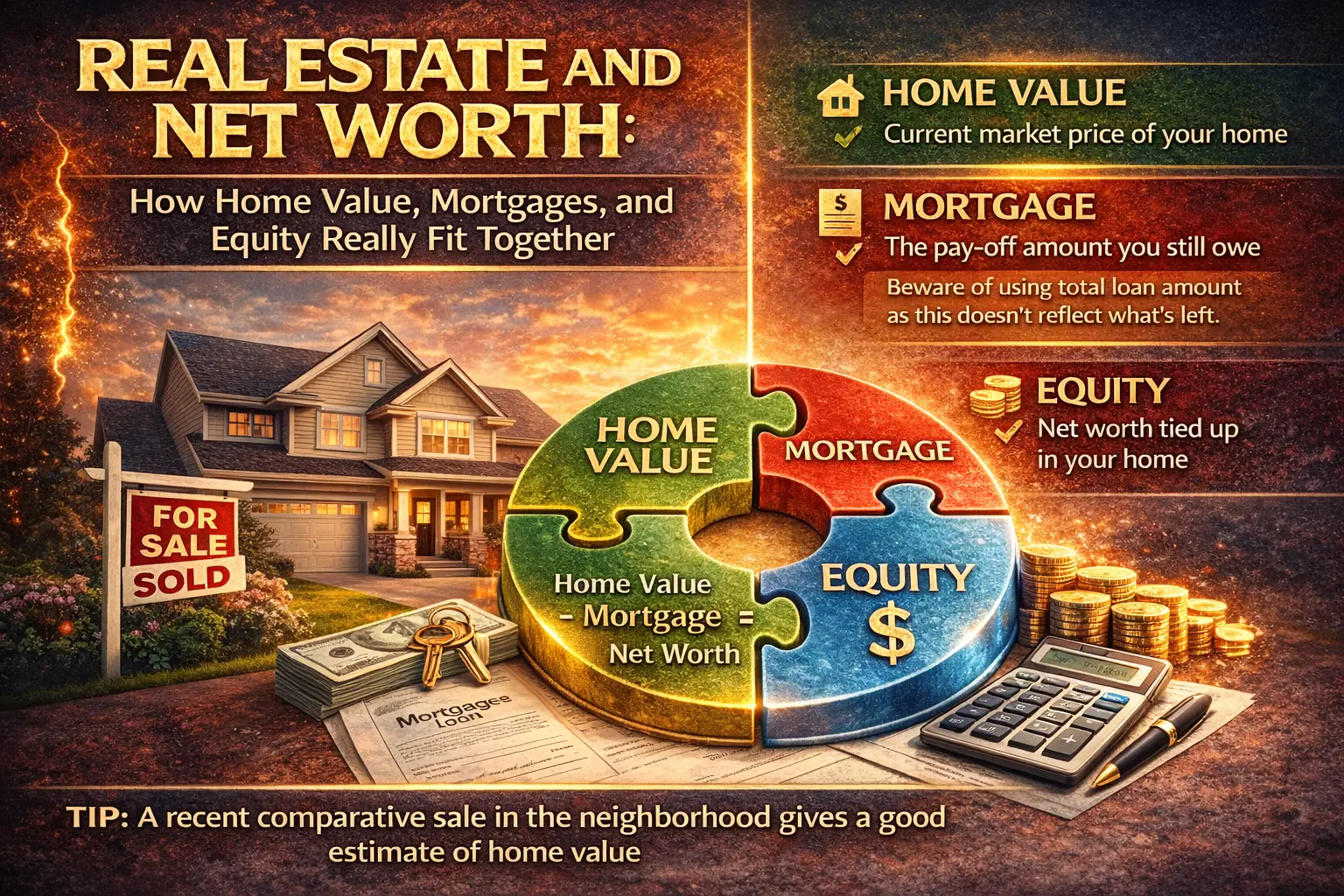
For the majority of Americans aged 65 and older, home equity represents approximately 60% of their total net worth. This concentration of wealth in residential property reflects decades of home price appreciation and mortgage pay-downs, leaving many seniors "house-rich but cash-poor," with limited liquid assets to cover daily living expenses or medical costs.
The phenomenon of having the vast majority of one's wealth locked in a primary residence is a defining characteristic of the modern American retirement landscape. As we navigate the economic environment of 2026, this statistic remains a cornerstone of financial planning for the elderly. While a high net worth is generally viewed as a sign of financial health, the illiquid nature of home equity presents unique challenges. For a senior household, a $500,000 net worth may seem substantial on paper, but if $300,000 of that is tied up in the walls and roof of their home, their actual lifestyle is dictated by the remaining $200,000 in savings, Social Security, and pension income.
Understanding how to manage this equity—and the risks associated with moving it from a "paper asset" to "spendable cash"—is critical for maintaining a sustainable standard of living throughout retirement.
The Evolution of the "House-Rich, Cash-Poor" Phenomenon
The concentration of wealth in home equity did not happen overnight. It is the result of several converging economic trends that have spanned the last four decades. For the cohort of seniors currently in or entering retirement in 2026, their homeownership journey likely began in the late 20th century, a period marked by significant residential appreciation.
Decades of Forced Savings
For many seniors, the monthly mortgage payment functioned as a "forced savings account." Unlike voluntary contributions to a 401(k) or IRA, which can be paused during lean years, mortgage payments are a non-negotiable obligation. Over 30 years, this steady reduction of principal, combined with the natural inflation of property values, results in a massive asset. By the time homeowners reach their 60s, many have satisfied their primary mortgage, leaving them with 100% ownership of a high-value asset.
The Stagnation of Liquid Savings
While home values have generally trended upward over the long term, wage growth and the ability to save liquid cash have not always kept pace. Many individuals in the current senior demographic prioritized paying off their homes and raising families over aggressive stock market investing. Additionally, the transition from defined-benefit pensions to defined-contribution plans (like 401(k)s) shifted the burden of retirement saving onto the individual, leading to a gap where the home became the most successful financial "investment" by default rather than by design.
Impact of Recent Market Volatility
The housing market fluctuations seen in the early 2020s led to a surge in home equity across the United States. As of 2026, while the market has stabilized from the post-pandemic highs, the "equity cushion" remains significant. However, because the cost of living—including property taxes, insurance, and maintenance—has also risen, the pressure to tap into that equity has never been higher.
The Risks of High Equity Concentration
While having significant home equity provides a safety net, it also introduces specific financial vulnerabilities. Diversification is a fundamental rule of finance, and having 60% or more of one's net worth in a single, non-diversified asset (a single-family home) carries inherent risks.
Illiquidity and the "Emergency Gap"
The primary risk is illiquidity. You cannot pay for a grocery bill or a sudden medical co-pay with a brick from your chimney. To access home equity, a senior must either sell the home, take out a loan, or enter into a complex financial arrangement like a reverse mortgage. Each of these options takes time and often involves high transaction costs. In a financial emergency, a senior with $400,000 in equity but only $5,000 in the bank is essentially insolvent in the short term.
Maintenance and Carrying Costs
A home is one of the few assets that requires constant capital reinvestment just to maintain its value. As seniors age, the physical and financial burden of home maintenance can become overwhelming. In 2026, the costs of labor and materials for roofing, HVAC systems, and general repairs remain elevated. If a senior cannot afford these costs because their wealth is "trapped" in the equity, the home may fall into disrepair, which in turn reduces the very equity they were relying on.
Geographic and Market Risk
By having 60% of their net worth in one location, seniors are highly exposed to local economic downturns. A shift in the local job market, a decline in school quality, or an increase in neighborhood crime can depress home values even if the national economy is doing well. Furthermore, the rising cost of property insurance in areas prone to climate-related risks (such as flood zones or wildfire regions) can eat into a senior's monthly budget, making it harder to stay in the home.
Strategic Methods to Access Home Equity in 2026
For those who find themselves with too much equity and too little cash, several pathways exist to rebalance their portfolio. Each method has distinct requirements, costs, and long-term implications.
1. Downsizing and Rightsizing
The most straightforward way to "unlock" equity is to sell the current primary residence and purchase a less expensive one. The difference between the sale price of the old home and the purchase price of the new home (minus commissions and moving costs) becomes liquid cash that can be invested in an annuity, stocks, or a high-yield savings account.
- Pros: Eliminates debt; reduces maintenance and utility costs; provides an immediate lump sum of cash.
- Cons: Emotional toll of moving; high transaction costs (realtor fees, closing costs); potential for capital gains taxes if the profit exceeds certain thresholds.
2. Reverse Mortgages (HECM)
The Home Equity Conversion Mortgage (HECM) is the most common type of reverse mortgage, insured by the Federal Housing Administration (FHA). It allows homeowners aged 62 and older to convert a portion of their equity into cash without having to make monthly mortgage payments. The loan is repaid when the last surviving borrower moves out, sells the home, or passes away.
- Requirements: You must be 62 or older, live in the home as your primary residence, and have significant equity. You must also undergo financial counseling.
- 2026 Status: Interest rates on reverse mortgages are a critical factor. Even with stabilized rates, the compounding interest on a reverse mortgage means the loan balance grows over time, potentially exhausting the remaining equity for heirs.
3. Home Equity Lines of Credit (HELOC)
A HELOC functions like a credit card secured by the home. It allows seniors to borrow against their equity as needed. This is often used for major home repairs or to bridge the gap during periods of high medical expenses.
- Pros: Only pay interest on what you use; lower closing costs than a full mortgage.
- Cons: Requires a monthly payment (usually interest-only for a set period); requires a good credit score and sufficient income to qualify, which can be difficult for retirees on a fixed income.
4. Sale-Leaseback Agreements
In a sale-leaseback, a company or investor buys the senior’s home and then leases it back to them. The senior receives a lump sum or structured payments and continues to live in the home as a renter.
- Pros: Instant access to equity; the new owner typically takes over maintenance and property taxes.
- Cons: The senior is no longer an owner and could be subject to rent increases or lease non-renewal depending on the contract terms.
Comparison of Equity Access Strategies
The following table compares the primary methods used by seniors to manage high equity concentration.
| Strategy | Ownership Status | Monthly Cash Flow Impact | Initial Cost/Fees | Primary Risk |
|---|---|---|---|---|
| Downsizing | Retained (New Property) | Improves (Lower expenses) | High (6-10% of value) | Market timing and moving costs |
| HECM (Reverse) | Retained (Title stays) | Improves (No payments) | High (Closing + Insurance) | Loan balance can exceed home value |
| HELOC | Retained | Decreases (New payment) | Low to Moderate | Variable interest rates |
| Sale-Leaseback | Transferred | Mixed (New rent payment) | Moderate | Loss of control over the property |
| Home Equity Loan | Retained | Decreases (Fixed payment) | Moderate | Default leads to foreclosure |
Legal and Tax Considerations
Navigating home equity in 2026 requires a keen understanding of the current tax code and legal protections.
Capital Gains Exclusions
Under current IRS rules, most homeowners can exclude up to $250,000 (single) or $500,000 (married filing jointly) of the gain from the sale of their primary residence from their taxable income. This is a vital protection for seniors who have seen their home values triple or quadruple over 30 years. However, if the gain exceeds these amounts, the tax hit can be substantial, necessitating careful tax planning before a sale.
Medicaid Eligibility and the Home
For many seniors, the home is an "exempt asset" when determining eligibility for Medicaid-funded long-term care, provided the equity is below a certain state-specific threshold (often ranging from $700,000 to over $1 million in 2026). However, if a senior sells the home and converts that equity into cash, that cash is no longer exempt and may disqualify them from benefits until it is "spent down." This creates a complex dilemma: should you keep the equity locked in the home to protect Medicaid eligibility, or unlock it to pay for better private care?
Homestead Exemptions
Many states offer property tax relief to seniors through homestead exemptions or tax freezes. These programs help mitigate the "cash-poor" aspect of homeownership by reducing the monthly carrying costs. Seniors should verify their eligibility annually, as these thresholds often change based on state legislative sessions.
The Role of Professional Guidance
Given that home equity comprises 60% of the average senior's net worth, decisions regarding this asset should not be made in isolation. A "DIY" approach to a reverse mortgage or a sale-leaseback can lead to predatory lending traps or unforeseen tax liabilities.
A comprehensive retirement plan in 2026 should involve:
- Financial Advisors: To assess how unlocking equity fits into the broader portfolio and tax strategy.
- Estate Attorneys: To ensure that equity management does not interfere with inheritance goals or Medicaid planning.
- Housing Counselors: Specifically HUD-approved counselors for those considering reverse mortgages.
Common Questions Regarding Senior Home Equity
Can the government take my home if I use a reverse mortgage?
No, the government does not take the home. In a HECM, you remain the owner and keep the title. However, the loan must be repaid when the home is no longer your primary residence. If your heirs cannot pay off the loan, the home may be sold to satisfy the debt. The FHA insurance ensures that you (or your estate) will never owe more than the home's appraised value at the time of sale.
Will selling my home affect my Social Security benefits?
In most cases, no. Social Security Retirement benefits are based on your work history, not your assets. However, if you receive Supplemental Security Income (SSI), selling your home could impact your eligibility because SSI is a means-tested program with strict asset limits.
What happens to my home equity if I move into assisted living?
If you move into assisted living permanently, your home is no longer considered your primary residence. If you have a reverse mortgage, the loan will become due. If you do not have a loan, the home remains your asset, but you may need to sell it to pay for the assisted living costs. As mentioned, the conversion of the home into cash can affect Medicaid "look-back" periods.
Are sale-leaseback programs safe for seniors?
Sale-leaseback programs have become more regulated by 2026, but they still require caution. The primary risk is the loss of equity growth and the potential for the new owner to sell the property or decline to renew the lease. It is essential to have an attorney review any leaseback contract to ensure it includes "lifetime tenancy" protections if that is the goal.
Should I pay off my mortgage before I retire?
While entering retirement debt-free is a common goal, it is not always the best move if it leaves you with zero liquid savings. If paying off the mortgage consumes all your cash, you increase your equity concentration risk. In some cases, keeping a low-interest mortgage and maintaining a liquid "emergency fund" is a safer strategy.
Next Steps for Seniors with High Home Equity
If your home equity represents the majority of your net worth, your primary objective should be liquidity assessment. Start by calculating your "Liquidity Ratio"—the amount of cash and easily sellable assets you have compared to your annual expenses. If this ratio is low (e.g., less than two years of expenses in cash), you are at risk.
Your next action should be to schedule a consultation with a fee-only financial planner to model different scenarios: downsizing, taking a modest HELOC for emergencies, or simply staying put while maximizing local property tax exemptions. The goal is not necessarily to move the 60% figure down to 20%, but to ensure that the 40% of your wealth that is liquid is sufficient to protect your quality of life regardless of what happens in the housing market.