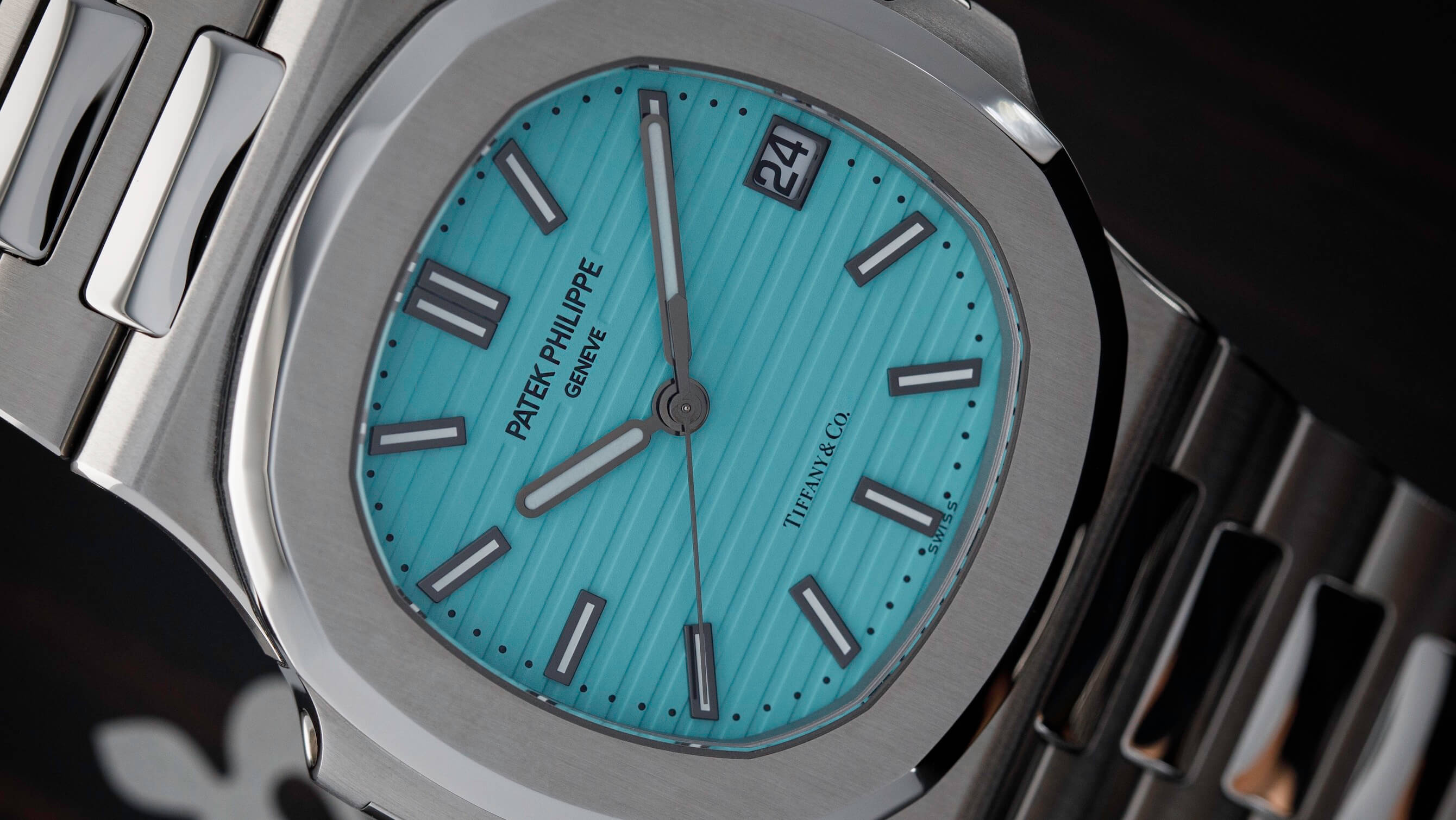
The Patek Philippe Nautilus Ref. 5711/1A-018 with its Tiffany Blue dial represents a modern pinnacle of horological collecting. Combining the iconic Gerald Genta design architecture of the stainless steel Nautilus with the retail heritage of Tiffany & Co., this limited edition of 170 pieces has transcended standard luxury watch discourse to become a rare cultural artifact and a high-value asset.
The Genesis of an Icon: Patek Philippe Meets Tiffany & Co.
The relationship between Patek Philippe and Tiffany & Co. dates back to 1851, when Antoine Norbert de Patek traveled to New York and forged a partnership with Charles Lewis Tiffany. This alliance marked the beginning of an enduring transatlantic retail relationship, making Tiffany the first official American retailer of Patek Philippe timepieces. Over the decades, this partnership evolved from standard distribution into a co-branding tradition reserved for exceptional watches. Retailers historically placed their signatures on the dials of high-end watches to authenticate provenance and celebrate milestones, a practice that has grown increasingly scarce in modern horology.
When Patek Philippe announced the eventual discontinuation of the steel Nautilus Reference 5711 in early 2021, collectors anticipated a fitting farewell. However, the true climax arrived quietly in December 2021 with the unveiling of the Reference 5711/1A-018. Created to commemorate the 170-year anniversary of the partnership between the Swiss watchmaker and the legendary American jeweler, this timepiece merged two titans of luxury into a single physical object. The double-signed dial—featuring both "Patek Philippe Geneve" at 12 o'clock and "Tiffany & Co." at 6 o'clock—revived a prestigious tradition that bridges 19th-century retail heritage with 21st-century hype.
Design Architecture and Technical Specifications
At its structural core, the 5711/1A-018 retains the fundamental architecture that made the Nautilus a watershed design upon its introduction in 1976. Styled by master designer Gérald Genta, the case mimics the porthole of a transatlantic liner, featuring an octagonal bezel with softly curved corners, a three-part case construction, and integrated bracelet links that taper smoothly toward the clasp. The stainless steel case measures 40mm in diameter and a slender 8.3mm in thickness, maintaining the elegant, versatile profile that collectors prize for everyday wear.
The defining characteristic of this specific reference, however, is its proprietary lacquer dial rendered in Tiffany’s signature robin's-egg blue. Unlike standard sunburst dials found on traditional Nautilus models, this flat, vibrant hue commands immediate visual attention while providing stark contrast against the blackened white gold applied hour markers and hands, which feature luminescent coating for legibility.
Beneath the sapphire crystal caseback—which bears a special commemorative inscription reading "170th Anniversary 1851-2021 Tiffany & Co. - Patek Philippe"—ticks the Caliber 26-330 S C. This automatic movement represents a modern evolution of Patek Philippe's reliable base calibers, featuring a stop-seconds (hacking) mechanism for precise time setting, a 21k gold central rotor, and a power reserve ranging from 35 to 45 hours. Water-resistant to 120 meters, the watch marries sports-luxury utility with haute horlogerie finissage, including Geneva stripes, polished bevels, and the Patek Philippe Seal.
| Specification Feature | Technical Detail |
|---|---|
| Reference Number | 5711/1A-018 |
| Case Material | Stainless Steel |
| Case Diameter | 40 mm |
| Case Thickness | 8.3 mm |
| Dial Color | Tiffany Blue (Lacquer finish) |
| Movement | Caliber 26-330 S C (Automatic) |
| Power Reserve | Min. 35 hours – Max. 45 hours |
| Water Resistance | 120 meters |
| Production Volume | Strictly limited to 170 pieces |
| Retail Availability | Allocated exclusively through Tiffany & Co. flagships |
Scarcity, Allocation, and the Economics of the 170-Piece Run
Scarcity is the primary driver of value in contemporary luxury collecting, and the 5711/1A-018 was engineered for scarcity from its inception. Limited to exactly 170 pieces globally, the allocation strategy handled by Tiffany & Co. and Patek Philippe focused heavily on top-tier clientele, museum curators, and prominent collectors with deep, long-standing purchase histories. This severe restriction in supply immediately created an astronomical disparity between initial retail pricing and secondary market valuation.
When the watch debuted with a retail price of approximately $52,635, market analysts understood that very few buyers would ever secure one at official boutiques. The very first piece allocated to the public sphere bypassed traditional retail channels entirely when it was consigned to Phillips auction house in New York in December 2021. Hammering at a staggering $6.35 million (inclusive of buyer's premium), with 100% of the proceeds donated to The Nature Conservancy, this single sale established the archetype for how modern hyped watches perform in secondary trading environments.
Subsequent secondary market transactions stabilized at figures ranging between $2 million and $3 million, cementing the watch's status as a liquid, high-value financial asset. This dynamic highlights a broader shift in luxury collecting, where mechanical timepieces function simultaneously as wearable art and alternative asset classes. The convergence of a discontinued flagship reference, a historic retail partnership, and an exclusive colorway created a perfect storm of market demand.
Authenticity Verification and Collecting Pitfalls
Given the multi-million-dollar valuations associated with the 5711 Tiffany, the secondary market is fraught with risks, making authentication a critical prerequisite for any serious acquisition. Counterfeiters and unscrupulous actors frequently target rare references, utilizing aftermarket dials, modified standard 5711 models, or outright replica components to deceive unsuspecting buyers. Verifying an authentic piece requires meticulous scrutiny of both physical attributes and documentation.
The Certificate of Origin issued by Patek Philippe is the primary document of provenance. For this specific reference, the certificate must explicitly state the model number 5711/1A-018 and feature official retailer codes associated with Tiffany & Co. Furthermore, the typography on the dial requires expert examination; the font weight, spacing, and alignment of the "Tiffany & Co." signature must match factory specifications precisely, as minor printing inconsistencies immediately flag a modified dial.
Buyers must also inspect the movement and caseback engraving. The commemorative text etched onto the sapphire display back must feature correct lettering depth, font style, and spacing. Engaging an independent, certified watchmaker or a reputable auction house specialist to perform a movement audit and exterior inspection is an essential step before finalizing any private transaction. Relying solely on photographs or unverified provenance histories exposes buyers to severe financial risk in the high-stakes world of elite horology.
The Case for the Rare Jewel: Cultural and Horological Significance
Evaluating whether the 5711/1A-018 deserves its status as a "rare jewel" requires looking beyond financial metrics to examine its cultural footprint. The watch represents the swan song of the steel Nautilus 5711 line, an era-defining luxury sports watch that came to symbolize late-2010s and early-2020s collecting culture. By fusing this modern icon with Tiffany's corporate color, Patek Philippe created a visual shorthand for modern luxury wealth and exclusivity.
Critics occasionally argue that such hyper-inflated valuations driven by social media and celebrity endorsement distort traditional horological values, prioritizing hype over craftsmanship. However, proponents argue that the watch is a brilliant marketing masterstroke that honors a 170-year commercial alliance while simultaneously setting a benchmark for modern watch design. The watch serves as a bridge between traditional Swiss watchmaking and modern pop-culture luxury, appealing to a younger, more globally connected demographic of ultra-high-net-worth collectors.
Ultimately, the 5711 Tiffany occupies a singular niche. It is neither a traditional vintage complication nor a pure jewelry watch, yet it commands the respect and valuation of both categories. As the years progress, this reference will likely be viewed by historians not merely as a commercial product, but as a defining cultural artifact of an era when wristwatches fully transitioned into mainstream luxury financial assets.
Frequently Asked Questions
What was the original retail price of the Patek Philippe Nautilus 5711/1A-018 Tiffany?
The retail price set by Tiffany & Co. at launch in December 2021 was $52,635 USD. However, because production was strictly limited to 170 pieces and allocation was tightly controlled, obtaining the watch at retail was restricted to an elite circle of top-tier collectors.
Why is the dial color referred to as Tiffany Blue?
The specific robin's-egg blue hue is closely tied to the branding and corporate identity of Tiffany & Co., dating back to the use of the color on the cover of their famous Blue Book catalog published in 1845. On the 5711, this color is executed via a proprietary lacquer rather than a traditional metallic sunburst finish.
How many 5711 Tiffany watches were actually produced?
Patek Philippe and Tiffany & Co. manufactured exactly 170 pieces of the Reference 5711/1A-018. This exact production cap was chosen to celebrate the 170th anniversary of their continuous commercial partnership, which began in 1851.
What movement powers the 5711 Tiffany?
The watch is powered by Patek Philippe's modern automatic Caliber 26-330 S C. This movement features a stop-seconds mechanism, a 21k gold central rotor, and operates at a frequency of 28,800 vibrations per hour while delivering a power reserve of up to 45 hours.
Are all 5711 Tiffany dials identical?
All authentic production models feature the identical lacquer robin's-egg blue tone with double signatures. However, collectors and researchers pay close attention to dial typography, as the rarity and extreme value of the watch have led to aftermarket forgeries and modified standard steel Nautilus models bearing fraudulent Tiffany signatures.