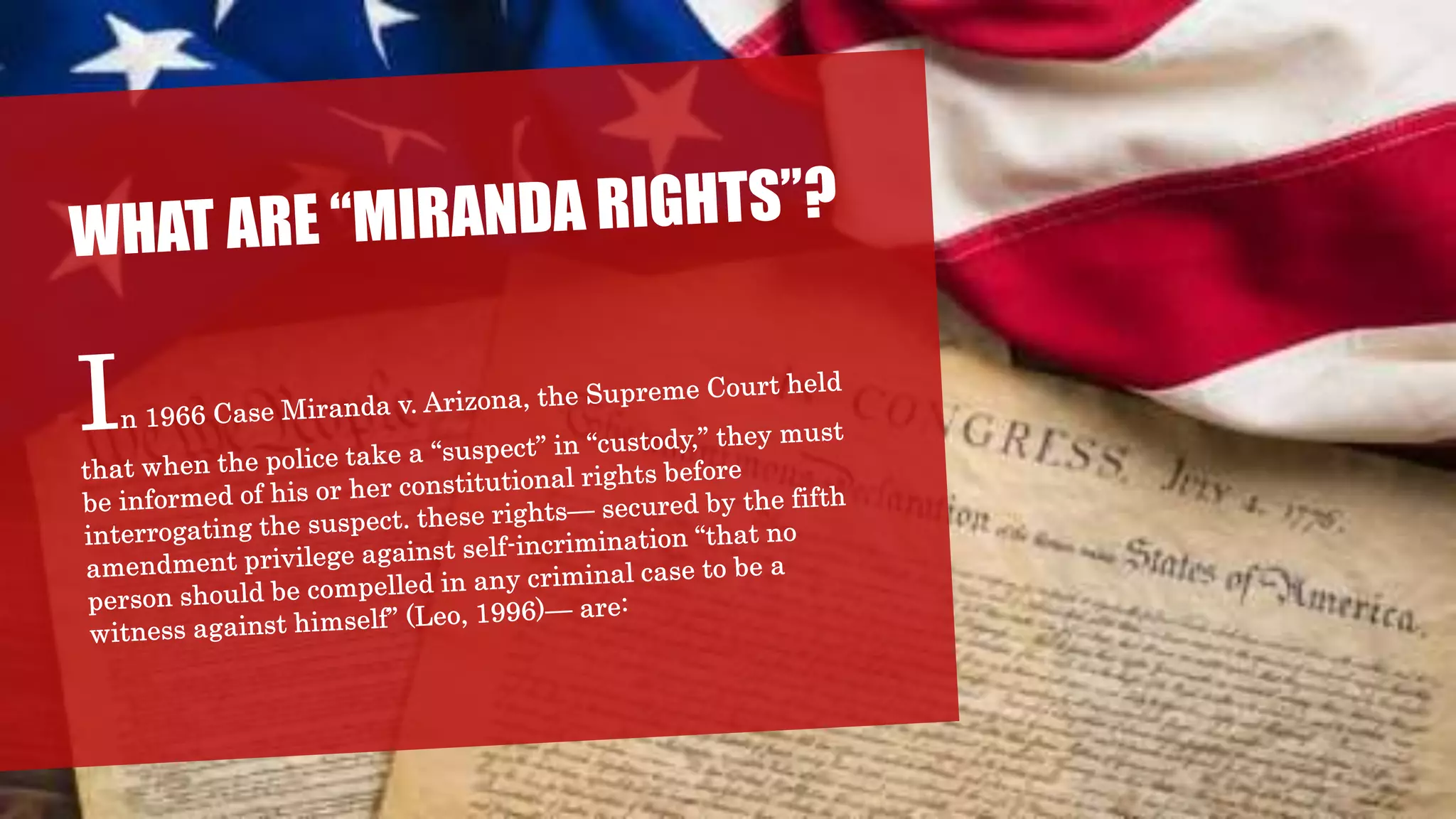
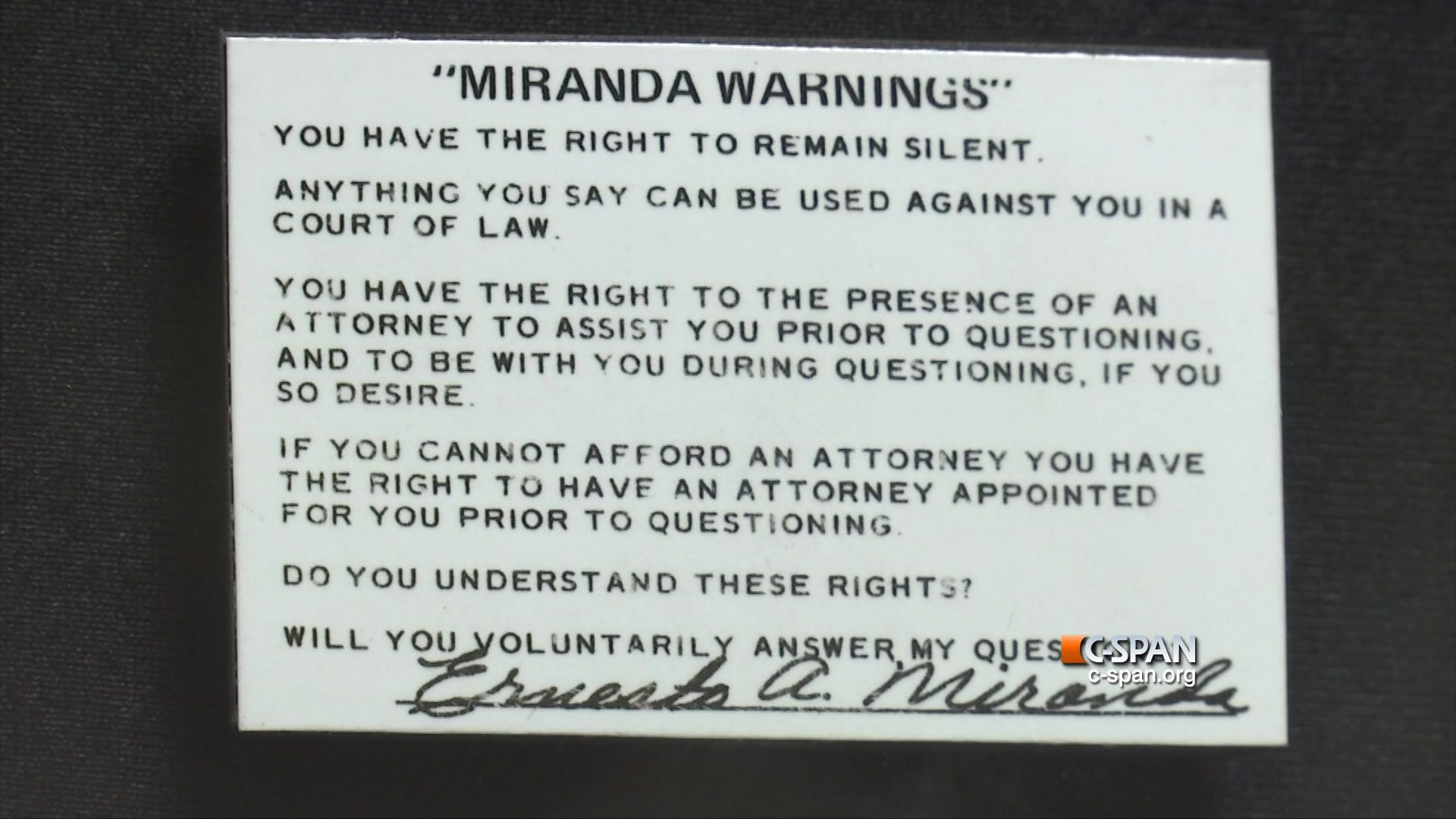
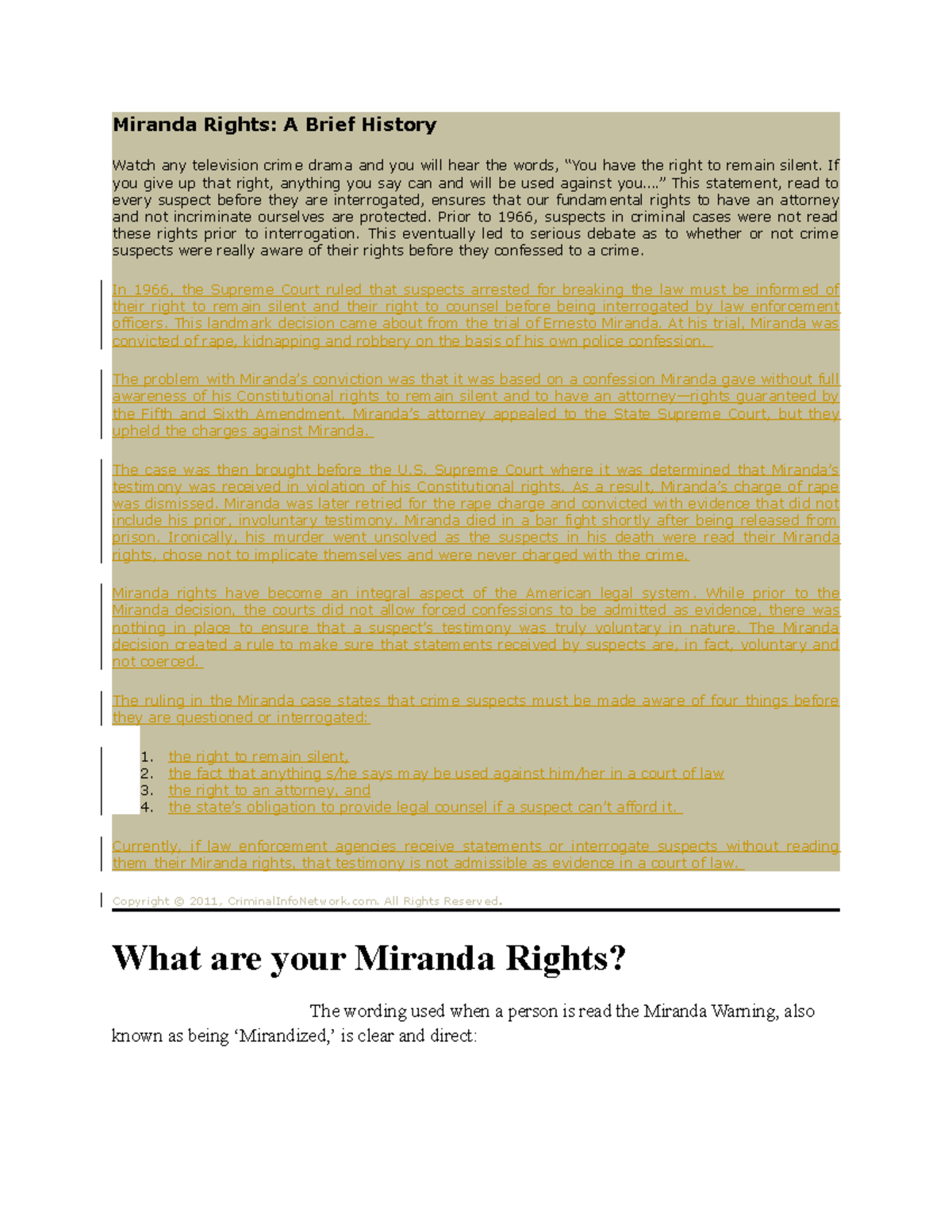
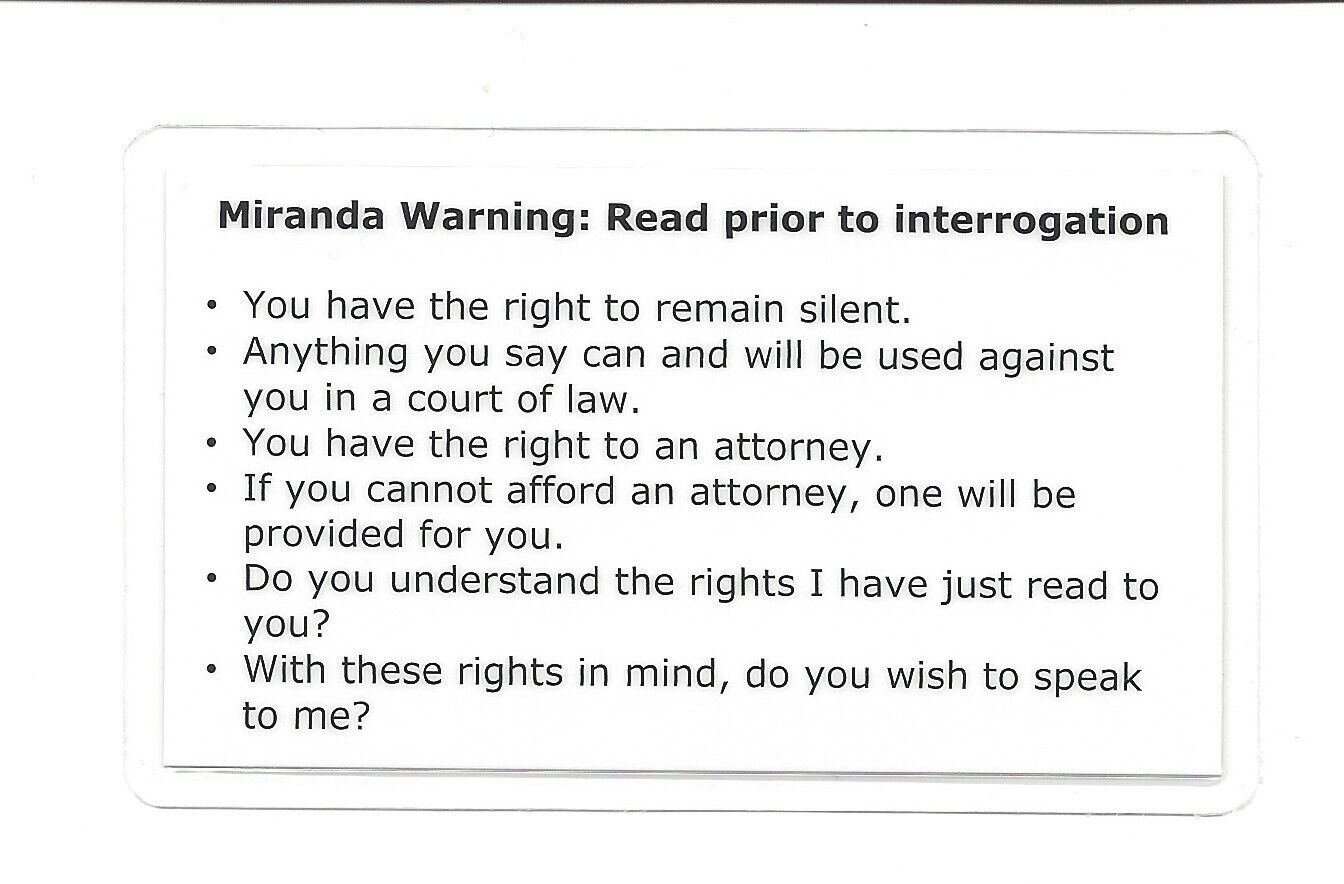
Miranda rights are procedural safeguards established by the U.S. Supreme Court to protect an individual’s Fifth Amendment right against self-incrimination and Sixth Amendment right to counsel. These rights require law enforcement to inform suspects in custody that they have the right to remain silent, that anything they say can be used against them, and that they have the right to an attorney.
In 2026, the landscape of American criminal procedure continues to be defined by several landmark Supreme Court decisions that have refined when and how these rights apply. Understanding these rights is not merely an academic exercise; it is a fundamental aspect of the "custodial interrogation" process. Failure by law enforcement to adhere to these standards can result in the suppression of evidence under the exclusionary rule, potentially rendering a confession inadmissible in court.
The Foundation of Miranda Rights
The term "Miranda rights" originates from the 1966 case Miranda v. Arizona. Prior to this ruling, the standard for admitting confessions was "voluntariness." However, the Supreme Court recognized that the "compulsion" inherent in custodial environments could lead to coerced statements, even without physical brutality.
To satisfy the Fifth Amendment's privilege against self-incrimination, the Court established that a suspect must be clearly informed of their rights before any questioning begins while in "custody." If a person is not in custody, or if they are in custody but not being interrogated, the Miranda warning is generally not required. This distinction—between a voluntary conversation and a custodial interrogation—is the source of significant legal debate.
1. Miranda v. Arizona (1966): The Original Precedent
The primary example of Miranda rights in practice is the case that started it all. Ernesto Miranda was arrested in 1963 for kidnapping and rape. After a two-hour interrogation, he signed a written confession. However, at no point did the police inform him that he had a right to have an attorney present or a right to remain silent.
The Legal Implication
The Supreme Court ruled that the "prosecution may not use statements, whether exculpatory or inculpatory, stemming from custodial interrogation of the defendant unless it demonstrates the use of procedural safeguards effective to secure the privilege against self-incrimination." Because Miranda was not warned, his confession was suppressed.
The implication for modern law is the Mandatory Warning Requirement. Law enforcement must deliver the four-part warning (silence, use of statements, right to counsel, right to appointed counsel) to any person subjected to custodial interrogation. Without this, the "fruit of the poisonous tree" doctrine may apply, disqualifying evidence derived from the illegal interrogation.
2. New York v. Quarles (1984): The Public Safety Exception
Not every failure to read Miranda rights results in suppressed evidence. In New York v. Quarles, police officers pursued a rape suspect into a supermarket. After frisking and handcuffing him, they discovered an empty holster. Without reading the Miranda warnings, an officer asked, "Where is the gun?" The suspect pointed to a stack of soap cartons and said, "The gun is over there."
The Legal Implication
The Supreme Court created the Public Safety Exception. They argued that the need for answers in a situation posing a threat to the public safety outweighs the need for the prophylactic rule protecting the Fifth Amendment's privilege against self-incrimination.
In 2026, this remains a critical tool for law enforcement. If there is an objectively reasonable need to protect the police or the public from immediate danger (such as an abandoned firearm or a ticking bomb), officers may question a suspect without providing Miranda warnings. Any statements made in this narrow window are typically admissible in court.
3. Berghuis v. Thompkins (2010): Invoking the Right to Silence
One of the most misunderstood aspects of Miranda rights is how a suspect must "invoke" them. In Berghuis v. Thompkins, the suspect was read his rights but refused to sign a form acknowledging them. He then remained almost entirely silent for nearly three hours of interrogation. Finally, when asked if he prayed to God for forgiveness for the shooting, he said "Yes."
The Legal Implication
The Court ruled that a suspect’s silence during interrogation does not actually invoke their right to remain silent. Instead, a suspect must affirmatively and unambiguously state that they are invoking their rights (e.g., "I am exercising my right to remain silent").
This case carries a heavy implication for suspects: if you simply stop talking, the police can continue to question you for hours. To stop the interrogation, you must speak up and claim the right. This "waiver by conduct" means that if a suspect understands their rights and eventually makes an uncoerced statement, they have effectively waived their Miranda protections.
4. J.D.B. v. North Carolina (2011): The Subjective Standard for Minors
The question of whether someone is "in custody" usually depends on an objective test: would a reasonable person in the suspect's position feel free to leave? In J.D.B. v. North Carolina, a 13-year-old student was pulled from class and questioned by a police officer and school administrators in a closed conference room about a neighborhood break-in. He was not given Miranda warnings.
The Legal Implication
The Supreme Court held that a child’s age is a relevant factor in the Miranda custody analysis. A "reasonable child" would feel more pressured and less free to leave than a "reasonable adult" in the same situation.
This established the Age-Conscious Custody Test. For legal professionals and law enforcement in 2026, this means that when dealing with juveniles, the threshold for when Miranda rights must be read is lower. An environment that might not be "custodial" for an adult could very well be custodial for a minor, requiring the officer to provide the warning to ensure any confession is admissible.
5. Edwards v. Arizona (1981): The "Bright-Line" Rule on Counsel
While the right to remain silent can be waived by re-initiating a conversation, the right to an attorney is treated with even more stringency. In Edwards v. Arizona, the suspect was informed of his rights and stated, "I want an attorney before making a deal." Questioning stopped. However, the next morning, two different detectives came to the jail and resumed questioning without an attorney present. Edwards eventually confessed.
The Legal Implication
The Court created a Bright-Line Rule: once a suspect invokes the right to counsel, all interrogation must cease. It cannot resume until an attorney is present, or unless the suspect themselves initiates further communication, exchanges, or conversations with the police.
This is known as the "Edwards Rule." It prevents police from "badgering" a suspect into waiving their rights after they have already asked for a lawyer. Even if different officers are involved or the questioning is about a different crime, the request for a lawyer acts as a total shield against further custodial interrogation.
Summary of Key Miranda Cases and Their Effects
| Case Name | Year | Primary Legal Question | Key Implication |
|---|---|---|---|
| Miranda v. Arizona | 1966 | Are confessions admissible if rights aren't stated? | Established the mandatory four-part warning for custodial interrogation. |
| New York v. Quarles | 1984 | Can police skip warnings for immediate danger? | Created the "Public Safety Exception" for immediate threats. |
| Berghuis v. Thompkins | 2010 | Does staying silent invoke the right to silence? | Right to silence must be invoked unambiguously; silence is not enough. |
| J.D.B. v. North Carolina | 2011 | Does age affect the "custody" definition? | Age must be considered in determining if a suspect feels free to leave. |
| Edwards v. Arizona | 1981 | Can police restart questioning after a lawyer is requested? | Created a "bright-line" ban on re-interrogation once counsel is invoked. |
The "Custody + Interrogation" Formula
A common misconception is that police must read you your rights the moment you are arrested. This is not true. The "Miranda trigger" requires two simultaneous conditions:
- Custody: The individual’s freedom of movement is restricted to the degree associated with a formal arrest. This is determined by the "reasonable person" standard.
- Interrogation: Direct questioning or actions/comments by police that they should know are reasonably likely to elicit an incriminating response.
If you are arrested and sitting in the back of a patrol car but the officers are talking about the weather, they do not need to read you your rights. However, the moment they ask, "Where did you hide the money?" the Miranda requirement is triggered. If they fail to read the rights at that point, any answer you give—and often the physical evidence found because of that answer—can be challenged in court.
Understanding the Waiver of Rights
For a waiver of Miranda rights to be valid in 2026, it must meet the KIV Standard:
- Knowing: The suspect must understand what the rights are.
- Intelligent: The suspect must understand the consequences of giving up those rights.
- Voluntary: The waiver must be the product of free will, not coercion, threats, or force.
Proving a waiver is usually done via a written "Miranda Waiver Form." If a suspect signs this form, it becomes significantly harder for a defense attorney to argue that the subsequent confession was involuntary. However, even with a signed waiver, if the police use physical torture or extreme psychological pressure, the confession can still be ruled "involuntary" under the Due Process Clause of the 14th Amendment.
Frequently Asked Questions
Do police have to read Miranda rights if I'm not being arrested?
No. Miranda rights only apply to "custodial" interrogations. If you are participating in a voluntary interview at a police station and you are free to leave at any time, the police are not legally required to read you the Miranda warning. However, once the situation transitions into one where you are no longer free to leave, the warning must be given before further questioning.
What happens if the police forget to read my rights?
If the police conduct a custodial interrogation without reading your Miranda rights, any statements you make are generally inadmissible as evidence in the prosecution's "case-in-chief." This does not necessarily mean your case will be dismissed. If the prosecution has other evidence (fingerprints, witnesses, video), they can still proceed. Additionally, un-Mirandized statements can sometimes be used to "impeach" you (challenge your credibility) if you testify at trial and say something different.
Can I change my mind after I waive my rights?
Yes. You can invoke your right to remain silent or your right to an attorney at any time, even if you have already started talking to the police. The moment you say, "I don't want to talk anymore" or "I want a lawyer," the interrogation must stop immediately. Any statements made before you invoked your rights remain admissible, but anything said after should be suppressed.
Does the Miranda warning have to be read in my native language?
For a waiver to be "knowing and intelligent," the suspect must understand the rights being read. If a suspect does not speak English fluently, the police should provide the warning in a language the suspect understands. In 2026, most jurisdictions have standardized translations and access to telephonic interpreters to ensure that Miranda warnings are constitutionally sound for non-English speakers.
Next Actions and Recommendations
If you or someone you know is facing a situation involving law enforcement questioning, it is vital to understand the following:
- Be Explicit: If you wish to remain silent, say so clearly. Do not just stop talking.
- Request Counsel: Use clear language like, "I want my lawyer." Avoid "hedging" phrases like "I think I might need a lawyer," which courts have sometimes ruled as ambiguous.
- Document the Interaction: If possible, note the time questioning began and whether you were told you were free to leave.
- Consult a Legal Professional: Miranda issues are highly technical. Only a qualified criminal defense attorney can analyze the specifics of a case to determine if a "Miranda violation" occurred and file the necessary motions to suppress evidence.
Disclaimer: This article provides general information regarding legal precedents and does not constitute legal advice. Jurisdictional rules and specific case facts may vary. Consult with a licensed attorney for advice regarding specific legal situations.