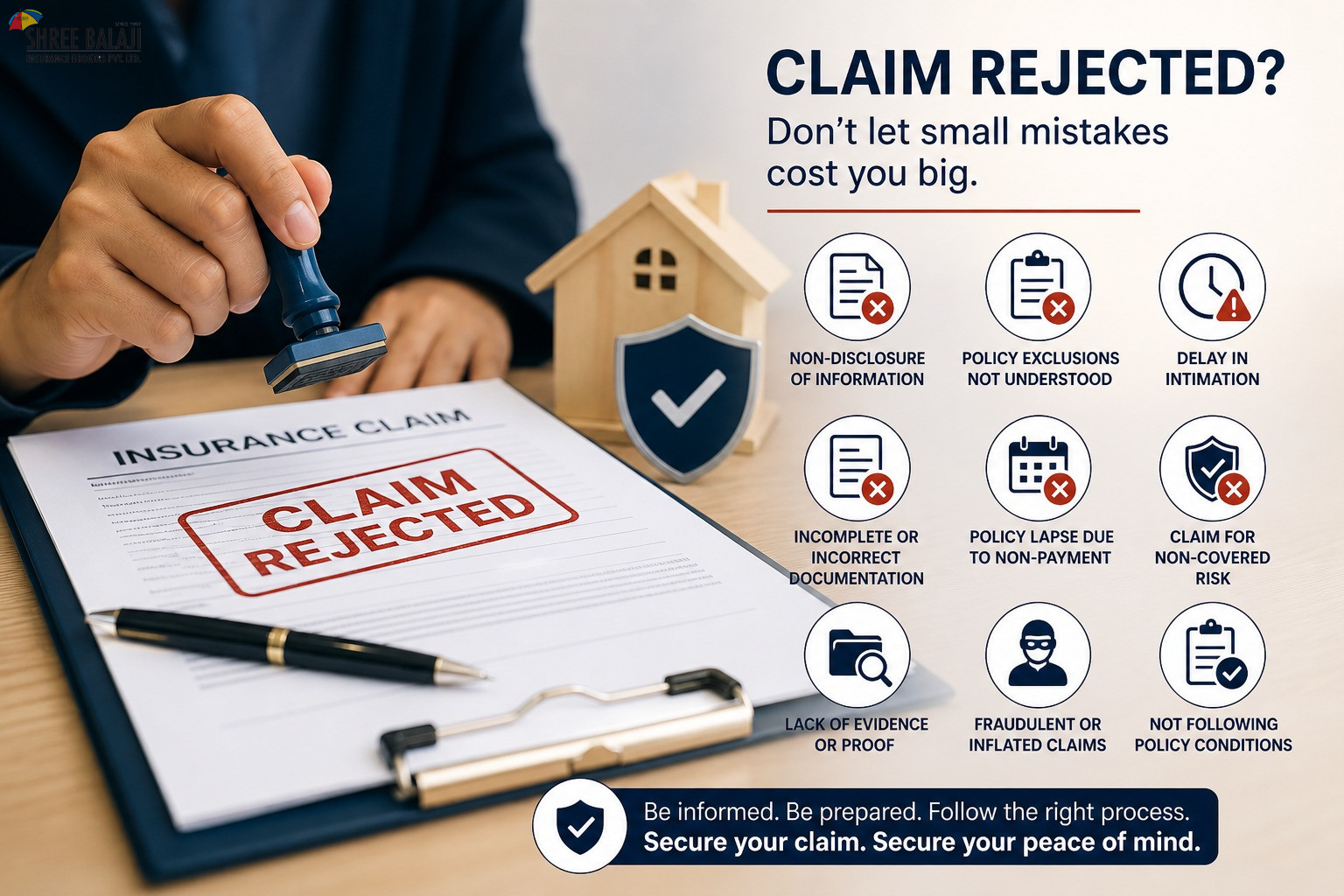
Life insurance policies are most frequently rejected due to undisclosed medical conditions, high-risk lifestyle choices, financial instability, criminal history, or poor results from the mandatory medical examination. Understanding these triggers is essential for navigating the underwriting process and ensuring your beneficiaries are protected by a valid, active policy in 2026.
Securing a life insurance policy is a rigorous process of risk assessment. When an insurance company "rejects" or "declines" an application, it is essentially stating that the applicant's risk profile falls outside the company’s acceptable "mortality risk" parameters. In 2026, the integration of artificial intelligence and real-time data analytics has made the underwriting process more precise than ever, meaning that discrepancies and health markers are identified with high accuracy.
While a rejection can be disheartening, it is rarely a permanent barrier to coverage. By understanding why insurers decline applications, you can take corrective measures, seek alternative carriers, or adjust your coverage expectations.
The Life Insurance Underwriting Process in 2026
To understand rejection, one must first understand underwriting. Underwriting is the method by which insurance companies evaluate the risk of insuring a person. In the current 2026 landscape, this involves traditional medical exams combined with "Accelerated Underwriting" (AU) which uses Big Data.
Insurers pull information from various sources:
- The MIB (Medical Information Bureau): A database where insurance companies share coded information about an applicant’s medical history.
- Pharmacy Benefit Managers (PBMs): Records of every prescription you have filled in the last seven to ten years.
- Motor Vehicle Records (MVR): Your driving history, including DUIs, reckless driving, or excessive speeding tickets.
- LexisNexis and Credit Agencies: Used to assess "financial mortality," or how likely your lifestyle and financial habits are to lead to an early death or a lapsed policy.
When the data gathered from these sources suggests a higher-than-average probability of a claim being filed sooner than the actuarial tables predict, the policy may be rejected.
1. Non-Disclosure and Material Misrepresentation
The single most avoidable reason for policy rejection is non-disclosure. This occurs when an applicant intentionally or accidentally omits important information on their application. In the insurance world, this is known as material misrepresentation.
The Concept of Materiality
A fact is "material" if knowing it would have caused the insurer to reject the application or charge a significantly higher premium. For example, failing to mention a minor surgery from fifteen years ago may not be material. However, failing to disclose a diagnosis of hypertension or a history of tobacco use is highly material.
Digital Footprints and Verification
In 2026, it is virtually impossible to hide medical history. Underwriters use automated systems to cross-reference application answers with electronic health records (EHR). If an applicant claims they have never smoked, but their pharmacy records show a recurring prescription for smoking cessation aids, the application will likely be rejected for lack of transparency.
The Consequences of Dishonesty
If a policy is issued based on false information and the insurer discovers the truth during the Contestability Period (usually the first two years of the policy), they can legally rescind the policy and deny the death benefit to the beneficiaries. Rejection at the application stage is often better than a rescinded policy later, as it allows the applicant to find a carrier that accepts their specific risk profile.
2. Health and Pre-existing Conditions
Health remains the primary factor in life insurance decisions. While many chronic conditions can be "rated" (meaning you are approved but pay a higher premium), certain health profiles are deemed uninsurable by traditional carriers.
Cardiovascular and Metabolic Health
Heart disease, stroke, and poorly managed diabetes are leading causes of rejection. Underwriters look closely at "comorbidity"—the presence of two or more chronic conditions. For example, an applicant with controlled Type 2 diabetes might be approved. However, an applicant with Type 2 diabetes, high blood pressure, and a high Body Mass Index (BMI) presents a cumulative risk that often leads to a decline.
Mental Health and Stability
In recent years, insurers have become more nuanced in their approach to mental health, but severe conditions still trigger rejections. A history of hospitalization for clinical depression, bipolar disorder, or multiple suicide attempts can lead to a rejection until a significant period of stability (often 3 to 5 years) has passed.
Obesity and BMI Thresholds
Every insurer has a "build chart" that correlates height and weight. If an applicant’s BMI exceeds the carrier’s maximum threshold (often above 40 or 45), the policy is frequently rejected. This is because high BMI is statistically linked to an array of secondary health issues, including sleep apnea, heart disease, and joint failure.
3. High-Risk Lifestyles and Occupations
How you live and how you earn your money are just as important as your health. If your daily life involves a high probability of accidental death, an insurer may decide the risk is too great.
Dangerous Hobbies (Avocations)
Activities that might seem like weekend fun to you are "hazardous avocations" to an underwriter. Common hobbies that lead to rejection or "exclusion riders" include:
- Skydiving and BASE jumping: Especially if done frequently or competitively.
- Scuba diving: Rejections often occur if the diver goes to depths exceeding 100 feet or engages in wreck/cave diving without certification.
- Private Piloting: Pilots of small, private aircraft face higher scrutiny than commercial pilots.
- Rock Climbing: Specifically solo climbing or high-altitude mountaineering.
Hazardous Occupations
If your job puts you in harm's way, you may face rejection. This includes offshore oil rig workers, underground miners, and some members of the military (depending on deployment status). In 2026, certain roles in private security or high-risk international journalism may also trigger a decline due to the heightened global volatility.
Travel to High-Risk Zones
If you plan to travel to countries with active war zones, political instability, or severe health epidemics, your application may be rejected or postponed until you return and have been back in the country for 30 to 90 days.
4. Financial Irresponsibility and Lack of Insurable Interest
Life insurance is a financial product, and the "math" must make sense to the insurer. Rejections based on financial grounds are more common than many realize.
Insurable Interest
You cannot take out a life insurance policy on just anyone. There must be an insurable interest, meaning the beneficiary would suffer a financial loss upon the death of the insured. If a person tries to buy a massive policy on a distant relative or a business partner with whom they have no clear financial tie, the application will be rejected on legal and ethical grounds.
Financial Over-Insurance
Insurers use "income replacement" formulas. If an individual earning $50,000 a year applies for a $10 million policy, the insurer will likely reject it. They view this as "over-insurance," which can occasionally signal fraudulent intent or a "moral hazard."
Credit and Legal History
A history of recent bankruptcy is a significant red flag. Most insurers require a bankruptcy to be discharged for at least six months to two years before they will consider an application. Furthermore, a criminal record—especially one involving felonies, fraud, or a history of violence—will almost always result in an immediate rejection.
5. Positive Lab Results and Substance Use
The medical exam (paramedical) is the "moment of truth" for many applications. Even if you feel healthy, your blood and urine can reveal hidden risks.
Nicotine and Drug Use
A positive test for nicotine when you claimed to be a non-smoker is a major reason for rejection. Similarly, the presence of illicit drugs (cocaine, heroin, etc.) or the misuse of prescription opioids will lead to an automatic decline. While marijuana use is treated more leniently by some carriers in 2026, heavy usage or usage for certain medical conditions can still lead to a rejection.
Alcohol Abuse Markers
Underwriters look for specific enzymes in the blood, such as GGT (Gamma-Glutamyl Transferase) and CDT (Carbohydrate-Deficient Transferrin). Elevated levels of these markers suggest chronic alcohol abuse or liver damage. Even if the applicant does not disclose an alcohol problem, these lab results provide objective evidence that can trigger a rejection.
Undiagnosed Illnesses
Occasionally, the life insurance medical exam discovers a serious illness that the applicant was unaware of, such as early-stage leukemia, kidney disease, or significantly elevated A1C levels (indicating undiagnosed diabetes). In these cases, the policy is rejected, and the applicant is advised to seek immediate medical attention.
Rejection vs. Postponement: A Critical Distinction
It is important to check the specific wording of your notice.
- Rejection (Decline): The company will not offer you a policy at this time under any circumstances.
- Postponement: The company is interested in insuring you but wants to wait. This usually happens if you have a pending surgery, are currently pregnant (due to temporary health fluctuations), or have just started a new medication for a chronic condition and the insurer wants to see if your health stabilizes.
Comparing Common Rejection Reasons and Remedies
| Reason for Rejection | Category | Primary Verification Method | Possible Solution |
|---|---|---|---|
| Material Misrepresentation | Integrity | MIB, Pharmacy Records, EHR | Full disclosure on next application; wait 2 years. |
| Severe Chronic Illness | Health | Medical Exam, Attending Physician Statement (APS) | Seek "Guaranteed Issue" or "Simplified Issue" policies. |
| High BMI / Obesity | Health | Paramedical Exam (Weight/Height) | Weight loss; seek carriers with more lenient build charts. |
| Dangerous Hobbies | Lifestyle | Application Questionnaire, Social Media | Accept a "flat extra" fee or an "exclusion rider." |
| Recent Bankruptcy | Financial | Credit Report, Public Records | Wait until 12–24 months post-discharge. |
| Positive Nicotine Test | Substance | Urine/Blood Sample | Apply as a smoker or quit for 12 months. |
Steps to Take if Your Application is Declined
If you receive a rejection letter, do not panic. You have rights and alternative paths.
- Request the Specific Reason: Under the Fair Credit Reporting Act (FCRA), you have the right to know why you were declined. If the decision was based on medical information, the insurer must provide that information to you or your doctor.
- Review for Errors: Sometimes, medical records are wrong. Perhaps a doctor coded a "routine checkup" as a "chronic condition evaluation" by mistake. If you find an error, you can contest it with the medical provider and the MIB.
- Work with an Independent Broker: If you applied with a "captive" agent (who works for only one company), they are limited to that company's rules. An independent broker can shop your profile across dozens of carriers, some of which specialize in "high-risk" cases.
- Look for Alternative Policy Types:
- Group Life Insurance: Most employers offer coverage that does not require a medical exam.
- Guaranteed Issue (GI): No health questions or exams, though coverage amounts are lower and premiums are higher.
- Simplified Issue: Fewer health questions and no exam, suitable for moderate risks.
- Wait and Reapply: If the rejection was due to a temporary issue (like a DUI three years ago or a recent surgery), waiting another year or two can significantly change your risk profile in the eyes of an underwriter.
FAQ
Can I be rejected for life insurance because of my family's medical history?
While family history (especially of heart disease or cancer before age 60) can lead to higher premiums, it is very rare to be rejected solely because of it. Insurers look at your current health first. If you are healthy but have a family history of illness, you will likely be approved, though perhaps not at the "Preferred Plus" rate.
If one company rejects me, will they all reject me?
No. Every insurance company has its own "underwriting guidelines." Company A might be very strict about BMI, while Company B focuses more on cardiovascular health. However, the rejection will be noted in the MIB database, so you must be honest about the previous rejection when you apply elsewhere.
Does a history of mental health therapy lead to rejection?
Generally, no. In 2026, seeking therapy for anxiety, grief, or mild depression is viewed as proactive health management. Rejections only occur when the condition is "unstable," involves self-harm, or requires heavy antipsychotic medications that have significant physical side effects.
Can a DUI result in a life insurance rejection?
Yes. A single DUI within the last 12 to 24 months is a common cause for a decline. If you have multiple DUIs, you may be considered uninsurable by traditional carriers for five to ten years because it indicates a high risk of accidental death.
Is marijuana use a reason for rejection in 2026?
It depends on the carrier and the frequency of use. Many insurers now treat occasional marijuana use similarly to alcohol or tobacco. However, daily use or medicinal use for a severe underlying condition can still trigger a rejection or a significantly higher premium.
Practical Recommendation
If you are concerned about rejection, the best next step is to consult an independent life insurance broker before submitting a formal application. A broker can perform a "pre-clearance" by shopping your anonymous health profile to various underwriters. This allows you to identify which companies are likely to offer coverage without triggering a formal rejection on your MIB record. Always prioritize honesty; in the data-rich environment of 2026, transparency is the fastest route to securing a policy that will actually protect your family when they need it most.