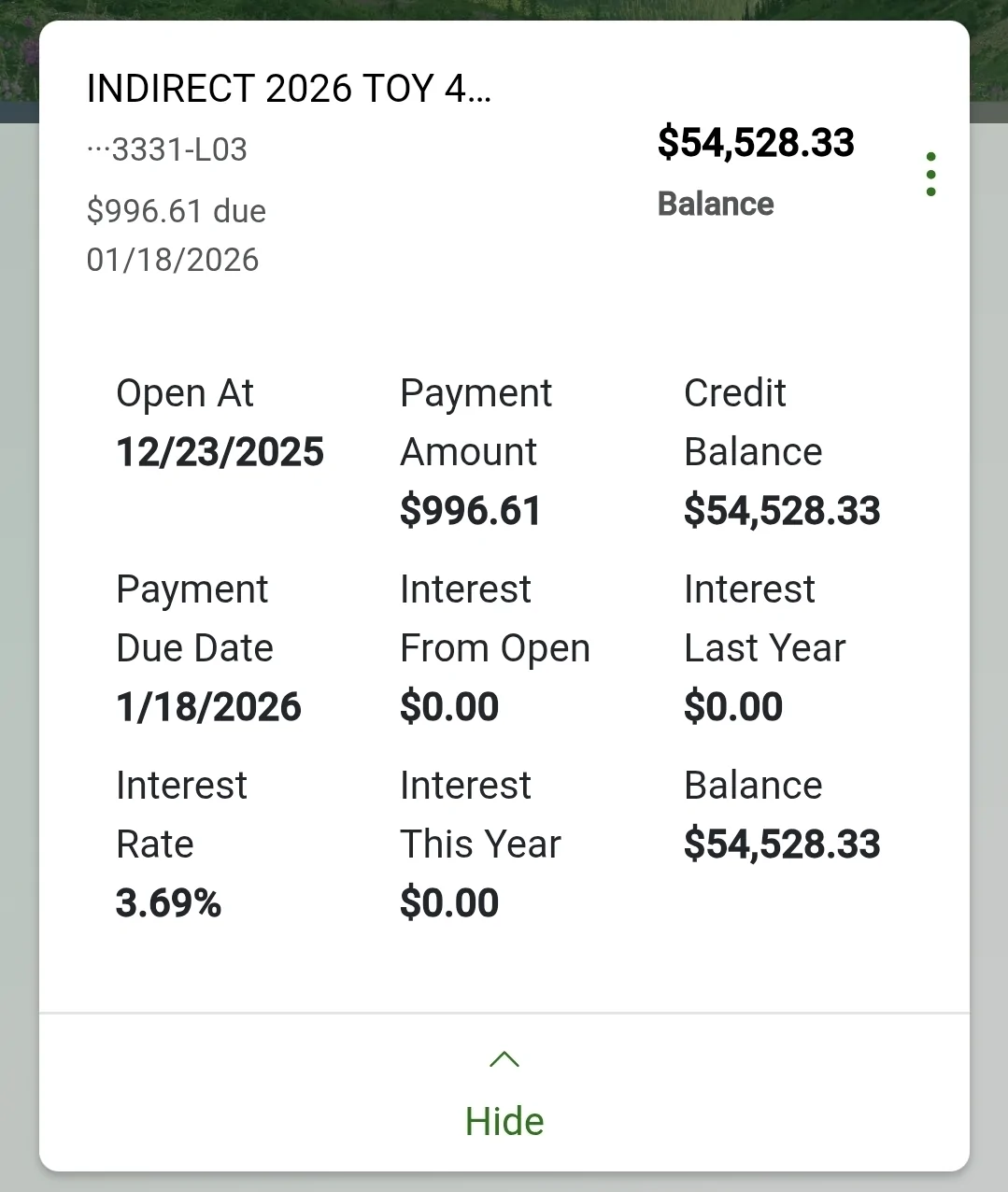
In 2026, Toyota 4Runner interest rates generally range from 3.9% to 5.9% for well-qualified buyers through Toyota Financial Services (TFS) on 48- to 60-month terms. Standard market rates for average credit profiles hover between 6.5% and 8.5%, while credit unions often provide competitive alternatives near 4.5% for existing members.
The 2026 Toyota 4Runner, now firmly established in its sixth generation, remains one of the most sought-after body-on-frame SUVs on the market. Whether you are eyeing the fuel-efficient i-FORCE MAX hybrid powertrain or the rugged Trailhunter trim, securing the right financing is as critical as choosing the right mechanical locking differentials. With vehicle prices stabilizing but remaining elevated, the "cost of money"—the interest rate you pay—can fluctuate significantly based on your credit tier, the lender's appetite for risk, and current federal monetary policy.
Understanding the nuances of 2026 financing requires a deep dive into the specific programs offered by Toyota, the role of independent lenders, and the impact of the 4Runner’s legendary resale value on your loan terms.
The State of Toyota 4Runner Financing in 2026
The automotive lending landscape in 2026 is characterized by a "return to normalcy" following the volatility of the early 2020s. For the 4Runner, which transitioned to the N400 platform recently, demand remains high, which typically means Toyota is less likely to offer 0% APR "clearance" rates. Instead, financing strategies focus on subvented rates—interest rates subsidized by the manufacturer to encourage sales of specific trims or configurations.
In 2026, financing a 4Runner is influenced heavily by the vehicle's high residual value. Lenders view the 4Runner as a low-risk asset because it depreciates slower than almost any other vehicle in its class. This often translates to slightly more favorable terms for borrowers who might otherwise struggle with high-LTV (Loan-to-Value) ratios on vehicles that lose value more quickly.
Toyota Financial Services (TFS) Tiered Programs
Toyota Financial Services remains the primary lender for most 4Runner buyers. TFS utilizes a tiered credit system that determines your eligibility for promotional rates. In 2026, these tiers are typically structured as follows:
- Tier 1+ and Tier 1 (Score 720+): These buyers qualify for the "Special APR" programs. In the current 2026 market, this usually means rates between 3.99% and 4.99% for 60 months.
- Tier 2 and 3 (Score 660-719): Buyers in this range are often subject to "Standard APR," which may sit between 6.0% and 7.5%.
- Tier 4 and Below (Score Under 660): Financing is still possible, but rates often climb into the double digits (10% to 14%), reflecting the higher risk of default.
Current Interest Rate Benchmarks for the 2026 4Runner
To navigate the dealership experience effectively, you must enter the showroom with an understanding of what a "good" rate looks like in 2026. The following table provides a breakdown of estimated interest rates based on common credit profiles and lender types.
| Credit Profile (FICO) | Lender Type | Estimated APR (2026) | Typical Term |
|---|---|---|---|
| Excellent (750+) | Toyota Financial (Promo) | 3.9% - 4.5% | 48 - 60 Months |
| Excellent (750+) | National Bank | 4.8% - 5.4% | 60 - 72 Months |
| Good (700-749) | Credit Union | 4.5% - 5.2% | 60 Months |
| Good (700-749) | Toyota Financial (Standard) | 5.9% - 6.9% | 60 - 72 Months |
| Fair (640-699) | Regional Bank | 7.5% - 9.0% | 60 Months |
| Subprime (<640) | Specialty Auto Lender | 11.0% - 16.0% | 48 - 60 Months |
Note: These rates are estimates for the 2026 calendar year and may vary by region and specific 4Runner trim level.
Factors Influencing Your 4Runner Financing Options
While your credit score is the most significant factor, several other variables dictate the interest rate and loan structure for a 2026 4Runner.
1. Loan-to-Value (LTV) Ratio
LTV is the relationship between the loan amount and the vehicle's value. With 2026 4Runner MSRPs ranging from approximately $46,000 for SR5 models to over $65,000 for fully-loaded Trailhunters or TRD Pros, the size of your down payment matters. A lower LTV (e.g., 80% or less) signals to the lender that you have "skin in the game," often resulting in a lower interest rate. If you are financing more than 100% of the vehicle's value (to cover taxes, titles, and fees), expect a rate premium of 0.5% to 1.5%.
2. Loan Term Length
In 2026, 72-month and 84-month loans have become increasingly common to keep monthly payments manageable. However, interest rates are almost always tiered by term. A 48-month loan might offer a 3.9% rate, while an 84-month loan on the same vehicle for the same buyer could jump to 7.9% or higher. The longer the term, the more risk the lender assumes regarding your ability to pay and the vehicle’s future value.
3. New vs. Certified Pre-Owned (CPO)
While this guide focuses on current 2026 financing, many buyers compare new 2026 models with 2024 or 2025 CPO 4Runners. Toyota’s CPO program often includes specific financing incentives that can sometimes be lower than new vehicle rates to help move used inventory. However, in most market conditions, the "new car" rates through TFS are the most aggressive.
4. Trim-Specific Incentives
Toyota occasionally isolates financing incentives to specific trims. For example, if inventory levels for the 2.4L Turbo i-FORCE engine are higher than the i-FORCE MAX hybrid, Toyota may offer a 1.0% lower APR on the non-hybrid models to balance the sales mix. Always ask the fleet or finance manager if there are "trim-restricted" subvented rates available.
Specialized Financing: The i-FORCE MAX Hybrid Factor
The 2026 4Runner’s hybrid powertrain (i-FORCE MAX) introduces unique financing considerations. Because this powertrain is standard on the Trailhunter and Platinum trims and optional on others, the higher MSRP can lead to larger loan balances.
Green Vehicle Incentives: Some credit unions and national banks offer "Green Auto Loans." These programs may provide a 0.25% to 0.50% discount on the interest rate if the vehicle meets certain fuel efficiency or hybrid criteria. While the 4Runner hybrid is built for power and off-road capability rather than extreme MPG, its hybrid status may still qualify for these specialized rates at specific institutions.
Leasing the 2026 4Runner: An Alternative to Financing
For many 2026 buyers, leasing is a strategic way to drive a 4Runner with a lower monthly commitment. The 4Runner is one of the best vehicles to lease because of its exceptionally high Residual Value.
How Residual Value Lowers Costs
When you lease, you only pay for the depreciation of the vehicle over the lease term (usually 36 months). If a 2026 4Runner TRD Off-Road has a residual value of 70% after three years, you are only financing 30% of the car's value plus the "money factor" (the lease equivalent of an interest rate).
- 2026 Money Factors: Expect money factors to range from 0.00200 to 0.00350 for top-tier credit. To find the equivalent APR, multiply the money factor by 2,400. A 0.00225 money factor equals a 5.4% APR.
- Pros of Leasing: Lower monthly payments, ability to upgrade to the latest tech in three years, and a guaranteed future value.
- Cons of Leasing: Mileage restrictions (typically 10,000 to 12,000 per year), no equity at the end of the term, and potential "wear and tear" charges.
Common Pitfalls in 4Runner Financing
The 4Runner’s popularity can sometimes lead to predatory or suboptimal financing arrangements.
- Dealer Reserve (Rate Markups): Dealers often receive a "buy rate" from a lender (e.g., 5.0%) and present a "sell rate" to the customer (e.g., 6.5%). The dealer keeps the difference as profit. In 2026, it is standard practice to ask, "Is this the buy rate, and if not, how much of a markup is included?"
- The "Monthly Payment" Trap: Salespeople often focus on the monthly payment rather than the total cost of the loan. By extending a loan to 84 or 96 months, they can make a $65,000 4Runner look affordable, but you will end up paying thousands more in interest and likely be "upside down" (owing more than the car is worth) for several years.
- Forcing Add-ons into the Loan: Be wary of financing GAP insurance, extended warranties, or "paint protection" at high interest rates. If you want these products, it is often cheaper to buy them separately or ensure they don't push your LTV into a higher interest bracket.
Steps to Secure the Best 2026 4Runner Interest Rate
- Check Your FICO Auto Score: Your standard FICO score used for credit cards may differ from your FICO Auto Score 8 or 9. Check the auto-specific version to see exactly what lenders see.
- Get Pre-Approved: Before visiting the Toyota dealership, secure a pre-approval from a credit union or online bank. This gives you a "ceiling" rate. If the dealer can't beat your 4.75% credit union rate, you already have your financing ready.
- Time Your Purchase: Toyota Financial Services often updates their national "Special APR" programs at the beginning of each month. Seasonal events (Toyotathon in late Q4 or summer sales events) are the most likely times to see sub-4% rates.
- Negotiate the Vehicle Price First: Never discuss financing until you have agreed on the "out-the-door" price of the 4Runner. Combining the two allows the dealer to hide price increases within the financing math.
- Review the Federal Truth in Lending Disclosure: This mandatory document lists the APR, the total finance charge, and the total amount you will have paid by the end of the loan. Review it carefully before signing.
Frequently Asked Questions
What credit score do I need for 0% financing on a 4Runner?
In 2026, 0% financing on the 4Runner is extremely rare due to high demand and the vehicle's recent redesign. However, if it is offered, Toyota Financial Services typically requires a Tier 1+ credit score, which is generally 720 or higher, though some regions may require 740+.
Can I refinance my 4Runner loan later?
Yes. If interest rates drop in late 2026 or 2027, or if your credit score improves significantly, you can refinance your auto loan. Most lenders suggest waiting at least six months to a year after the initial purchase to ensure your credit file has stabilized and the title work is fully processed.
Does the 4Runner Trailhunter have different financing than the SR5?
Generally, the interest rates are the same across the model line, but the "Special APR" promotions sometimes exclude limited-production trims like the Trailhunter or TRD Pro if demand significantly exceeds supply. Always check the fine print of the Toyota regional offer.
Is it better to finance through a credit union or Toyota?
It depends on the current incentives. Credit unions often have lower "standard" rates, but they cannot compete with Toyota’s "subvented" promotional rates (like a 3.9% special). Always compare your credit union’s best rate against the TFS promotional offer for that specific month.
How much down payment is recommended for a 2026 4Runner?
To secure the best rates and avoid being "underwater" on the loan, a down payment of at least 10% to 20% is recommended. Given the 4Runner’s MSRP, this typically means a down payment of $5,000 to $12,000 depending on the trim level.
Final Recommendation for 2026 Buyers
To maximize your savings on a 2026 Toyota 4Runner, your goal should be to qualify for Toyota Financial Services Tier 1+ "Special APR" programs. If your credit score is currently near the 720 threshold, it may be worth waiting a few months to pay down revolving debt and boost your score before applying.
Always come prepared with a pre-approval from an external lender to use as leverage. In the 2026 market, a rate below 5% for a 60-month term is considered excellent for this vehicle class. Prioritize shorter loan terms (60 months or less) to take advantage of the 4Runner’s high resale value and build equity as quickly as possible.